 NL
NL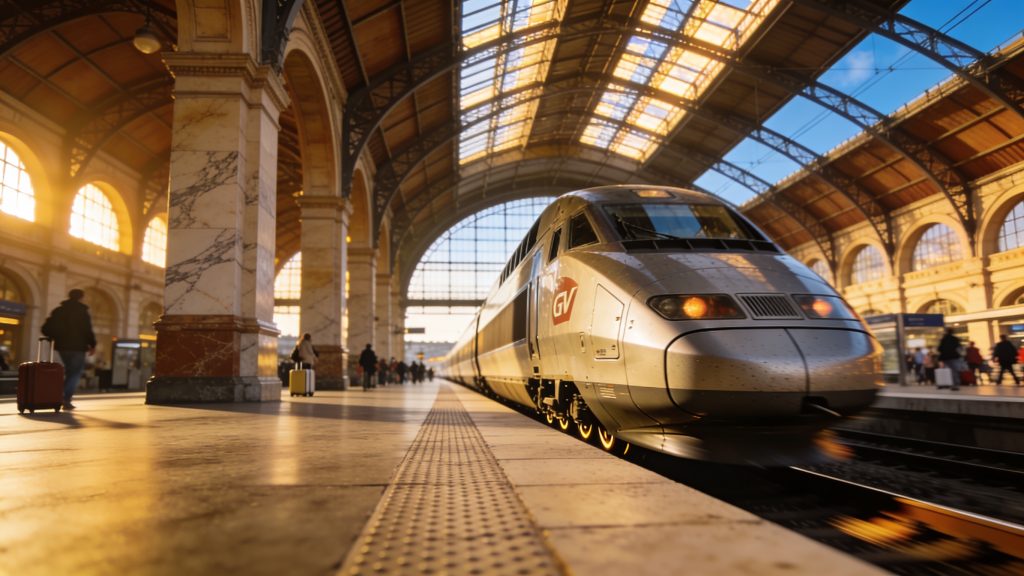
The train to Paris is faster and more comfortable than you might think. From the Netherlands and Belgium, you can travel in 3 to 4 hours without changing trains to the heart of the French capital. You avoid check-in, airport stress and long waiting times. What’s more, you arrive at Paris Gare du Nord, right in the middle of the city. The train is a smart alternative. That goes for a romantic city break, and it also applies to a trip with the family. Read on for concrete routes, booking tips and what’s best to do after you arrive.
Why choose the train to Paris
The train often beats the plane when you compare the total journey time. You leave home and arrive at your hotel. By train, you’re sometimes finished sooner. You don’t need to check in well in advance or go through extended security checks. You get on, find your reserved seat and can immediately relax, work or sleep.
It is also a comfortable way to travel. You have more legroom than on a plane and you can take more luggage without extra costs. For city breaks by train this is extra convenient, because you are in less of a rush and the journey itself already becomes part of the holiday.
Paris Gare du Nord is within walking distance of districts such as Montmartre and just a few metro stops from popular neighbourhoods like Le Marais and the opera district. So you are immediately where you want to be.
Direct train connections from the Netherlands
From the Netherlands, direct high-speed trains to Paris depart from three major stations. These are the main departure points:
- Amsterdam Central: about 3 hours 15 minutes to 3 hours 30 minutes
- Schiphol Airport: about 3 hours 5 minutes to 3 hours 15 minutes
- Rotterdam Central: about 2 hours 35 minutes to 2 hours 50 minutes
Rotterdam is therefore the fastest option if you live nearby. From Schiphol, the train is also attractive if you are coming from further away and still prefer to travel by rail. You can first take the train to Schiphol and change there to the high-speed train.
For travellers from other cities such as Utrecht, Eindhoven, The Hague, Breda, Groningen, Arnhem or Nijmegen, one change is needed. The total journey time can then increase to 4 to 5 hours, depending on the connection.
Connections from Belgium
From Belgium there are also fast, direct connections to Paris. The main departure stations are:
- Brussels: about 1 hour 20 minutes to 1 hour 45 minutes
- Antwerp: about 2 hours 10 minutes
- Liège: about 2 hours 20 minutes
Brussels also serves as an important interchange for travellers from other Belgian or Dutch cities. If you are travelling from a smaller town, you will often first arrive in Brussels and then change there to the fast train to Paris.
How to book a train ticket to Paris
You can book tickets for the train to Paris online via various channels. Dutch Railways, Belgian Rail and international booking sites all offer tickets. Sometimes it is cheaper to book directly via the high-speed train operator.
Ideally, book early, especially if you want to travel at a weekend, during school holidays or on public holidays. Prices rise quickly as the departure date gets closer. Are you flexible with times? Morning and late afternoon trains are often cheaper than popular peak-time departures.
With a high-speed train, a seat reservation is usually included or compulsory. When booking, check whether you can sit next to your fellow travellers. Most booking systems show you which seats are still available.
What to check when booking
- Departure station: not all trains depart from the same station
- Arrival time: plan any onward travel in Paris
- Luggage rules: high-speed trains are usually generous, but do check
- Cancellation and change conditions: especially important if your plans might still change
‘ The day train has the advantage that you can depart directly from the Netherlands or Belgium and arrive in Paris within a few hours. ’
Are there night train options to Paris
At the moment there is no direct night train from the Netherlands to Paris. Night services used to run, but they have been withdrawn. Current connections all run during the day and are designed so that you can travel there and back within a working day.
Would you still like to travel at night? There are night train options from other countries to Paris, for example from Germany, Austria and Italy. From the Netherlands you would first have to travel to one of those countries to start a night train adventure there.
The day train has the advantage that you can depart directly from the Netherlands or Belgium and arrive in Paris within a few hours. You do not lose an entire night’s sleep and can start your city break straight away.
What to do on arrival at Gare du Nord
Paris Gare du Nord is a large and busy station. It’s wise to plan in advance how you will get from the station to your hotel. The station is well connected to the rest of the city:
- Metro lines to all major districts and sights
- RER trains for fast connections to more outlying areas
- Taxis and city buses for those who prefer them
The metro is usually the fastest and cheapest option. Buy a ticket or day pass from the machines at the station. Note that you need to buy metro and RER tickets in advance; you cannot pay contactless at all metro stations.
If it’s your first time in Paris, it’s useful to work out your route before you leave. Download a map of the metro network to your phone or print one out. That way you can continue your journey straight after arrival without stress.
Practical tips for a comfortable train journey
A train journey to Paris requires little preparation, but a few simple tips make it even more pleasant. Arrive at the station about 20 to 30 minutes before departure. This gives you enough time to find the right platform and pick up something to eat or drink if you like.
Take a compact suitcase or rucksack that you can easily lift yourself. There is more space on the train than on a plane, but you do need to take your luggage yourself to the luggage racks. Heavy or very large suitcases make that more difficult.
Before departure, check whether your passport or ID card is valid. Although you are travelling within the Schengen Area, random checks can take place. Make sure your documents are easy to reach.
On board the train
Most high-speed trains to Paris have on-board wifi, sockets at the seats and a buffet car or coffee trolley. You can work, read or simply enjoy the view as you travel through the French countryside. Many travellers appreciate this calm way of travelling as a welcome change from the hectic experience of flying.
‘ For families with children, the train is often more pleasant than flying. ’
Best approach for a city break to Paris
Plan your trip in a logical order. First choose your departure station and check whether there is a direct connection. Compare prices and departure times. Then book your accommodation in a place that is easy to reach from Gare du Nord. Popular districts such as the 9th, 10th or 18th arrondissements are close to the station.
Don’t plan your first day too full, especially if you are leaving early. A relaxed arrival gives you the chance to acclimatise, check in and explore the area. From day two, you can then head into the city full of energy.
The train to Paris is ideal for a stay of 2 to 4 days. You travel comfortably, arrive quickly and don’t have to deal with complicated transfers. For families with children, the train is often more pleasant than flying. Children have more space to move around, and there are fewer strict rules for hand luggage.
Find out more about travelling by train
On the Traveler Tips website you will find much more information about train travel, from routes and booking tips to destinations and preparation. Whether you are planning a long train journey through Europe or a short city break, there are extensive guides and practical checklists available. Discover the possibilities and plan your next trip even more smartly.
Frequently asked questions
The most comfortable and efficient routes to Paris are the direct high-speed trains (such as Thalys/Eurostar) from Amsterdam, Schiphol, Rotterdam, Brussels and Antwerp to Paris Gare du Nord. Preferably choose a direct connection or a route with only one change (for example via Brussels) to limit time loss and transfer stress. For the best deals, book as early as possible, avoid peak days and times (Friday afternoon, Sunday evening, holiday periods) and compare prices across several departure times on the same day. When booking, also pay attention to your seating preference (quiet carriage, duo or table seat) for extra comfort during the journey.
Choose a window seat or a seat in a quiet carriage, preferably facing the direction of travel and not too close to the doors or the galley for more peace and quiet. Take a travel pillow, light blanket or scarf, your own headphones and possibly earplugs to make it more comfortable and quieter. Make use of the facilities on board such as wifi (if available), power sockets, bar/buffet car and toilets by checking in advance where these are in your train set. Bring your own snacks, water and offline entertainment (books, films, music), so you are not dependent on what is available on board and can travel in complete relaxation.
Crucial preparations are: booking your train tickets early, checking your seat reservation, packing a compact suitcase and planning your route from Gare du Nord to your accommodation in advance (metro lines, RER or walking route). Make sure you are at your boarding station 20–30 minutes before departure and print or download both your ticket and your hotel and route information for offline use. In Paris, navigate smartly by determining in advance which metro or RER line you need from Gare du Nord and having a navigation app (or metro map) to hand. Ideally, choose accommodation close to a metro station so that the last few kilometres are quick and straightforward.
Yes, you can treat the journey as part of the holiday by planning, for example, a longer stop in Brussels or Antwerp and spending a few hours walking around there. From the Netherlands you can also choose a route with a change in Brussels instead of the fastest direct train, so that you have time for a coffee or lunch in the city. An early train out and a later one back give you room to briefly discover an extra city on the outward or return leg. This way the train journey becomes not just transport, but also a mini city break along the way.