
 NL
NL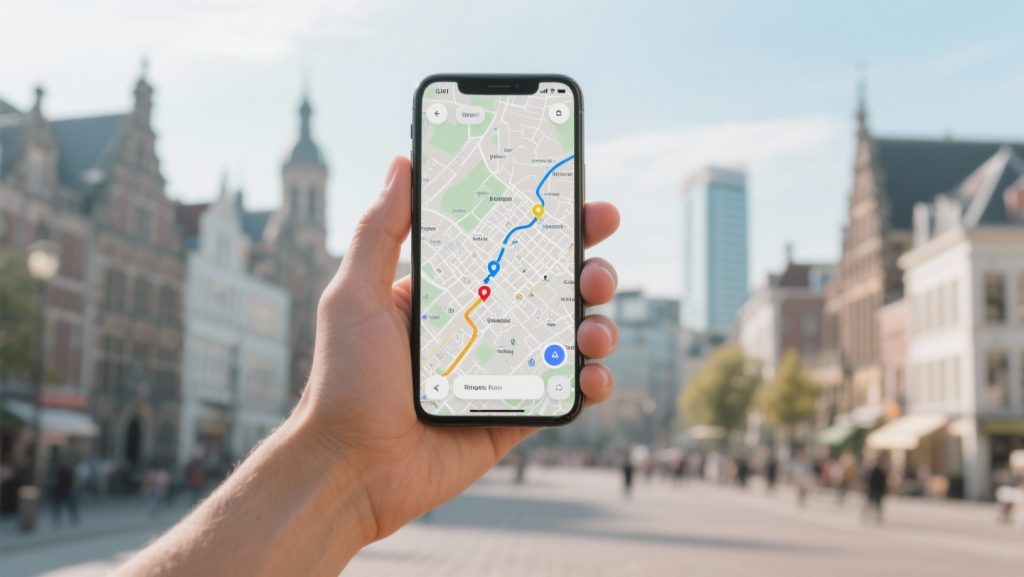
Smart City Trips: Parking, Environmental Zones, and Access
A carefree city break by car hinges on good preparation regarding parking, environmental zones, and city access. Varying rules, stickers, and payment methods can quickly turn your visit into a frustrating and expensive experience. Fortunately, with the right knowledge and planning, it’s perfectly possible to explore any city smoothly and smartly, without stress or unexpected fines. Read on to discover how to make your next city visit a guaranteed success.
More and more European cities are implementing strict rules to improve liveability and air quality. For you as a traveller, this means you can no longer simply drive anywhere. Good preparation is important for a successful driving holiday, and arranging the correct documents and knowledge in advance is an indispensable part of this. This starts with understanding low-emission zones.
Low-emission zones and environmental stickers: your access to European cities
A low-emission zone (LEZ), also known as an environmental zone, is a delimited area where only vehicles that meet certain emission standards are allowed. To prove your car is clean enough, you need an environmental sticker or vignette in many countries. Ignoring these zones will almost certainly lead to a high fine, as checks are often carried out using cameras.
Well-known examples in Europe:
- Germany: the Umweltplakette. Most German cities have an ‘Umweltzone’ (environmental zone) where you are only allowed to enter with a green sticker. This sticker is linked to your number plate and is valid indefinitely. You can order it online or buy it at German inspection stations such as TÜV or Dekra.
- France: the Crit’Air vignette. France operates with six categories of stickers, depending on your vehicle’s emission class. Rules vary by city and can be temporarily tightened during severe air pollution. Order this vignette well in advance via the official French website, as delivery can take several weeks.
- Belgium: registration requirement. Cities like Antwerp, Brussels, and Ghent have an LEZ. Vehicles with a Dutch number plate must register online in advance. If you fail to do so, you risk a fine, even if your car meets the standards.
- Italy: the Zona a Traffico Limitato (ZTL). This is a unique system. The ZTL is often more focused on restricting general traffic from historical centres than purely on emissions. The rules are complex: the zones are often only active at certain times, and access is usually reserved for permit holders. Signs are in Italian and therefore easy to miss. An infringement is always registered by cameras.
‘ This requires careful planning and close attention to signs when entering the city. ’
Specific access rules: from time windows to toll roads
In addition to environmental zones, there are other rules that limit city access. In cities like London and Stockholm, you pay a Congestion Charge to enter the city centre. This is a tax designed to reduce the number of cars during peak hours. You often have to arrange payment online yourself on the day of entry.
In many Italian cities, within the ZTL, specific time windows (venstertijden) apply. Outside these hours, you may enter the zone. This requires careful planning and close attention to the signs when entering the city. Always check with your hotel if they can arrange a temporary exemption for you if your accommodation is located within a ZTL.
Parking options in the city: what suits you?
Once past the city’s access gates, the next challenge arises: parking. The right choice depends on your budget, your schedule, and your willingness to travel a bit by public transport.
Park & Ride (P+R): the smart choice
The most cost-efficient and stress-free option is often a Park & Ride location on the outskirts of the city. You park your car here for a low daily rate and then travel by public transport (bus, tram, or metro) to the centre. Often, public transport tickets for multiple people are included in the parking fee. This saves you money and simultaneously avoids the stress of navigating busy and narrow city streets.
Car parks: convenience and security
For those who want to be right in the heart of the city, car parks offer the most security. Your car is parked undercover and often monitored. However, convenience comes at a price: rates in central car parks can be quite high, especially if you stay for a whole day. Reservations are sometimes possible and advisable, particularly during events or in high season.
Street parking: flexible but pay attention
Street parking can be an option for short stops. Rates are often lower than in a car park, but there are drawbacks. The maximum parking duration is often limited, and you must pay close attention to specific rules: many spots are reserved for permit holders. Payment machines do not always accept all payment methods, and instructions can be unclear.
Navigating to parking spaces and paying
Fortunately, you’re not alone. Various apps and websites help you find a parking spot. Apps like Parkopedia, EasyPark, or the ANWB Onderweg app provide an overview of parking locations, rates, opening hours, and sometimes even real-time availability. Google Maps also increasingly shows nearby car parks for your destination.
Paying is also becoming easier. In addition to coins and credit cards, you can use parking apps in many cities. These allow you to pay via your phone and extend your parking time remotely. This prevents you from having to rush back to the machine and reduces the chance of a fine.
‘ Trams and buses are ideal for shorter distances. ’
Alternatives to the car: efficient public transport
Once your car is safely parked, public transport is your best friend. Cities like Paris, Berlin, and Rome have excellent metro networks that transport you quickly and efficiently throughout the city. Trams and buses are ideal for shorter distances. Consider purchasing a day ticket or a multi-day pass. This is often more cost-effective than single tickets and gives you the freedom to travel unlimited.
Fine risks and consequences: avoid unpleasant surprises
Ignoring the rules can give your city trip an expensive tail. Fines for wrongfully entering an environmental zone or ZTL are high and can range from €60 in Belgium to well over €100 in France and Italy. As most controls are automated with cameras scanning number plates, the chance of being caught is almost 100%. The fine will be sent to your home address via a collection agency and can arrive months after your trip.
Parking fines are also a common pitfall. An expired parking time or parking in a spot reserved for permit holders quickly results in a ticket under your windscreen wiper. So, always be careful and rather take a little extra time than risk a fine.
Your pre-departure checklist: preparation by country and city
With good preparation, a city visit by car can be a relaxed experience. Use this checklist before you depart:
- Check your destination: Search online for the city name combined with ‘environmental zone’, ‘LEZ’, or ‘ZTL’. Official city websites or tourist boards are the most reliable sources.
- Order stickers in time: Apply for the necessary environmental stickers (Germany, France) well in advance through official channels.
- Register your number plate: Don’t forget to register your car for cities where this is mandatory (e.g., in Belgium).
- Research P+R locations: Identify the most convenient P+R locations on your route to the city and check public transport connections.
- Download the right apps: Install a reliable parking app and an app for local public transport on your phone.
- Check for toll roads and vignettes: Check if you need a vignette for your destination country (e.g., Austria, Switzerland).
- Double-check before departure: Rules can change. Re-check the most current situation just before your trip.
‘ However, that freedom only truly becomes valuable when you know and respect the local rules. ’
Enjoy your driving holiday and city visit to the fullest
A car gives you a lot of freedom to go wherever you want, even during a city break. However, that freedom only truly becomes valuable when you know and respect the local rules. Therefore, take the time to prepare, download the necessary apps, and arrange the correct stickers. This lays a solid foundation for a carefree journey. Get into your car with confidence, drive into the city, and let yourself be surprised by everything that awaits you. Your next city break starts now – ready to depart?