
 NL
NL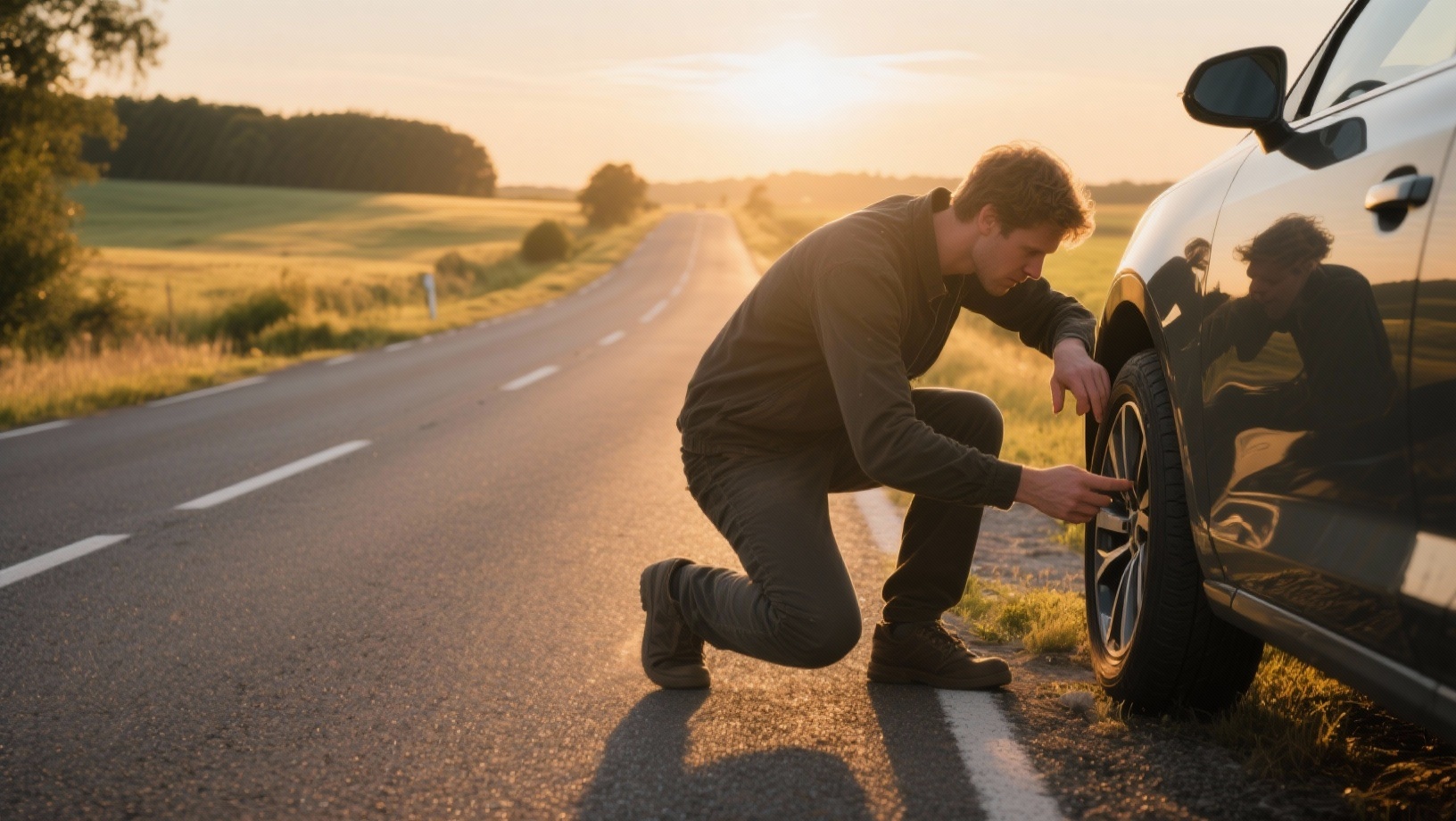
Road Safety: A Complete Guide to Breakdown Scenarios and Prevention
Careful preparation regarding road safety & breakdown scenarios forms the basis of every successful and relaxed car holiday. By assessing risks in advance and knowing how to act in unexpected situations, you can hit the road with peace of mind. Read on to discover the steps you can take to make the journey as enjoyable as the destination itself.
The freedom to set your own pace and choose routes is one of the great advantages of travelling by car. Good planning is key to success. This applies not only to the route and overnight stays but also to the technical condition of your vehicle and your preparation for what might go wrong. Good preparation is the foundation of a successful car holiday.
Thorough Car Check Before Departure
Before you set off, inspecting your car is an essential step. Technical defects are a common cause of breakdowns on the road. A thorough check significantly reduces the chance of problems and ensures you can drive safely. Pay attention to the following components:
- Tyres: Check the tyre pressure when the tyres are cold. Ensure it is in line with the manufacturer’s recommendations, taking into account a full load. Inspect the tread; a depth of at least 2mm is recommended for summer tyres. Don’t forget the spare wheel or repair kit either.
- Fluids: Check the levels of engine oil, coolant, brake fluid, and windscreen washer fluid. Top them up as necessary with the correct specifications.
- Lighting: Check all lights. Do the headlights (dipped and main beam), rear lights, brake lights, and indicators work correctly? Carrying a set of spare bulbs is a sensible choice in many countries.
- Brakes: Test the brakes at low speed. Do they feel smooth and reliable? If in doubt, such as a grinding sound or a vibrating pedal, have them checked by a professional.
- Battery: A battery older than four or five years has an increased risk of failure, especially in extreme temperatures. Have your garage test the condition of the battery if you are in doubt.
‘ Always check the local rules of your destination and the countries you are travelling through. ’
Mandatory and Recommended Safety Equipment
The safety equipment in your car is your first line of defence in the event of a breakdown or accident. The requirements for this vary by country. Therefore, always check the local rules of your destination and the countries you are travelling through. Basic equipment usually includes:
- Warning Triangle: Mandatory in almost all of Europe. Place it a sufficient distance behind the car to warn other traffic.
- Safety Vest: In many countries, a reflective vest must be within reach for every occupant. Always wear this when you leave the car in the event of a breakdown.
- First-aid Kit: Although not mandatory everywhere for passenger cars, an approved first-aid kit is a sensible addition.
In addition to the mandatory items, there are additional things that come in handy, such as a fire extinguisher, a torch, gloves, jump leads, and a blanket.


Insurance and Breakdown Assistance: Your Backup Plan
With the correct documents and coverage, you can prevent administrative problems and high costs. Ensure your car insurance (including your green card) is valid in all countries you visit. Supplementary travel insurance often covers personal accidents and medical expenses not covered by your standard health insurance. For car breakdown assistance, a breakdown cover policy with European coverage is recommended. Carefully check the policy conditions: for example, does the service repatriate your car in the event of a serious defect, and is replacement transport included?
Fit and Alert Behind the Wheel
Your own fitness is a determining factor for road safety. Fatigue reduces your reaction time and concentration. Therefore, plan your journey realistically and take sufficient rest. The general guideline is to take a break of at least fifteen minutes every two hours. Stretch your legs, drink and eat something light, and ensure fresh air in the car. Avoid long drives in the dark if you are not used to it, and share the driving with a fellow passenger if possible.
‘ Minimise distractions by putting your phone on silent and out of reach. ’
Safe Driving and Navigation
A defensive and anticipatory driving style is the best way to prevent dangerous situations. Keep a sufficient distance, adjust your speed to the circumstances, and be prepared for traffic rules and driving behaviour in other countries. Set up your navigation system before you depart and use voice instructions, so you can keep your eyes on the road. Minimise distractions by putting your phone on silent and out of reach.


Theft Prevention On the Road and at Your Destination
A car full of luggage is an attractive target for thieves. Therefore, take preventive measures, both during stops and at your destination. Park in well-lit and supervised car parks. Never leave valuable items such as laptops, cameras, or documents visible in the car. Cover luggage and always lock the car, even if you are only away for a short time. Consider using additional security devices, such as a steering wheel or pedal lock, for extra peace of mind.
Safe Stopping and Action in Case of a Breakdown
When you encounter a car breakdown, taking correct action is of great importance for your own safety and that of other road users. Follow this step-by-step plan:
- Find a safe spot: Steer the car as far to the right as possible, preferably onto the hard shoulder, a lay-by, or a parking area.
- Switch on the hazard lights: Make your car immediately visible to other traffic.
- Put on a safety vest: Do this before getting out. Ensure all passengers do so too.
- Place the warning triangle: Put the triangle approximately 100 metres behind the car (on motorways) to warn approaching traffic in time.
- Move yourself and passengers to safety: Stand behind the crash barrier and wait there for help. Never stay in the car.
- Call the breakdown service: Ensure you have the contact details and your policy number to hand.
Acting in Case of an Accident
In the event of an accident, it is important to remain calm and act in a structured manner. Safety is paramount.
- Secure the area: Switch on the hazard lights and place the warning triangle. Move all involved parties to safety, away from traffic.
- Check for injuries: Provide first aid if necessary and possible. In case of injury, immediately call the European emergency number 112.
- Complete the European Accident Statement form: Do this together with the other party. Fill in all fields as completely as possible and only sign the form if you agree with the described circumstances.
- Gather evidence: Take photos of the situation, the damage to the vehicles, and any skid marks. Note down contact details of witnesses.
- Contact your insurer: Report the damage to your insurance company as soon as possible.
Emergency Numbers and Services per Country
The general emergency number throughout Europe is 112. Through this number, you can reach the police, fire brigade, or ambulance. Save the number of your breakdown service and your insurer in your phone, so you have them immediately to hand when needed. Before departure, inquire about any additional local emergency numbers for your destination country.
Communication in Case of Breakdown or Accident
Clear communication with emergency services speeds up the process. Make sure you provide the following information:
- Your exact location: Use your phone’s GPS coordinates, a navigation app, or the kilometre markers along the road.
- Vehicle details: Have your car’s registration number, make, model, and colour ready.
- Description of the problem: Indicate as clearly as possible what is wrong (e.g., a flat tyre, a smoking engine, or a collision).
- Your contact details and policy number: Ensure the emergency service can reach you and verify your details.
Enjoy Your Trip Safely
Good preparation for unexpected situations brings peace and confidence. By ensuring your car is in good technical order, arranging the correct equipment and insurance, and knowing how to act in the event of a breakdown or accident, you lay a solid foundation for a relaxed journey. This allows you to focus entirely on creating beautiful memories, knowing that you are prepared for whatever the road brings.