NL
NL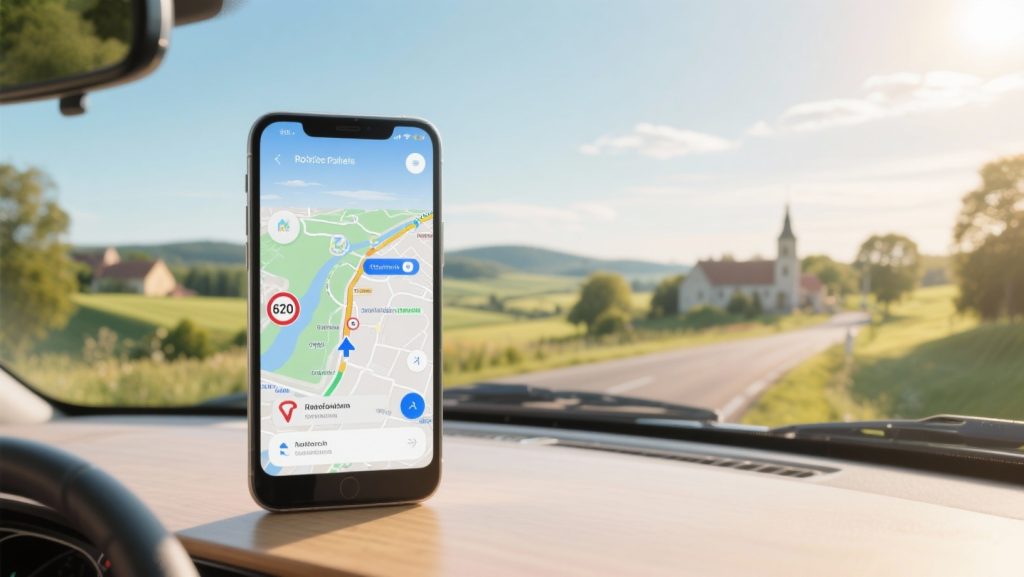
Traffic Regulations Abroad: How to Prepare for Your Journey
Thorough preparation for traffic regulations and driving abroad is the foundation for a relaxed and safe motoring holiday. Knowledge of local laws, mandatory equipment, and unwritten rules of conduct prevents expensive fines and also reduces stress and uncertainty behind the wheel. This allows you to enjoy your trip with full confidence and a greater sense of experience. Read on to discover how to best prepare yourself for the roads of your next destination.
Whether you are a seasoned traveller or embarking on a longer car journey for the first time, good planning is half the battle. Motoring holidays offer the ultimate freedom to set your own pace, but you only truly appreciate that freedom when you know what to expect on the road. From differing right-of-way rules to specific environmental stickers, the differences from the Netherlands are sometimes greater than you think.
The Basics: General Points of Attention and Key Differences
Although many European traffic regulations have been harmonised, significant country-specific differences remain that drivers must be aware of. The most common variations are seen in speed limits. While in Germany there is no speed limit on parts of the Autobahn, in France a strict limit of 80 km/h applies on many roads outside built-up areas. Alcohol limits also vary; some Eastern European countries have zero tolerance, while others apply a limit of 0.5 per mille. Familiarise yourself with the specific rules of your destination and the countries you will travel through in advance. Also pay attention to right-of-way rules, especially at roundabouts and in mountainous areas. In many Alpine countries, for example, ascending traffic has priority over descending traffic, unless otherwise indicated.
‘ An incomplete set can result in a fine during a check. ’
Mandatory Car Equipment: What Should You Always Carry?
Every country has its own requirements for mandatory car equipment. An incomplete set can result in a fine during a check. Therefore, ensure you always have the basic items in order and supplement them with country-specific items. In almost all of Europe, the following are mandatory:
- Warning Triangle: For signalling a breakdown or an accident. In Spain, two warning triangles are mandatory.
- Safety Vests: A reflective vest for each occupant. Keep these within easy reach, for example, in the glove compartment, and not in the boot. In many countries, you must wear this vest as soon as you leave the car due to a breakdown.
- First-aid Kit: Although not mandatory everywhere for passenger cars, therefore, carry an approved first-aid kit.
Additionally, some countries have supplementary requirements. In France, an alcohol tester was mandatory for a long time, and although the fine for not carrying one has been abolished, we still recommend having one. Check the current requirements for your destination before departure.
Specific Driving Conditions: Mountains, Winter, and Other Challenges
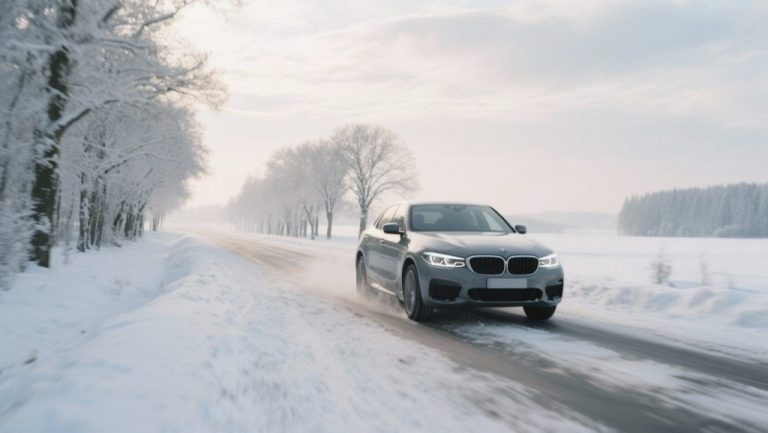
Driving abroad can sometimes lead you into conditions not commonly encountered in the Netherlands. Mountainous terrain requires a different driving technique. When descending, drive in a low gear to spare the brakes and use engine braking. Be aware that ascending traffic often has priority on narrow mountain roads. Winter conditions require extra preparation. In Germany, Austria, and parts of Italy and France, winter tyres are mandatory in snowy or icy conditions. Snow chains are even a requirement on some mountain passes. Practise fitting the chains at home once, so you are not caught off guard in the cold.
Local Driving Culture: Understand the Driving Behaviour of Your Destination
Beyond formal regulations, each country has its own driving culture. Understanding these unwritten rules helps you navigate traffic smoothly and avoid frustrations. In Southern European cities, traffic may seem more chaotic, with greater use of the horn and a more assertive driving style. Try to adapt to this without losing sight of your own safety. Be predictable in your behaviour and maintain sufficient distance. In Scandinavian countries, on the other hand, the driving style is generally calmer and more disciplined. By adapting to the local rhythm and remaining patient, you will make the journey much more pleasant. Pay attention to local customs, anticipate the behaviour of other road users, and always remain courteous.
‘ A fine you incur in France can therefore simply arrive on your doorstep in the Netherlands. ’
Fines and Enforcement: What to Do in Case of Violations?
A traffic fine abroad can be an unwelcome dampener on a holiday. Within the EU, authorities are increasingly collecting fines across national borders. A penalty you incur in France can therefore simply arrive on your doorstep in the Netherlands. In the event of being pulled over, the police may demand immediate payment of the fine. Therefore, ensure you have enough cash or a credit card with you. If you disagree with the fine, pay under protest and always request an official receipt. This will allow you to appeal later. Be aware that fines for, for example, speeding offences or using a phone while driving are considerably higher in many countries than in the Netherlands.
Finding Country-Specific Information: Your Pre-Departure Checklist
Traffic regulations can change regularly. Therefore, check the most up-to-date information shortly before departure. Reliable sources include the websites of travel organisations like the ANWB (Dutch Automobile Association), the official tourism boards of the respective countries, and national government websites. Pay particular attention to recent changes in environmental zones. More and more European cities require an environmental sticker, vignette, or registration. These often need to be applied for online in advance. Create a checklist for yourself for each country you visit:
- Are there toll roads and how do you pay?
- Is an environmental sticker or vignette required and where do you order one?
- What are the speed limits on different types of roads?
- Which items are mandatory in the car?
- Are there specific rules for daytime lighting?
Safe and Comfortable Driving: General Tips for the Road
Good preparation for the rules is one thing, but safe and comfortable travel requires more. Start your journey well-rested and take a break of at least fifteen minutes every two hours. If possible, swap drivers. Before departure, check the condition of your car, including tyre pressure, fluids, and lighting. Take out comprehensive travel and breakdown assistance insurance with European cover, so you receive quick and adequate help in case of problems. Download offline maps to your navigation system or smartphone, so you can find your way even without an internet connection.
‘ A well-informed driver is a confident driver. ’
With Preparation, You’ll Enjoy Your Motoring Holiday More
A motoring holiday represents freedom and the opportunity to travel at your own pace. By familiarising yourself with local traffic regulations and customs in advance, you make the most of this freedom. This prevents unnecessary stress, fines, and dangerous situations. A well-informed driver is a confident driver. This way, you can focus your attention on what truly matters: enjoying the journey, the surroundings, and creating unforgettable memories.