
 NL
NL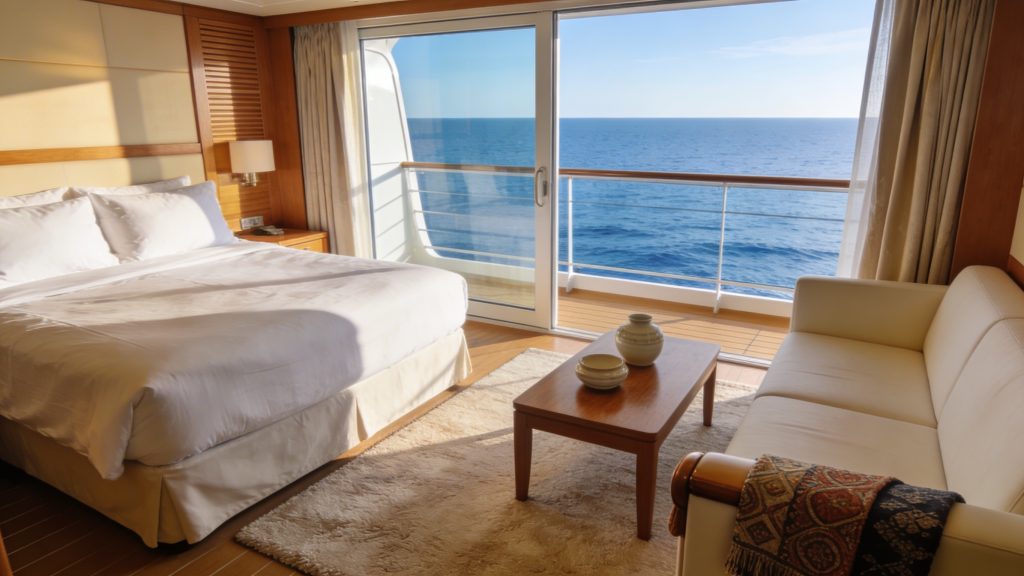
Cabins and accommodation on board a cruise ship
The cabin you choose largely determines how you experience your journey at sea. A compact inside cabin without daylight, a balcony cabin with panoramic views or a luxury suite with jacuzzi: the accommodation on board affects your comfort, your rest and your overall budget. When planning a cruise, your cabin choice deserves at least as much attention as the itinerary or the excursions. Discover what options are available, what to look out for and how to find the cabin that perfectly suits your travel needs.
From inside to suite: what cabin types are there?
Cruise ships offer different categories of cabin, each with its own features. The most affordable option is the inside cabin. This cabin has no window or porthole and is therefore compact. You will find standard facilities such as a private bathroom, beds and wardrobe space. Do you mainly spend time on deck or on excursions? Then this option is often sufficient.
An outside cabin offers more space and has a window or porthole. This gives you natural light and a view of the sea or ports. Many outside cabins have a sitting area with a small table, which makes your stay more pleasant. This option is suitable if you spend more time in your cabin without paying the price of a balcony.
Balcony cabins are popular with travellers who like fresh sea air and a private outdoor space. The size of the balcony varies per ship and cruise line. Cabins at the front or rear often offer spectacular views, especially on routes through fjords or along coastlines. Do pay attention to wind and privacy when choosing a balcony cabin.
Suites and penthouses are the top luxury category. These accommodations have separate living and sleeping areas, a large balcony and extra facilities such as a whirlpool bath, jacuzzi or pantry. The floor area ranges from around 43 square metres for a Neptune Suite to more than 120 square metres for a Pinnacle Suite. In these cabins you will often find king-size beds, double sinks and access to exclusive lounges.
There are also special variants. Family suites offer space for three to four people with pull-down beds or sofa beds. Spa cabins focus on relaxation with a zen interior, yoga mats and special shower heads. Some cruise lines, such as Carnival, offer larger standard cabins than average.
‘ Avoid cabins near lifts, discos or engine rooms if peace and quiet matters to you. ’
Location on the ship: why it matters
The position of your cabin on the ship influences your experience. Cabins in the middle of the ship are quieter and less sensitive to movement. This is pleasant if you suffer from seasickness. Lower decks move less than higher ones. This also helps with any discomfort.
Avoid cabins near lifts, discos or engine rooms if peace and quiet matters to you. Noise from music, footsteps or vibrations can disturb your sleep. Cabins at the front or rear can experience more movement, especially in bad weather. You may also experience anchor noise in lower cabins at the front.
Higher decks are generally more expensive but offer better views and more privacy. Suites are often located on the upper decks. Do bear in mind that you are further away from central facilities such as restaurants and theatres. This means more walking. For those with reduced mobility, a cabin on a lower deck with good access to lifts can be more convenient.
Check the deck plan of your ship beforehand. This way you can see where restaurants, theatres, swimming pools and other facilities are located. This helps you choose a location that suits your needs.
Comfort and facilities in the cabin
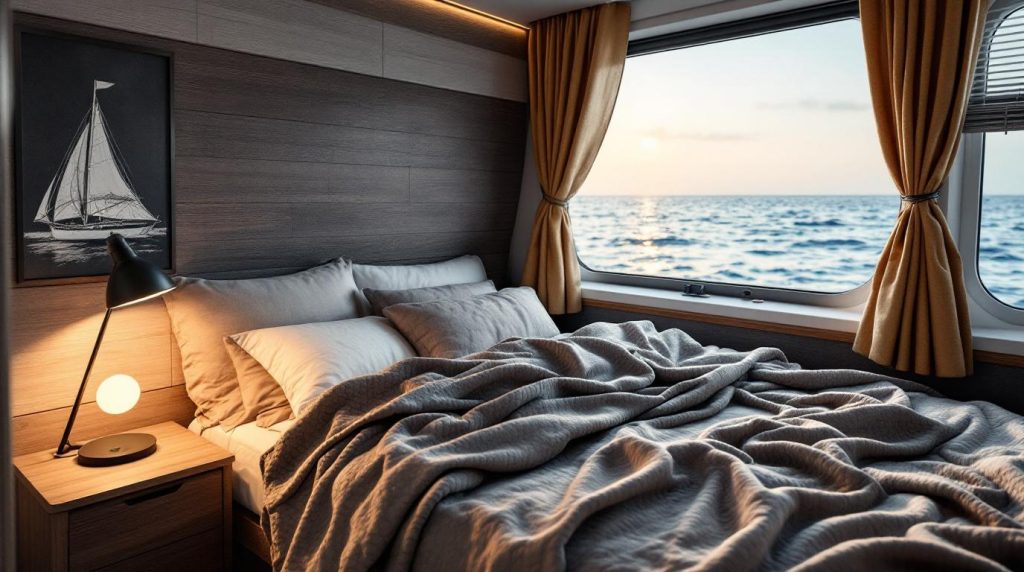
Standard facilities in most cabins include comfortable beds, sufficient wardrobe space and a private bathroom. Many cruise lines offer toiletries such as Elemis products, bathrobes and slippers. Room service is often available, sometimes at an extra charge.
The layout of the beds differs per cabin type. You can usually choose between a queen-size bed or two separate beds. Some cabins have extra sleeping space via pull-down beds, sofa beds or bunk beds, which is suitable for families. Suites often have king-size beds and separate bedrooms.
Higher categories give access to extra services. Think of a personal concierge, access to exclusive lounges with snacks and drinks, and priority embarkation and disembarkation. This increases comfort and saves time, especially at busy moments.
Many ships now offer 360-degree virtual tours of cabins on their website. This gives you a realistic impression of the layout and space before you book. It prevents disappointment and helps you make an informed choice.
Which cabin suits your travel style?
The ideal cabin is determined by your travelling party, budget and personal preferences. Solo travellers who spend little time in their cabin often find an inside cabin sufficient. This saves budget that you can spend on excursions or other experiences on board.
Couples who value views and privacy often opt for a balcony cabin. The private balcony offers a quiet place to relax and admire the surroundings. For longer cruises or routes through exceptional natural areas this is a popular option.
Families benefit from family suites or cabins with extra beds. This way everyone has enough space and sleeping places. For families, also pay attention to the location: a cabin close to the children’s pool or kids’ club can be practical, but also busier.
Looking for luxury and exclusivity? Then choose a suite. The spacious layout, extra facilities and special services such as lounge access and priority boarding make all the difference. For honeymoons or special occasions this can be well worth it.
People who are sensitive to seasickness are well advised to choose a cabin in the middle of the ship on a lower deck. This minimises movement and increases comfort during the journey.
What should you look out for when booking a cabin?
First set your budget. Cabins on higher decks and in higher categories cost more, but also offer more space and facilities. Decide what is most important to you: view, space, peace and quiet or exclusive services.
Look at the ship’s deck plan before you book. This shows you which cabins are directly above or next to noisy areas. Avoid cabins above theatres, discos or kitchens if you value a good night’s sleep.
Watch out for possible obstructions to the view. Some balcony cabins overlook lifeboats, anchors or other parts of the ship. This is often mentioned in the cabin description, but check it to be sure.
Compare balcony sizes if you are considering a balcony cabin. Not all balconies are equally spacious. Some only just have room for two chairs, while others can accommodate a table and sun loungers.
Book early for the best choice. Popular cabins such as midship balcony cabins or large suites sell out quickly. Early booking discounts can also save you money.
Check what is included with your cabin category. Some cruise lines offer free drinks, Wi‑Fi or speciality restaurants with suites. This can reduce your total costs.
Checklist for choosing your cabin
- Determine your budget and priorities: view, space or price
- Study the deck plan and avoid noisy zones
- Choose a central location to reduce seasickness
- Check bed configuration and extra sleeping places for families
- Check for possible obstructions to the view with balcony cabins
- Compare balcony sizes if this is important to you
- View 360-degree virtual tours of the cabin
- Book early for the best availability and discounts
Luxury experience: what do suites and higher categories offer?
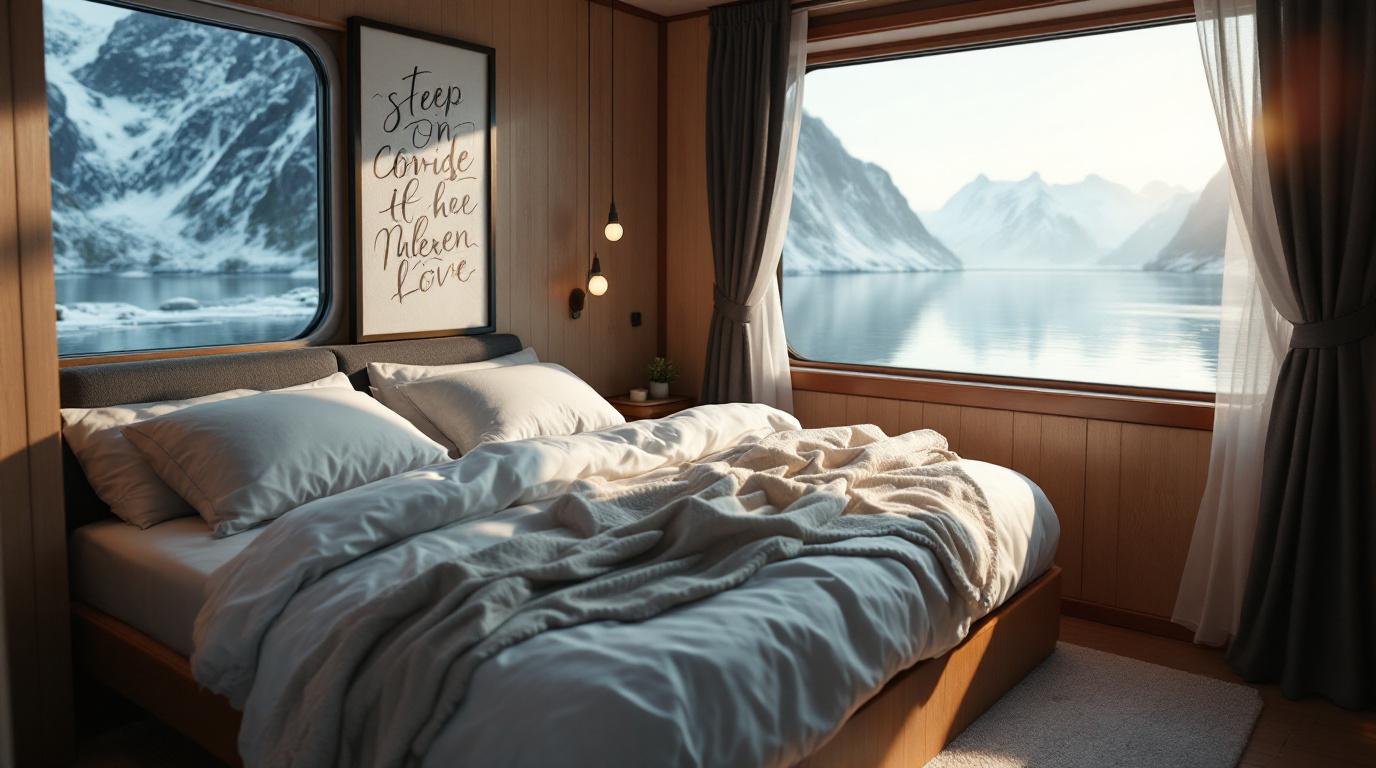
Suites on cruise ships go beyond just offering more square metres. They provide a complete experience with extra services and exclusive access. Many suites have a personal concierge who helps with reservations, special requests and practical matters.
Access to an exclusive lounge is a common benefit. Here you will find snacks, drinks and a calm environment throughout the day. This saves time and creates a relaxed atmosphere without crowds.
Many suites feature luxury amenities such as whirlpools, double sinks, walk‑in wardrobes and separate dining areas. Some suites even have a pantry or microwave, which is convenient for those who want flexibility with meals.
Priority embarkation and disembarkation means you board more quickly and have less waiting time on arrival. This is especially pleasant in busy ports or when you have tight schedules for excursions.
Some ships offer exclusive restaurants or swimming pools for suite guests. This increases privacy and comfort. Fresh fruit, flowers and welcome gifts complete the experience.
Practical tips for more comfort on board
Even in standard cabins you can increase comfort with small adjustments. Take a multi-socket extension lead with you, as power points are often scarce. A magnetic hook is useful for hanging items on metal walls.
Ask at check‑in whether an upgrade is possible. Sometimes there are last-minute options at a reduced rate. This applies especially to balcony cabins or higher categories that are still available.
Use the storage space cleverly. Many cabins have drawers under the beds or extra shelves in wardrobes. This helps to keep the space organised, especially on longer trips.
Report any defects to reception straight away. Whether it concerns a broken air conditioning unit, a leaking tap or noise nuisance, swift action prevents irritation during your trip.
Make use of room service for breakfast or a late-night snack. This is often free or available for a small surcharge, and gives extra convenience without having to leave your cabin.
‘ Whether you choose a functional inside cabin or a luxury suite with all the extras, good preparation enhances your travel experience at sea. ’
The right preparation makes all the difference
A well-considered choice of cabin ensures a comfortable and enjoyable cruise. By taking into account location, type and facilities, you can match the accommodation to your wishes and budget. Whether you choose a functional inside cabin or a luxury suite with all the extras, good preparation enhances your travel experience at sea.