
 NL
NL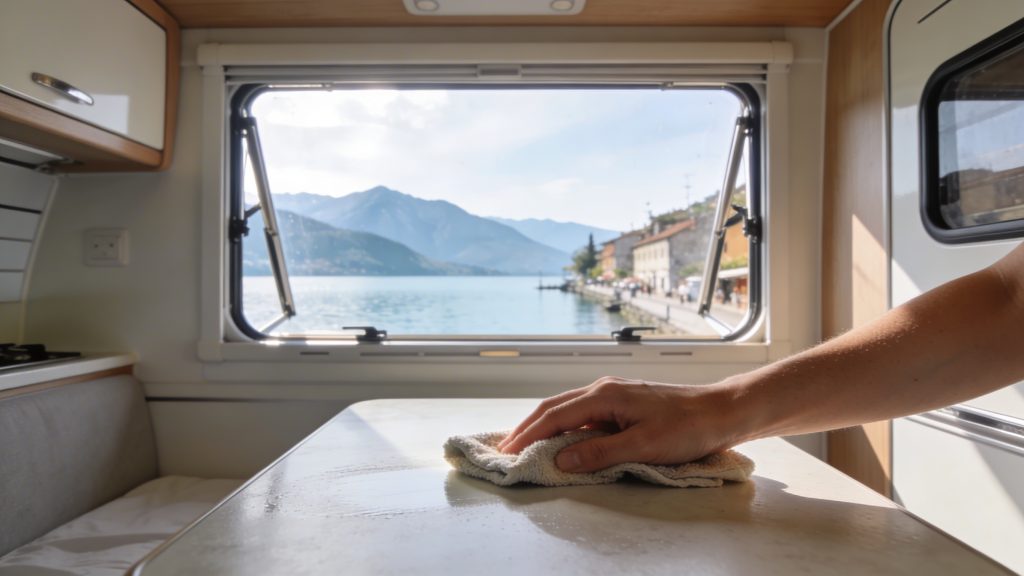
A clean and well-ventilated motorhome interior keeps odours, mould and condensation at bay and ensures you can start every trip in comfort. By airing mattresses, thoroughly cleaning the fridge and ventilating regularly, your motorhome stays fresh and hygienic. That way, you turn a simple cleaning session into an investment in the health and lifespan of your interior.
Why cleaning and ventilating the interior is so important
A motorhome is a relatively small, enclosed space where moisture builds up quickly. When cooking, showering or even just breathing, water vapour is released that has nowhere to go. Without good ventilation, that moisture settles on cold surfaces such as windows, walls and mattresses. This leads to condensation, unpleasant smells and, ultimately, mould.
Regular cleaning and ventilation prevent these problems. You remove dust and dirt that retain moisture and ensure air circulation that stops it building up. This not only keeps your interior fresh but also protects materials from damage. A clean motorhome also contributes to a healthy travel environment, which is especially important if you spend a lot of time indoors. For a complete overview of all maintenance tasks, you will find useful information on the page motorhome check and maintenance.
‘ By ventilating, you prevent moisture from lingering in the space and later seeping into other materials. ’
Preparation: tidying up and ventilating
Start by taking all loose items out of the motorhome. Remove cushions, curtains, carpets and mats so you have access to all surfaces. Beat upholstery and cushions outside to remove dust and leave them to air for a while. That alone reduces moisture build-up and gives a fresher feel.
Then open all windows, doors and ventilation grilles wide. This is especially important after cleaning mattresses and carpets, as these materials can retain a lot of moisture. By ventilating, you prevent moisture from lingering in the space and later seeping into other materials.

Hoovering and removing coarse dirt
Tackle the coarse dirt first. Sweep up loose debris and hoover all surfaces thoroughly. Don’t forget the hard-to-reach places, such as under beds, in cupboards and around ventilation grilles. Use a hoover with small attachments or a handheld hoover to reach cracks and corners properly.
Dust and dirt hold moisture and can cause unpleasant odours. By removing these thoroughly, you prevent moisture from building up and get the motorhome ready for the next step: wiping down surfaces.
Wiping down surfaces and protecting materials
Wipe all hard surfaces with a damp cloth and a mild cleaning agent. Think of tables, cupboards, the dashboard, drawers and fronts. Use lukewarm water with an all-purpose cleaner or a multi-surface cleaner suitable for different materials. Make sure your cloth is not too wet, as too much moisture can damage wood and upholstery. Dry surfaces immediately afterwards with a dry cloth.
For leather surfaces, use a special care product that keeps the material supple and protects it against drying out. Clean windows with glass cleaner and a microfibre cloth. Avoid cockpit spray on the steering wheel and gear lever, as it can make them slippery. Limit this product to the dashboard and other plastic panels.
‘ This removes built-up moisture and makes them fresh again. ’
Airing and treating mattresses and upholstery
Mattresses and upholstery are prone to moisture and odours. Hoover them thoroughly first to remove dust and crumbs. Treat stains with a mild cleaning agent or a steam cleaner if you have one. Then stand mattresses upright and leave them to air outside on a sunny day. This removes built-up moisture and makes them fresh again.
Use a fabric freshener for a pleasant scent, but make sure it is suitable for textiles. For deep cleaning of upholstery and carpets, you can use a wet–dry vacuum or hire a carpet cleaner. Microfibre cloths work well on stubborn stains without leaving residues behind.
Cleaning the fridge and preventing odours
The fridge is an important source of odours if it is not cleaned regularly. Empty the fridge completely and remove all loose parts such as shelves and vegetable drawers. Wash these with warm water and washing-up liquid and dry them thoroughly before putting them back.
Wipe the inside of the fridge with a damp cloth and a mild cleaning agent. Pay attention to corners and seals, where dirt and mould easily build up. Leave the door open after cleaning to ventilate. This prevents moisture from remaining in the fridge and promoting mould. If you are not using the motorhome for an extended period, it is wise to leave the fridge door slightly ajar.
Useful products for the fridge
- Warm water with washing-up liquid for loose parts
- Mild all-purpose cleaner for the interior
- Baking soda to neutralise stubborn odours
- Dry cloth for drying afterwards and preventing moisture build-up
Thoroughly tackling the kitchen and bathroom
Clean the worktop, hob, taps and sink with household cleaning products. Remove any food residues and grease with a degreaser. For the shower and toilet, use a bathroom cleaner. Pay attention to seals and joints, where mould likes to develop.
Remove loose stones and dirt from steps and runners. These areas are often overlooked but collect a lot of dirt and can retain moisture. A clean kitchen and bathroom contribute to a hygienic living environment and help prevent health problems.
‘ This also helps to keep mosquitoes and other insects at bay. ’
Wiping out and organising storage compartments
Empty all storage compartments and sort the contents. Throw away items you no longer use and organise the rest neatly. Wipe the compartments with a damp cloth to remove dust and crumbs. This is also a good time to check whether there is any moisture or mould in the cupboards.
Place scented balls or lavender sachets in cupboards to maintain a fresh smell. This also helps to keep mosquitoes and other insects at bay. Make sure cupboards can dry properly after cleaning before you put things back.
Ventilating against condensation and mould
Good ventilation is the most important measure against moisture, condensation and mould. Open windows and ventilation grilles daily, even if you are not using the motorhome. Create a draught by opening, for example, a window at the front and one at the back. This ensures air circulation that removes moisture.
When cooking or showering, switch on the extractor hood or fan. Let it run for a while after you finish so that water vapour is completely removed. If you park the motorhome in an enclosed space such as a garage, make sure there is good ventilation in the space itself.
Tips for daily ventilation
- Open windows and ventilation grilles daily, even in winter
- Create a draught by opening windows at the front and back
- Use the extractor hood when cooking and showering
- Regularly leave cupboards open to allow air circulation
- Preferably park the motorhome in a sunny spot, as warmth helps moisture to evaporate
Extra details and checks
When cleaning, don’t forget to tackle the extra details as well. Check the emergency kit, such as the first aid box, and replace expired medicines. Check whether the fire extinguisher, smoke alarm and carbon monoxide detector are still working. These small checks contribute to a safe journey.
For stubborn dirt or deep cleaning, you could hire professional equipment such as a carpet cleaner. This can be a worthwhile investment if your motorhome is used intensively. Doing the cleaning yourself saves money but does require time and the right products.
‘ This extends the lifespan of materials and ensures your motorhome always feels comfortable and fresh. ’
Regular maintenance keeps your motorhome fresh
Make cleaning and ventilating a regular habit. A quick clean after every trip prevents dirt and moisture from building up. For longer storage, give the interior a thorough clean and make sure all areas are dry and clean. This extends the lifespan of materials and ensures your motorhome always feels comfortable and fresh.
On the Traveler Tips website, you will find much more information about motorhome maintenance, trip preparation and practical tips for a carefree holiday. Discover more useful articles and plan your next trip with confidence.
Frequently asked questions
Start by tidying everything away and taking loose items, mats and cushions out of the car or accommodation and airing them well. Then hoover or sweep thoroughly, including in crevices and under furniture/seats, and wipe all surfaces with a mild all-purpose cleaner and a slightly damp cloth. Clean textiles (upholstery, mattresses, cushions) where necessary with a stain remover or steam cleaner and allow everything to dry fully. Finally, ensure maximum ventilation by leaving windows and doors open for a while so that moisture and odours disappear.
Take a small handheld hoover or dustbuster, a set of microfibre cloths and a compact dustpan and brush with you to quickly remove crumbs and dust. Add a small spray bottle with mild all-purpose cleaner for tables, cupboards and the dashboard. Take moist cleaning wipes or bathroom wipes for the kitchen and toilet. If you wish, you can take a mini roll of bin bags so you can dispose of rubbish and clutter straight away.
While driving, regularly open a window or air vent briefly to allow fresh air to flow through, and when stationary (safely parked), briefly open opposite windows or doors at the same time to create cross-ventilation. Air and beat cushions, mattresses and upholstery outside regularly to reduce moisture and stale odours. Keep the interior clean and dry (especially the floor, mats and upholstery) and always leave windows or doors open for a while after cleaning. Do not leave the fridge and cupboards completely closed if you are not driving or staying there for a longer period, so that air can circulate and odours don’t get a chance.
Use kitchen roll, a microfibre cloth and a mild all-purpose cleaner to dab liquid stains immediately and then wipe over. For crumbs, sand and dust, a small handheld hoover or dustpan and brush is quick and effective, even in cracks and corners. Treat stains on upholstery or mattresses as soon as possible with a mild cleaning agent and then allow textiles to air well. Always ventilate extra (windows/doors open) after cleaning to prevent moisture, odours and mould.