 NL
NL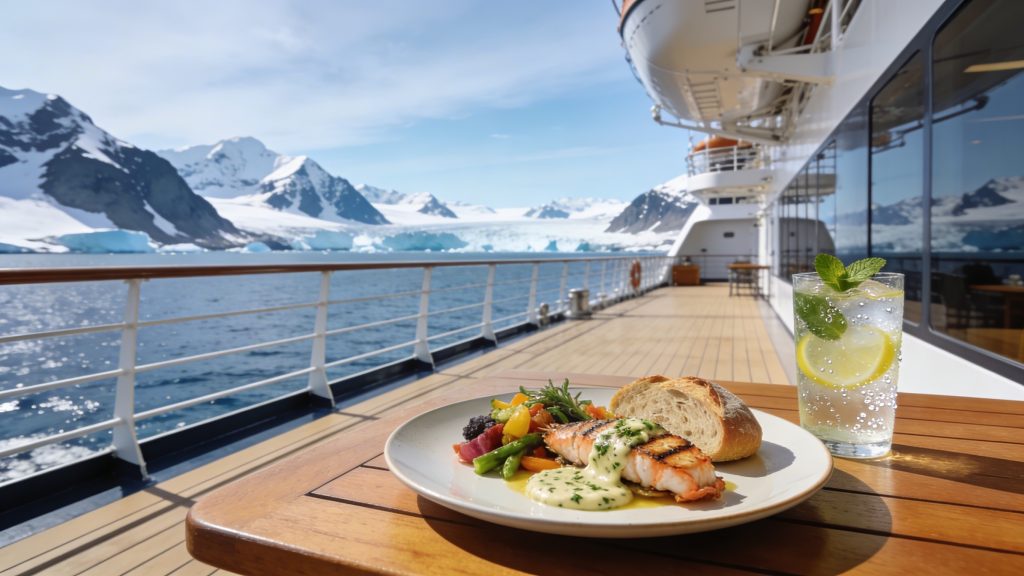
On an expedition cruise, food and drink are fully taken care of, with fresh meals, local inspiration and coffee and tea available throughout the day. You enjoy full board, with all main meals and snacks included, while you relax with a drink in cosy lounges with ocean views. For travellers who like to plan their expedition cruises thoroughly in advance, it is useful to know what to expect on board and which costs are extra.
What is included in the meal costs
Most expedition cruises offer full board. This means that breakfast, lunch and dinner are included in the cruise price. Snacks, soup, water, coffee and tea are also available all day at no extra cost. For many travellers, this is an advantage when budgeting for the trip.
Please note: alcoholic drinks and soft drinks are usually not included. You pay for these separately on board. Check with the cruise line in advance what exactly is covered by full board, as operators can differ in what they offer.
‘ You are not tied to just one dining formula. ’
What does the culinary offering look like
Even on smaller expedition cruise ships you will often find several dining venues. In addition to the main restaurant, there is sometimes a bistro or speciality restaurant. You have flexibility in where and when you eat. You are not tied to just one dining formula.
The galley prepares everything as freshly as possible. For each cruise, large stocks are taken on board and stored in provision rooms. Many products are transported frozen and only thawed when needed. Cold dishes, such as salads and sandwiches, are put together in the pantry. Hot dishes are prepared on large griddles and in huge pans.
The kitchen takes inspiration from local flavours. Where possible, fresh products are bought during stopovers. This provides variety and means that you also get to know the region through its cuisine during your journey.
Where can you eat and drink on board
In addition to the formal restaurants there are lounges and public areas you can use throughout the day. Observation lounges and central meeting areas are popular places to relax with coffee, tea or a drink. You will often find self-service coffee and tea here, so you can have something to drink at any time of day while looking out over the water.
The bar is available for cocktails, beer, wine and other drinks. You pay for these separately, usually via an onboard account that you settle at the end of the cruise. Some cruise lines offer drinks packages that you can book in advance.
Are drinks included on an Antarctica cruise
On most Antarctica cruises, non-alcoholic drinks such as water, coffee and tea are included. Alcoholic drinks and soft drinks usually are not. Each cruise line has its own rules, so it is worth checking this with the operator in advance.
Some more luxurious expedition cruises do include alcoholic drinks. However, this is not standard. If drinks are an important part of your budget, you can ask about a drinks package. With this you pay a fixed amount in advance for a selection of drinks during the trip.
‘ Because of the limited storage space and the remote destinations, it is more difficult to suddenly arrange different options during the trip. ’
What dietary options are available on board
Most cruise lines can take specific dietary requirements into account. This applies to vegetarian, vegan, gluten-free, lactose-free and other allergies or preferences. You do need to communicate this well in advance so that the kitchen can prepare.
When booking, indicate which dietary requirements you have. Repeat this again on arrival on board if needed, so that the galley staff are aware. Because of the limited storage space and the remote destinations, it is more difficult to suddenly arrange different options during the trip.
On most ships the galley staff are experienced in dealing with special requests. The service is known for its attention to detail, which contributes to a pleasant stay.
How is the food prepared and stored
Expedition cruise ships have limited space, but modern cooling and freezing facilities. Large quantities of food are loaded before departure. Fresh produce is topped up where possible during stopovers, but this depends on the route and availability.
Preparing food at sea requires good planning. The galley compiles menus in advance. In doing so, the chef takes the length of the cruise and the storage options on board into account. The meals are varied throughout the trip.
During expeditions to remote areas such as Antarctica or the Arctic regions, it is often not possible to replenish fresh supplies. The kitchen then works with high-quality frozen products, supplemented with fresh herbs and vegetables that keep for longer.
What is the atmosphere like during meals
Meals on expedition cruises are often informal and convivial. Most ships have open seating. You choose where you sit and with whom. This makes it easy to meet other travellers and share experiences.
Some cruises organise special dinners, for example with a theme related to the destination. This might be an introduction to local dishes or a festive evening at the end of the trip. The atmosphere is usually relaxed, without dress code or strict meal times.
After dinner, travellers often gather in the lounges. Here you can continue chatting, have a drink or enjoy the view. The lounges are accessible throughout the day and evening. Coffee and tea are usually available free of charge.
Practical tips for eating and drinking on board
- Communicate any dietary requirements to the cruise line at least four weeks before departure
- Ask in advance what is included in the full board and what incurs additional costs
- Consider a drinks package if you plan to drink alcoholic beverages regularly
- Make use of the self-service coffee and tea in the lounges to save on costs
- Ask on arrival on board about the exact meal times and restaurant layout
What can you expect from the service
The crew on expedition cruises provide personal service and pay close attention to detail. The service is personal because the ships are smaller than large cruise liners. This means that the crew quickly get to know your preferences and can respond better to your wishes.
The galley team works under challenging conditions at sea, but generally serves meals of a high standard. Travellers appreciate the combination of craftsmanship and the informal atmosphere on board.
If you have questions or special requests, you can always mention them to the restaurant staff or reception. They will be happy to help make your stay as pleasant as possible.
How does the destination influence the menu
The destination plays a role in what ends up on your plate. On cruises to Antarctica you will sometimes see dishes featuring fish from the southern oceans. Trips to northern regions offer opportunities for Scandinavian or other northern influences in the cuisine.
During stopovers in ports, fresh local products can be brought on board. This creates authenticity and variety. Some cruise lines also organise visits to local communities, where traditional snacks are offered. This is a great addition to the culinary experience.
The focus on local flavours means that an expedition cruise is more than just a journey. It is also a chance to get to know the region you are exploring through its food.
On the Traveler Tips website you will find more information about planning your expedition cruise, from packing lists to destinations and practical preparation. Discover everything that is possible and how to prepare for your trip in the best possible way.
Frequently asked questions
On an expedition cruise, all main meals (breakfast, lunch, dinner) are usually included, as well as various snacks, coffee, tea, water and often soup. Alcoholic drinks and soft drinks are usually not included and must be paid for separately. Many cruise lines additionally offer individual drinks in bars and lounges, but specific “drinks packages” or à la carte arrangements differ per cruise line. Always check with the organiser in advance which drinks options are available exactly.
On expedition cruises, an extensive buffet and à la carte menu often play a central role, with many home-made dishes and lots of variety. What is unique is that during landings or special stops, local snacks or products are sometimes offered in cooperation with local communities. In this way, the culinary offering matches not only international tastes, but also the flavours and traditions of the regions visited. This means the travel experience is closely linked to the destination, both in terms of nature and in terms of food.
On expedition cruises it is often possible to take dietary requirements, allergies and specific food preferences into account, provided these are registered with the cruise line in advance. The galley prepares many dishes itself and can therefore often vary or adapt. It is important to communicate specific needs in good time, so that they can be taken into account when purchasing supplies and planning menus. On board you can usually explain your dietary requirements once again to the staff.
Make maximum use of what is already included (breakfast, lunch, dinner, snacks, coffee, tea and water) and buy as few extra drinks such as alcohol and soft drinks as possible. For shore excursions, take a reusable water bottle and, if allowed, some snacks from breakfast or lunch. Check your travel documents in advance to see which drinks and meals are not included, so you can plan your additional daily expenses. Avoid impulse purchases in bars and lounges and set yourself a clear daily budget for paid drinks and any snacks ashore.
There are generally several culinary options available on board, such as a main restaurant, a bistro and sometimes a speciality restaurant, with a varied selection of hot and cold dishes. The galley prepares as much as possible itself, using large stocks that are loaded in advance and stored chilled or frozen in special provision rooms. Products that need to keep for longer are transported deep-frozen and only thawed shortly before use to guarantee freshness, even in very remote areas.