
 NL
NL
Expedition cruises: a voyage of discovery to unspoilt natural areas
Expedition cruises take you to the most remote places on earth, where large cruise ships cannot reach. These are journeys where flexibility comes first: the route can change completely along the way, based on weather conditions, ice formation or special wildlife sightings. Instead of luxury and entertainment, the focus is on intense immersion in nature, education and active landings in regions such as Antarctica, Svalbard or Greenland, to name just a few. For travellers who consciously opt for an organised yet adventurous experience, expedition cruises offer a unique way to explore extreme environments.
How does an expedition cruise differ from a traditional cruise?
On a traditional cruise you know exactly which ports you will visit and when. The route is fixed. On an expedition cruise, only the departure and arrival time are set. The exact route is secondary to the conditions on site. If the expedition leader and captain spot a group of whales, they may decide to adjust the schedule. Dense pack ice can mean that a different bay is chosen for a landing.
This flexibility makes every expedition cruise unique. Two ships visiting the same destination in the same season often experience a completely different journey. The aim is not to follow a tight schedule, but to maximise immersion in nature and wildlife sightings.
The type of ship also differs fundamentally. Expedition cruises take place on small, manoeuvrable ships with usually between 100 and 300 passengers. These ships are ice-strengthened and specially designed for extreme regions. Large cruise ships with more than 500 passengers are not allowed to make landings in fragile natural areas, which makes expedition cruises more exclusive.
Small-scale ships with specialised equipment
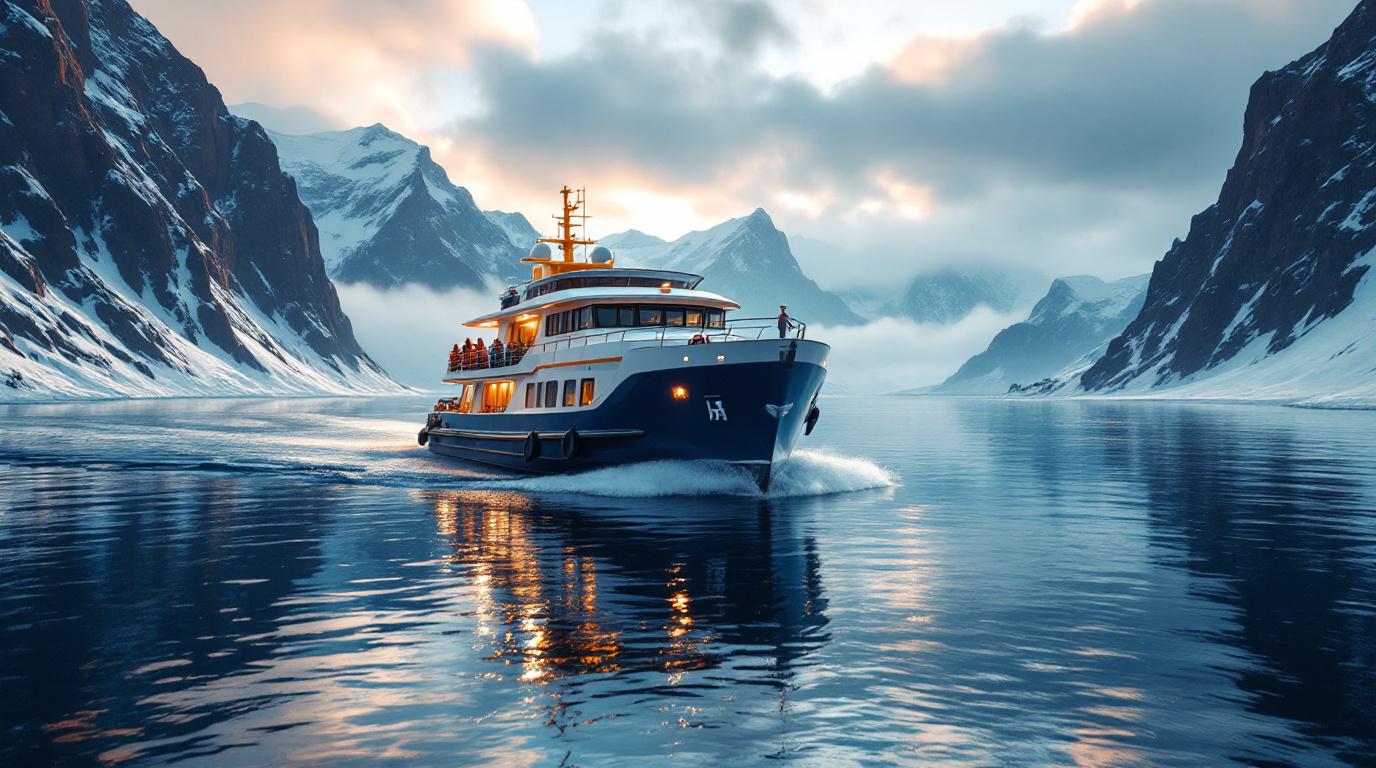
Expedition cruise ships are compact, robust vessels. They have access to narrow fjords, shallow bays and ice-bound coastlines. Their smaller size helps minimise impact on fragile ecosystems. The ship’s design focuses on functionality, not on entertainment or excess.
On board you will find specialised equipment for activities:
- Zodiacs: sturdy inflatable boats used to transfer you to the shore for landings
- Kayaks and SUP boards for quiet exploration
- Diving and snorkelling equipment for underwater exploration
- Sometimes helicopters or small submarines for special explorations
This equipment allows you to get close to nature. From the mother ship this would be impossible. You spend much of your time out on deck, at sea or ashore, rather than in lounges or restaurants.
Education is central during the journey
Every expedition ship has a team of specialists on board. This expedition team is made up of various experts. Think of marine biologists, ornithologists, glaciologists, historians and botanists with experience in polar regions. Some ships have teams of up to 26 people.
Lectures are held daily in Discovery Centres on board. These are meeting rooms with presentation facilities, specially designed for educational sessions. These presentations cover the local ecosystem, climate change, the history of polar expeditions or specific animal species you may encounter. Sometimes several topics are covered in a single session. The knowledge you gain enriches your experience during landings and excursions.
The educational aspect sets expedition cruises apart from purely recreational holidays. You learn to understand what you are seeing. When you observe a penguin colony, you know which species are present, how they survive in extreme cold and what threats they face.
Destinations that are hard to reach by other means
Expedition cruises focus on areas with little or no other tourist infrastructure. The most popular destinations are:
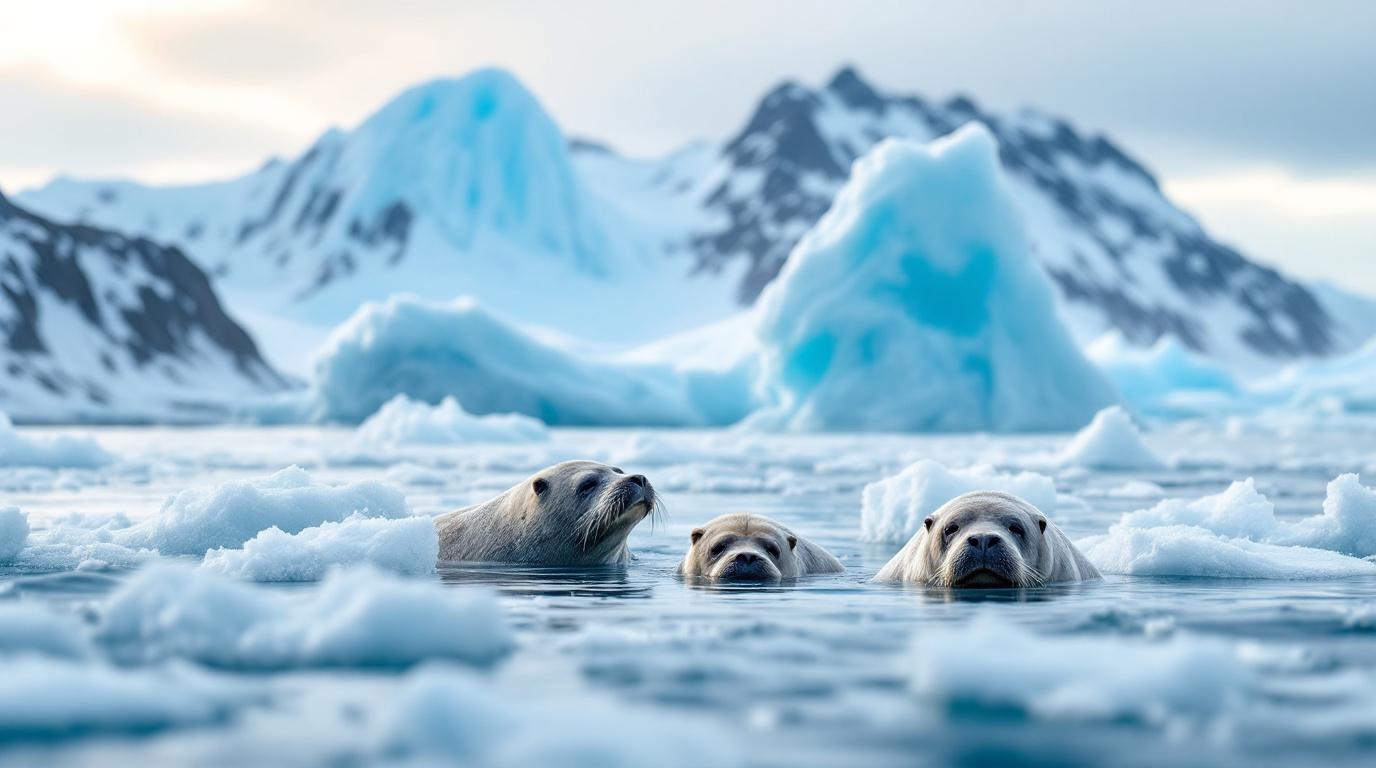
- Antarctica: the South Pole region with penguin colonies, icebergs and elephant seals
- Svalbard: the Norwegian archipelago with polar bears, Arctic foxes and walruses
- Greenland: gigantic glaciers, ice fjords and Inuit communities
- South Georgia: an island with the highest concentration of wildlife on earth
- Norwegian fjords: deep fjords, waterfalls and remote coastal villages
- Alaska: glaciers, bear watching and pristine wilderness
These destinations cannot be reached using regular means of transport. There are no roads, hotels or airports. An expedition ship acts as your floating base, means of transport and accommodation all in one.
‘ The season you choose has a direct impact on what you experience. ’
The season determines what you can see and do
Expedition cruises are seasonal. Polar regions are accessible only a few months a year. The season you choose has a direct impact on what you experience.
For Antarctica, the season runs from March to December. Early in the season you see more ice and fresh snow. Later in the season there is more wildlife activity, such as penguin chicks. Svalbard is accessible from June to September, when the polar ice has partially melted. Greenland is accessible from May to September.
When planning your trip, it is important to decide what your priorities are. Do you mainly want to photograph icy landscapes? Then choose the early season. Do you want to see as many animals in action as possible? Then the late season is more suitable.
Zodiac landings and active excursions
An expedition cruise is not a passive experience. Most days you make landings using Zodiacs. These inflatable boats take groups of 10 to 15 passengers to the shore. There you disembark for walks, wildlife watching or visits to research stations.
During these excursions, expedition leaders accompany the group. They draw your attention to important details. Think of tracks in the snow, nesting birds between rocks, or changes in the landscape that indicate glacier movement.
In addition to landings, there are opportunities for kayaking, paddling in small groups through calm bays and past ice floes. Some ships offer diving or snorkelling excursions in areas with rich underwater worlds. The level of physical effort varies by activity, but a reasonable level of fitness is required.
What you need to know before you book
Expedition cruises are often fully booked months in advance. The limited capacity of the ships and the popularity of certain destinations make early booking essential, especially if you have specific wishes regarding destination or season.
When choosing an expedition company, pay attention to several criteria. Look at the composition of the expedition team, group sizes during landings and the facilities offered. Some ships are basically equipped, others offer more comfort. However, the most important criterion is the expertise of the team and the quality of the excursions.
Also consider how much flexibility you can live with. Expedition cruises require a flexible attitude. If you struggle with spontaneous changes to the schedule, this can be frustrating. The strength of these journeys lies precisely in the ability to improvise.
‘ These decisions are not negotiable. ’
Safety and responsibility in fragile areas
Expedition cruises operate in areas where nature is fragile and conditions can be dangerous. Safety protocols are strict. Before every landing you receive instructions. These cover how you should behave, what distance to keep from animals and how to move safely on glaciers or rocks.
Responsible tourism is central. The small ships and limited numbers of passengers help minimise impact. Strict rules apply during landings. You may not eat, leave rubbish behind, or approach or disturb animals. In Antarctica, these rules are laid down in international treaties.
Expedition leaders constantly monitor the safety of the group. If weather conditions deteriorate or unexpected dangers arise, a landing is aborted. These decisions are not negotiable.
The right equipment makes all the difference
Conditions on an expedition cruise are often extreme. Temperatures can range from just above zero to well below freezing. Wind, precipitation and rapid weather changes are common.
A good packing list includes:
- Waterproof and windproof outer layer
- Multiple insulating layers, such as fleece or merino wool
- Waterproof gloves and a warm hat
- Sturdy, waterproof walking boots or wellingtons
- High SPF sunscreen and sunglasses
- Binoculars for wildlife watching
- Dry bags to protect cameras and electronics during Zodiac transfers
Many expedition companies provide detailed packing lists on their website. Some ships lend expedition jackets or rubber boots. Check in advance what is included and what you need to bring yourself.
Life on board between excursions
Although the focus is on excursions, you also spend time on board. Expedition cruise ships usually have a restaurant, a lounge and an outside deck. The atmosphere is informal and focused on sharing experiences.
Many passengers are like-minded travellers with an interest in nature, photography or science. Conversations often revolve around the sightings of that day or the lectures that have been attended. A sense of camaraderie develops that is typical of this type of journey.
The facilities are functional. Entertainment such as casinos or theatres is absent. Instead, there are libraries with books about the region, observation lounges with panoramic windows and sometimes mud rooms where you can dry and store your gear.
‘ Many of them are committed to sustainable tourism and support scientific research or nature conservation projects. ’
Sustainability as a core principle
Expedition cruise companies operate in some of the most unspoilt regions in the world. Many of them are committed to sustainable tourism and support scientific research or nature conservation projects.
The small scale of the ships helps keep impact low. In addition, many companies apply strict waste separation systems, use cleaner fuels and avoid disturbing wildlife through noise pollution.
Some expedition cruises work together with researchers, who take measurements or collect data during the journey. As a passenger, you can sometimes contribute to citizen science projects, where your observations help map animal populations or climate change.
Who is an expedition cruise suitable for?
Expedition cruises are not for everyone. They suit travellers who are willing to trade comfort for experience, who can cope with unpredictability and who are curious about extreme natural environments.
If you like planning your own trips but want to reach a destination that is logistically complex, an expedition cruise offers a practical solution. The ship and expedition team take the organisation off your hands, while you can focus on experiencing and learning.
A reasonable level of physical fitness is required, as landings involve effort and the terrain can be rough. You also need to be flexible: if the weather does not cooperate, a planned landing may be cancelled. That flexibility is also part of what makes expedition cruises special, because you are open to whatever nature offers at that moment.
Start by exploring routes and operators
Does an expedition cruise fit your travel preferences? Then the next step is to compare routes and operators. Read accounts from other travellers, study the make-up of expedition teams and check which activities are included as standard and which incur additional costs.
Choose a destination that matches the season in which you can travel. Decide whether your priority is wildlife, landscapes or a combination of both. Ask the operator about the balance between time on board and time on excursions, and whether the programme allows room for personal interests such as photography or kayaking.
An expedition cruise requires preparation, but in return offers a journey you cannot make in any other way. These are trips to places where you feel the power of nature, far from mass tourism and close to the essence of exploration.