NL
NL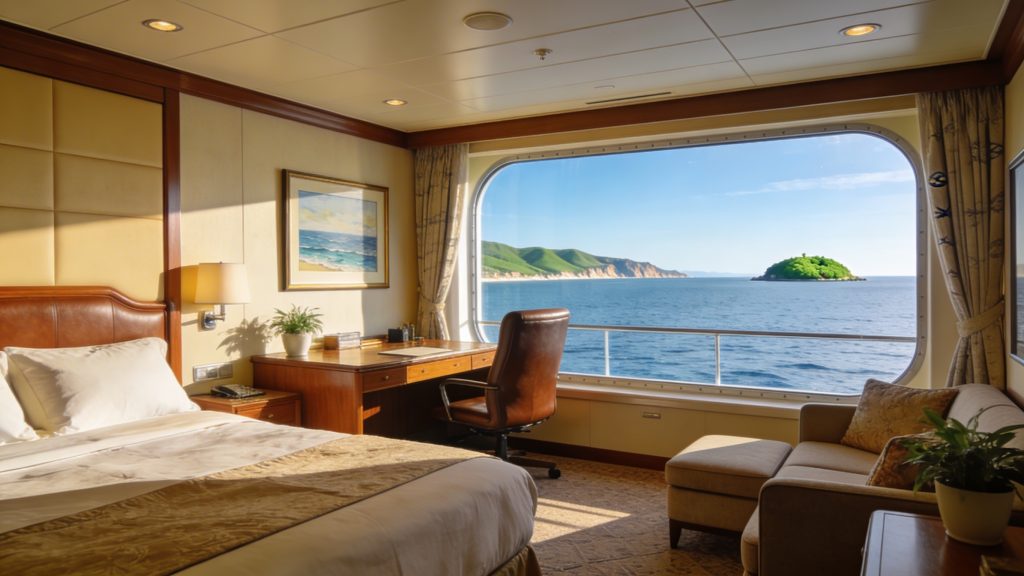
The location of your cabin largely determines how comfortable your cruise holiday will be. Midship you experience the least movement in waves. The front moves more. The view is better there though. The aft section often suffers from vibrations from the engines. Do you want to know which spot suits you best?
Why the cabin location matters for your sailing comfort
Not all places on a cruise ship are the same. The position of your cabin affects how much movement you feel and how much noise you hear. It also determines how quickly you can reach key amenities. Some people are prone to seasickness. Others are looking for peace and quiet. This choice then makes a big difference. You can read more about the different cabins and accommodation on board further down.
For cabin locations there are three important variables. These are stability, noise disturbance and practical location. Midship scores well on stability. The front of the ship offers spectacular views. The aft section is often more budget-friendly. Every ship has a unique layout. Always check the deck plan. Do this before you book.
‘ This part of the vessel makes the smallest movements in waves. ’
Advantages and disadvantages of midship
The midship area lies at the centre of gravity of the ship. This part of the vessel makes the smallest movements in waves. Do you suffer from nausea? This is often the best choice. Do you want a good night’s sleep? Then this is also the ideal place.
Why this spot offers stability
The middle moves the least in swell. The ship rolls and pitches more at the ends. This physical principle makes midship ideal for long ocean crossings or itineraries with rough weather. First-time cruisers also often choose this zone. The predictable comfort plays a role in that.
In addition, you are close to the central facilities here. Think of restaurants, lifts and staircases. This means less walking. It also saves time during your holiday. Families with young children like this. Travellers with reduced mobility also appreciate this proximity.
Points to note with midship cabins
The easy access also has a downside. Corridors can be busier because of passing foot traffic. Imagine: your cabin is right next to a lift. This can cause noise at night. There are also facilities such as kids’ clubs, theatres or pools. These sometimes generate noise. This can carry through to nearby cabins.
So preferably choose a cabin that is slightly away from busy spots. Make sure you are still central enough. That way you benefit from the stable location. Choose a deck above the waterline. This minimises engine noise.

Advantages and disadvantages of the front
The front of the ship offers a different type of experience. This is also called the bow or fore. By bow we mean the front side of the ship. The stem is the pointed front of the ship. Here you will often find cabins with panoramic windows. There are also spacious suites with views of the horizon. Do you find a sea view important? Then this is an attractive option.
View and peace at the front
Forward cabins have less foot traffic. The central zones are busier. This often makes forward cabins quieter in terms of ambient noise. You are further away from restaurants and entertainment. This brings peace and quiet. The feeling of exclusivity also plays a role here. The newer ships place luxury suites at the bow.
The view is unique. You look straight ahead over the ocean. You can be the first to spot dolphins. You are also the first to see an approaching port. For many cruisers this is a special experience. This experience justifies the additional price.
More movement in waves
The front feels the swell more strongly. The middle feels less swell. At high speed you notice more up-and-down movements. This is also the case in storms. First-time cruisers find this less suitable. People who are prone to seasickness also find this uncomfortable. Itineraries with a lot of wind can be uncomfortable here. Transatlantic voyages are an example.
There can also be more noise in certain weather conditions. Wind and breaking waves cause this. It differs per ship. The itinerary also plays a role. So take this factor into account in your decision.
What to know about the aft of the ship
The aft is a third option. This is also called the stern or aft section. The stern is the rear part of the ship. The aft section is the very end of the ship. This zone attracts less attention than the other locations, but also has pros and cons.
Vibrations and engine noise
Most cruise ships have their engines at the back. This causes vibrations. There is also mechanical noise. This applies mainly to the lower decks. Are you a light sleeper? Then this can be disturbing. Do you spend a lot of time in your cabin? Then this is also something to consider. More modern ships have better insulation. It still remains something to watch.
The propellers also turn at the back. At low speed this is sometimes audible. You can also hear this while manoeuvring in ports. Preferably choose a higher deck. This reduces the effect.
Access to outdoor areas
The aft often has balconies or open decks with views of the wake. The wake is the stream of water behind the ship. This gives a different perspective than the front. There are sometimes also restaurants or pools in this zone. For some travellers this is particularly practical.
Prices are often more favourable here. Midship is more expensive. The front is as well. If vibrations and noise are not a problem for you, this can be a budget-friendly choice. The comfort level is adequate.
‘ This provides stability. ’
Where on the cruise ship do you feel the least movement?
You feel the least movement midship. Do choose a mid-level deck. This is because of the central position at the centre of gravity. Lower decks usually feel slightly less movement than higher ones. Noise from facilities on other decks does, however, play a role there.
Preferably choose a cabin that is not too high up. Also do not choose too low down. Avoid the extremes at the very front or back. This provides stability. It also limits ambient noise.

Which cabin location is the least noisy?
The front generally has the least foot traffic. There is less noise from corridors. You do have to take wind noise into account in certain weather. Wave noise also plays a role then. Midship can be noisier because of nearby facilities. Modern ships have good soundproofing.
Avoid cabins directly above restaurants, nightclubs, theatres and swimming pools. Also avoid cabins directly below these facilities. These places are busy. They remain active until late in the evening. Sometimes until midnight or later. Check the deck plan. Find out where these facilities are located. Do this before you book.
Where should I avoid a cabin on a cruise ship?
Some places are less suitable for a comfortable stay. Cabins directly above the engine room suffer from vibrations. They also suffer from noise. The engine room is the space with the ship’s engines. Places directly under the pool deck can also be busy during the day. They can also be noisy.
Furthermore, cabins at the very front are more sensitive to movement. Cabins at the very back are also more sensitive to movement. If you are not used to sailing, these zones are best avoided. Cabins without windows can feel claustrophobic for some people. Cabins with limited views can have the same effect. Cabins on a promenade deck are an example. A promenade deck is a deck where people can walk and spend time.
Pay attention to nearby facilities
Always check where kids’ clubs and sports facilities are located. Also look where cafés and shows are held. A cabin that looks good on paper can in practice be quite restless. Noise from above then plays a role. Noise from below can also be disturbing. Noise next to you can likewise cause nuisance. If you are unsure, ask the cruise line for advice. Also consult the experiences of other cruisers.
‘ Every ship requires its own assessment. ’
Practical tips for booking your cabin
Book early. This gives you more choice of locations. Popular spots sell out quickly. Think of midship on a mid-level deck. Check the deck plan carefully. Find out which decks offer the best balance. Pay attention to peace and quiet, accessibility and stability.
For families with children, being close to children’s facilities is convenient. Do choose a cabin slightly away from the hustle and bustle. This gives you more sleep at night. Luxury suites at the front combine views with space. Suites at the back do as well. Do bear movement in mind. Engine noise can also play a part.
For your first cruise, try a midship cabin. That way you can see how you react to sailing. On later trips you can experiment with other locations. Your preferences determine this. Every ship requires its own assessment. Every itinerary does too.
Discover more about cruise travel
Choosing the right cabin location is one element of a well-planned cruise. On the Traveler Tips website you will find extensive information. You can read about itineraries and preparation. Regulations are also covered. There are practical tips for a comfortable trip. Discover more. Plan your next cruise with confidence.
Frequently asked questions
A cabin in the midship area is close to the ship’s centre of gravity and therefore moves the least, which increases stability and reduces the chance of seasickness. At the front of the ship, wave action and up-and-down movements are felt most strongly, which increases the chance of nausea. Travellers who are sensitive to seasickness are therefore better off choosing a midship cabin. Those who mainly want views and a sense of experience can book at the front, but must accept more motion.
The cabins at the front of the ship generally offer the best experience in terms of views and direct contact with the sea. You are, as it were, looking “over the bow”, seeing the sea and the upcoming horizon without many visual obstacles. This makes the view feel more impressive and adventurous than from more centrally located cabins.
Yes, there can be differences in noise disturbance: midship cabins are often closer to lifts and central amenities, which means you can experience more disturbance from passing people and activities. Front cabins are usually quieter in terms of foot traffic, but you may hear more structural noise there from the bow cutting through the waves, especially in rougher weather. As for privacy, the differences are usually small; they depend more on the deck, cabin type and proximity to public areas than on whether you are at the front or midship. At the front you will often have fewer people passing directly by your door, which can feel like slightly more privacy.
Yes, choosing a cabin midship or at the front can affect both price and availability. Midship cabins are popular because of their stability and central location, and can therefore sell out faster and sometimes be slightly more expensive. Front cabins often offer spectacular views and peace and quiet, which for certain ships and categories can also mean a higher price. Ultimately, price and availability vary by cruise line, ship and departure date.
The most practical cabin location in terms of walking distance to key facilities on board is generally midship. You are centrally located between lifts, staircases, restaurants and entertainment, so you can get everywhere relatively quickly.