 NL
NL
Cabin swapping on cruise ships is an informal way for passengers to exchange their bookings with each other via online platforms. This can lead to better deals, preferred locations or more suitable cabins, without the cruise line acting as an intermediary. It is less structured than official change programmes. Even so, more and more cruise passengers are making use of it. Here you can read how it works, what the advantages are and what you need to be aware of.
What is cabin swapping between passengers?
With cabin swapping, two parties exchange their booked cabins between themselves. This happens without involving the cruise line, often via forums, social media or specialised platforms. Each passenger remains listed under their own reservation. They agree to use each other’s cabin. On paper, the booking remains unchanged, but in practice each party stays in the other person’s cabin.
This is different from what some cruise lines officially offer. With those options you usually pay a fee and have to ask for permission. With cabin swapping you arrange everything directly with another passenger. It is important to know that not all cruise lines allow this. You often fall outside the standard terms and conditions, which brings risks.
Passengers swap for various reasons. Someone may want an upgrade. Another prefers a different location on the ship. Or someone has booked a cabin with a specific facility. Do you already know in advance what kind of cabin you are looking for? Then you will often be a good match with someone who finds your cabin valuable. You can read more about your options in this article on cabins and accommodation on board.
How does exchanging between cruise passengers work in practice?
The process usually starts with placing a request in online spaces such as cruise forums, Facebook groups or Reddit threads. You describe which cabin you have, for which cruise and what you are looking for. Conversely, you also browse other people’s offers. If there is a match, you get in touch and exchange details.
Once you have reached an agreement, you align details such as location, cabin type, deck and view. Check that both parties have the same travel dates. Also see whether you are both travelling under comparable booking conditions. Some passengers put their agreements in writing by e-mail. This prevents misunderstandings. It is not a legal document, but it does help with clarity.
On arrival at the ship, you usually use the official card for your own booking. Physically, you stay in the other cabin. Your luggage and key card belong to the original cabin. You sleep in your swap partner’s cabin. Some cruise passengers discuss the situation with reception on arrival. This is not always accepted.
Step-by-step plan for a successful cabin swap
- Find a suitable platform or forum where cruise passengers are active
- Post a clear description of your cabin and travel itinerary
- Check the other party’s booking and terms and conditions
- Put agreements in writing, including cabin number, name and cruise date
- Exchange contact details and booking confirmations
- On arrival on board, check whether the cabin matches the description

What benefits does cabin swapping offer cruise passengers?
The main benefit is that you get a better or more suitable cabin at no extra cost. If someone has a balcony cabin but would prefer an inside cabin, and you are the opposite, a swap works well for both parties. You do not pay change fees and do not need to rebook.
Cabin swapping can also give you a better position on the ship. Some passengers prefer a lower deck for less movement, while others want to be higher up for the view. A midship location is appreciated by people who suffer from seasickness, while others prefer to be at the front or the back.
Cabin swapping saves you money. You pay nothing extra. If you have booked a cheap inside cabin and someone else actually wants to downsize, you can upgrade without any additional charge. This works particularly well with last-minute deals, where someone has a more expensive cabin but would rather switch to a cheaper option to free up money for excursions.
What risks come with cabin exchanges on cruises?
The biggest risk is that the cruise line discovers the swap. Many cruise companies forbid guests in their general terms and conditions from sharing or swapping their cabin with others without permission. The cruise line does not accept this. If it is detected, they can ask you to return to your original cabin or, in the worst case, put you off the ship.
Another risk is that the other party does not stick to the agreement. You do not have an official contract and no legal protection. If the other person does not show up or decides at the last minute to stay in their own cabin after all, you have little recourse. This does not happen often, but it is a realistic scenario.
Practical problems can also arise with key cards, on-board accounts and services. If your name is not on the cabin, staff may ask questions. Some passengers explain the situation to reception in advance. This is not always accepted. It is better to act discreetly. The risk remains.
Important points to consider for safe exchanges
- Always check the cruise line’s general terms and conditions regarding cabin swaps
- Exchange as much information as possible in advance about the cabin’s condition and location
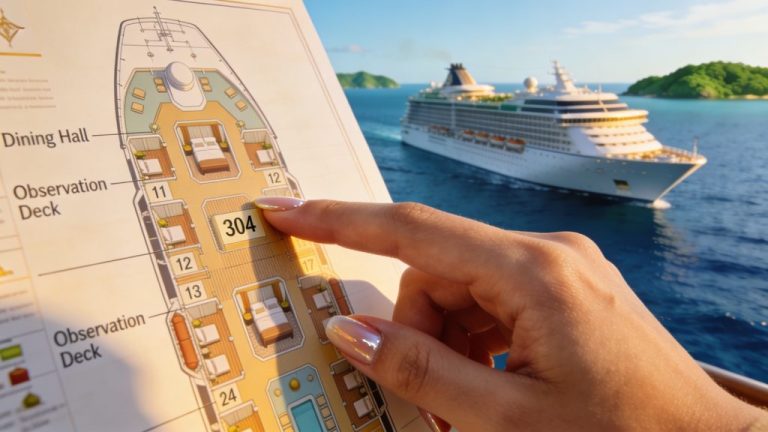
- Ask for photos and a recent deck plan of the ship
- Put what has been agreed in writing, including date and names
- Exchange phone numbers for contact during the trip
- Agree in advance how you will deal with any costs or damage
‘ The advantage is that you do not pay anything, but the drawback is that you have no official protection. ’
How does informal cabin swapping differ from official cruise line programmes?
With official change programmes offered by cruise lines, you adjust your cabin in return for a fee. This is done via customer service and is fully recorded. The cruise line changes your booking and you receive a new confirmation. This is safer than an informal swap, but it usually costs money and is not always possible.
Informal cabin swapping, on the other hand, takes place entirely without the cruise line’s involvement. You remain officially registered for your own cabin, even though you are not using it. This means that all communication, invoices and key cards are still registered to your original cabin. The advantage is that you do not pay anything, but the drawback is that you have no official protection.
Some cruise lines do offer cabin upgrades during the cruise at reduced rates, but that is not a swap. It is a paid change that you can request on board if there is availability. This is a safe alternative for anyone who does not want to take risks with informal arrangements.
Where can you find platforms for cruise exchanges?
The most commonly used channels are Facebook groups focused on specific cruise lines or cruise itineraries. That is where passengers post their swap requests and others respond. Many of these groups are private and require approval before you can join. Well-known examples include groups for Carnival, Royal Caribbean and MSC Cruises.
There are also specialised forums, such as Cruise Critic, and Reddit threads under subreddits like r/Cruise. In these places you search by specific travel dates and ships. The community is generally helpful. People share their experiences of successful and failed swap attempts.
Some websites offer automated matching services. These are less common. They often require a small fee. The advantage is that there is more structure and verification. Even so, most passengers opt for free platforms with direct communication.
When is cabin swapping a smart choice?
Cabin swapping is particularly useful if you booked early and a better or more suitable cabin later became available. It is also handy if you have a cabin with facilities you do not use, such as a balcony that you do not need because you prefer to use the ship’s facilities.
Cabin swapping is helpful for families or groups who originally booked separately. They would prefer to be next to each other. By swapping with others, you can arrange for your cabins to be on the same deck or corridor. This does require coordination between several parties.
If you value certainty and official support, informal cabin swapping is less suitable. In that case choose the official change options offered by the cruise line or select the right cabin straight away when booking. This is more expensive, but you avoid surprises and conflicts during the trip.
‘ If someone stays vague or puts you under pressure, that is a warning sign. ’
Tips for a smooth and safe cabin swap
Always start by thoroughly checking the other party. Ask for a copy of the booking confirmation. Check whether the details match what was promised. Pay attention to details such as cabin number, cabin type, deck and view. Compare this with deck plans of the ship that are available online.
Make clear agreements in advance on what happens if either party is not satisfied. Some passengers agree that they will assess the situation on the first day and, if necessary, return to their own cabin. This prevents you from being stuck in an unwanted situation for the whole trip.
Be mindful of privacy-sensitive information. Do not share more personal data than necessary and be alert to attempts at fraud. Genuine passengers can usually provide sufficient details about their booking and travel plans. If someone stays vague or puts you under pressure, that is a warning sign.
On the Traveler Tips website you will find much more information about cruise holidays, from costs and routes to tips for on board and popular destinations. Explore more articles and plan your next trip with reliable and practical information.
Frequently asked questions
Cabin swapping is budget-friendly because you usually do not pay rent or accommodation costs: you stay in someone’s cabin while they use yours. That means mainly travel, food and daily living costs remain. Also budget for any insurance, local taxes or tourist taxes and the cost of transport to and from the cabin. In addition, you may have extra expenses for visas, equipment (for example mountain or hiking gear) and activities on site.
Ideally, start planning 9–12 months in advance so you can find suitable swap partners, align preferences and dates, and arrange travel and insurance matters. First define your swap conditions clearly (period, type of cabin, number of people, house rules) and create a detailed profile with photos and a description of your cabin. Use reliable platforms or existing networks, check references and reviews, and plan at least one (video) call to go through the arrangements and verify mutual expectations. Put all agreements in writing (dates, key handover, cleaning, handling of damage) and make sure both parties have each other’s contact and emergency details.
With a cabin swap you stay in someone’s personal cabin with a unique, often secluded location, which gives you a much more authentic and local experience than standard hotels or holiday parks. The interior is usually homely and characterful, with personal touches and practical facilities that the owner uses themselves. You often experience more peace, nature and privacy, because cabins tend to be smaller and less crowded than traditional accommodation. In addition, you regularly have personal contact with your swap partner, which provides extra tips, trust and a feeling of “being at home in someone else’s place”.
In home exchange programmes, participants are usually expected to arrange their own (travel and contents) insurance properly; sometimes organisations do provide guidelines or require a minimum level of cover. Liability in the event of damage or accidents is generally laid down in the exchange or use agreement, for example via provisions about excess, intent/gross negligence and who bears which costs. House rules are usually shared in writing in advance by the owner/resident (for example about pets, smoking, use of appliances and receiving guests) and form an integral part of the arrangements. Often there is a standard contract or platform terms and conditions in which all these aspects – insurance, liability and house rules – are combined and which both parties must explicitly accept.
Homes on cabin swap platforms are often in very different surroundings: from easily accessible urban or village locations to more remote areas, which means accessibility by car or public transport can vary greatly. In towns and villages, public transport links are generally good, while remote cabins are mainly accessible by car or on foot. Parking options also vary: at many rural or out-of-the-way properties you can park on site or nearby, but in urban areas parking may be limited or paid. It is therefore important to check the specific information about accessibility and parking for each listing.