 NL
NL
Choosing a cabin for families with children comes down to three key factors: bed configurations that match your family set-up, proximity to children’s facilities and having enough space to be together without living on top of each other. Interconnecting cabins or twin cabins with pull-out sofas offer the flexibility families need. A strategic location close to kids’ clubs and family activities instantly makes your holiday more pleasant. Read on and discover which choices will make your cruise with children a success.
Which cabin type suits your family best?
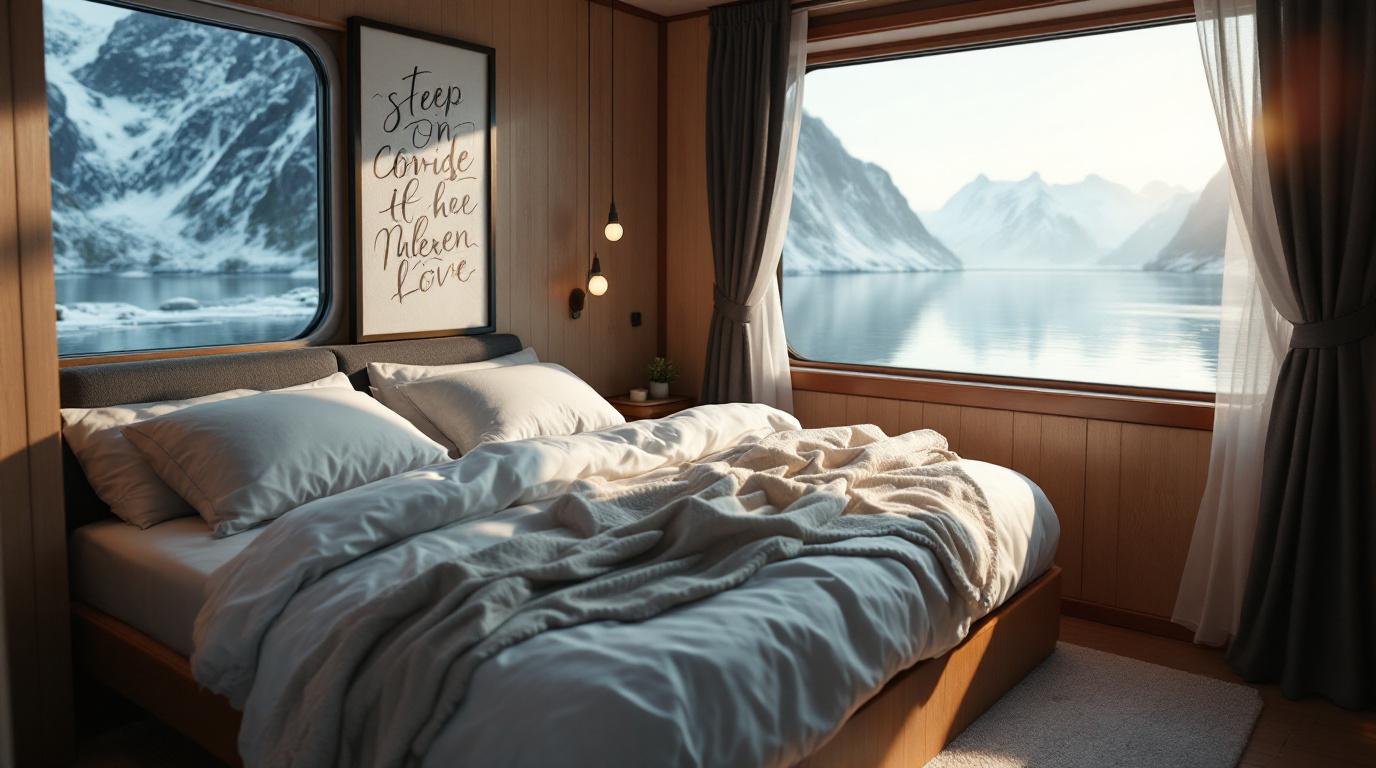
The choice of cabin type is directly linked to the age and number of children travelling with you. For families with young children, a family room with a double bed and two extra sleeping places often works best. These cabins offer enough privacy for parents and a separate sleeping area for children, usually in the form of pull-out sofas or upper berths.
For larger families or those with teenagers, interconnecting cabins are a practical solution. Two adjacent cabins with a connecting door give both parents and children their own space, while still keeping you close to one another. This type of accommodation prevents you from constantly living on top of each other, which is especially valuable on longer cruises.
Some cruise lines also offer specific family cabins with a separate children’s room or extra bunk beds. These cabins are usually more spacious than standard cabins. They come with practical features such as more storage space and a larger bathroom. When choosing a cabin, it’s wise to look at cabins and accommodation on board that fit in with your family’s daily routine.
‘ When booking interconnecting cabins, it is important to request this explicitly with the cruise line or travel company. ’
Can you book interconnecting cabins on a cruise ship?
Yes, most cruise lines offer the option to book interconnecting cabins. These cabins are located directly next to each other and have a door that connects the two spaces. This creates a flexible living area where parents and children have their own place, but can easily come together.
When booking interconnecting cabins, it is important to request this explicitly with the cruise line or travel company. Not all cabins on a ship can be connected. Booking early increases the chance of getting this configuration. Also note that some cruise lines only offer interconnecting cabins in certain categories, such as balcony cabins or outside cabins.
Another point to consider is pricing. Interconnecting cabins are usually priced separately, which means you pay for two full cabins. For families with several children, this can work out cheaper than booking a large suite, but always compare the total price before you book.
Where are the children’s activities located on the ship?
The location of children’s activities and facilities varies per ship, but you will usually find kids’ clubs, play areas and teen hangouts on higher decks or towards the aft. When choosing a cabin, it’s useful to look at how it is positioned in relation to these activities. A cabin near the kids’ club means children can walk to activities independently. It also keeps walking distances short when you need to drop them off or pick them up.
At the same time, there is a downside. Cabins directly above or next to play areas can be noisy, especially on busy days. It can therefore be wise to choose a cabin on the same deck as the kids’ club, but just a little further away from the centre of the activity.
When looking at the deck plan, you can usually see where pools, restaurants and children’s facilities are located. Take the time to study this layout, and only then reserve your cabin. This way you avoid constantly having to walk back and forth between the cabin and the places where your children are during the cruise.
Practical considerations for the bed configuration
The bed configuration is one of the most important choices when booking a cabin for families. Many cruise lines offer twin cabins with pull-out sofas or upper berths. The latter are similar to bunk beds and fold up during the day, giving you more space in the cabin.
For families with very young children, it is important to check whether a cot or travel cot can be placed in the cabin. Not all cabin categories offer enough space for this. Ask the cruise line in advance and indicate that you need a cot. Some companies provide this free of charge, others charge a small supplement.
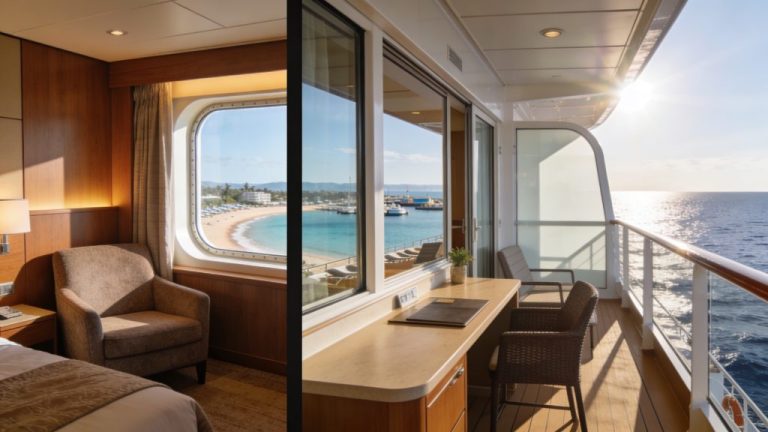
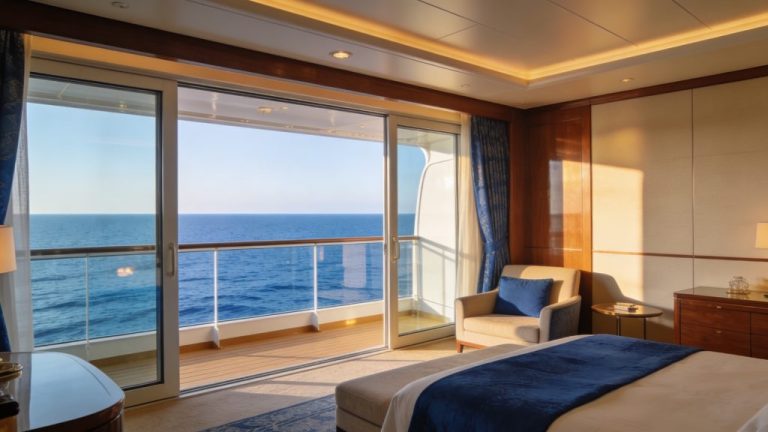
The layout of the cabin also plays a role. Cabins with a separate seating area or balcony offer more options for letting children play or sleep quietly. Parents can then stay up without disturbing the children. This can make a big difference to comfort and relaxation, especially in the evenings.
Important points to consider for the bed layout
- Check whether pull-out sofas are suitable for your children’s age
- Ask whether upper berths have safety rails for young children
- Check if there is enough space to move around when all beds are folded out
- Ask about the possibility of a cot or travel cot for babies
‘ Young children must always be supervised on the balcony. ’
Balcony or inside cabin with young children?
This question occupies many parents when booking a cruise. A balcony offers extra space and fresh air, which is especially pleasant if children nap during the day or go to bed earlier in the evening. You can then sit outside without leaving the cabin.
At the same time, a balcony also raises safety considerations. Young children must always be supervised on the balcony. Check whether the railing is high enough and whether there are any objects nearby that can be climbed on. Some parents deliberately choose an inside cabin or outside cabin without a balcony to avoid this risk.
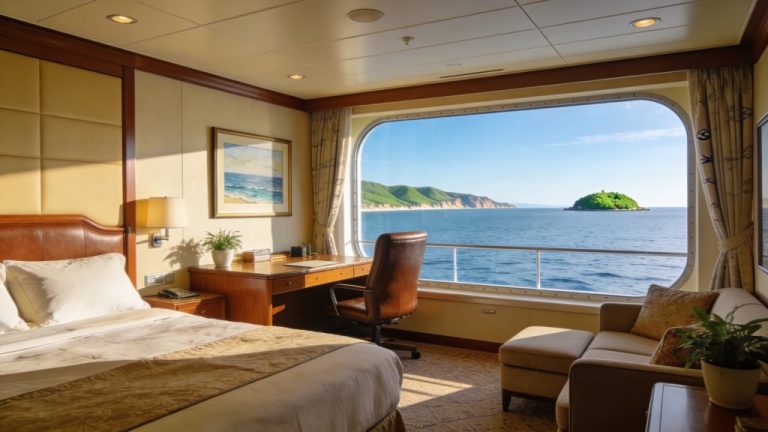
An inside cabin has the advantage of often being cheaper and completely dark, which can support children’s sleep patterns. Some families are mainly active around the ship during the day and use the cabin mostly for sleeping. For them, this can be a sensible choice.
Proximity to lifts and facilities
The position of the cabin in relation to lifts, stairs and public facilities affects day-to-day comfort during your cruise. Cabins near lifts are convenient if you are frequently moving between decks, especially with a buggy or pushchair. This saves walking time and energy when travelling with children.
On the other hand, cabins directly next to lifts or stairs can be noisy due to the constant coming and going of passengers. This can be disturbing, especially for young children. A cabin one or two doors away from a lift often offers the best balance between convenience and peace and quiet.
Also pay attention to the proximity of restaurants, theatres and bars. Cabins near busy entertainment areas can be affected by noise, sometimes until late in the evening. Check the deck plan and choose a cabin in a quieter area if your children are sensitive to noise.
Midship or aft on the ship?
The position of the cabin on the ship affects how much movement you feel while sailing. Cabins located midship generally experience less motion. Cabins at the front or aft feel more movement. This can be a decisive factor with children prone to seasickness.
Aft cabins often offer a wider view and more privacy, but they can feel more vibration from the engines and more movement in rough weather. Cabins at the front of the ship are often cheaper, but they can move up and down more in heavy seas. If seasensitivity plays a role in your family, choose a cabin on a lower deck and as close to midship as possible.
Which facilities are useful in the cabin itself?
Besides the bed configuration, there are practical facilities that make staying with children more pleasant. A small fridge in the cabin is useful for storing drinks, snacks and any medication. Many cruise lines offer this as standard; with some it is an option you pay extra for.
Adequate storage space is also important. Families often bring more luggage than individual travellers. Wardrobe space and drawers make the difference between a cluttered and a tidy cabin. When booking, check how many wardrobes and storage options the cabin has.
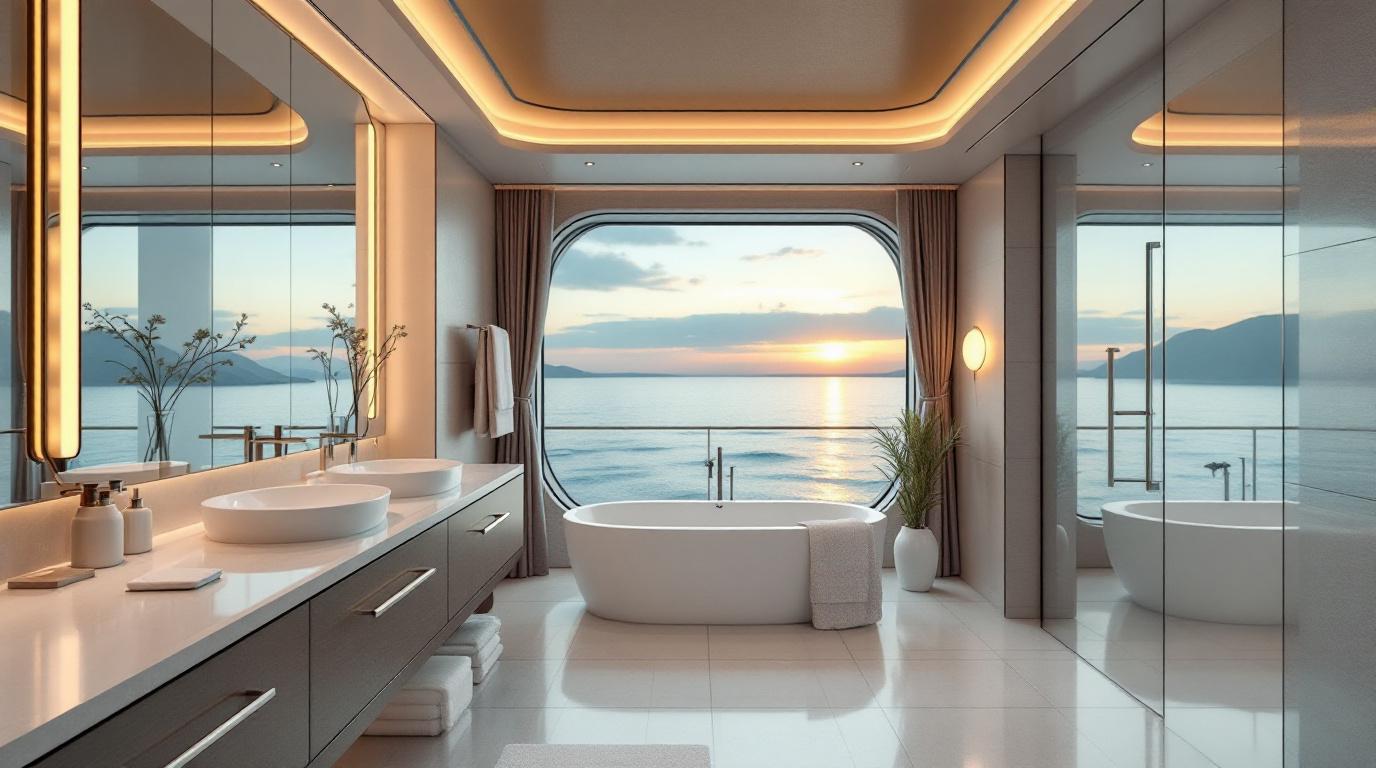
A bathroom with a shower is standard, but the size and layout can vary greatly. For families with young children, it is helpful if the bathroom is spacious enough for you to help together with washing and getting dressed. Some larger family cabins even have a second bathroom, which makes the morning and evening routine much quicker.
Useful facilities to ask for
- Small fridge or minibar for snacks and drinks
- Extra storage such as drawers or luggage racks
- Kettle for baby bottles or hot drinks
- Sockets within easy reach for chargers and devices
- Blackout curtains for better sleep
What you need to know before you book
When booking a cabin for your family, it is important to ask clear questions in advance. Not all cruise lines apply the same rules for children, bed configurations and facilities. Explicitly ask about the options for your specific family set-up and state what you need.
Also pay attention to the maximum occupancy of a cabin. Some cabins are officially suitable for four people, but can feel cramped when all the beds are folded out. Look at photos and floor plans to get a realistic idea of the available space.
Finally, booking early is an advantage. Popular cabin categories and interconnecting cabins are often fully booked quickly, especially during school holidays and popular sailing periods. By reserving early, you increase the chance of getting the cabin that best suits your family.
On the Traveler Tips website you will find much more information about cruises with children, choosing the right itinerary and preparing for your trip in the best possible way. Discover which destinations are most suitable for families and read how to plan your cruise properly from start to finish.
Frequently asked questions
Essential facilities are sufficient and safe sleeping places for each child, preferably family rooms or a separate children’s sleeping area. Good sanitary facilities are also important, such as clean toilets and washing facilities, possibly with child-friendly sinks or a place to change babies. A basic kitchen or kitchenette to prepare simple food hygienically increases comfort. Finally, storage space for luggage and a well-ventilated, dry cabin are important for a pleasant and healthy stay.
Use filters for child-friendly accommodation and pay attention to the distance to playgrounds, petting zoos, easy walking paths (T1–T2) and any nearby attractions or swimming spots. Check in the description whether there are family rooms, an indoor play area, an outdoor playground or a private woodland/garden where children can play safely. Also see whether there are animals on or near the site (petting zoo, farm animals) and whether child-friendly walking routes or short hut-to-hut walks start directly from the cabin. Read reviews from other families to see how they experienced the location and children’s facilities.
Book early and filter for family-friendly cabins with family rooms, safe play areas and walking options that match your children’s age and fitness. Pay attention to the level of difficulty of the routes (e.g. T1–T3), maximum walking time per day and the distance from the cabin to your planned road trip route, so you do not have to make long detours. Compare prices of staffed and unstaffed cabins (self-catering is often cheaper) and look for discount cards or packages for families. Read recent reviews specifically from families to avoid unexpected costs, noise or unsafe situations for children.
The cabins and their immediate surroundings in the described examples are generally safe and child-friendly, with family rooms, play areas and often an enclosed or clearly demarcated site. There are regularly extra child-friendly facilities such as playgrounds, farm animals and secret children’s bedrooms. However, it is recommended to remain alert around open water (such as swimming ponds) and to match the difficulty level of walking paths (T1–T3) to the children’s age.