 NL
NL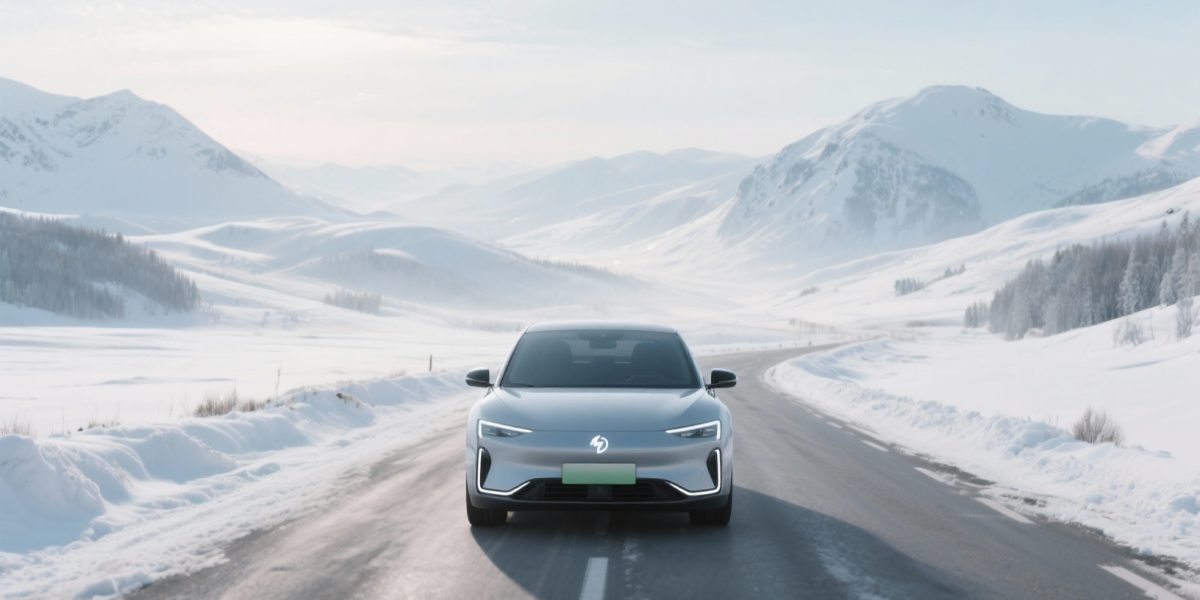
Car winter check: snow chains and antifreeze
A good preparation of your car is the basis for a successful and safe winter sports holiday. A thorough winter check of the car, with special attention to snow chains and antifreeze, ensures that you won’t encounter any surprises on snowy mountain roads. Read on and discover how to prepare your car for winter for a comfortable and carefree trip to the snow.
What does a car winter check involve?
A winter check is a comprehensive inspection of your car, specifically aimed at the challenges of cold weather, ice, and snow. From October, when temperatures start to drop, it is advisable to have this check carried out. In winter, road salt, low temperatures, and slippery conditions put more strain on your car. A garage will check all vital parts of the car to ensure safety and reliability.
During a winter check, the garage inspects the following points:
- Tyres: The garage checks the tread depth and tyre pressure. Winter tyres offer significantly more grip and a shorter braking distance at temperatures below 7°C.
- Battery: Cold significantly reduces a battery’s capacity. A check of the battery and alternator prevents starting problems on a freezing morning.
- Fluids: The garage checks the level and composition of the oil, coolant, and windscreen washer fluid. The antifreeze properties are particularly important here.
- Brakes and shock absorbers: Properly functioning brakes and shock absorbers are crucial for vehicle control on slippery roads.
- Lighting and windscreen wipers: Good visibility is extra important during the dark winter months. The garage therefore accurately inspects the operation of all lights and the condition of the windscreen wiper blades.
‘ Good preparation prevents fines and dangerous situations. ’
Snow chains: obligation and use
When travelling to winter sports regions in the Alps, snow chains are often indispensable. In many countries, they are even mandatory on certain roads. A round, blue traffic sign with a white band and a snow chain indicates this obligation. Even if you are driving on winter tyres, the use of snow chains is sometimes mandatory.
Regulations in popular winter sports countries
The rules for using winter tyres and snow chains vary by country. Good preparation prevents fines and dangerous situations.
- Austria: Between 1 November and 15 April, you are obliged to drive with winter tyres in wintry conditions. Alternatively, on roads completely covered with snow or ice, you may fit snow chains to the driven wheels. On some mountain passes, snow chains are mandatory, even with winter tyres. So make sure you always have a suitable set of chains with you.
- France: In the French mountainous regions (Alps, Pyrenees, Vosges, Jura, Massif Central, and Corsica), there is an obligation from 1 November to 31 March inclusive. You must either drive on four winter tyres or have snow chains in the car for fitting to the driven wheels. The French authorities actively enforce this.
It is wise to practise fitting snow chains at home beforehand. On a cold, snowy car park alongside a mountain road, it’s not a pleasant task to figure out for the first time how to attach the chains to the tyres. Choose a flat and safe place to fit the chains and follow the instructions carefully.
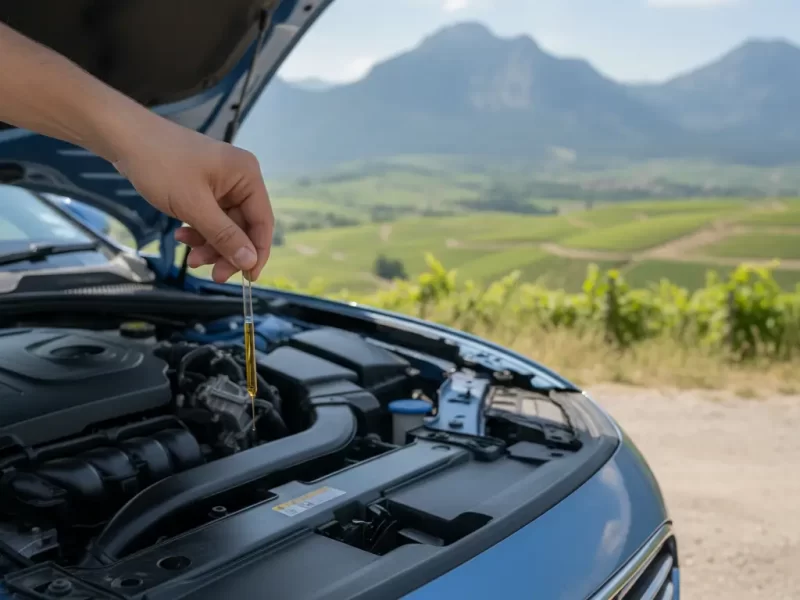
Antifreeze: protection for engine and windscreen washers
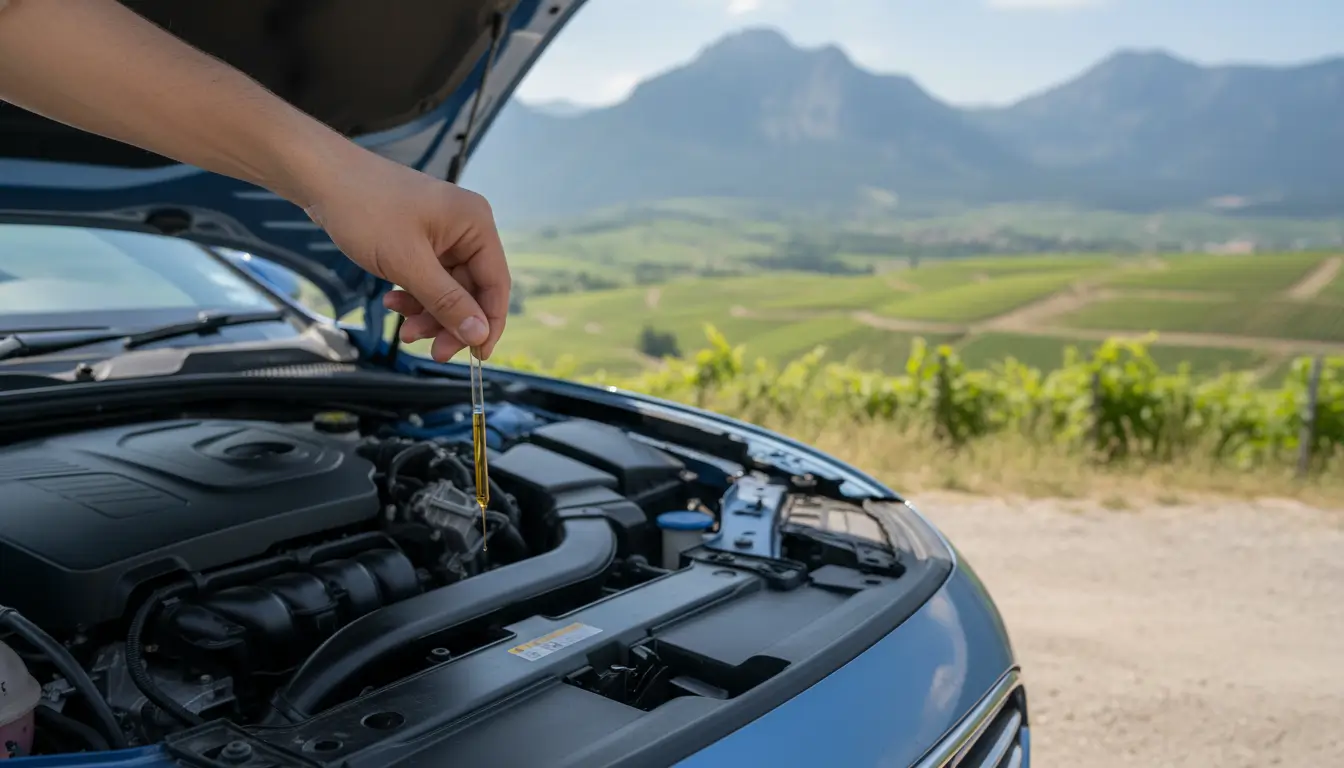
One of the most important parts of the winter check is the inspection of fluids with antifreeze. This protects your car against the effects of frost and ensures you can drive safely even in low temperatures.
Coolant with antifreeze
The coolant in your car prevents the engine from overheating. In winter, the addition of antifreeze (glycol) to this fluid is necessary to prevent the cooling system from freezing. Frozen coolant expands and causes serious damage to the engine and radiator. During a winter check, the garage measures the frost resistance of the coolant. For a trip to the Alps, the fluid must offer protection down to at least -25°C. Have the fluid topped up or replaced in time if the protection is insufficient.
Windscreen washer fluid for clear visibility
A clear windscreen is essential for your safety. In winter, splashing dirt and road salt quickly make the screen dirty. A good windscreen washer fluid with antifreeze is therefore not an unnecessary luxury. Make sure you use a variant suitable for low temperatures, so that the reservoir and nozzles do not freeze. A frozen spray system means you cannot clean the screen, which seriously obstructs your visibility while driving.
A well-prepared car is the first step towards a relaxed and enjoyable winter holiday. In addition to the technical aspects of the car, it is also wise to plan your route well and be aware of local traffic rules. On the Traveler Tips website, you will find more articles and in-depth guides on planning your road trip, the most beautiful routes through Europe, and other practical travel tips. Discover more and set off well-prepared.
Frequently asked questions
Snow chains are essential in mountainous areas and during snowfall, especially where winter tyres are mandatory. In Austria, they are compulsory from 1 November to 15 April in wintry conditions, while France actively enforces this in mountainous regions. The Netherlands does not require them, but signs indicate when they are needed as an alternative to winter tyres. Bring chains for Alpine routes and practise fitting them beforehand.
You can check the frost resistance of the antifreeze in your car during a winter check, where protection down to at least -25°C is recommended for colder areas. If the antifreeze is not sufficiently frost-resistant, it should be topped up with a 50/50 mixture of water and antifreeze, or completely replaced if it is older than 2-5 years. Forgetting antifreeze can lead to serious engine damage, such as a burst radiator.
Choose snow chains that match your car’s tyre size; metal chains are suitable for intensive use, while textile chains offer more convenience. Practise fitting them beforehand and always attach the chains securely on a flat surface, especially for Alpine routes. This increases safety and prevents unnecessary fines in areas where they are mandatory.
Antifreeze is crucial for a winter road trip to prevent freezing of the cooling system and engine damage at low temperatures. There are different types of antifreeze, mainly based on glycol, which offer protection down to temperatures below -20°C. It is important to check the frost resistance and ensure a 50/50 mixture of water and antifreeze, especially for trips to mountainous areas. Regular replacement (every 2-5 years) is essential, as old antifreeze loses its effectiveness.