 NL
NL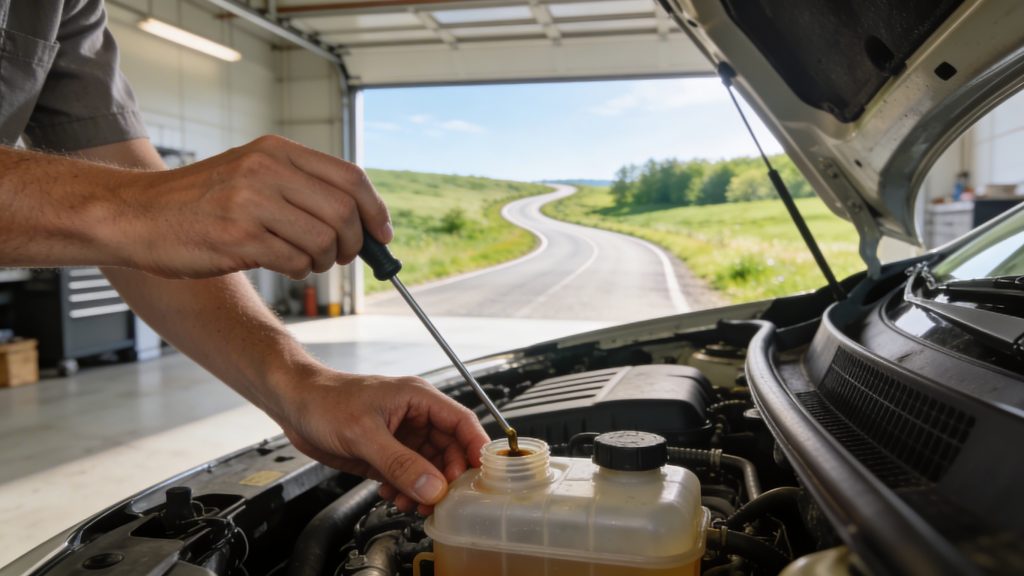
A leaking coolant hose, too little engine oil or an empty windscreen washer reservoir can ruin your holiday straight away. That’s why checking and topping up all the fluids in your motorhome in good time is essential rather than a luxury. It’s a simple task that can save you a lot of trouble and helps ensure you travel safely. Want to set off well prepared? Then it all starts with the basics.
Before you leave on your motorhome holiday, it’s sensible to carry out a thorough check. Besides tyres, lights and battery, it’s especially the fluids that are often overlooked. Yet engine oil, coolant, brake fluid and power steering fluid play an important role in the functioning of your vehicle. A level that’s too low can lead to engine damage, overheating or reduced braking performance.
In this article you’ll read which fluids you need to check, how to do that safely and what to look out for to avoid problems on the road.
Which fluids should you check?
A motorhome needs various fluids to function properly. You can easily check and top up most of them yourself. It’s important to let the engine cool down, park on a level surface and work with the manual to hand. That way you know exactly where the reservoirs are located. You’ll also know which type of fluid you need to use.
These fluids need regular checking:
- Engine oil
- Coolant
- Brake fluid
- Power steering fluid
- Windscreen washer fluid
Check the level before every long journey or after every 1,000 kilometres, especially with older motorhomes or intensive use.
‘ Too little oil leads to wear, overheating and, in the worst case, engine damage. ’
Engine oil: your most important lubricant
Engine oil ensures that all moving parts in the engine continue to run smoothly. Too little oil leads to wear, overheating and, in the worst case, engine damage. Check the level at least every 3,000 kilometres or before you go on a trip.
This is how to check the engine oil:
- Let the engine cool down for at least 10 minutes so the oil can flow back into the sump
- Pull out the dipstick and wipe it clean with a cloth
- Insert the dipstick fully and pull it out again
- Read the level: the oil should be between the minimum and maximum marks
Top up via the oil filler cap using the type of oil specified in the manual. This type is listed in the manual. Ideally you keep the level halfway between minimum and maximum. That way the engine has enough reserve. Lubrication then remains optimal. Note: having to top up regularly can indicate a leak or wear. Have this checked by a mechanic.


Coolant prevents overheating
Coolant ensures that the engine stays at the right temperature, even in hot weather or under heavy load. You’ll usually find the expansion tank or coolant reservoir under the bonnet. Always check with a cold engine and unscrew the cap carefully with a cloth so any pressure can escape.
The level should be between the minimum and maximum markings. Do not fill up to the maximum, as coolant expands when it heats up. Use the type of coolant specified in the manual. This type is stated in the manual. In emergencies you may use water. Don’t do this too often. Water reduces the effectiveness of the cooling system.
Safety is important when dealing with coolant:
- Wear gloves to avoid skin contact
- Never fill the windscreen washer reservoir with coolant, these fluids must not be mixed
- Tighten the cap firmly until you hear a click
Is the level dropping quickly? Then there’s a leak. Check whether there is any fluid under the motorhome and have the system inspected.
Brake fluid: directly linked to your safety
Brake fluid transfers the pressure from the brake pedal to the brakes. The reservoir is usually located roughly above the brake pedal, on the inside of the engine bay. The level should be fully filled up to the maximum mark.
A level that’s too low indicates worn brake pads or a leak in the braking system. Only top up with the type of brake fluid specified in the manual. Never use the wrong type, as this can damage the braking system. Not sure? Have a garage carry out the checks.
‘ Motorhomes need this more often. ’
Power steering fluid and windscreen washer
Power steering fluid makes sure you can turn the steering wheel easily, even at low speed or when stationary. You’ll find the reservoir under the bonnet. Check the level regularly and top up according to the instructions in the manual. Motorhomes need this more often. Their higher weight and the load on the steering system play a part in this.
The windscreen washer reservoir is easy to recognise by the picture of a washer jet on the cap. Fill the reservoir up to the maximum mark with windscreen washer fluid. Ideally use a funnel to avoid spills. In winter you can choose a screenwash with antifreeze so the fluid doesn’t freeze.


Check for leaks before departure
Besides checking the levels, it’s also sensible to look for any leaks. Park your motorhome on a clean, flat surface and check after a night whether there are any patches under the vehicle. Fluids come in different colours:
- Engine oil: brown or black
- Coolant: often green, pink or orange
- Brake fluid: clear to light yellow
- Power steering fluid: red or brown
Do you see patches? Then try to work out where the fluid is coming from. Have the problem fixed before you set off. A small leak can turn into a major issue on the road.
Handy tips for on the road
Going on a long holiday? Then take a small set of fluids with you. Motorhomes often use more than you’d expect. The extra weight and distances travelled play a role here. Buy the correct fluids in advance and store them in a sealed crate or compartment so they can’t leak.
Keep the manual close to hand. Take photos of the most important pages. That way you always know which type of fluid you need and where the reservoirs are located. Older motorhomes sometimes have opaque reservoirs. With older motorhomes, the markings are sometimes missing too. In that case, use a torch. Compare the level with the manual.
Check the fluids with a cold engine. Hot fluid can spray and cause burns. Plan your checks before breakfast.
‘ Find out what else you can do to travel safely and without worries. ’
Discover more about motorhome maintenance
Checking and topping up fluids is only one part of thorough preparation. On the Traveler Tips website you’ll find much more information about motorhome maintenance, pre-departure checklists, routes and destinations. Find out what else you can do to travel safely and without worries.
Frequently asked questions
For a long road trip it is essential to check engine oil and coolant and top them up if necessary. Also check the level of the brake fluid. Where applicable, it is also advisable to check the power steering fluid. Finally, check the windscreen washer fluid reservoir and top it up.
During an extended road trip it is advisable to inspect the main fluids at least every 1,000 km. In any case, check the engine oil, coolant, brake fluid and windscreen washer fluid before departure and after every longer leg of the journey. With intensive use, such as driving in the mountains or with a heavy load, an extra check in between is sensible. Watch out for unusually fast consumption; this can point to a leak or technical problem.
For on the road, it’s best to take a small reserve supply of engine oil of exactly the type specified in the manual. In addition, a bottle of suitable coolant and brake fluid is important so you can always top up safely. Extra windscreen washer fluid and, if applicable, power steering fluid are also useful to have in the motorhome. Check in advance which specifications your motorhome requires and match your spare fluids to that.
If you ignore fluid checks, you increase the risk of engine and brake problems, which can leave you unexpectedly stranded and interrupt your trip. Engine or brake damage can lead to expensive repairs on the road that blow your travel budget. Overheating due to too little coolant can, for example, cause a blown head gasket, which can sometimes cost thousands of euros. In addition, a lack of windscreen washer fluid and power assistance can make driving more stressful and less safe, which reduces your enjoyment of the trip.
Always consult your car or motorhome manual for the exact specifications of engine oil, coolant, brake fluid and other fluids, and note the brand, type (e.g. 5W30, DOT 4) and any standards (ACEA/VW/BMW specifications). With this information you can safely buy fluids from official dealers, reputable independent garages, major car accessory chains and reliable webshops. Abroad, you can go to authorised garages or large chains (e.g. Norauto, Feu Vert, A.T.U.) with the specifications you’ve noted down (or a photo from the manual), where they can select the right products based on the registration number or vehicle details. For long journeys, it’s best to take a basic set of fluids with you from home so that, if you need to top up, you’re not dependent on limited local availability.