 NL
NL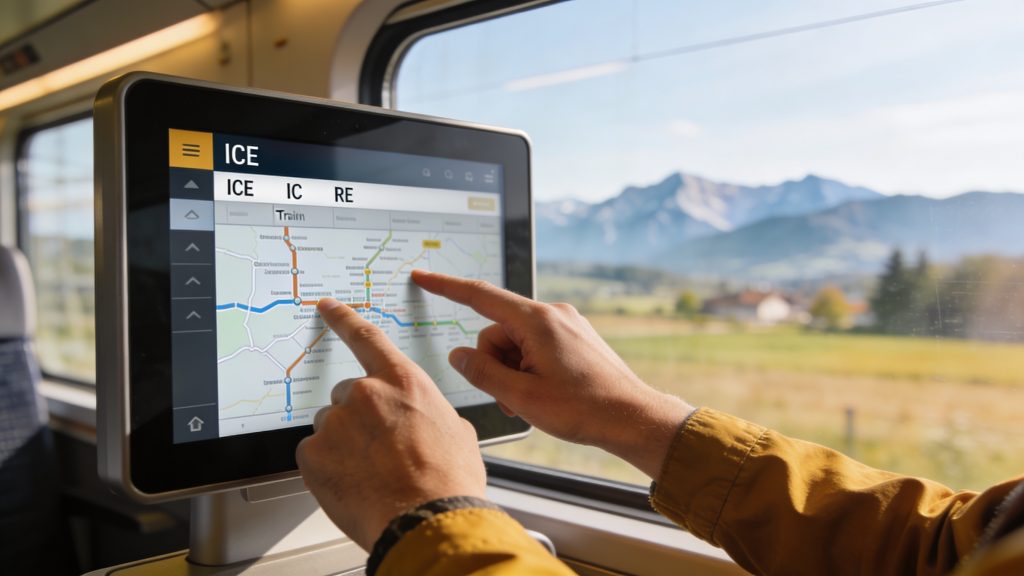
The choice between ICE, IC, RE or regional trains not only determines your travel time, but also your budget and the feel of your trip. For a train holiday in Germany, regional trains are often more affordable and offer more freedom, while ICE connections are mainly suitable for fast journeys between major cities. Discover which type of train suits your travel plans.
What is the difference between ICE, IC and RE trains
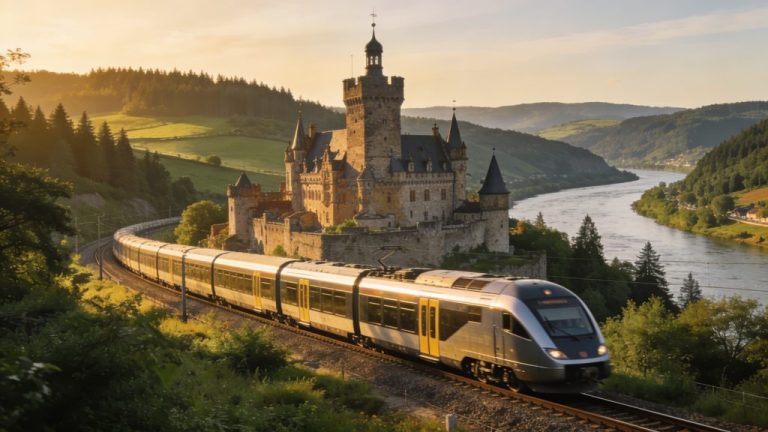
Germany has an extensive network with different types of trains. Each type has its own function and fits a specific need. The ICE (InterCity Express) is the high-speed train that reaches up to 300 kilometres per hour. It connects major cities such as Frankfurt, Munich and Cologne with each other and also forms international routes, for example between Amsterdam and Frankfurt.
The IC and EC (InterCity and EuroCity) are slightly slower. They stop at more stations between cities. These trains offer comfortable seats, are reliable and often have a restaurant carriage. Reservations are not compulsory, which gives you flexibility if you want to travel last minute.
RE (Regional Express) and RB (Regional Bahn) are regional trains. They connect villages and smaller towns with bigger cities. They stop more often and run more slowly than IC or ICE. RE stops less often than RB. Modern regional trains have air conditioning and power sockets, but the travel experience is more functional than luxurious.
The IRE (Interregio-Express) is a hybrid form. These trains run regional connections between different regions, without you needing to make a reservation. They are convenient for routes that fall just outside the major cities.
‘ For those who want flexibility without booking in advance, regional trains are the best option. ’
Which type of train is cheapest for a holiday through Germany
Regional trains such as the RE (Regional Express) and RB (Regional Bahn) are considerably cheaper than the ICE (InterCity Express) or IC (InterCity). With Sparpreis tickets, last-minute travel is also affordable. In addition, there are special day passes, for example the regional day ticket for the federal state of Lower Saxony, which allows you to travel unlimited on regional trains and buses within a specific region.
This regional day ticket is valid from 9 a.m. on weekdays and all day at weekends. The ticket is valid as far as cities like Hamburg and Bremen, and can therefore also be used for border crossings via Emmerich or Leer. For holidaymakers who want to make several stops, this offers major savings.
Children under 15 travel free with an adult on ICE trains, which reduces costs for families. Still, the total price of regional trains remains lower if you travel several legs. For those who want flexibility without booking in advance, regional trains are the best option.
On which trains can I use my D-Ticket
The Deutschlandticket, also called the D-Ticket, is valid on regional trains such as RE, RB and IRE. You can also use the ticket on buses and trams within Germany. This makes the ticket attractive for travellers who are touring the country for several days or weeks without being in a big hurry.
Important restriction: the D-Ticket is not valid on ICE or IC trains. If you still want to use these trains, you will need a separate ticket. For those planning a holiday with plenty of local exploring and less emphasis on speed, the D-Ticket is a budget-friendly choice.
The D-Ticket is offered on a monthly basis and is therefore especially suitable for longer stays or several weekend trips. Combine it with a strategic route along smaller towns and nature areas for an authentic travel experience.
ICE for speed and comfort between major cities
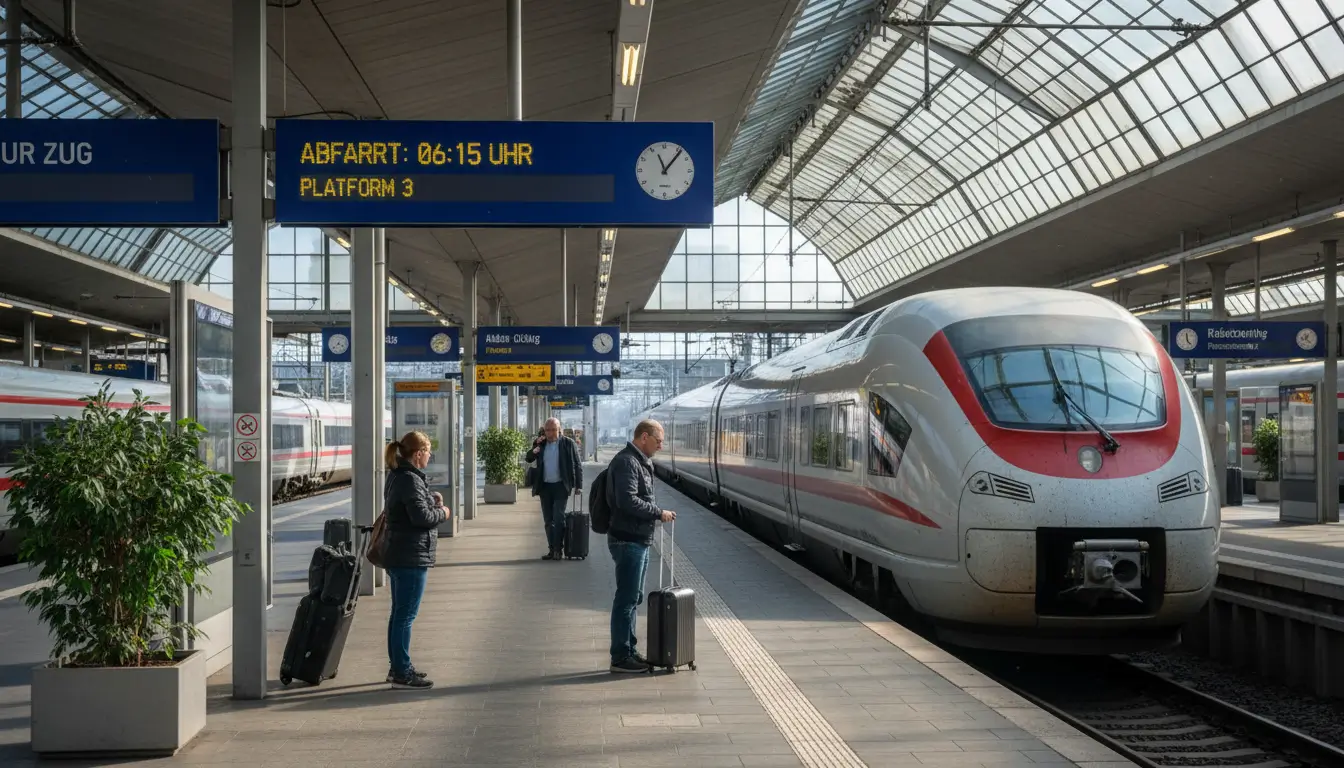
The ICE is the fastest option for long-distance journeys. Routes such as Brussels–Cologne take just 1 hour and 50 minutes. The train offers spacious seats, quiet carriages and a restaurant carriage. In first class you enjoy extra legroom and free coffee.
Reservations are optional, but strongly recommended during holidays and at weekends. You can book up to 9 months in advance, and booking early can give you prices from 19.99 euros. Last-minute tickets are often more expensive, especially at peak times.
The ICE is ideal if you want to travel quickly between major cities and are willing to pay more for comfort and speed. For those with little time who want to combine capital cities, the ICE forms the backbone of the trip.
‘ They combine comfort with a wider station network than the ICE. ’
IC and EC for flexible city-to-city connections
IC and EC trains offer a good balance between speed and accessibility. They stop more often than ICE, so more cities are reachable without changing trains. This is useful for routes where you want to make a stop along the way.
Because reservations are not compulsory, you can travel more spontaneously. If an ICE is fully booked, the IC often offers an available alternative. Prices lie between those of ICE and regional trains, especially for flexible tickets.
These trains are suitable for travellers who want to visit several cities without needing the highest possible speed. They combine comfort with a wider station network than the ICE.
RE and RB for regions and budget travellers
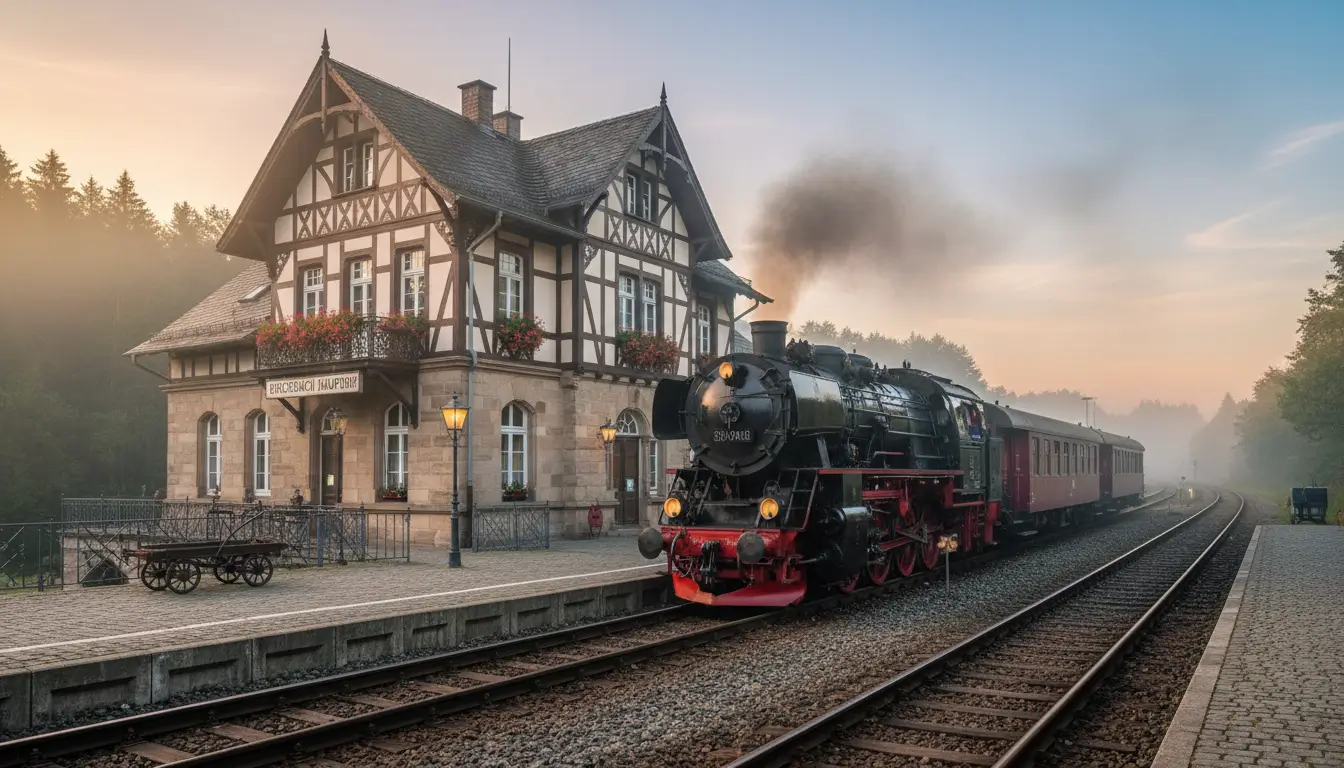
Regional trains are the backbone of local travel in Germany. They connect villages, small towns and regional sights with larger hubs. The RE is faster than the RB, but both are considerably slower than IC or ICE.
Advantages include low costs, no reservation requirement and frequent services. You can board without booking in advance, which leaves room for spontaneous trips to castles, nature reserves or local markets. Modern regional trains have Wi-Fi and power sockets, although availability varies by region.
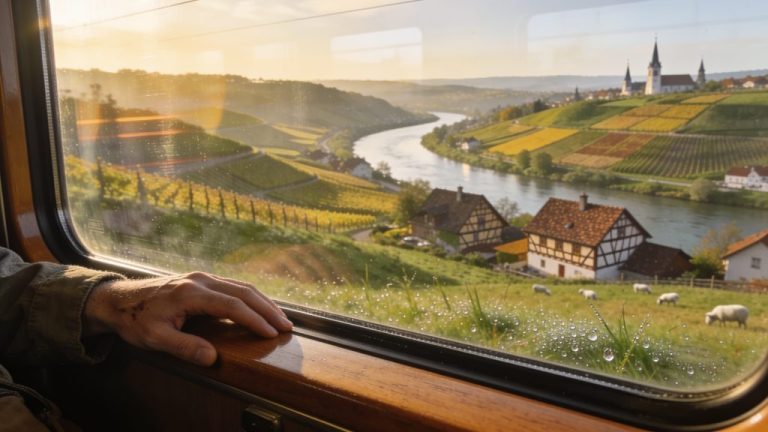
For those looking for an authentic travel experience and who have time to enjoy the journey, regional trains offer the best value for money. They give access to parts of Germany that are not directly reachable by ICE.
Combine train types for a hybrid route
Many travellers combine different train types. Start with an ICE for the main legs between big cities, and switch to regional trains for local exploring. This saves time on long distances and offers flexibility for day trips.
A practical example: travel by ICE from Amsterdam to Düsseldorf, and then use an RE train with a day pass to explore the Rhineland region. This combination maximises both efficiency and affordability.
For border crossings from the Netherlands you can also start with regional trains. The regional route Arnhem–Düsseldorf runs every hour. This connection is cheaper than a direct ICE connection. From Maastricht to Aachen you can use Dutch day tickets up to the border.
Practical tips for smart train travel through Germany
Plan ahead if you want to use ICE. Book early for the lowest prices, especially between 6 and 9 months before departure. Choose off-peak times to avoid crowds and higher prices.
For regional trains you don’t need to make reservations. Travel after 9 a.m. on weekdays or at weekends for more peace and quieter trains, and cheaper day passes. Check which day passes are valid in the region where you are travelling, such as the Bayern-Ticket or Schönes-Wochenende-Ticket.
Take connections into account. Regional trains sometimes have longer transfer times, which can affect your schedule. Allow enough time when changing between different train types, especially if you are travelling with luggage.
- Book ICE tickets up to 9 months in advance for prices from 19.99 euros
- Use regional trains with day passes for unlimited travel within a region
- Combine train types: ICE for main routes, RE/RB for local trips
- Travel outside peak hours for more comfort and lower prices
- Check whether your D-Ticket is valid for your chosen train type
On the Traveler Tips website you’ll find much more information about train travel, routes through Germany, tips for border crossings and smart ways to plan your trip. Discover more useful articles and make sure your holiday turns out exactly the way you want it.
Frequently asked questions
ICE trains offer the most comfort: quiet, spacious, often modern with a restaurant carriage, good seats and ideal for long distances. IC trains are slightly less luxurious and often older, but still suitable and comfortable for longer journeys. RE and other regional trains are simpler, with more stops, often busier and sometimes with less legroom or fewer facilities, which can make long rides feel more tiring. However, modern RE/RB trains with air conditioning and power sockets can be quite pleasant for medium-length journeys, especially if price and flexibility are important to you.
For an individual route, ICE and IC are generally more expensive but considerably faster, so the travel time per kilometre is the shortest and efficiency is high if time matters most to you. RE and other regional trains are usually cheaper, but take longer because of lower speed and more stops; they are therefore mainly efficient if cost and flexibility are more important to you than time. Roughly speaking, it’s often: highest costs and shortest travel time with ICE, slightly lower costs and slightly longer travel time with IC, and the lowest costs and longest travel time with RE/regional. So the overall “efficiency” depends on how you weigh ticket price, travel time and the flexibility you want on the chosen route.
On ICE trains you can usually count on good Wi-Fi, power sockets at almost every seat, air conditioning, generous luggage racks and a restaurant carriage or Bordbistro; this offers the highest travel comfort, especially on long distances. IC/EC trains often also have Wi-Fi, power sockets, air conditioning, luggage racks and a (more modest) bistro or trolley service, which is comfortable but slightly less luxurious than ICE. On RE/RB trains it depends on the rolling stock: modern trains often have air conditioning and sometimes power sockets, but rarely Wi-Fi or extensive catering; you usually bring your own food. As a result, travel comfort on regional trains is simpler and functional, while ICE (and to a slightly lesser extent IC/EC) clearly offer more convenience and peace.
It’s smart to choose a slower RE/RB if you want to be able to get off frequently along the way for villages, countryside or castles, because these trains have more stops. Regional trains are often cheaper and do not require reservations, which gives you more flexibility when travelling spontaneously or taking a detour. They are ideal for scenic routes where travel time is less important than the experience and your freedom to change plans as you go. When using cheap state or day tickets (such as Länder-Tickets), a regional train is usually the best choice as well.
Yes, you do need to take into account (recommended or sometimes compulsory) reservations, especially on ICE and some international trains, and ticket prices that differ per type of train (ICE/IC usually more expensive than RE/RB) and per departure time. First decide on your priority: getting there as fast as possible (ICE/IC) or as cheaply and flexibly as possible (RE/RB). Then compare, in a journey planner (such as DB Navigator or NS International), different departure times and train types for the same route to see the balance between price and travel time. Plan consciously by avoiding busy hours and weekends for ICE, and by choosing regional trains if you have more time and want to keep costs down.