NL
NL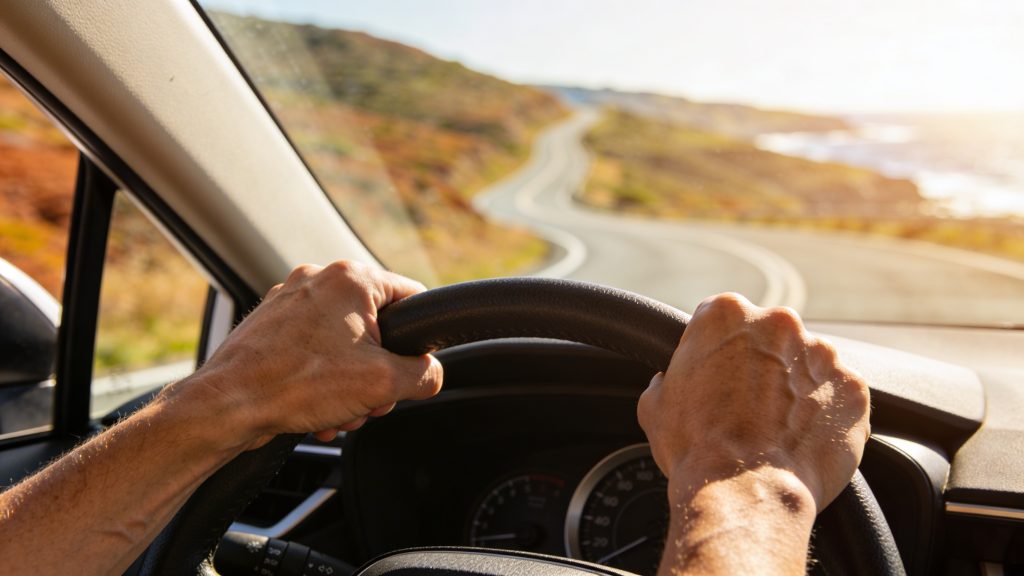
Almost one third of the world drives on the left-hand side of the road. For anyone used to driving on the right, this calls for good preparation and conscious attention. With the right approach and practical tips, you’ll soon be driving safely in the traffic of Ireland, the United Kingdom, Australia or one of the other 76 left-driving countries. Read on and discover how to take on this challenge with confidence.
Which countries drive on the left-hand side
Between 67 and 76 countries worldwide use left-hand traffic (driving on the left-hand side of the road). You drive on the left carriageway. The steering wheel is on the right-hand side of the car. For holidaymakers, the main destinations with left-hand traffic are: the United Kingdom, Ireland, Malta, Cyprus, Australia, New Zealand, Thailand, Japan, Singapore, India, South Africa and Namibia.
In Europe, driving on the right is standard in almost all countries. The exceptions are the United Kingdom, Ireland, Cyprus and Malta. Travellers from the Netherlands who go to these countries by car have every reason to prepare for different traffic and different traffic rules during a motoring holiday abroad.
‘ This combination made driving on the right the most logical and safest option. ’
Why some countries drive on the left
The custom of driving on the left dates back to the era of horse-drawn carriages. Drivers sat on the left behind the horses so they could use the whip in their right hand to steer the animals. By keeping to the right they could see oncoming traffic and avoid the whip hitting them. This combination made driving on the right the most logical and safest option.
In many former British colonies, left-hand traffic has remained the standard. That is why countries such as Australia, India and South Africa still drive on the left-hand side of the road today.
Hire a car with the steering wheel on the correct side
One of the most important pieces of advice: hire a car locally instead of taking your own car. A hire car already has the steering wheel on the right-hand side. This makes driving noticeably easier. As the driver you sit closer to the centre of the road and have a better view of the traffic.
Ideally choose a small car. This makes manoeuvring in heavy traffic and parking easier. Also opt for an automatic instead of a manual car. Changing gear with your left hand takes extra getting used to. You already need your concentration for driving on the left.
Driving on the left in your own car
If you do drive your own left-hand-drive car, make sure you have a front-seat passenger. As the driver you sit on the side of the verge. This feels unfamiliar. A passenger can help you judge your road position. The passenger also offers support with tricky manoeuvres such as overtaking and turning.
Cover your headlights with special stickers. Headlights on a left-hand-drive car shine to the left and can dazzle oncoming traffic. This is not compulsory everywhere, but it is wise and safer.
Practise first on quiet roads
Drive your first kilometres on the left-hand side on quiet stretches of road. Here you can get used to the new situation without pressure. On busy roads you naturally flow along with other traffic, but on quiet stretches it takes more concentration to keep to the left automatically.
Pay extra attention to your position on the road. There is a risk that you may accidentally drift partly onto the other carriageway. This happens mainly on quiet roads with no other traffic. Keep yourself alert and consciously think: stay left.
‘ This way you build up confidence step by step without pushing yourself too far. ’
Adjust mirrors and build up speed gradually
Adjust your mirrors properly before you set off. With left-hand traffic your field of vision shifts. The mirrors are your most important aids for monitoring traffic behind and beside you. Take the time to set them correctly.
Start with quiet roads, then move on to somewhat busier routes and only then tackle motorways. This way you build up confidence step by step without pushing yourself too far.
How to handle roundabouts and junctions
Roundabouts are the first difficult point for many travellers. In left-driving countries you go clockwise around the roundabout, so to the left. Traffic on the roundabout has priority, and that traffic comes from the right. So look to the right before you enter.
When turning right at a junction, you cross oncoming traffic. Drive a little further on up to the junction and make sure you do not cut the corner on the inside. This is a very common mistake with left-hand traffic.
Priority at junctions
In the United Kingdom, traffic from the right has priority, even though people drive on the left. This varies by country. Always check the local traffic rules before you set off. An upside-down triangle with double broken lines means you must give way.
Crossing the road as a pedestrian in left-driving countries
As a pedestrian in a left-driving country you need to pay extra attention to where the traffic is coming from. Look right first, then left and right again before crossing. This is the opposite of what you are used to in the Netherlands.
Many cities in the United Kingdom have arrows painted on the road surface at busy junctions with the text “look right” or “look left”. These instructions help pedestrians look in the correct direction.
‘ Keep your attention on the road and avoid distractions. ’
Important traffic rules in left-driving countries
Besides left-hand traffic itself, there are other traffic rules that differ. These rules are different from what you are used to. In the United Kingdom, yellow marked areas at junctions (box junctions) are no-stopping zones. You may only stop there if you are waiting to turn right.
Do not park at red or yellow lines, double white lines or on the right-hand side of the road (against the direction of travel). On a single yellow line you may park at certain times; these are shown on a sign. In Scotland, parking on the pavement is not allowed.
Behavioural rules behind the wheel
In the United Kingdom there are strict rules around distraction while driving. Loud music, using a phone without hands-free and even talking animatedly with passengers can lead to fines starting from £200 (around €230). Smoking in the car with minors on board costs £50 (€57).
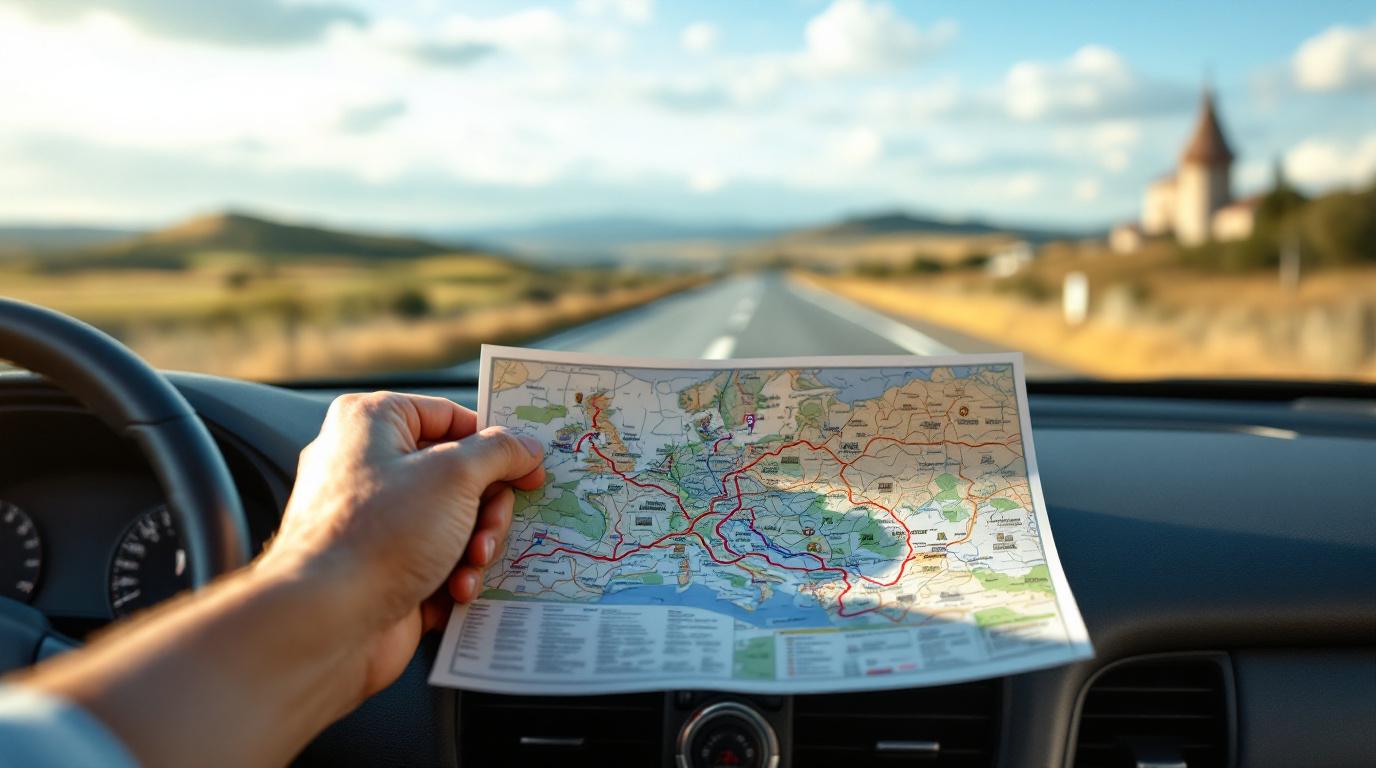
Eating, drinking, operating the radio and reading maps while driving can also be fined as dangerous driving behaviour. Keep your attention on the road and avoid distractions.
Challenges when overtaking and drive-through points at restaurants
With a left-hand-drive vehicle in a left-driving country, overtaking is more difficult. It is harder to see past the vehicle in front to check whether the road is clear. Be extra cautious and only overtake if you are completely sure of the situation.
Drive-through collection points at restaurants and barrier buttons are located on the right-hand side of the road. With a left-hand-drive vehicle you have to reach far across to the right or even get out. This is a practical inconvenience that you can avoid by hiring a right-hand-drive car locally.
Driving on the left is manageable with good preparation
Driving on the left initially seems more complicated than it really is. Once you are on the road, it often turns out to go very well, especially when you apply the tips from this article. Most traffic rules are the same as in the Netherlands, only mirrored. With a bit of concentration, good preparation and the right choices you will drive safely and comfortably during your road trip.
Before you set off, make sure you also check the vignette schemes, environmental zones and toll roads for your destination. Study the speed limits and parking rules that apply specifically to your destination country. Prepare your navigation and download offline maps so you do not have to fiddle with your phone on the way. Do not start your first day with a long drive, but plan short stops where you can get used to left-hand traffic.
Frequently asked questions
Make sure you are familiar in advance with the main traffic rules of the country, and preferably hire a car with the steering wheel on the “correct” side, ideally an automatic. Drive your first kilometres on quiet roads to get used to your new position on the road and to keeping left, especially at roundabouts and junctions. If possible, take a front-seat passenger who can help you when overtaking, judging distances and choosing the correct lane. Drive with full concentration, avoid long journeys in the first few days and plan plenty of breaks to prevent fatigue and mistakes (such as steering back over to the right).
The key is that you always keep to the left, especially when setting off, on roundabouts (clockwise, traffic from the right has priority) and when turning, so that you do not cut corners on the inside. Pay extra attention to your road position and, at junctions, look to the right first (that is where the traffic comes from) and only then to the left. Check local rules on priority, parking lines and any special markings such as yellow hatched boxes where you are not allowed to stop. Ideally, drive a locally hired car with the steering wheel on the right and, if possible, an automatic to make changing gear and overtaking easier.
If you have to drive on the left in a country, it is best to hire a car with the steering wheel on the right (so on the side closest to the middle of the road). This gives you a better view of the traffic and makes overtaking, junctions and roundabouts safer and easier to judge.
Start with short stages on quiet roads and plan extra breaks so you do not become overtired from the concentration that driving on the left demands. Ideally hire an automatic with the steering wheel on the “correct” side and drive your first kilometres together with a front-seat passenger who watches along and gives directions. Repeat simple rules aloud, such as “stay left, look right at roundabouts”, so they become automatic. Build in deliberate moments of relaxation (a short walk, visiting viewpoints) so that the road trip is not only about driving but also about enjoying yourself.
Busy cities with many roundabouts and complex junctions (such as London or Dublin) and narrow, winding country roads with oncoming traffic are less suitable for novice left-side drivers. At first, also avoid motorways with lots of lane changes and interchanges. Instead, choose quieter regions, the outskirts of cities or rural areas with straightforward roads and clear signposting. Build up experience by first driving short journeys outside rush hour, preferably with an automatic and a locally hired car.