NL
NL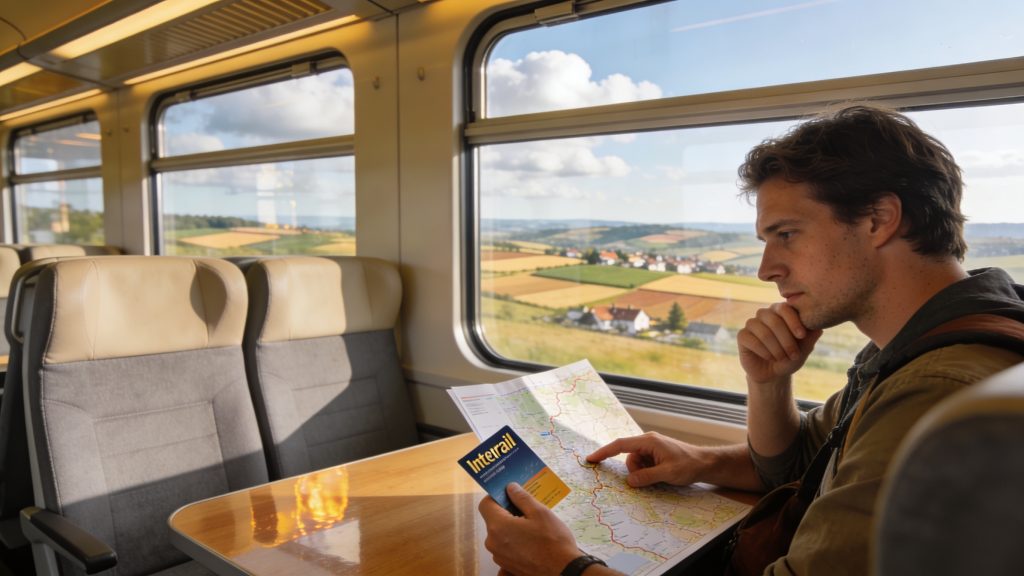
A travel day with Interrail runs from 00:00 to 23:59 and within that time gives you the freedom to take as many trains as you like. This simple rule forms the basis of your Interrail trip and determines how efficiently you can use your available travel days. Once you fully understand how a travel day works, you can plan smarter and get more out of your rail pass.
What is a travel day with Interrail?
A travel day is the day on which you activate your Interrail & Eurail train passes in order to travel by train. This day always starts at midnight and ends at 23:59 local time. Within that period you can make as many train journeys as you like. All journeys must fall within the validity rules of your pass.
There are two types of passes that determine how you use your travel days. With a Flex Pass you choose yourself which days are travel days. These fall within a longer validity period. For example, 4, 5 or 7 travel days within one month. With a Continuous Pass every day within the validity period is automatically a travel day. Examples include 15 consecutive days or 1 continuous month.
You only use a travel day when you actually travel by train on that day. With a mobile pass you add your train journey in the app. The travel day is then automatically set to that date. It is important that you register this journey before you depart.
‘ “Within one travel day you can in principle make as many train journeys as you like.” ’
Multiple trains on one travel day
Within one travel day you can in principle make as many train journeys as you like. You may change trains. You can combine regional trains with intercity services. You can travel several stretches one after another. This makes Interrail particularly suitable for travellers who want to visit several cities in one day or plan a long journey with stopovers.
For example, travel from Amsterdam to Cologne in the morning. Continue on to Frankfurt during the day. Then go on to Munich in the evening. All these train journeys take place within the same calendar day. You then use only one travel day. Every single journey must, however, be correctly registered in your app or on your pass before you depart.
Some high-speed and night trains require a seat or sleeper reservation. A travel day does not automatically mean you can board without a reservation. Always check this in advance.
When does a night train cost one or two travel days?
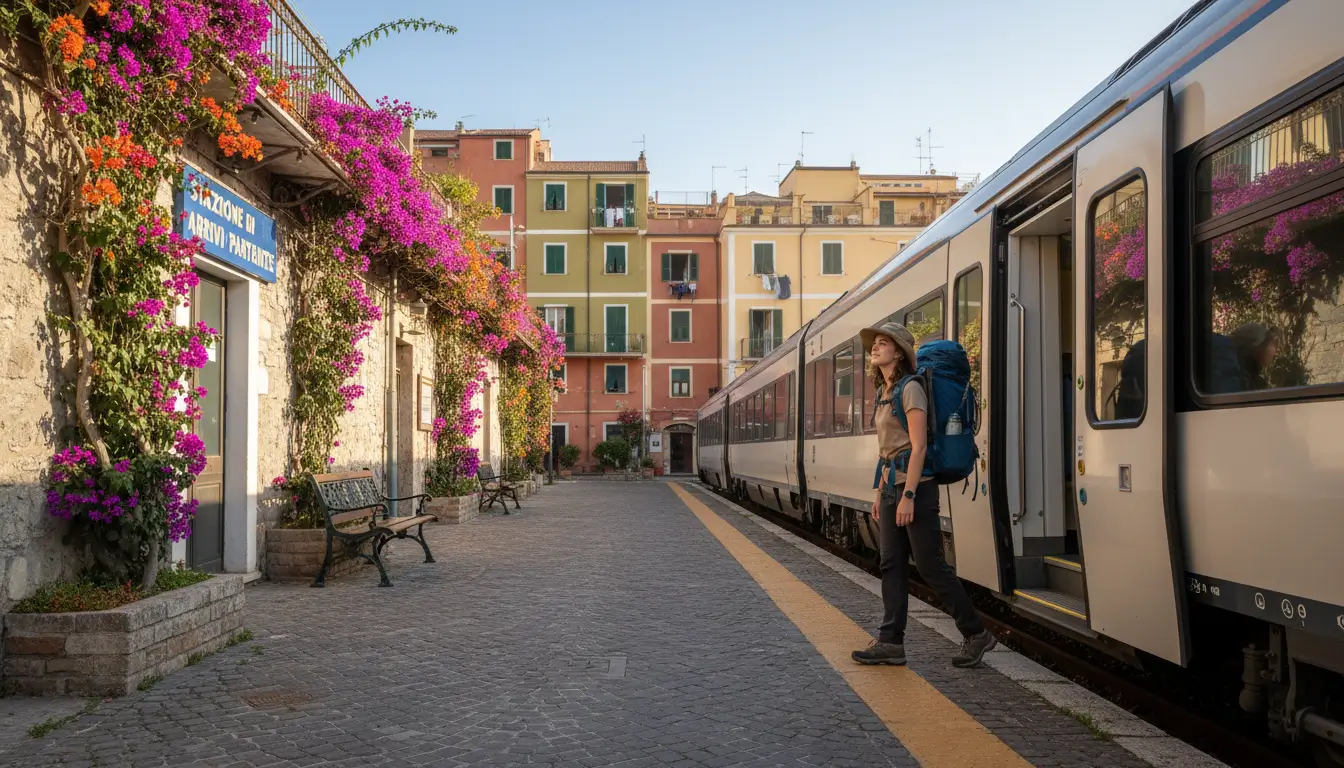
Special rules apply to night trains. These rules help you save a travel day. Do you depart before midnight and arrive after midnight? You do not change trains after midnight? Then you usually only use one travel day: the day of departure. This rule makes night trains attractive for anyone wanting to use their travel days sparingly.
If you change to another train after midnight, you need two travel days. The same applies if you continue travelling straight away after arriving on the night train. You may not use a night train on the last day of your pass if that train continues after 23:59. Your pass will then have expired.
Practical example of a night train
You depart Paris for Munich at 22:30. You arrive at 08:00 the next morning. You do not change trains after midnight. In that case you use one travel day: the day of departure. However, if you depart at 01:00 or change trains in Stuttgart at 02:00, then you need a second travel day.
Travelling in your own country with a Global Pass
With a Global Pass you may in most cases use two travel days in your own country. You use one travel day to leave your country. The other is used to return. These travel days count as regular travel days from your total, so with a pass with 7 travel days you have 5 left for travelling in other countries.
Stopovers during these outbound and inbound days are often permitted. Your journey is registered correctly. It is clearly visible that you are on your way to the border or back home. Check the specific terms and conditions of your pass. There may be differences between countries.
How do you activate a travel day in practice?
With a mobile pass you activate a travel day via the official Interrail app. You open the journey planner. You add your planned train journey. The app automatically sets the travel day to that date. On the travel day itself you show the barcode in the app during ticket checks.
Useful features of the app are:
- You can usually still cancel a travel day before the day starts
- You can change your departure date before the validity day starts
- The app often automatically splits journeys that last several days. Sometimes the app asks for extra travel days
Always keep a screenshot or back-up of your pass in case your phone dies or you have no internet connection.
Tips for using travel days smartly
Want to save travel days? Then plan your journeys around midnight. A night connection that departs just before midnight gives you a full travel day. A train that departs at 00:30 will cost you an extra travel day.
Only activate your travel day if you are actually travelling that day. A travel day is valuable, especially with a Flex Pass with a limited number of travel days. Want a rest day in one place? Then do not use a travel day and continue your journey the next day.
Check time zones when travelling across borders. By this we mean journeys where you go from one country to another. In practice the local time of the country you are travelling in applies. This can be confusing if you travel, for example, from Germany to Poland, where there is a one-hour time difference.
Check connections and transfer times carefully. This is especially important for night trains. If you still have to continue with another train after midnight, a travel day can quickly be used up. Plan your entire route in advance and make sure you know which train leaves when.
Common misunderstandings about travel days
A travel day is not a period of 24 hours from the moment you board. The standard rule is that a travel day is a calendar day from 00:00 to 23:59. This means that a train that departs at 23:30 and arrives at 01:00 spans two different calendar days.
Many travellers think that a night train always costs two travel days. This is not true. If you depart before midnight and travel straight through without changing after midnight, you actually only use one travel day. This rule can really help you when planning an efficient route.
Some travellers think that they can keep changing trains indefinitely without consequences. You may indeed change as often as you like. This only applies, however, if all transfers fall within the same travel day and within the rules of your pass and chosen route. Do pay attention to compulsory reservations on certain trains.
Checklist for your Interrail travel day
Before you depart, check the following:
- Do you have a Flex Pass or Continuous Pass? How many travel days do you have left?
- Only activate your travel day shortly before you actually depart
- Check whether your night train costs one or two travel days. Pay attention to the departure time and any transfers
- Pay attention to connections and transfer times, especially around midnight
- Check whether reservations are required for high-speed trains or night trains
- Take local time and any time zones at border crossings into account. By this we mean the difference on the clock when you travel from one country to another
Want to know more about train travel?
A travel day is the building block of your Interrail adventure. Smart planning lets you reach several destinations on one travel day. With night trains you can save a lot of money. The biggest gains come from timing your departure well. Transfers and arrival times are important too.
On the Traveler Tips website you will find much more information about rail holidays and practical routes across Europe. You will also find tips for choosing the right rail pass and handy checklists for on the road. Discover more articles and plan your next train journey even better.
Frequently asked questions
Make sure that before departure you have added all the planned journeys for that day in the Interrail app and have activated the correct travel day. Check departure times, platforms, any transfers and time zones, especially around midnight. Arrange compulsory reservations for high-speed and night trains in advance. Charge your phone, make sure you have offline access to tickets and your travel plan, and keep your passport and insurance details to hand.
Reserve seats as early as possible, especially for high-speed and night trains, preferably as soon as you have roughly decided on your itinerary. Use the Interrail/Eurail planner or app and always tick “reservation required/recommended” on busy routes and at peak times. Where possible, choose less popular travel times (early in the morning or later in the evening) and avoid weekends and public holidays for the busiest routes. Check your reservations again a few days before departure and print them or download them offline so that you are not caught out by missing or incorrect bookings.
On board many (high-speed) trains you will find reserved seats, Wi-Fi, power sockets, toilets, luggage racks and often a restaurant car or minibar service; on night trains you can usually choose between seats, couchettes or sleeping compartments. Check in advance for each railway company or route whether reservations are compulsory and which comfort classes (1st/2nd class) are available. Optimise your comfort by choosing your seat wisely (by the window, in a quiet carriage, on the upper deck), wearing layers of clothing and taking a neck pillow, earplugs and snacks. Plan your travel day so that you cover long stretches on a comfortable train and avoid changing unnecessarily often, especially late in the evening.
Always keep an up-to-date journey planner app to hand and, in the event of delays, immediately check for alternative connections within the same travel day. Plan your route with generous transfer times, especially around midnight, so that if there are delays you are not immediately stuck or forced to use an extra travel day. Make use of regional trains if fast high-speed services are cancelled or fully booked. Build a flexible day without a tight schedule into your itinerary so that you can “sacrifice” it if something goes wrong.
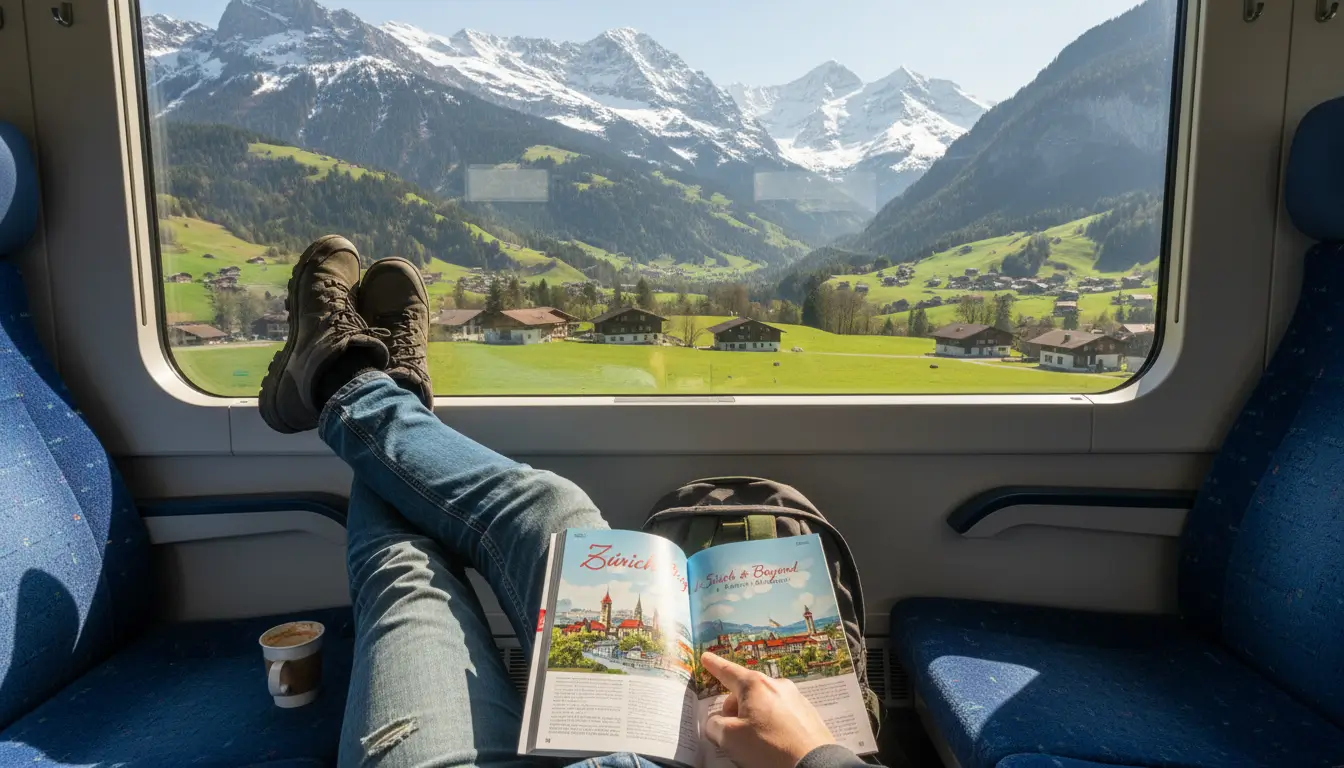
Choose a route that is not the fastest but does run along scenic stretches (for example along coasts, rivers or mountain passes) and plan at most one or two longer transfers in places with a beautiful old town centre or viewpoint. Turn those transfers into mini stops: take a short walk through the town, visit a local café or viewpoint and then return to the station. Try to travel through the most beautiful landscapes in daylight and push more monotonous stretches to the morning or evening. Use a map and journey planner beforehand to avoid routes with lots of tunnels or industrial areas and mark a few “highlights” along the railway line that you definitely want to see.