 NL
NL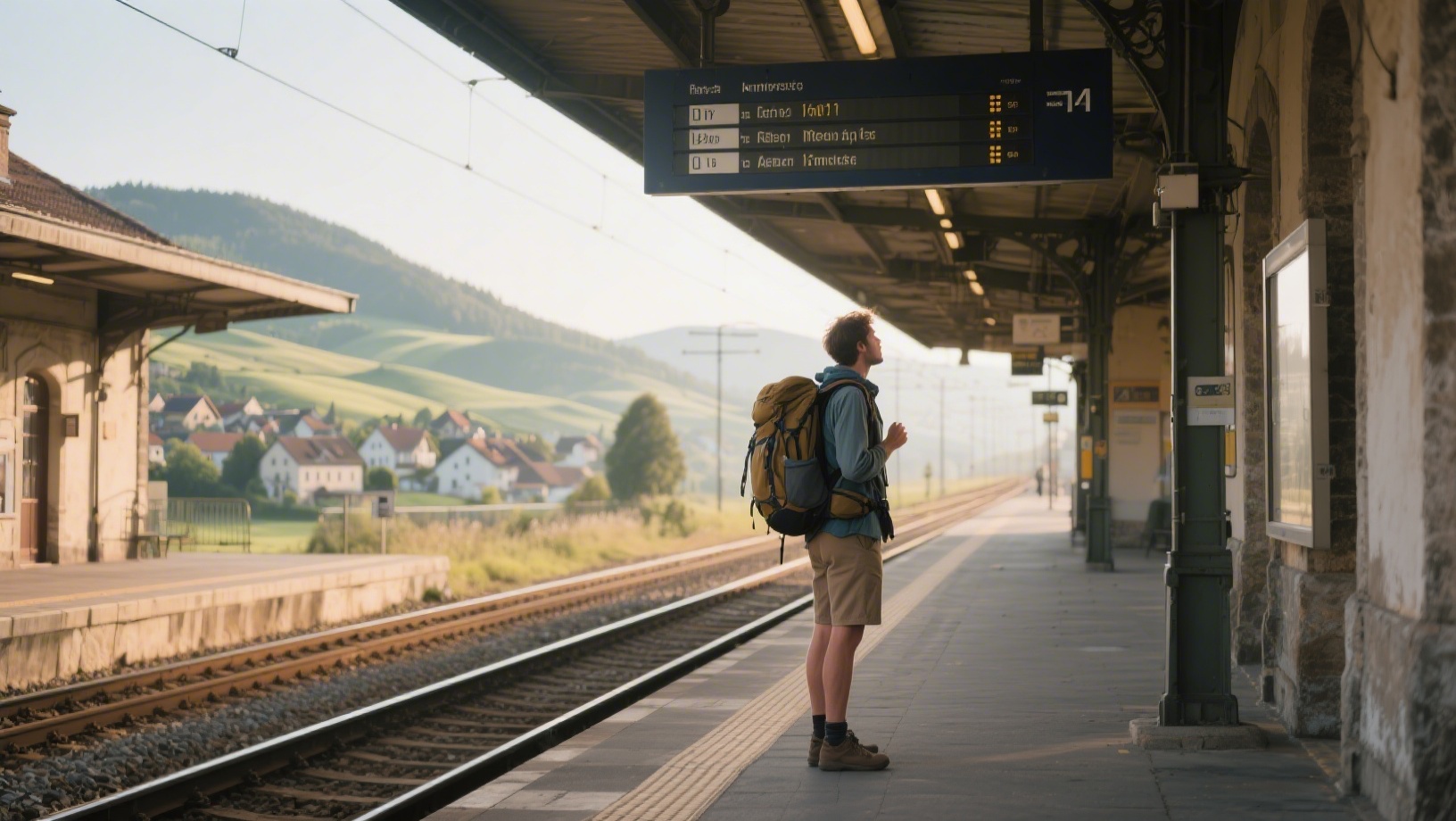
Hiking with the train as your means of transport gives you the freedom to travel without a car while you sustainably discover new routes. The choice between linear hiking routes from station to station or a basecamp strategy determines how you organise your train journey: continuously moving through new landscapes, or repeatedly returning to the same base. Both approaches have clear advantages for luggage, public transport and seasonal planning. Read on to find out which method best matches your travel goals.
Linear hiking routes from station to station
With linear hiking routes you start at one station and finish at another. You follow a continuous route without returning to your starting point. The train keeps taking you to new starting points, so you explore different landscapes every day. This method works well in regions with a dense rail network, such as the Netherlands, Luxembourg and large parts of Germany and Switzerland.
Linear hiking offers maximum variety. You walk through different villages, forests, hills or along rivers without following the same path twice. In the Netherlands there are more than 45 NS walks with lengths between 5 and 23 kilometres. Think of routes such as Dieren to Rheden through the Veluwezoom with heathland and hills, or Maastricht to Valkenburg through the Geul valley. These routes are designed to be accessible by train and always end at a station.
For those who want to travel further, there are international options. Luxembourg offers free train travel and various station-to-station routes through nature reserves. The Escardenne Eisleck Trail in Belgium starts directly from the platform and leads through wooded rolling hills. In Germany you can take the night train from Amsterdam to Saxon Switzerland, where rugged rocks and valleys are waiting. The Black Forest also has good rail connections from stations such as Hausach or Hinterzarten to hiking areas like the Hornisgrinde or Feldberg.
Key advantages of linear hiking
- New surroundings every day with no repetition
- No having to walk back along the same path
- Light luggage: just a daypack with essentials
- No parking stress or traffic jams because you travel entirely by public transport
- Flexible planning: choose routes based on train timetables and your fitness
- Sustainable travel with minimal CO2 emissions
When planning, do take train timetables into account. Check whether there are enough connections from your final station at weekends or in the evening. For longer routes it is wise to check whether there is waymarking, especially if you are travelling alone. Routes with good signage help prevent you from getting lost in unfamiliar areas.
‘ This approach is a good fit for anyone who wants variety without constantly moving on. ’
Basecamp strategy for those seeking peace
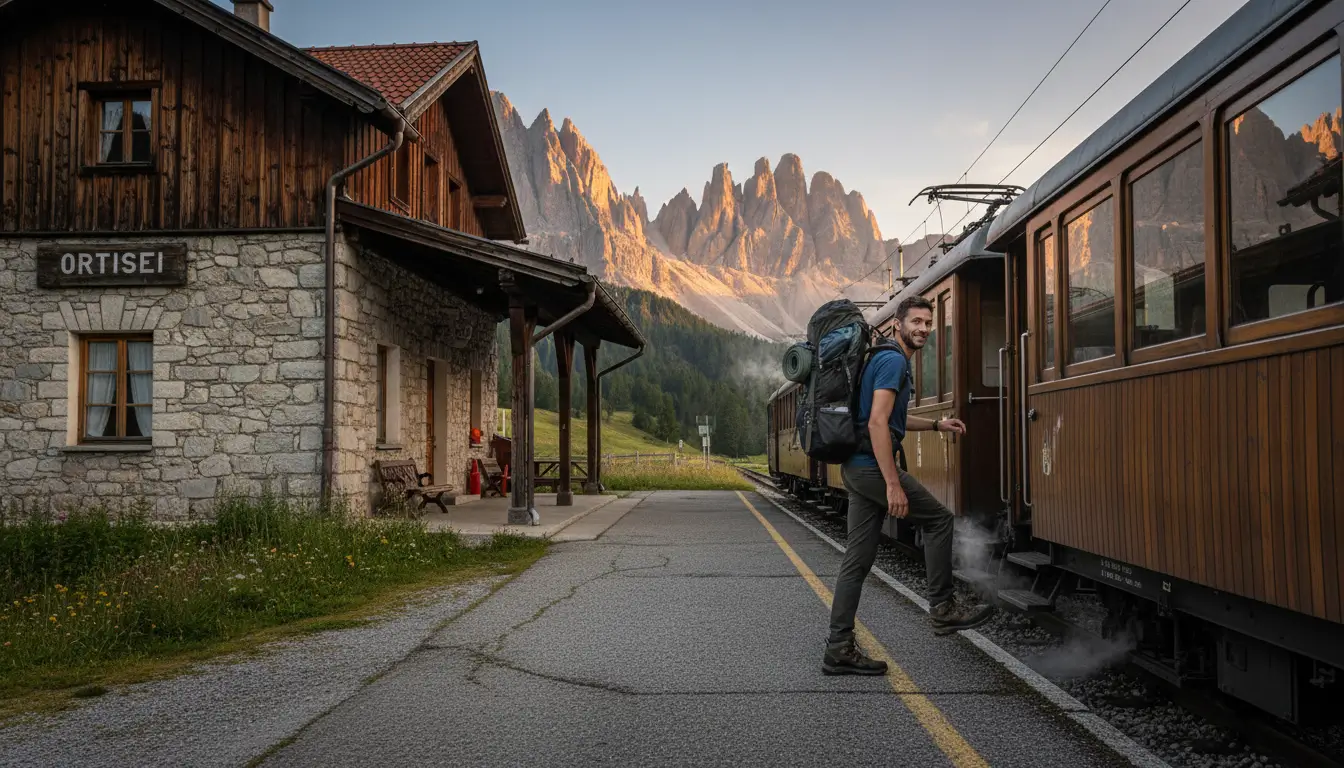
A basecamp strategy works differently. You choose one central base, often a village or town with a station and accommodation. From this fixed point you make day trips to different hiking areas. At the end of the day you return to the same place. This means you only need to check in once and can leave all your luggage at your accommodation.
This approach is a good fit for anyone who wants variety without constantly moving on. In Luxembourg, for example, you can use Troisvierges as a basecamp for forest hikes in the area. In the Black Forest, stations such as Bad Peterstal or Hinterzarten are suitable bases for various mountain hikes. The Mullerthal Trail in Luxembourg also offers options for walking new stages every day from a single base.
For families or beginner hikers, a basecamp offers more comfort. You do not have to pack your things every day and can choose shorter or longer routes depending on the weather or your energy. In bad weather it is easier to adapt and opt for a shorter walk. Some basecamps also offer the option of taking local buses to remote trailheads, giving you even more variety.
Key advantages of a basecamp
- Checking in and out of your accommodation only once
- All your luggage stays in one place
- Flexibility in bad weather or when your energy levels vary
- Suitable for families and people who value comfort
- Get to know one specific region in more depth
- Fewer train journeys needed
A basecamp does require a bit more preparation in advance. You need to check which hiking routes are accessible by train or local buses. Not all trailheads are directly next to a station. Some areas, such as the Limburg hills around Valkenburg, are well served and offer a lot of variety within a small radius.
How to choose between the two strategies
Your choice depends on your travel goals, experience and preferences. Linear routes offer more adventure and new impressions every day. You are constantly on the move and keep discovering new places. This method does require light luggage and careful planning of train connections. It is suitable for experienced hikers who like to travel solo and want to remain flexible.
A basecamp offers more peace and convenience. You spend less time travelling and packing. This approach works well for anyone who wants to stay longer in one region or is travelling with children. It also gives you the freedom to choose a longer route in good weather and a shorter walk when it rains. For people who like returning to familiar accommodation, this is the better option.
Practical considerations when choosing
- Season: in autumn or winter the days are shorter and the weather more changeable; a basecamp then gives you more flexibility
- Fitness: linear routes require consistent energy every day; a basecamp lets you vary the distance
- Luggage: if you travel light, you will benefit more from linear routes, while anyone wanting comfort and extra kit is more likely to choose a basecamp
- Travel budget: basecamps can be more economical because you do not need night trains or multiple accommodations
- Train connections: check whether your final stations on linear routes have good connections, especially in sparsely populated areas
Tips for both strategies
Whichever you choose, there are some practical points that will make planning easier. Book train tickets early, especially for night trains to destinations such as Switzerland or southern Germany. Prices go up the closer you get to the departure date. For journeys to Luxembourg you pay from around 33 euros for a single ticket, but this can vary by season.
Always take weatherproof shoes suitable for different surfaces, from loose sand to muddy forest paths or steep hills. Download apps with real-time public transport information so you can check any delays or changes while you are on the move. For anyone who likes to sleep out in nature: in countries such as Sweden, wild camping is permitted, which opens up extra possibilities for multi-day linear routes.
Choose areas with less mass tourism if you are looking for peace and quiet. The Ardennes, the Black Forest and smaller stations in Luxembourg offer beautiful countryside without the crowds. When planning longer routes, keep your own fitness level in mind. A linear route of 18 kilometres through rolling countryside demands more energy than a flat route of the same distance.
Both methods make hiking holidays by train more sustainable and more accessible. You avoid traffic jams and parking problems while keeping your CO2 emissions low. Whether you opt for the daily discoveries of linear routes or the calm of a basecamp, the train takes you straight to nature areas that are otherwise harder to reach.
On the Traveler Tips website you will find more information about sustainable travel, train journeys in Europe and hiking routes in different seasons. Discover practical tips for your next hiking holiday by train and plan your route with useful background information.
Frequently asked questions
The basecamp travel style best suits your preference for comfort, convenience and a deep experience of the destination. From a single fixed base, you do not have to move as often, can head out each day with a light daypack and have all facilities close at hand. Because you return to the same place, you get to know the surroundings and local life better. You can also flexibly adapt your hiking plans to your energy and the weather without complicated logistics.
For linear routes you travel with all your luggage directly by train to your starting and finishing stations, stay overnight along the route, and only walk with a light daypack between accommodations that are well located for stations or bus stops. Check train timetables in advance and book where necessary (especially night trains), so that transfers and arrival times match your stage endpoints. With a basecamp strategy you choose one easily accessible station as your fixed base, leave your main luggage there and make day trips with just a daypack, returning by train or bus to the same place to stay. In both cases, optimise your plans with public transport and hiking apps, and choose locations with frequent services so you can shorten or extend stages in bad weather or when tired.
A linear hiking route from station to station offers the most flexibility and the most opportunities for spontaneous changes or day trips, while still planning smartly and travelling comfortably by train. You carry only a daypack, can choose a different landscape every day and always have a station as a logical end or exit point. This makes it easy to shorten or lengthen routes or spontaneously include a village or town along the way.
On a linear train journey you usually enjoy more variety in hiking routes and landscapes because you keep moving from station to station and explore a new environment each time. With a basecamp set-up you return to the same base, so the variety is slightly more limited but you get to know one region in more depth. Overall travel costs can be higher on a linear trip because of more journeys between different places, especially internationally. A basecamp set-up is often cheaper in terms of logistics, as you move on less often and mainly use the train for the outward and return journeys plus a few day trips.