 NL
NL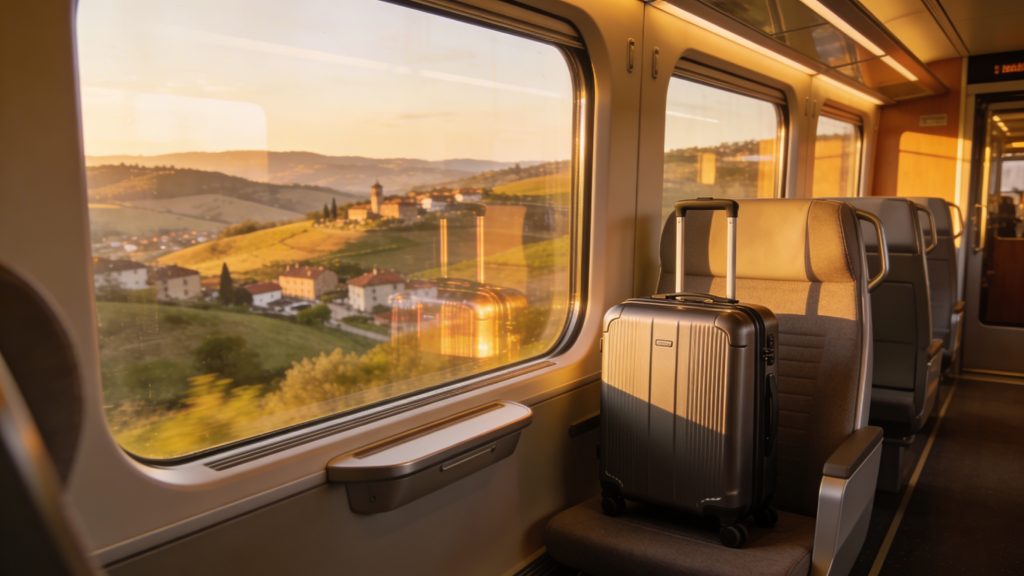
When travelling with an Interrail pass there is no strict luggage limit, but the difference between 1st and 2nd class is noticeable in terms of space and comfort. The key to a pleasant journey? Pack light, so you stay flexible with frequent train changes and transfers. Discover how to pack smartly and make the most of the comfort available.
Luggage rules with an Interrail pass
With an Interrail pass there are no strict limits on how much luggage you can take. That sounds attractive, but in practice the facilities on the train and your own mobility determine how much you can realistically bring. European trains vary widely in the amount of luggage space, from spacious racks in modern high-speed trains to compact areas on regional services.
Most trains provide overhead luggage racks above the seats and spaces by the doors or in corridors. In high-speed trains such as the TGV, ICE or Frecciarossa, these racks are often larger and better suited to suitcases up to 55x35x25 cm. Regional trains have more limited space, with only shelves above the seats. For larger bags or backpacks you’ll often use the floor space by your seat or near the door.
In France and Italy some operators ask for a maximum of two pieces of hand luggage per person, but this is rarely strictly enforced. If you reserve a seat in advance, you secure access to luggage racks. This is especially useful at peak times or in busy countries. Always keep your luggage in sight and use a padlock for extra security, especially on night trains.
‘ Prices vary, but the difference in comfort is clear. ’
What is the difference between 1st and 2nd class comfort?
Your choice between 1st and 2nd class affects your comfort and the space available for luggage. Interrail & Eurail train passes offer both classes, so you can decide which best suits your trip. Prices vary, but the difference in comfort is clear.
In 1st class you enjoy more spacious seats with extra legroom, quieter carriages and larger luggage racks. The space between the seats is often 10 to 20 cm greater than in 2nd class, which makes a difference on longer journeys. In addition, the carriages are less crowded, so it’s easier to find a spot for larger backpacks or suitcases. Many 1st class carriages have power sockets, Wi‑Fi and sometimes free coffee or water.
2nd class offers solid comfort for a lower price, but expect more compact seating and less luggage space. At busy times it can be difficult to find a place for a large bag. The carriages are often fuller, especially on popular routes or during holidays. This means you may sometimes have to stand or place your luggage between your feet.
For longer journeys 1st class is worth considering. The same applies when you have a lot of luggage. For shorter legs 2nd class is comfortably adequate and affordable. This also applies when you pack light.
Practical luggage tips for multiple train changes
Frequent train changes are a challenge. Packing heavy or bulky makes this even harder. A compact backpack of 40 to 60 litres with a total weight of no more than 8 to 12 kg is ideal. This weight equals around 20 percent of your body weight, which remains comfortable to carry during longer walks along platforms and stairs.
Choose a backpack over a suitcase. Backpacks are more flexible on uneven surfaces, stairs and in crowded carriages. Wheeled suitcases roll poorly on cobblestones and are harder to manoeuvre in narrow corridors. A backpack with adjustable shoulder straps, hip belt and rain cover makes all the difference on a day with multiple changes and varying weather.
In addition to your main backpack, take a daypack of 20 to 30 litres for day trips and essentials such as your passport, Interrail pass, water and snacks. That way you always keep valuables with you and don’t have to lug your big bag around at every stop.
Pack smart and minimalist
Travel with no more than what you really need. Test at home whether you can comfortably carry your full bag for a day. Does it feel heavy or awkward? Then cut 20 percent of your items. This prevents back pain and delays when changing trains.
Use packing cubes to keep your belongings organised and roll clothing instead of folding it. This saves space and helps prevent creasing. Limit yourself to one or two pairs of shoes, preferably versatile trainers you can wear both for walks and everyday use.
- Documents: Interrail pass, ID card or passport, travel insurance and copies
- Health: first-aid kit, plasters, sun cream and personal medicines
- Comfort: charger, power bank, earplugs, sleep mask and rain jacket
- Practical: padlock for lockers, universal plug adapter and foldable water bottle
- Extras: swimwear, towel and walking shoes
Comfort during the journey
The comfort on Interrail trains depends on the type of train and the route you take. High-speed trains such as the TGV, ICE and Eurostar offer modern carriages with power sockets, Wi‑Fi and spacious seats. Regional trains are more compact and often only offer basic facilities.
Reserve a seat in advance wherever possible. This costs between €10 and €30 per journey but guarantees you a seat and access to luggage racks. In busy countries such as France, Italy and Germany a reservation is often compulsory for high-speed services. Avoid rush hours to steer clear of crowded carriages and standing room only.
For night trains, consider a couchette or sleeper berth. This costs an extra €20 to €50 but gives you a bed and secure storage for your luggage. Night trains are a smart way to combine travel time and accommodation costs.
Extra comfort tips for long journeys
Wear compression socks to promote circulation during long journeys. Take a neck pillow for better support and stay hydrated by drinking water regularly. If you are travelling in a group, book seats together via the train operator’s app or website.
Arrive at the platform early to secure the best window seats and empty luggage racks. Avoid suitcases larger than 55x35x25 cm, as they do not always fit in the overhead compartments on regional trains.
‘ German and Austrian ICE trains offer spacious luggage racks and lifts at the doors, which is ideal for backpacks and wheeled suitcases. ’
Regional differences in Europe
Luggage space and comfort differ by country and train operator. In France and Italy, TGV and Frecciarossa trains apply stricter luggage checks, especially in 1st class. Take no more than two pieces of hand luggage and avoid oversized bags.
German and Austrian ICE trains offer spacious luggage racks and lifts at the doors, which is ideal for backpacks and wheeled suitcases. The facilities are modern and accessible, with plenty of room for larger groups of travellers.
In central Europe local trains often have limited luggage space. If you are travelling through this region in summer, keep your luggage under 40 litres. This makes changing trains easier and prevents you from obstructing other passengers in cramped carriages.
Discover more about train travel
On the Traveler Tips website you’ll find extensive information about routes, destinations and practical preparation for your train journey through Europe. From detailed overviews of popular Interrail routes to tips about night trains, reservations and budget planning. Find out more and plan your next trip with confidence.
Frequently asked questions
A backpack of around 40–60 litres with hip belt, adjustable shoulder straps and rain cover is usually the most practical and comfortable for Interrail, because it allows you to handle stairs, platforms and cobblestones easily. Make sure the total weight stays around 8–12 kg and test at home whether you can walk with the full bag for a day. You can also use a small daypack (20–30 litres) for day trips and valuables. Avoid overly large or heavy suitcases, as they are awkward in crowded carriages and often fit poorly in luggage racks.
Store large bags preferably in the racks at the beginning or end of the carriage, and place smaller backpacks above your seat so you can keep an eye on them. Use a simple cable lock or strap to loop your backpack through the handle of the rack or other luggage, so that no one can quickly walk off with it. On busy routes it pays to board early so you can find a spot close to your seat and don’t have to leave your bag in another carriage. Always keep travel documents, electronics and wallet in a small daypack at your feet or on your lap, never in your big backpack.
Opt for one compact backpack (40–60L) of a maximum of 8–12 kg instead of a suitcase, and use packing cubes and rolling your clothes to stay organised and save space. Limit your clothing to mix‑and‑match layers and a maximum of 1–2 pairs of shoes, so your bag stays light when changing trains and climbing stairs. Keep essentials (passport, ticket, power bank, water, snacks, jumper) in a small daypack that is always with you on the train. Add comfort items such as earplugs, sleep mask, neck pillow and a lightweight rain jacket, and leave “might be handy” items at home to avoid decision fatigue and unnecessary hauling.
Yes, there are a few useful comfort tips. Reserve a seat where possible on long‑distance trains (such as ICE/TGV) so you are sure of legroom, a power socket and a fixed place for your luggage. For long journeys, take a neck pillow, earplugs, snacks and a refillable water bottle; wear loose clothing and possibly compression socks. Board early to secure a window seat and good luggage rack, and travel with a compact backpack (max. approx. 40–60L) so you can easily store it above your seat or in the racks.
On night trains the luggage capacity per person in the compartment is often slightly more limited, because the space is taken up by beds/berths; you usually store your bag under the bed, at the foot end or in limited racks. On day trains (especially high‑speed) there are more often large luggage racks by the doors and above the seats, so that suitcases and larger backpacks can be placed more easily. In terms of comfort, night trains with couchettes or sleepers offer more rest and privacy to lie down, but less freedom of movement and seating comfort during the day. Day trains generally offer better seats, more legroom and facilities such as power sockets and Wi‑Fi, but no option to lie fully flat.