 NL
NL
The all aboard time is the absolute cut-off for being back on board a cruise ship. This time is usually 30 to 60 minutes before departure. If you miss this time, the ship will leave without you. You are then personally responsible for the costs of rejoining the cruise at the next port. Strict rules apply to arrival times and all aboard. Every cruise passenger must know these to ensure a stress-free start. Want to step on board well prepared? Then timing is everything.
Especially when you book your first cruise, it is important to understand arrival times and departure schedules. That way you know exactly how they work. Cruise lines use firm deadlines that leave no room for interpretation. Being late has immediate and often costly consequences.
When do you have to be back on board?
The all aboard time differs per port and cruise line. It is always communicated well in advance via the ship’s app, daily programme or personal messages delivered to your cabin. This is the time by which all passengers must be on board so the ship can depart on time. Most cruise lines keep a buffer of 30 to 60 minutes between all aboard and actual departure.
In popular European ports such as Barcelona, Rome and Amsterdam, the all aboard time is often between 13:00 and 16:00. The ship then leaves in the late afternoon. Larger cruise ships generally depart between 16:00 and 18:00. Smaller ships or regional ports may use an earlier time.
It is important always to check your specific schedule. Differences between ports can be significant:
- Amsterdam: all aboard usually at 14:00 for a 16:00 departure
- Barcelona: all aboard at 13:00 for a 15:00 departure
- Civitavecchia (Rome): all aboard at 16:00 for a 17:00 departure
- Southampton: all aboard at 15:30 for a 17:00 departure
‘ Any delay at one of these stages can, however, be disastrous. ’
How much buffer should you build in?
Arrive at the port at least 2 hours before the all aboard time. This buffer gives you enough leeway. Think of unexpected delays such as traffic jams, long queues at security or issues with transport. For international arrivals or busy ports such as Barcelona or Civitavecchia, a buffer of 3 to 4 hours is advisable.
Travellers arriving by plane should allow extra time. They need to factor in collecting luggage. Passport control and customs also take time. On top of that, you need to plan your travel time to the port. A flight that lands at 11:00 theoretically gives you enough time for an all aboard at 14:00. Any delay at one of these stages can, however, be disastrous. It is better to book a flight that arrives early in the morning or to plan an overnight stay in the port city.
For overland travel to the port, similar principles apply. There are various factors that can take more time than you initially estimate. Think of rush-hour traffic. Roadworks can also cause delays. Alternative routes sometimes mean extra travel time. Use navigation apps with live traffic information and leave well in advance.
Practical preparation for a smooth arrival
Good preparation starts with gathering all the necessary documents. Make sure you have your passport to hand. You should also take your booking confirmation with you. Keep your credit card within easy reach. Some ports require you to receive a cruise card when boarding (embarkation). This card is your boarding pass. It grants you access to the ship. In addition, it serves as a means of payment on board.
Download your cruise line’s app in advance. This app offers live updates on waiting times at the terminal. You can also see changes in the schedule. You will also receive important news. Many cruise lines send push notifications if there are changes to the all aboard time.
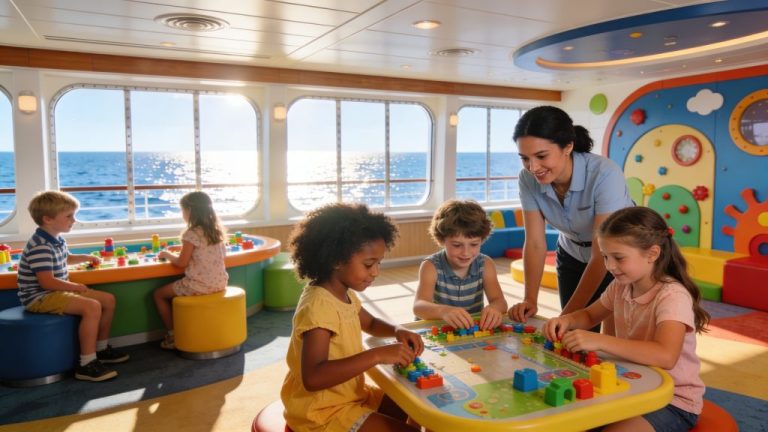
For families with children, it is advisable to arrive extra early. Many ships already offer children’s activities from midday. The swimming pools are open by then too. This makes the start of the cruise instantly relaxing. If you arrive early, you are often given priority during embarkation. You will also have a better choice of activities on board.

What happens if you miss the all aboard time?
The ship will depart without you. This is not a threat, but standard policy at all major cruise lines. A cruise ship’s departure schedule is coordinated with port authorities, tug services and harbour masters. A delay can lead to fines. The ship may also lose reserved berths at subsequent destinations. In addition, disruptions can arise in the schedule for the entire ship.
If you are too late, you must travel to the next port at your own expense. You have to continue your cruise from there. This may involve a flight, hotel and transport. Take for example a destination such as a Greek or Caribbean port. These costs can easily run into hundreds of euros or even more than a thousand euros.
In rare cases, cruise lines offer assistance in the event of delays. This only happens when the delay is beyond your control. You must also be able to show that you did everything possible to be on time. Even then you are often still financially responsible yourself. Travel insurance with cruise cover is therefore essential.
Risks of organised excursions versus going it alone
Organised shore excursions booked through the cruise line come with an important guarantee. If the excursion is delayed, the ship will wait. However, this guarantee does not apply to excursions you book independently via external providers. Suppose you visit a city tour, beach or museum on your own. The coach is delayed or you misjudge how much time you need. In that case, you run the risk of being left behind.
Many travellers still opt for independent excursions. They are cheaper and more flexible. In that case, it is wise always to return at least an hour earlier than the all aboard time. Allow for unexpected delays. Think of traffic jams or problems with public transport.
Checklist for stress-free boarding
To make sure you do not miss the all aboard time, a clear checklist is useful:
- Check the all aboard time daily via the ship’s app or daily programme
- Plan to arrive at least 2 hours before all aboard; for international arrivals, 3 to 4 hours
- Keep passport, booking confirmation and credit card handy at all times
- Download the cruise line app for live updates
- Book transport to the port well in advance and check traffic information
- Avoid rush hours and plan alternative routes
- For independent excursions: be back on board at least one hour before all aboard
- Arrange travel insurance with cruise cover
Mistakes you can avoid
There are several common mistakes. Some travellers underestimate the travel time to the port. Others rely on public transport without having a back-up plan. Some travellers also check the exact all aboard time too late. Some people think a slight delay will be tolerated. This is, however, a misconception that can be expensive.
Another risk is not setting an alarm or reminder on your phone. There are moments when you can easily lose track of time. Think of excursions or a relaxing day on board. At such times, the hours can fly by. Set multiple alarms and keep your watch or phone synchronised with ship’s time.
‘ This way your holiday starts relaxed and carefree. ’
Preparation is half the battle
A cruise begins before you even step on board. Take the rules around arrival times and all aboard seriously. That way you avoid stress and unexpected costs. Always allow for delays, arrive well in time and check your schedule regularly. This way your holiday starts relaxed and carefree.
Do you want to know exactly which documents you need for different ports, or how to choose the best travel insurance? On the Traveler Tips website you will find practical checklists, up-to-date regulations and useful route tips to help you prepare every cruise perfectly.
Frequently asked questions
The recommended arrival time differs per mode of transport: for cruises it is advised to be in the port at least 2 hours before the all aboard time, and in busy or international ports preferably 3–4 hours. For trains and coaches, 20–30 minutes before departure is usually sufficient, mainly to find the platform/waiting area. For flights the general advice is to be at the airport 2 hours (within Europe) to 3 hours (intercontinental) before departure, which is well before boarding/all aboard. Always check the specific guidelines of the operator or terminal, as times can vary by carrier and location.
Plan to arrive at the port or ship at least 2 hours before the all aboard time, and at busy ports or if you are flying in, even 3–4 hours earlier. In your schedule, allow extra time for traffic, check-in, baggage drop and security on top of that margin. Use an early shuttle or taxi and avoid rush hours so that unexpected delays do not immediately eat up your buffer. Finally, check the exact all aboard time in the cruise line app or documents and base all your planning on that.
If you miss the all aboard time, the ship may leave without you and you will have to travel to the next port at your own expense or miss the rest of the cruise. This can mean high costs for last-minute flights, hotels and any missed excursions. To prevent this, plan to arrive at the port at least 2 hours (preferably 3–4 hours at busy ports) before the all aboard time. Keep checking the exact times in your booking details or cruise line app and allow time for traffic, check-in and security checks.
You will find the most reliable and up-to-date times in the official information from your cruise line: the booking confirmation, cruise documents and the cruise line’s app or website. Check the daily programme (“daily planner”) or the app for each port, as they list the exact arrival time and all aboard time per day. In the days themselves, also use the information boards on board and announcements as a final check. Do not rely on general websites or old forums, but always on the official cruise line sources for your specific trip.
Before the all aboard time you must check in at the cruise terminal, drop off your checked luggage, and go through security and document checks (passport/ID, ticket, any visas). Cruise lines generally recommend being at the port at least 2 hours before the all aboard time. Depending on how busy it is and on the port, the entire check-in process usually takes between 30 minutes and 1.5 hours. Make sure you check the exact times in the confirmation or cruise line app, as they can vary by ship and port.