 NL
NL
Blue zones work differently in Belgium, some environmental zones completely ban parking and parking tariffs vary per city and even per street. Anyone planning a holiday by car does not want to be surprised on the way by unexpected fines or time-consuming searches for a parking space. With the right preparation and a clear strategy you will park more easily, more cheaply and according to the rules.
Parking in foreign cities requires preparation. Each country has its own rules for blue zones, environmental zones and loading/unloading. What works in the Netherlands does not automatically apply elsewhere. If you check the local rules carefully in advance and download useful apps, you will avoid parking fines and parking stress. It also helps to know how to park for free or cheaply, so your budget is not put under unnecessary pressure. For a complete overview of what you need to know before you set off, read more under traffic rules and driving abroad.
How do blue zones work in different countries?
A blue zone is a parking space where you may park for a limited time free of charge or at a reduced rate. The rules differ greatly per country. In Belgium you use a parking disc and may usually stay for 1 to 2 hours, depending on the municipality. In France broadly the same system applies, but some cities impose a maximum duration of 30 minutes in busy centres.
Italy uses a colour system for parking spaces. Blue zones are paid parking with a ticket machine, not free as in Belgium. White zones are often free for residents, yellow zones are reserved for taxis or loading/unloading. Only green zones sometimes offer free parking for tourists. Always check the local signs, because exceptions are common.
Spain also uses paid blue zones in city centres. Parking time is usually limited here to 1 or 2 hours, depending on the city. Barcelona and Madrid have strict rules with so-called green zones where only zero-emission vehicles are welcome. For motorhomes there are loading zones available at supermarkets and campsites on the outskirts of cities, but not in the centre itself.
‘ Without a vignette you are not allowed to enter the city, let alone park. ’
Environmental zones and parking bans in major cities
More and more European cities are introducing environmental zones where only cars with a valid vignette or low emissions are allowed to enter. In Paris the Crit’Air vignette is compulsory. Without a vignette you are not allowed to enter the city, let alone park. The vignette costs a few euros and can be ordered online in advance. The same applies to Brussels, Lyon and Grenoble.
Germany uses an Umweltzone with a green sticker for vehicles that meet the emission requirements. Cities such as Berlin, Munich and Cologne have these zones. Parking without a sticker will result in a fine of at least 100 euros. The sticker remains valid as long as you have the same car.
In Italy, ZTL zones (Zona Traffico Limitato) are areas where you may only drive and park with a permit. Rome, Florence and Milan have strict monitoring via cameras. If you enter a ZTL without a permit, you will usually receive a fine within a few weeks. So plan your route in advance and avoid these zones, or request a temporary access permit through your hotel.
Apps and tools for parking tariffs and availability
Apps make parking abroad easier. They show tariffs, availability and often also payment options. For France, Paybyphone works in many cities. You can pay for parking via the app without cash or a parking meter. This app is also increasingly accepted in Spain and Belgium.
In Italy, EasyPark is popular for paid parking. The app shows available spaces and tariffs per zone. For Germany you can use Parkopedia or Park Now, which provide coverage in major cities and some car parks. These apps also work in Austria and Switzerland.
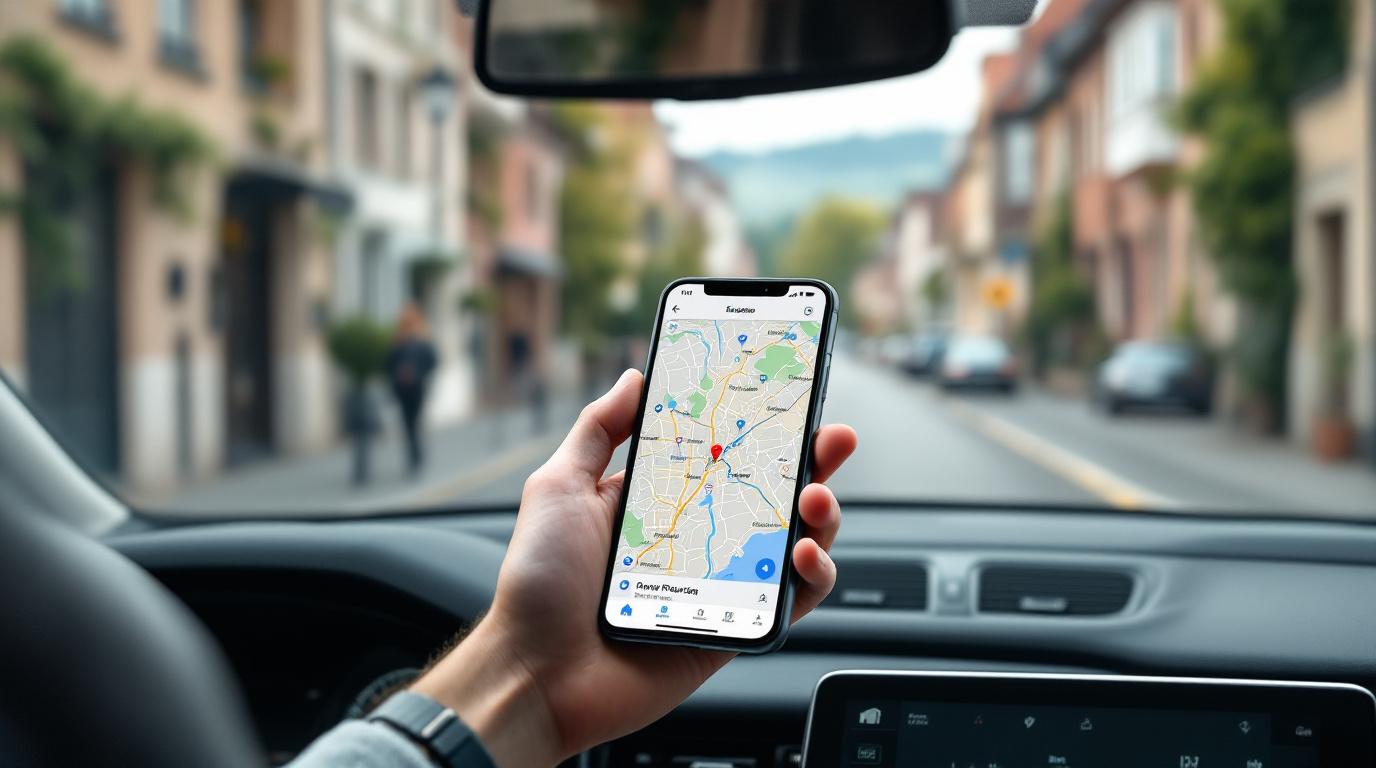
For a broad overview you can use Google Maps. Search for your destination and filter for car parks. Although tariffs are not always up to date, it does give an indication of where you can park. Read reviews from other travellers to see whether a location is reliable and whether there is enough space for larger vehicles such as motorhomes.
Useful apps per country
- France: Paybyphone, ParkNow
- Italy: EasyPark, MyCicero
- Spain: Telpark, Paybyphone
- Germany: Parkopedia, Park Now
- Belgium: 4411 (Brussels), Paybyphone
Tips to avoid parking fines and unexpected costs
Parking fines abroad can add up quickly. In Paris you will easily pay 50 euros for incorrect parking, and up to 135 euros if you do not pay within a month. Always check the signs for maximum parking time, payment method and permitted vehicles.
Pay attention to public holidays and weekends. In some cities, parking on Sundays is free or cheaper, but not everywhere. In Italy, paid zones often remain in force even on Sundays. Download a local parking app or check the municipal website for up-to-date information.
Avoid parking in places with yellow lines or marked residents’ spaces. These are reserved and will definitely result in a fine. Residents in Spain and France often have special permits, and cameras automatically check whether your number plate has access. It is better to choose an official car park or P+R location on the outskirts of the city.
What to do if you get a parking fine?
- Pay within the specified period to avoid surcharges.
- Check whether the fine is justified by consulting local parking rules online.
- Keep the fine notice and proof of payment for any disputes.
- If in doubt, contact the municipality or local authority.
‘ P+R locations (Park and Ride) are a smart option. ’
Free parking during your road trip
Free parking still exists, especially outside city centres. In smaller villages in France, Spain and Italy you will often find free car parks on the edge of the village. Walk a few extra minutes and save on parking costs. Use Google Maps or local signposting to find these places.
P+R locations (Park and Ride) are a smart option. Cities such as Amsterdam, Paris and Barcelona offer cheap or free parking options outside the centre, often linked to public transport. You park your car for a few euros a day and continue your journey by metro or bus. This saves both money and time.
In Scandinavian countries such as Sweden and Norway, car parks at nature reserves and tourist attractions are often free. Do check whether overnight stays are permitted. Some places explicitly forbid this, especially in national parks. For motorhomes there are special camper pitches with facilities, sometimes free and sometimes for a small fee.
Loading and unloading in busy city centres
Loading and unloading is only permitted in many cities at designated times and places. In Belgium you may often load/unload on yellow lines between 6:00 and 11:00, but this differs per city. Brussels has stricter rules than smaller municipalities. Check the signs or ask for local advice.
In France, loading zones are often marked with a sign indicating the permitted times. This can vary from 15 minutes to an hour. Do not stay longer than allowed, because cameras and parking attendants carry out regular checks. In Paris, loading zones are mainly available in the morning, while in the afternoon and evening they are reserved for residents.
Spain has specific loading zones for motorhomes at supermarkets and campsites, but not in historic city centres. Cities such as Barcelona and Valencia have strict rules to reduce traffic congestion. Plan your shopping outside the centre or use a car park with charging facilities for electric vehicles.
Driving electric and parking abroad
Electric cars have advantages in many cities. Paris offers free parking for electric vehicles, provided you apply for an exemption from the municipality in advance. Without an exemption you still risk a fine, despite your electric car. Stockholm and other Swedish cities also offer discounts or free parking for zero-emission vehicles.
Charging points are increasingly available, especially in large cities and along motorways. France has more than 45,000 public charging points, Germany even 44,000. Use apps such as Chargemap or Freshmile to find charging points and check availability. In southern Europe, charging points are often concentrated in city centres and at shopping centres.
Pay attention to costs and compatibility of charging cards. A Dutch charging card often works in the Benelux and Germany, but in Italy and Spain you sometimes need a local card. Apply for this well before departure or use apps that allow credit card payment via QR codes. Plan charging stops in advance and preferably charge early in the morning to avoid queues.
‘ On the Traveler Tips website you will find many more practical tips about routes, toll roads, traffic rules and the best destinations for your road trip. ’
Discover more about travelling by car
Parking and charging in foreign cities requires preparation, but with the right information you can avoid stress and extra costs. On the Traveler Tips website you will find many more practical tips about routes, toll roads, traffic rules and the best destinations for your road trip. Discover how to plan smartly and get more out of your holiday.
Frequently asked questions
In many foreign city centres, parking costs for regular cars are roughly between €2 and €5 per hour, with higher outliers in top tourist cities; for electric cars parking can sometimes be (partly) free at charging points, such as in Paris with an exemption. The availability of parking space in historic and busy centres is often limited, meaning you are more likely to use car parks or P+R sites on the edge of the city. At charging locations, coverage in Western and Northern European cities is generally good, but in Southern and Eastern Europe charging points, and therefore parking spaces with chargers, are scarcer and more concentrated around large cities. As a result, planning ahead with apps and reservation options is usually necessary to be sure of a space.
Always check the local parking rules of the city, such as whether electric charging is only permitted while actively charging and whether there are time limits at charging or loading/unloading bays. Find out in advance whether there are environmental zones (e.g. LEZ/ZEZ) where only vehicles with a certain emissions class or registration (vignette/online registration) are allowed. In every foreign city, look at specific EV benefits or restrictions, such as free or reduced parking for electric cars only with a previously requested exemption (for example in Paris). Finally, check whether special permits or registration are required for access to city centres, car parks or residents’ zones, and arrange these before departure.
In many foreign cities, parking works with parking meters, ticket machines or zones in which you pay via SMS, app or credit card; cash payments are becoming less common. Increasingly, you can use number plate parking, where enforcement digitally checks whether you have paid. Handy international parking apps include EasyPark, ParkMobile, APCOA Flow and city-specific apps; check which app or provider is commonly used in each country. For electric cars you can also use charging and parking apps such as Chargemap, Enel-X or local providers, often linked to a charging card.
Yes, in many busy city centres there are specific zones designated for loading and unloading at accommodation. These often have a clear time limit, for example only in the morning hours or for a maximum number of minutes. These rules are intended to prevent blocking the traffic and to ensure good traffic flow. Always check the local signs and municipal regulations.
Recommended alternatives to on-street parking include P+R sites on the edge of the city, covered or underground car parks and parking facilities at shopping centres or public transport hubs. These options are often cheaper and offer more available spaces, sometimes with charging points for electric cars. You can find them online via route and parking apps (such as Google Maps or specific parking apps), the website of the municipality or public transport operators, and by searching for terms such as “P+R [city]”, “car park [centre]” or “park+ride [city]”. Check tariffs, opening hours and any connections to public transport online straight away.
Yes, preferably park in supervised or busy (multi-storey) car parks and do not leave valuables in sight, but store them in the boot beforehand. In the car park, take a photo of the surroundings and the parking bay number so you can quickly find where you left your car. Pay close attention to local signs and rules, for example time limits or special zones, to avoid fines and towing. Only park at charging points when you are actually charging and follow the instructions on the charging post to avoid problems or fines.