
 NL
NL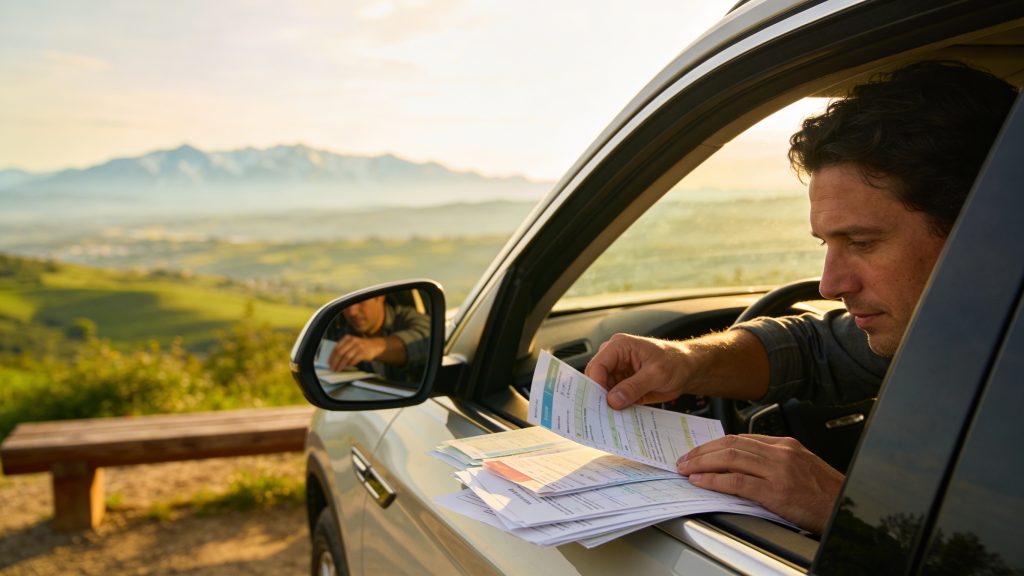
A well-prepared car prevents surprises at the border. From tyre pressure to mandatory equipment: if you check everything in advance and add what’s missing, you travel without delays and fines. Discover which checks you need to carry out and how to prepare your car optimally for a trip across the border.
Most important documents for travelling across the border
A complete set of documents is the basis for a smooth border crossing. Always make sure you have a valid driving licence, registration certificate and passport or identity card with you. These papers are compulsory for everyone in the car. For countries outside Europe, an international driving licence may be required.
Also take insurance documents with you, including the green card. Check in advance whether you have cover abroad. When travelling to certain countries such as Bosnia and Herzegovina, you must carry the original document, as copies are sometimes not accepted. Traffic rules and driving abroad also require extra attention when preparing your trip.
Put all documents for yourself, your passengers and the vehicle together in a folder in an accessible place, such as the glove compartment. That way you have everything immediately to hand when you arrive at a border checkpoint.
‘ Worn tyres can lead to dangerous situations and fines in some countries. ’
Which maintenance check should you carry out?
A well-maintained car is your best guarantee against problems on the road. Start with a basic check of all fluids. Check whether the engine oil, windscreen washer fluid, coolant and brake fluid are at the correct level. Top up where necessary before you set off.
Also check the tyre pressure and tread depth of your tyres. Worn tyres can lead to dangerous situations and fines in some countries. Check whether all lights are working and take spare bulbs with you. In several countries it is compulsory to have these on board.
For longer journeys, it is wise to have your car checked by a garage beforehand. A mechanic can spot problems you might miss yourself. Breakdown cover including cover abroad is also recommended, especially if you are travelling further from home. Make sure you know what the warning lights in your car mean and whether you can change a tyre yourself.
MOT and emission standards for travelling
Before departure, check whether your MOT inspection is still valid. An expired MOT can cause problems during checks, including abroad. Make sure the inspection is done before you leave so you know your car meets the safety requirements.
Some countries apply strict emission standards, especially in environmental zones. If you are travelling to Germany and want to visit cities with these zones, you need an environmental sticker. You can order this online in advance. Without a valid sticker you are not allowed to enter certain areas and you risk a fine.
Cars that do not meet emission standards can be refused in some cities. Find out in advance which standards apply at your destination and whether your car complies with them. This prevents disappointment and unexpected detours.
How do you put country stickers on your number plate?
When travelling through Europe, your car must be identifiable with a country sticker. This sticker shows the country where your car is registered. For Dutch cars this is an NL sticker. The sticker must be placed on the left-hand side of the back of your car, close to the number plate or on the bumper.
Make sure the sticker is clearly visible and clean. Some modern cars already have a country code on the number plate, but in many countries a separate sticker is still compulsory. Check before departure whether you meet the requirements.
Mandatory equipment by country
The required equipment differs per country. What is not compulsory in the Netherlands may be a requirement elsewhere. Below you will find what you need to take with you for various destinations:
France
- High-visibility vests for all occupants, compulsory in case of breakdown or an accident
- Spare bulbs and a spare wheel are recommended
Germany
- For foreign cars, safety equipment is recommended
- Border controls may be tightened, so make sure your documents are in order
- Environmental sticker required for cities with environmental zones
Spain
- V-16 warning light or warning triangle compulsory
- High-visibility vest for all occupants
- Spare wheel, space-saver spare or tyre repair kit
Keep high-visibility vests in an easily accessible place in the car. In case of breakdown you must be able to grab them immediately before getting out. Hiring a car? Then always check whether all compulsory equipment is present before you drive off.
Extra equipment and tools
In addition to compulsory equipment, there are practical tools that make your journey safer and more comfortable. Take jump leads and a tow rope with you. These can come in handy in case of a breakdown or when helping other travellers. A tyre repair kit is useful as an alternative to a spare wheel.
Make sure you have enough drinking water in the car, especially if you are travelling with children or pets. Emergency services are not quick to arrive everywhere. Extra water prevents you from getting stuck without basic supplies.
Also check whether your spare bulbs are up to date for your car. Some drivers have old bulbs that no longer fit their model. Know which fuel you need to fill up with and, if necessary, download an app with live traffic information, such as the Onderweg app for travelling to Germany.
Hire car across the border
Do you want to cross the border with a hire car? Arrange cross-border use directly when booking and ask for written confirmation. Not all rental companies allow border crossings and some countries require additional insurance.
Always arrange this in advance and not only once you are at your holiday destination. That way you are properly insured in case of damage abroad. When collecting the car, check whether all compulsory equipment is on board.
‘ “Thorough preparation ensures you can relax and enjoy your trip, without stress at border crossings.” ’
Practical tips for a smooth border crossing
A friendly attitude towards border staff makes all the difference. Follow their instructions carefully and remain patient, even if checks take longer. Make sure you know in advance where you are going and what the purpose of your trip is.
Find out in advance about the traffic rules and required equipment in the country you are travelling to. Each country has its own rules and regulations. Some countries carry out stricter checks than others. Be prepared and allow for extra travel time at busy border crossings.
Know your car well and make sure all warning lights are clear to you. An emergency kit with jump leads, tow rope and spare bulbs gives you extra peace of mind. Thorough preparation ensures you can relax and enjoy your trip, without stress at border crossings.
On the Traveler Tips website you will find much more information about driving holidays, routes, practical preparation and smart travel tips. Discover useful articles about travelling by car and plan your next trip with reliable advice.
Frequently asked questions
Essential are a valid driving licence (and, where required, an international driving licence), the registration certificate and full car documents including the European accident statement form and the original green card. In addition, all occupants must carry a valid passport or identity card. The car insurance must provide cover abroad, and this must be demonstrable with the insurance documents. Keep all these documents together in one place, easily accessible in the car.
Inform yourself in advance about country-specific rules such as speed limits, toll roads and environmental zones, compulsory use of lights and local priority and overtaking rules. Always take all essential documents with you (driving licence, registration certificate, green card, passport/ID and insurance papers) and check that your car is well maintained. Make sure you have each country’s mandatory equipment, such as high-visibility vests for all occupants, warning triangle or V-16 warning light, spare bulbs, spare wheel/tyre repair kit and, where applicable, an environmental sticker. Keep everything easily accessible in the car and, for a hire car, check that all compulsory items are present.
Before you leave, check the essential fluids (engine oil, coolant, brake fluid and windscreen washer fluid), your tyre pressure and tread depth, and whether all lights work properly. Take a set of spare bulbs and fuses, an emergency kit (including jump leads and a tow rope) and, if possible, a spare wheel or repair kit. Make sure your warning devices and safety equipment meet the requirements of the countries you are travelling through (for example, high-visibility vests, warning triangle or V‑16 warning light). Arrange breakdown cover including cover abroad and make sure you know what the warning lights mean and how to act in the event of a breakdown.
Use route planners such as ViaMichelin or Google Maps with filters for ‘avoid tolls’ and compare the extra travel time with the money saved. Calculate your fuel budget in advance by dividing the total distance by your average fuel consumption and checking the current fuel prices per country. Check each country’s toll systems (vignettes, toll gates) and, where possible, buy in advance online or at service stations just before the border. Consult official environmental zone maps (such as for German Umweltzones and French Crit’Air) and plan your route so that you avoid restricted zones or apply for the correct sticker/registration in good time.