 NL
NL
Night trains are often seen as a smart way to save a travel day during your Interrail adventure, but there are important details you need to know in advance. You must always book a couchette or sleeper berth separately. The departure time determines whether the journey counts as one or two travel days on your pass. In this article you will discover how to use night trains to best effect during your Interrail trip.
Travelling by night train significantly enhances your Interrail experience and requires good preparation. With Interrail & Eurail train passes you have access to hundreds of train services across Europe. This also applies to popular night services. You always pay an additional reservation fee. There are also specific rules for travel days. So make sure you plan well in advance.
How do night trains count as a travel day?
A night train that departs before midnight counts as one travel day on your Interrail pass. This means you have to decide on which date you activate the journey in your pass. For trains that depart after midnight, the following calendar day counts as the travel day.
The rule seems simple. Longer routes with connections make it more complex. You may sometimes take several trains within one night period. Taken together, these trains can use up more than one travel day. Always check in advance how your route will be counted.
Do you want to make optimal use of your travel days? Then choose strategically when to use night trains. A night train not only saves you a hotel overnight, it also gives you more time to explore your destination during the day.
Booking berths and couchettes
For berths in night trains you always need a separate reservation, regardless of your Interrail pass. These reservations are not included in the pass price and can vary considerably in cost. Typical prices range from around 15 euros for a simple seat to more than 120 euros for a premium sleeping compartment.
Book your reservation well in advance, especially if you are travelling with a group and want to sit or sleep together. Popular routes such as Paris–Venice or Hamburg–Zurich are quickly fully booked in high season. Many night trains offer different categories:
- Standard seats without a bed
- Couchettes with six or four berths per compartment
- Sleeper carriages with one, two or three beds and more privacy
- Deluxe cabins with private bathroom facilities
The beds in night trains are usually already made up when you board. In most trains you will find bunk beds with three levels. If you are tall or afraid of heights, specifically ask for a lower berth. Taller travellers over 175 centimetres sometimes have to curl up their legs on the higher berths.
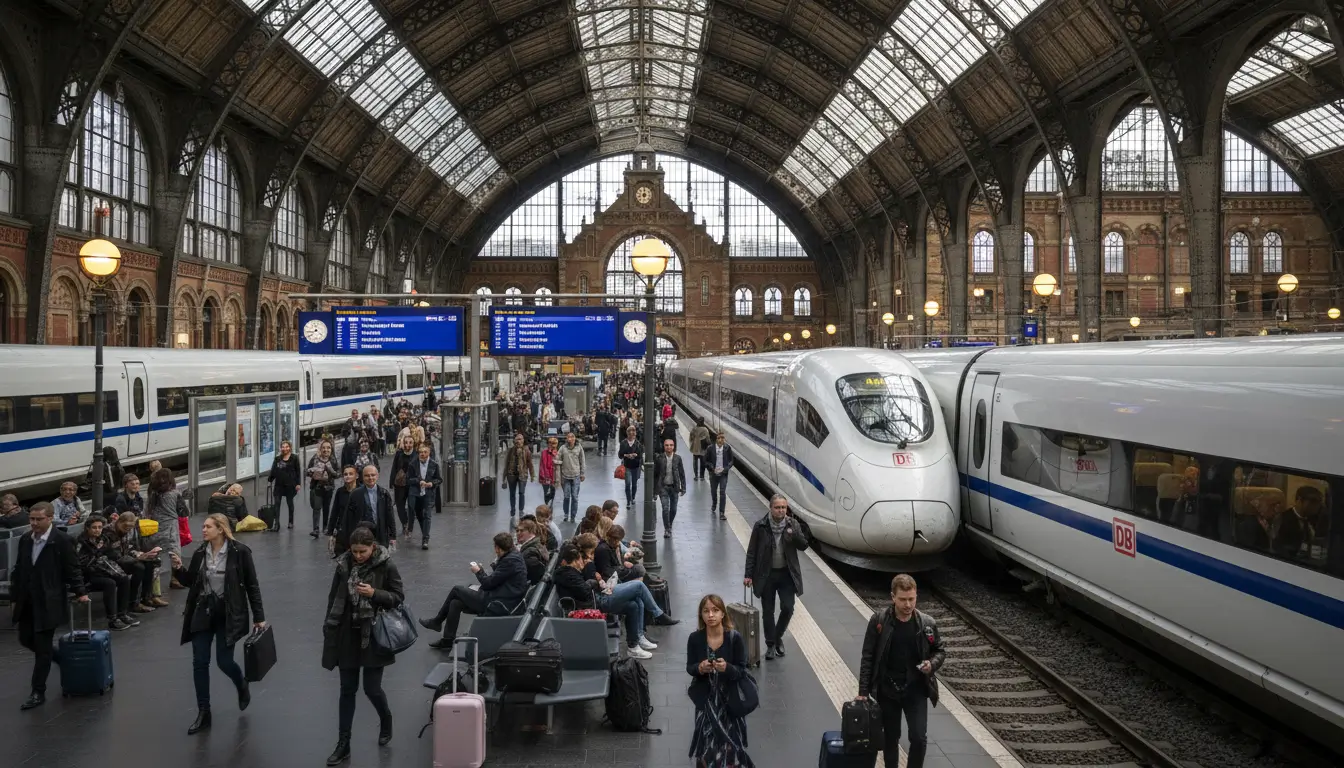
Best night trains for your Interrail trip
Europe has an extensive network of night trains, with certain services particularly popular among Interrail travellers. Your choice of night train depends on your route and budget. Some routes offer a good balance between comfort and price.
The Nightjet services of the Austrian Railways connect major cities such as Vienna, Munich, Zurich, Venice and Rome. These trains are known for their reliability and reasonable prices. The French night trains to southern destinations such as Nice and the Spanish border are also popular.
In Northern Europe, night trains provide links between Scandinavian cities and Central Europe. The routes through Italy, particularly between northern and southern Italy, are practical for travellers who want to cover large distances without losing daytime travel time.
Not all routes run daily. Some night trains only depart a few times a week. Always plan your route in advance. Check the timetable.
Comfort and practical preparation
The temperature in night trains is generally pleasantly cool to neutral. You do not need thick clothing; a light jumper or cardigan is usually enough. Many travellers pack too warmly and then do not use the extra layers.
Bring the following items for a comfortable night:
- Earplugs to muffle train noise and fellow travellers
- Toiletries in a small bag for use in the compartment
- Your own breakfast or snacks, as the breakfast on offer is often limited
- A small light or head torch to find your things at night
- A bottle of water
In most night trains you can brush your teeth in the compartment or in shared sanitary areas. The facilities vary by train type and are generally basic but functional.
‘ The movement of the train and the monotonous sound are often calming. ’
Travelling with children on night trains
Children usually respond positively to night trains and find it exciting to sleep on a moving train. Do not let your child sleep in the top bunk. First check whether they could fall out of bed. Many parents choose the middle or lower berths for young children.
Children generally fall asleep faster than adults. The movement of the train and the monotonous sound are often calming. Be sure to bring favourite cuddly toys or blankets to create a familiar sleep environment.
Allow enough time for toilet visits before bedtime. Walking through narrow corridors with children at night is difficult. This is especially true if other passengers are already asleep.
Pay attention at border crossings
Avoid choosing night trains on routes with intensive passport checks. This especially applies at borders outside the Schengen Area. On some routes you have to leave the train in the middle of the night for passport and luggage checks. This significantly disrupts your night’s rest and can be quite chaotic.
Routes between Schengen and non-Schengen countries, such as services towards the Balkans or Turkey, often involve several checks per night. For these routes, a daytime train is sometimes a more comfortable choice, even if it costs you an extra travel day.
Check in advance which borders you will cross and what type of checks take place there. In many cases customs officers come through the compartment, so you do not have to get off. This does vary by country and border crossing.
Costs and savings
An Interrail pass can save you up to 200 euros per night train compared to regular day fares. This saving particularly applies if you use several night trains on one trip. Four night trains together can yield savings of up to 400 euros.
However, do not see night trains as a direct replacement for a hotel room. Reservation costs for a compartment for three people can be as high as 144 euros, while the same route by day may cost only 30 euros in reservations. The real value lies in the time saved and the fact that you arrive at your new destination in the morning feeling rested.
Combine night trains with flexible travelling. That increases the financial benefits. In many Central and Eastern European countries reservations are not compulsory for regular trains, which reduces your total travel costs further.
‘ This flexibility requires careful planning on routes with infrequent trains. ’
Flexibility and connections
An Interrail pass offers complete flexibility. You can get off wherever you like and catch a later train. However, as soon as you get off, your seat reservation lapses and you must reserve again for the next train if required.
This flexibility requires careful planning on routes with infrequent trains. If you miss a connection, the waiting time can be two hours or more. Check the timetable for your entire route in advance and allow enough transfer time.
For night trains, flexibility is more limited because you are tied to your reserved berth. If you want to stop somewhere along the way, you lose your reservation for the remaining part of the journey.
Discover more about train travel
For longer routes, night trains are a practical choice. You travel at night and save daytime travel time. You also save on accommodation costs. Do pay attention to reservation fees and the rules for travel days. Also check whether your route involves passport controls. Plan your route carefully and book your berths well in advance. On the Traveler Tips website you will find more information about routes, destinations and trip planning for your rail holiday.
Frequently asked questions
On European night trains you can usually choose between standard seats, couchette cars (with simple berths) and real sleeper cars with 2–3 beds per compartment. The more expensive the option, the more privacy, peace and comfort you get (more space, better beds, often a washbasin and sometimes breakfast). For the most comfortable choice with Interrail, it is best to book a sleeper car and reserve a lower berth, especially if you are tall or travelling with (small) children. Compare the supplements for each type (seat, couchette, sleeper) in advance and weigh the extra cost against what you save on a hotel night and your need for a good night’s sleep.
Book as early as possible and compare different categories (seat, couchette, sleeper car); a cheap seat or shared couchette is usually the most economical, but always also check the price of a day train plus hostel/hotel as an alternative. Note that a night train that departs before midnight usually costs only one Interrail travel day, allowing you to combine extra-long routes in a single day. Additional costs include the compulsory reservation supplement (around €15 for a seat up to well over €100 for a luxury berth), possible surcharges for a private compartment and sometimes service fees if you book via a ticket office or intermediary. Do not automatically assume you are saving a hotel night: sometimes a day train plus a cheap overnight stay together work out cheaper than the night train reservation.
Essential preparation tips include: book your couchette or sleeper well in advance, check whether reservations are compulsory on your route and avoid night trains with (night-time) border and passport checks where possible. Bring practical items such as earplugs, toiletries, an extra jumper and your own breakfast/snacks, as the breakfast offered is usually limited. If possible, choose a lower berth if you are tall or travelling with children, and remember that your reservation lapses as soon as you get off along the way. Plan your travel days smartly in your Interrail pass, especially on routes with few trains or multiple connections.
Night trains to and from Central and Eastern Europe are usually the most suitable for Interrail travellers who want both experience and efficiency, because they cover long distances overnight and therefore save an entire travel day. Routes where you board in the evening and arrive in a new city in the morning (for example routes between major capital cities) combine a unique travel experience with optimal use of time. Avoid night trains with border crossings outside Schengen (such as towards Turkey), because passport checks at night can seriously disrupt both the experience and your sleep. In general, night trains deliver the most value if you include several of them in your Interrail route, so that you benefit as much as possible in terms of both cost and time savings.
On a night train you can usually choose between seats, couchettes (berths) or proper sleeper cars with made-up beds; there are toilets and often a washroom where you can freshen up. Sometimes there is a restaurant car, but by no means always. The breakfast offered on board is often simple and limited. For that reason, take your own food and drink (sandwiches, snacks, water) for the evening and the following morning.