NL
NL
Your guide to a well-planned diving holiday
A well-prepared diving holiday offers a direct connection with nature and fits with a conscious way of travelling. Organising diving holidays yourself allows you to explore the underwater world at your own pace, tailored to your own route and interests. Read on and discover how to carefully plan your journey to the most interesting dive locations.
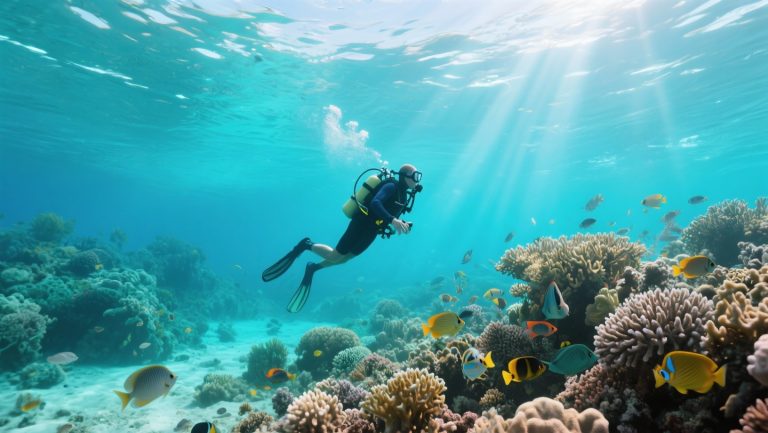
Exploring the underwater world is one of the most special experiences you can have, a form of nature holiday where you are a guest in another universe. The feeling of weightlessness, the silence and the direct encounters with marine life are an experience that enriches your trip.
Explore the underwater world: interesting diving destinations
The choice of destination determines what you will see underwater. For travellers exploring Europe by car or train, there are surprisingly diverse options. Countries such as Malta and Croatia offer clear water and interesting rock formations. The Eastern Scheldt in Zeeland is also known for its rich underwater life, with cuttlefish, lobsters and seahorses, and is a suitable option for a shorter trip.
For those looking further afield, the Red Sea in Egypt is a well-established destination with diverse coral reefs and an abundance of tropical fish. Another renowned location is Raja Ampat in Indonesia, famous for its great biodiversity and pristine reefs. These destinations require more planning, but the reward is a comparable diving experience in a very specific ecosystem.
‘ The best time to travel depends strongly on the destination. ’
Best visibility: the right diving seasons
Planning your trip in the right season is crucial for the quality of your dives. The best time to travel depends strongly on the destination. For the Mediterranean, summer and early autumn are ideal, with warm water and clear visibility. In Zeeland, spring is the best time to dive, when the cuttlefish are mating and visibility is usually clear.
In Egypt you can dive all year round, but spring and autumn offer the most pleasant temperatures, both above and below the water, where you can observe various types of marine life, reefs and underwater landscapes. In Southeast Asia you need to take into account the rainy season, which differs per region. Good planning based on the climate prevents limited visibility and gives you the best chance of seeing specific marine life.
Your diving equipment: chosen for comfort and with care
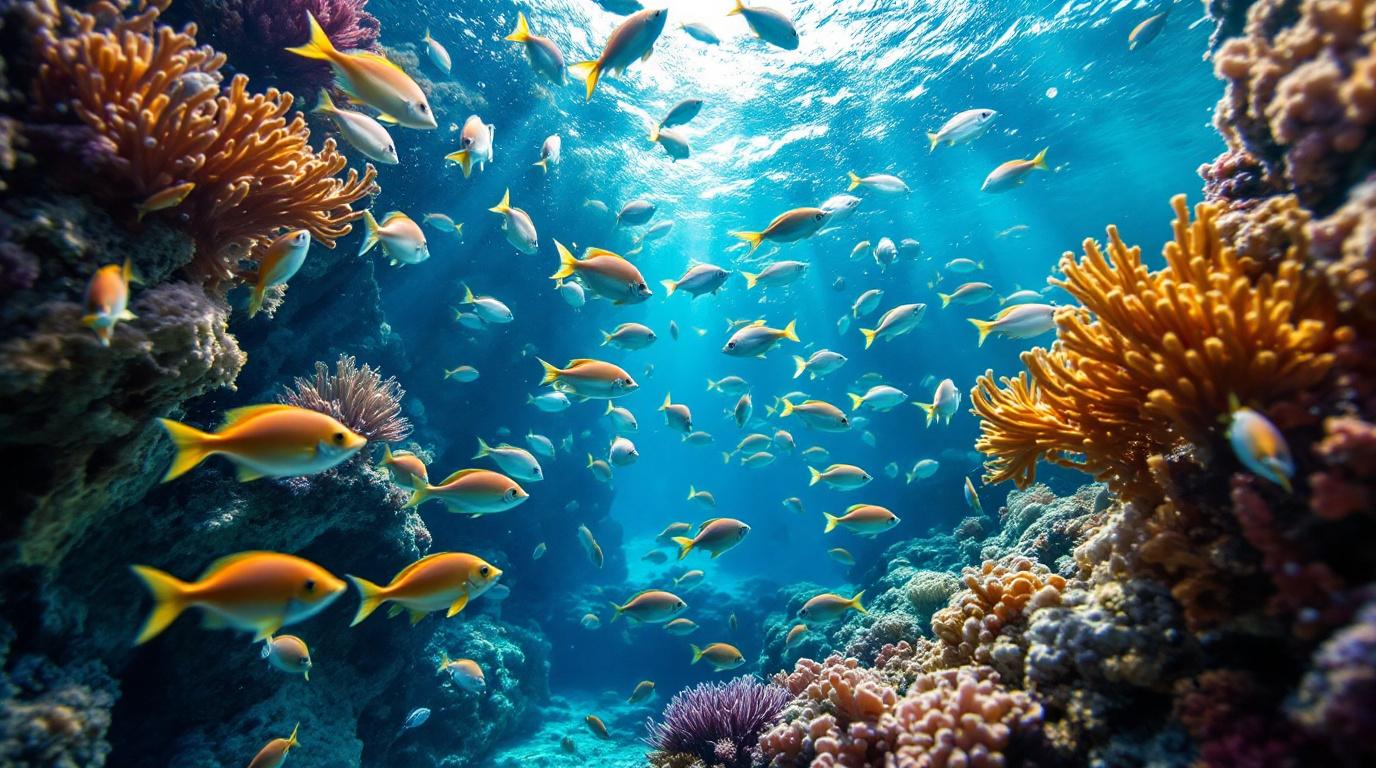
Suitable diving equipment is important for your comfort and safety. As a beginner or occasional diver, renting from a local dive centre is a practical choice. This saves you the cost of investment and carrying heavy bags. Make sure you carefully check any rented gear in advance.
If you dive more often, it may be worth buying your own basic kit, such as a mask, snorkel and fins. These items are personal and a good fit greatly increases comfort. Your own dive computer is also a useful investment for the more experienced diver. For larger items such as a regulator or buoyancy control device (BCD), you can wait until you know that diving is a lasting hobby.
Safety first: important tips for divers
Safety always comes first when diving. Make sure you have a valid diving certificate from a recognised organisation such as PADI or SSI. Never dive alone and perform a buddy check with your dive partner before every dive. Know your own limits and do not dive deeper than you are certified for.
Always check local conditions such as currents and weather forecasts. Be aware of local regulations and respect protected marine areas. Also make sure you know what the emergency procedures are and where the nearest decompression chamber is located. Thorough preparation ensures a relaxed and safe dive.
‘ Take only memories with you and leave no trace. ’
Dive sustainably: consciously choose marine protection
As a diver, you have a responsibility to protect the fragile underwater world. Choose dive centres and operators that value sustainability. Look for certifications and ask about their environmental policy. A knowledgeable operator will give you a detailed briefing on how to interact respectfully with underwater life.
Do not touch anything underwater. Coral is a living organism that can be damaged by the slightest touch. Do not chase animals for a photo and do not feed them. Take only memories with you and leave no trace. By making conscious choices, you help preserve the places you enjoy so much.
More than just diving: combine your holiday
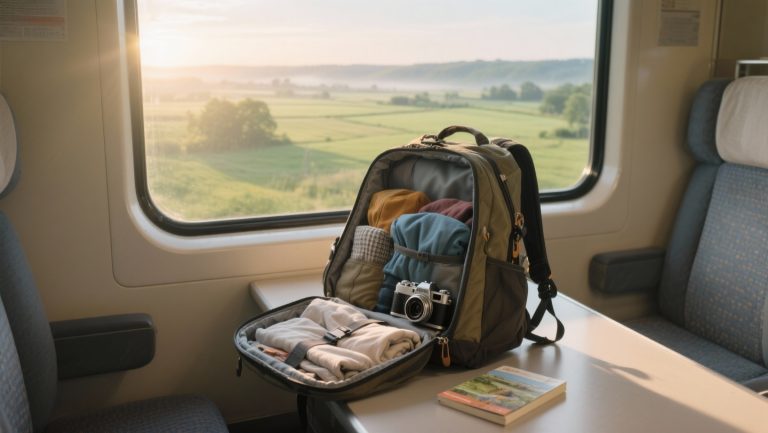
A diving holiday can easily be combined with other travel activities, which fits well with a self-organised road trip or train journey. For example, plan a route along the Croatian coast and alternate cultural excursions in cities such as Split and Dubrovnik with diving days in the Adriatic Sea. Or combine a tour of Egypt along the Nile with a week of diving in the Red Sea.
Even closer to home you can create combinations. A weekend in Zeeland could include diving in the Eastern Scheldt, cycling through the dunes and exploring the Delta Works. By keeping your trip flexible, you create a varied holiday with activities both above and below the water.
Planning your diving holiday: a checklist
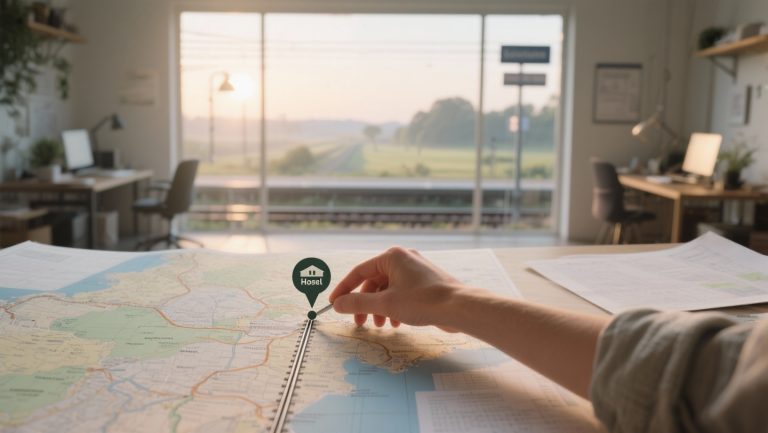
A structured approach helps you to overlook nothing when organising your diving trip. Use this checklist as a guide for careful preparation.
- Certification: Check whether your diving certificate is still valid and appropriate for your planned dives
- Destination and season: Choose a location that suits your level of experience and research the best time to travel
- Dive centre or operator: Select a reliable provider and book your dives or dive package
- Transport and accommodation: Book your flights, hire car or train tickets and arrange accommodation that makes sense along your route
- Equipment: Decide what you will bring yourself and what you will rent locally. Check your own kit well before departure
- Insurance: Take out travel insurance that covers diving, including medical emergencies
- Health: Make sure you are in good physical condition and consult a doctor if you have any doubts about your medical fitness
- Documents: Make copies of your passport, diving certificates, logbook and insurance documents