
 NL
NL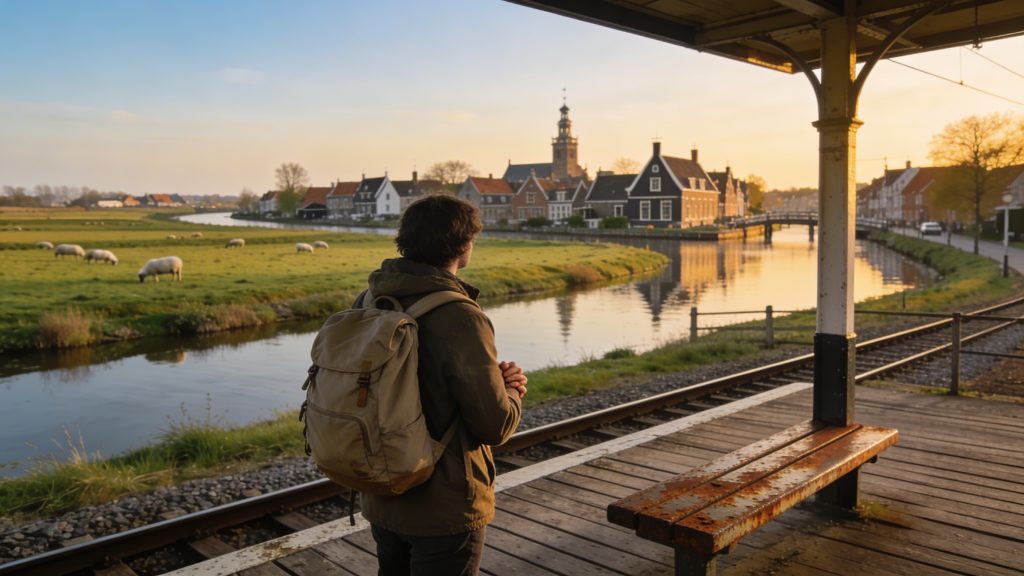
The Frisian Eleven Cities can be reached on foot via a handy local line between Leeuwarden and Stavoren that runs past six of the eleven historic towns. This combination of train journeys and city walks gives you freedom. You divide the route into stages. You don’t need a car. Discover why this approach makes the Eleven Cities route accessible for every walker.
Why choose train travel for Eleven Cities walks
The Eleven Cities route is famous for its classic skating races, but on foot the experience is at least as special. The total walking route is roughly 200 to 250 kilometres. The exact distance depends on the variants and diversions you choose. You can easily spread this distance over several days by using trains and buses as transport between the towns.
The flat Frisian landscape with its ditches, canals and meadows makes long walks comfortable. By choosing train journeys for walking holidays you use sustainable transport. At the same time you enjoy the peace and quiet of the countryside. You don’t need to walk back to your starting point and you can end each stage at the next station.
Leeuwarden is the central hub for these walks. From this main interchange there are direct trains to Sneek, Workum, Hindeloopen, Stavoren, Franeker and Harlingen. You reach the other towns with a short bus connection or an extra walk. The nearest station is your starting point.
Which train connections fit your walking route
Most trains to the Frisian Eleven Cities depart from Leeuwarden Central. The Leeuwarden–Stavoren line is the main connection for walkers. It runs through the heart of the Eleven Cities area. The train stops at several towns.
For a clear overview of the towns you can reach:
- Leeuwarden to Sneek: this line runs via IJlst. This is where you get off. You’ll see quiet gardens and an old sawmill.
- Leeuwarden to Stavoren: the stopping train passes Workum and Hindeloopen. Both towns are known for their colourful façades and IJsselmeer shoreline.
- Leeuwarden to Harlingen: via Franeker. This combination offers fortified towns and access to the Wadden Sea.
- Bus from stations: for Bolsward, Dokkum and Sloten you travel by bus from Workum, Harlingen or IJlst
A day ticket for unlimited travel is recommended if you are planning several stops. Check the latest timetable via the NS journey planner so you can estimate your connections in advance. Bear in mind that some lines have an adapted timetable at weekends.
How do you divide the Eleven Cities route into walking stages
Walking the full Eleven Cities route in one go takes several days and requires a good level of fitness. By using train stations you can split the route into manageable stages of 15 to 30 kilometres per day. This gives you time to properly explore the towns and enjoy the landscape in between.
A practical division could look like this:
- Day 1: Leeuwarden to Sneek (around 25 kilometres), via IJlst for a short break
- Day 2: Sneek to Workum (around 20 kilometres). You walk through polder landscape and along canals.
- Day 3: Workum to Stavoren (around 15 kilometres). You stop en route in Hindeloopen.
- Day 4: Stavoren back to Leeuwarden, or on to Bolsward by bus and then a walk to Harlingen
- Day 5: Harlingen to Franeker and back to Leeuwarden by train
You don’t have to follow a fixed direction. Many walkers start in Leeuwarden and choose their own order based on the weather, their interests and the time available. Keep your first stages short so you can get used to the rhythm. After that you can plan longer distances.
What makes each of the Eleven Cities special for walkers
Every town along the route has its own character. Sneek is known for its water sports culture and its centre with the famous Waterpoort. IJlst offers a quieter alternative with historic architecture and traditional workshops.
Sloten is the smallest of the eleven towns and can be reached by minibus from IJlst. The ramparts and narrow canals create a compact and photogenic setting. Hindeloopen attracts visitors with its picturesque façades. You will also hear stories there about skating history. Workum has a lively centre as well as the Jopie Huisman Museum, where folk art takes centre stage.
Stavoren marks the end of the rail line on the IJsselmeer. The legend of the Lady of Stavoren is told by the statue in the harbour. From here you return towards Leeuwarden or continue the route northwards by bus.
Bolsward lies a little further from the railway line. The town requires an extra bus ride. Its historic centre with distilleries and monasteries is well worth the trip. Harlingen is the gateway to the Wadden Islands and has a harbour atmosphere with maritime history. Franeker is known for its planetarium, the oldest working one in the world, and its compact town centre. Dokkum is a bastion town with fortifications and old city walls.
‘ Friesland is known for its changeable weather. ’
Practical preparation for train walks in Friesland
You will be walking for several days and visiting different towns. This requires some planning. Make sure you bring waterproof walking boots. Polder paths become muddy when it rains. The wind on the IJsselmeer is colder than you might expect.
A windproof jacket or raincoat is always useful, even in summer. Friesland is known for its changeable weather. Not every stage runs past shops or cafés. So take enough water with you. On longer stretches through the polders there is little shade, so remember sun protection too.
Download offline maps to your phone or take a paper route map with you. The signposting often follows the junction system used for cyclists. This system is also useful for walkers. The green signs indicate the classic clockwise Eleven Cities route. There are also alternative routes along quieter paths.
Check the train and bus timetables in advance. Some smaller stops have limited services, especially on Sundays. If you are travelling with a group or taking bikes, it is wise to travel outside rush hours. You can usually take your luggage without any problems, but a light rucksack makes long walking days more comfortable.
Where to stay overnight during your Eleven Cities walk
For multi-day walks you will need overnight stays. Most of the Eleven Cities have hotels, bed and breakfasts and holiday homes. Popular options are Sneek and Hindeloopen, both with a wide range of accommodation and lively terraces.
Sloten and Stavoren are smaller places with fewer options, so book early there. Harlingen and Franeker offer more choice and are easy to reach by train, which makes them good bases for several nights.
You can also return to Leeuwarden every day and stay there overnight, walking a different stage each day. This approach saves time on checking in and out and gives you a fixed base. It does mean, however, that you have to travel there and back every day, which adds extra travel time.
Tips for a relaxed walking experience
Start your day early to avoid crowds and make the most of the daylight. Especially in spring and autumn the days are shorter, and a late start can mean you cover the last kilometres in dusk.
Schedule breaks at windmills, bridges or small villages. These rest stops make the walk more varied and give you the chance to consciously take in the landscape. Many walkers appreciate the peace of the Frisian countryside and the contrast between water and meadows.
Talk to people in village cafés or at small shops. You’ll often hear local tips about beautiful walking routes or shortcuts from residents themselves. Friesland is known for its hospitality, and many locals are happy to share their knowledge of the area.
Avoid overloading your rucksack. Only take what you need for that day. You will be on the road for several days. Send your luggage ahead to your next accommodation. Some hotels offer this service for a small fee.
‘ This approach gives you more flexibility and less time pressure. ’
What to do in case of bad weather or delays
The weather in Friesland can change quickly. Rain or strong winds make walking more difficult. The train stations then offer a way out. You can shorten a stage by getting on earlier, or skip a section and come back to it later.
If trains are delayed, check the latest travel information in the NS app. Alternative bus connections are available between many of the Eleven Cities, but they run less frequently. Take this into account when planning your time.
Some walkers choose not to complete the full route in a single holiday. You can also spread the Eleven Cities route over several weekends, exploring a new section each time. This approach gives you more flexibility and less time pressure.
Discover more walking routes on Traveller Tips
The combination of train travel and Eleven Cities walks is an example of how you can travel through the Netherlands in a sustainable and comfortable way. On the Traveller Tips website you will find much more information about walking holidays, train routes and destinations, which you plan yourself. Browse the other articles to prepare your next trip and discover which routes suit you.
Frequently asked questions
The most efficient and comfortable base is to first travel by (intercity) train to Leeuwarden and change there to the regional trains. From Leeuwarden, Sneek (with onward travel to IJlst), Workum, Hindeloopen, Stavoren, Franeker and Harlingen are directly accessible by train as starting points for Eleven Cities walks. For Bolsward and Sloten, a combination of train (to Workum or IJlst/Sneek respectively) and bus is the most practical. Dokkum is easiest to reach by taking the train to Harlingen or Leeuwarden and then continuing by bus.
Plan your stages so that you start or finish in an Eleven Cities town with a station (Leeuwarden, Sneek/IJlst, Workum, Hindeloopen, Stavoren, Franeker, Harlingen) and use the train to travel to your starting point in the morning and back to your accommodation in the afternoon. Choose one fixed base (for example Leeuwarden or Sneek) or two to three bases and travel from there by train/bus to the start of each stage, so your luggage can stay at your accommodation. Use a public transport day ticket or credit on your OV-chipkaart and avoid rush hours if you are walking with a large rucksack. For towns that are harder to reach (Sloten, Bolsward, Dokkum), combine the train with a short bus ride and plan your overnight stay there, so that you can walk on to a town with a station the next morning.
Essential Traveller Tips are: plan your stages and your train and bus connections in advance via a journey planner, using Leeuwarden as your central hub. Ideally buy a day ticket or use an OV-chipkaart and avoid rush hour, especially with a rucksack or (folding) bike. Check timetables, any engineering works and connections to ferries or buses to towns without stations, such as Sloten and Dokkum, well in advance. Take waterproof shoes, windproof clothing and enough water, because parts of the route run through open polder and waterside areas.
For the Eleven Cities walks, a nationwide Dal Voordeel (Off-Peak Discount) season ticket (or similar discount subscriptions on the OV-chipkaart) and regional day tickets often offer the best value for money, because they allow you to make several short train journeys between the towns at a reduced fare outside peak hours. If you are doing everything in a few consecutive days, a day ticket for unlimited train/public transport in Friesland or a multi-day promotional ticket is usually cheaper than buying separate tickets for each leg. Ideally start and finish in Leeuwarden and combine the train services to Sneek/IJlst, Workum, Hindeloopen, Stavoren, Franeker and Harlingen to plan your stages efficiently. Check current deals and regional day tickets in advance, as these change regularly and can save you a lot of money.
Not all of the Eleven Cities have their own railway station: eight of the eleven are accessible by train. Sloten, Bolsward and Dokkum can be reached by bus, usually with a change in a town with a station (for example Leeuwarden, Harlingen or Workum). Buses generally connect well with the train services and are included in nationwide public transport planners. This means you can still complete the full Eleven Cities route entirely by public transport.