 NL
NL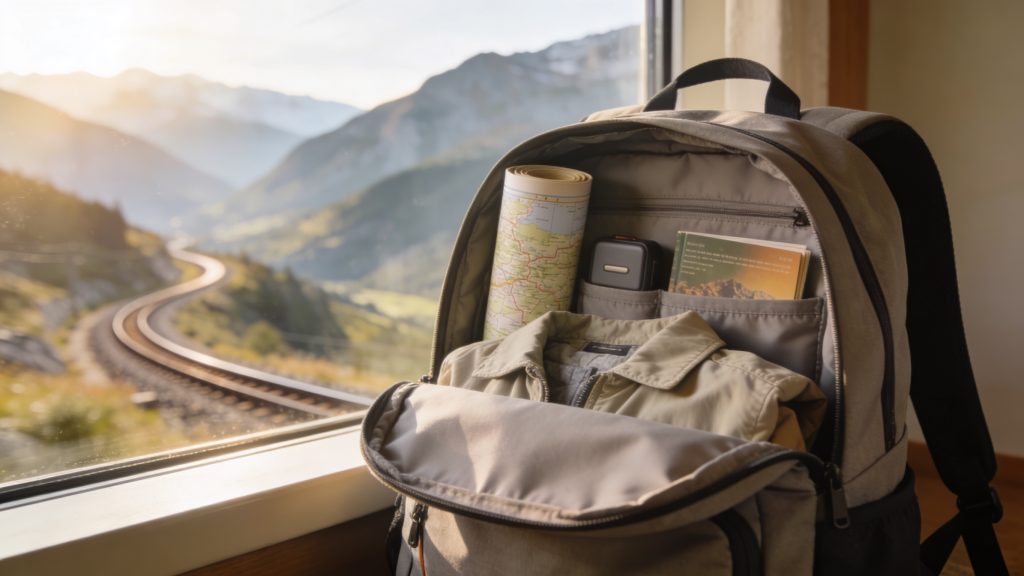
A train-hiking holiday calls for targeted choices in what you take with you. Your luggage needs to be compact for transfers. At the same time, it has to contain everything for multi-day hikes. The right gear makes the difference between a comfortable trip and unnecessary burden. With this packing list you travel light, stay flexible and enjoy the journey to the full.
Whether you are planning your first train trip for hiking holidays or are already experienced: the trick is to be selective without sacrificing comfort. The combination of trains and trails requires multifunctional items and smart priorities. Below you will find what you really need.
The right bag for train and trail
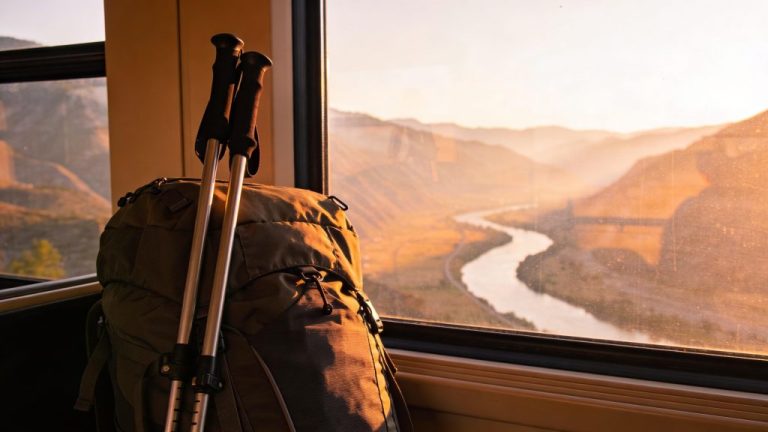
A rucksack of 40 to 50 litres is the foundation. This volume is compact enough for use on trains and platforms. At the same time, it offers enough space for clothing and hiking gear. Choose a model with adjustable shoulder straps and a hip belt for comfortable carrying during transfers.
Packing cubes keep your luggage organised. You can quickly find what you are looking for without unpacking everything. A rain cover protects your rucksack against precipitation at stations. This protection is also important on mountain paths. Add waterproof dry bags for documents, phone and other sensitive items.
In addition to your main rucksack, take a daypack with you. This has a capacity of 15 to 20 litres. You use it during hikes and for day trips from your accommodation. A foldable model takes up little space when you are not using it.
Clothing for train and trail
The layering principle is the key for train-hiking holidays. Thermal underwear forms the bottom layer in cooler weather. On top of that you wear breathable T-shirts or merino wool shirts that regulate moisture. As an outer layer, take a fleece jacket or softshell, depending on the season.
For a two-week trip, count on this basic wardrobe:
- 1 thermal long-sleeved top
- 2 to 3 breathable short-sleeved T-shirts
- 1 fleece jacket or softshell
- 1 long walking trousers with zip-off legs
- 1 pair of shorts or sports leggings
- 7 to 10 sets of underwear
- 2 to 3 pairs of walking socks
- 1 pair of normal socks
Walking trousers with zip-off legs have two functions. You can zip the legs off and then you have a pair of shorts. This saves space and weight. Choose quick-drying materials so you can wash items on the way. Many accommodations have laundry facilities, so you do not need to take separate clothes for every day.
Protection against weather and the elements
Rain protection is essential for train-hiking holidays. It is part of the basics of your gear. A compact rain jacket or poncho weighs little and packs down small. Ponchos are often lighter. In windy conditions, a well-fitting rain jacket works better. Add rain trousers for hikes in regions with frequent rainfall.
For cooler weather, take gloves and a hat or buff. A buff is multifunctional. Use it as a hat, scarf, headband or face covering against wind. For summer hikes, sunglasses, a cap and sun cream with SPF 30 or higher are essential.
Footwear for comfort and performance
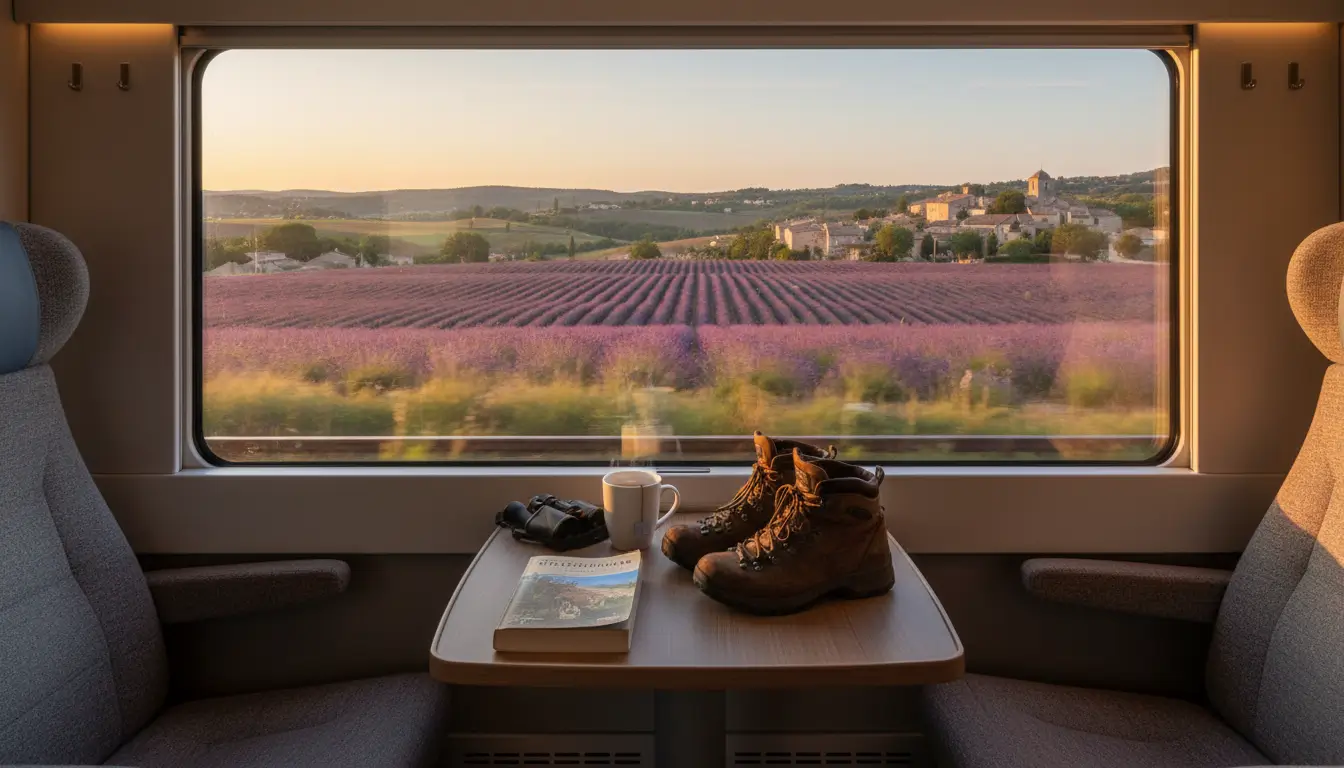
Good walking boots are the most important investment. Choose boots that match the terrain. You use sturdy mountain boots for alpine routes. Lighter walking shoes are suitable for hills and forest paths. Break in new boots properly in advance to prevent blisters.
In addition to walking boots, take comfortable trainers or sandals. You wear these on trains, at stations and during evenings in town. Your feet get a rest from the walking boots and you have clean footwear for accommodations and restaurants.
‘ They are never your only navigation tools. ’
Navigation and safety on the way
Topographical maps at a scale of 1:25,000 or 1:50,000 remain reliable. They work even when your phone has no signal. They also work when the battery is dead. Combine physical maps with a compass. Also add a waterproof map case. GPS devices or GPS watches are useful additions. These are satellite-guided navigation devices that determine your position. They are never your only navigation tools.
A head torch with spare batteries is indispensable for early starts, late arrivals or emergencies. Add a whistle and a small mirror for emergency signals. Write down the phone numbers of rescue services in the countries you are visiting.
Health and personal care
A compact first aid kit is necessary. It should contain gauze, bandages, tape and disinfectant. Blister plasters deserve extra attention. Take plenty. Use them preventively at the first sign of rubbing. Painkillers, antacids and remedies for diarrhoea also belong in your kit.
For personal care, opt for travel sizes. You can also choose solid alternatives. A bar of soap and a shampoo bar weigh less than liquid products. They also do not leak. Add a small tube of sun cream, insect repellent and a tick remover. A light microfibre towel dries quickly and takes up little space.
Food and hydration during the journey
A reusable water bottle of at least 0.75 litres is handy. Fill it up at stations and in accommodations. Many train stations have drinking water points. For cold days, add a flask. You can use it for hot tea or coffee during train journeys.
Take snacks for the journey that keep well and do not crumble:
- Nuts and dried fruit
- Granola or energy bars
- Instant coffee or tea bags
You do not need to take full meals with you. Train stations and mountain huts serve food. In towns you will find supermarkets for stocking up.
Electronics and connectivity
A power bank is indispensable for long travel days. These are days when you spend several hours on the train or go on long hikes. Choose a model with enough capacity to fully charge your phone at least twice. A universal travel adapter works in several countries. It saves space compared with separate adapters per country.
Take the following electronics with you:
- Phone and charging cable
- Power bank
- Universal travel adapter
- Headphones or earphones for trains
- Camera (optional for photography)
An extension lead with multiple sockets is useful in train carriages and hostel rooms. There are often only a few sockets. Keep this compact and light.
Documents and admin
Keep your passport or ID card, train tickets and insurance documents in a waterproof pouch. Make digital copies. Store them in the cloud. You can also email them to yourself. Also take cash and bank cards. Distribute these across different places in your luggage.
A small notebook and pen are practical for addresses, tips from fellow travellers and planning. Digital notes work too, but paper never runs out of battery.
Seasonal adjustments
Adapt your packing list to the season in which you are travelling. In spring and autumn, rain gear is the priority. Warm layers are also important then. Temperatures fluctuate strongly. The layering principle works best in these conditions. Make sure you have waterproof footwear for wet paths. You can also take overboots.
Summer calls for lighter clothing, but do not underestimate the sun in mountain regions. Swimwear is useful on routes along lakes or swimming pools. Winter trips require thermal underwear, a down jacket and thick gloves. Winter walking boots with good grip are sometimes necessary too.
‘ Plan washing moments along the way. ’
Tips for packing light and efficiently
Roll your clothes. This works better than folding. It saves space and prevents creases. Put heavy items such as shoes and food at the bottom of your rucksack. Place them close to your back. Lighter items go on top.
Use multifunctional items where possible. For example: a buff serves as a hat, scarf and sweatband. Choose clothing you can combine into several outfits. Then you do not need to take separate sets for each day.
Weigh your rucksack before departure. For train journeys, keep the weight preferably under 10 to 12 kilograms. You can carry this weight comfortably during transfers. It is also pleasant during hikes. Plan washing moments along the way. That way you take fewer clothes with you.
Pre-departure checklist
Check these points before you leave:
- Passport or ID card is valid for the entire trip
- Train tickets and reservations are printed or available digitally
- All electronics are fully charged
- Weather forecast for the first few days has been checked
- Digital copies of documents have been stored
- Travel plan has been shared with family or friends
- First aid kit is complete and medicines have been packed in sufficient quantities
The balance between minimal and functional
The secret of successful train-hiking holidays lies in thoughtful choices. Every item in your rucksack should have a clear purpose. Minimalism does not mean taking too little. It means taking exactly the right things in the right quantities.
Foot protection and weatherproof clothing are not things you can minimise. A good pair of walking boots and reliable rain gear are essential. They weigh more than other items. Even so, they are worth their weight for your comfort during the trip. Many experienced travellers deliberately take less. They take less than they initially think they will need. Top up locally on the way where it is really necessary. This is always possible.
On the Traveler Tips website you will find more useful information on train journeys, walking routes and preparation for active holidays. Discover practical tips on destinations, regulations and planning. These tips will help you prepare your next trip even better.
Frequently asked questions
Use one medium-sized, well-adjustable rucksack (40–50 litres) with a hip belt so it is manageable on the train and carries the weight on your hips while walking. Distribute the weight logically: heaviest items against your back and at the bottom, light and frequently used items (snacks, rain jacket, power bank, tickets) at the top or in side pockets. Pack in layers with multifunctional clothing (zip-off trousers, merino wool, buff) so the same set is comfortable in cool carriages and during strenuous walks. Use packing cubes and a small day or tote bag for quick access on the train without having to open your entire rucksack all the time.
Indispensable items are good, broken-in walking boots with suitable socks and an adjustable rucksack with rain cover. Always take layered clothing (thermal top, fleece/softshell, zip-off trousers) plus a waterproof and windproof jacket and, if necessary, rain trousers so you can switch between warm, cold and wet weather. For safety, a first aid kit with blister plasters, emergency blanket, head torch, whistle and reliable navigation tools (map + compass and/or GPS/phone) are essential. In addition, a reusable water bottle, snacks, sun cream, cap/sunglasses and insect repellent ensure extra comfort on a wide range of terrains.
Take light, compact comfort items such as earplugs or noise-cancelling headphones, a sleep mask and an inflatable or small neck pillow. A reusable water bottle and some light snacks (nuts, energy bars) increase your comfort without adding much weight. Choose an e-reader or phone with offline entertainment instead of books to save space and kilos. A light microfibre towel and a small toiletry bag with travel-size products make your journey more comfortable without weighing down your bag.
Choose multifunctional clothing such as zip-off trousers, a buff that serves as a scarf/hat/headband and merino wool or quick-drying layers that you can wear for several days. Use packing cubes and roll your clothes to save space and keep your bag organised. Take compact items such as a microfibre towel, shampoo bar and a light rain poncho instead of heavy, bulky versions. Plan to do laundry en route so you need to take fewer sets of clothes.