
 NL
NL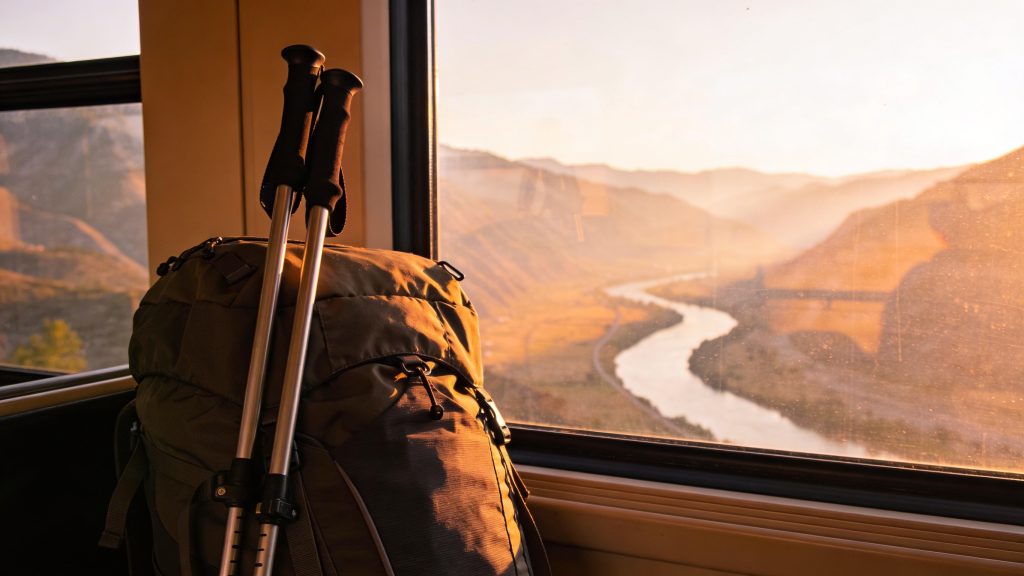
Spring and autumn are the most suitable seasons for train hiking holidays in the Netherlands and the Alps, because you will find fewer crowds and the weather stays pleasant for multi-day hikes. Avoid winter, when mountain huts are closed, and summer heatwaves that make walking in the hills hard work. Find out which months show your destination at its very best.
Why the season determines your train hiking holiday
The season in which you set off has a direct impact on your hiking experience. Temperatures, rainfall and opening times of mountain huts vary from month to month. In southern destinations such as Andalusia or Portugal, the late season makes hiking more comfortable thanks to mild temperatures around 24 degrees. In northern areas such as Norway or Sweden, summer is the only time when trails are dry and the days long enough.
The connection between train and the starting point of hiking routes is also linked to the season. Local buses to mountain villages often only run from April to October. In addition, how busy the trails and stations are will determine how much peace and quiet you find on the way. With train journeys for hiking holidays you consciously choose to travel sustainably, but that works best when train services are running normally and the trails are not too crowded.
Spring offers blossom and gentle routes
Between March and May, southern routes come back to life. In Andalusia and the Portuguese Algarve, temperatures range between 20 and 25 degrees. Flowering fields and green hills make hiking pleasant without the heat of July and August. Beaches are still quiet and train stations less busy.
In mountain regions such as Tyrol or the Black Forest the hiking season starts early. Trails are less muddy than in autumn. Routes to the Feldberg or the gorges near Hinterzarten become easily passable from May onwards. Mountain huts open at the end of April, making multi-day hikes possible.
- Temperatures between 15 and 25 degrees, suitable for longer hikes
- Fewer tourists on the trails and in the trains
- Nature in bloom in low-lying areas
- Mountain huts and local bus services are starting their season
Summer works for northern and high-altitude routes
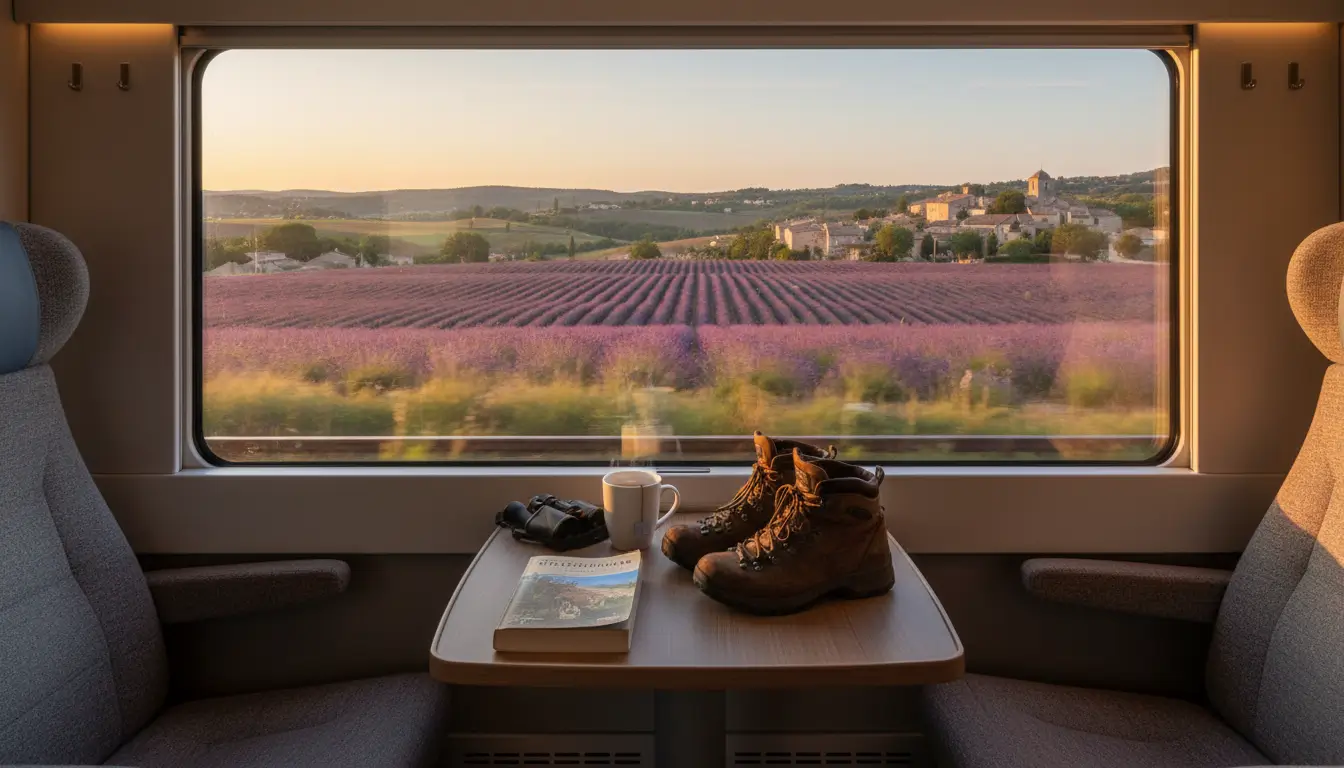
From June to August, northern and Scandinavian routes are at their best. The Norwegian Romsdalen valley and the Swedish Kungsleden offer long days with dry weather. Waterfalls, fjords and mountain valleys are easily reached from stations such as Dombås and Åndalsnes. In these regions, summer is the only season with reliably good hiking conditions.
Avoid southern hotspots in these months. Temperatures above 30 degrees make hiking tough and the trails are overcrowded. Trains to popular coastal resorts are busier and more expensive. If you still want to hike in summer, choose high mountain areas in the Alps. Temperatures stay cooler there and the views are crystal clear.
Autumn combines peace with pleasant temperatures
September to November is ideal for Mediterranean and central European destinations. Around Seville, Cádiz and the south coast of Portugal, temperatures drop to between 20 and 25 degrees. Swimming is still possible and the trails are less busy than in summer. Trains have more space and prices fall.
In the forests of the Black Forest or Bohemian Switzerland the leaves change colour in October. Routes through the Eifel or Luxembourg Ardennes offer tranquillity and explosions of colour. Mountain huts only close at the end of October, so multi-day trips remain possible. It is the best time for anyone wanting to avoid crowds without compromising on hiking quality.
- Pleasant temperatures for hiking in southern Europe
- Autumn colours in forests and hills
- Fewer tourists on trails and at stations
- Lower prices for trains and accommodation
‘ Mountain huts close and trails become impassable. ’
Winter demands careful choice and preparation
December to February is suitable for mild coastal routes or low-lying areas. Beach walks in Portugal or southern Spain are still possible with temperatures around 15 degrees. Trails are empty and trains are cheap. This season suits those seeking peace and quiet who do not mind shorter days.
Do check snowfall in the Alps and Scandinavia. Mountain huts close and trails become impassable. Train services to mountain villages run on a reduced timetable or stop completely. Winter hiking requires careful planning and specialised equipment. For most train hiking holidays, winter is less suitable.
Regional differences call for a tailored approach
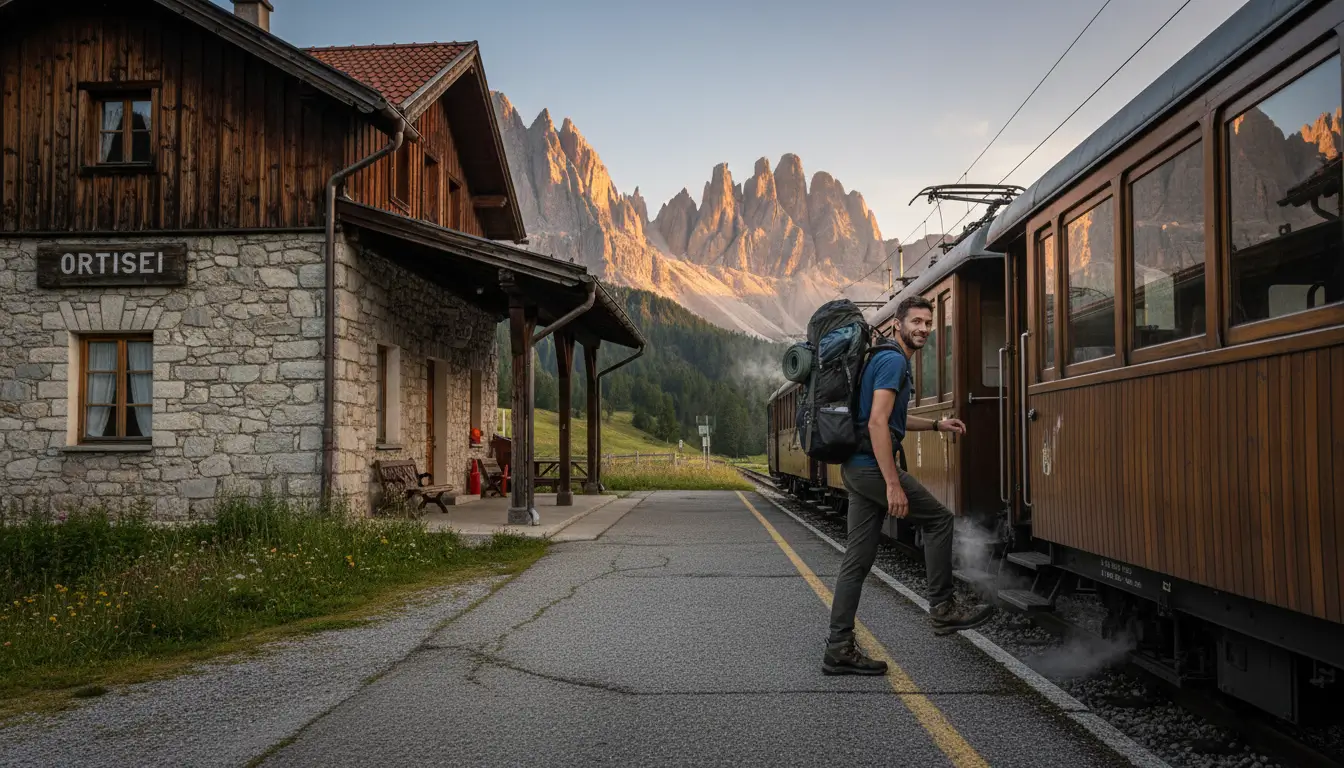
Each destination has its own climate conditions. Southern routes such as Seville to Cádiz or Lagos to Vila Real are at their best from September to October. Swimming is possible and trains take you straight to coastal paths. Start your walks from the stations for short or long routes.
The Black Forest and Titisee are accessible from May to October. Summer offers multi-day hikes, autumn brings autumn colours. Stations such as Hinterzarten give access to the Feldberg and gorges. In Tyrol and Scharnitz you can hike from June to September through the Karwendel mountains. Rivers and mountain huts are within a day’s reach. Avoid winter ice on these routes.
Luxembourg and the Eifel are suitable from April to October. Free public transport in Luxembourg makes stages easy to organise. Stations such as Troisvierges and Gerolstein provide access to Ardennes routes and dolomites. Corsica and Vizzavona are ideal from April to June and in September. Rugged mountain forests and small stations give access to woodland trails without extreme heat.
Practical choices for your planning
Use flexible train tickets so you can get off spontaneously at beautiful viewpoints or unexpected routes. Reserve seats for popular routes in peak season. Combine train with local buses for seamless access to the start of the trails. Check the bus timetable in advance, especially outside the main season.
Check weather forecasts per region before you leave. Take layers for mountain regions where temperatures change quickly. Sunscreen is still needed with autumn sun in southern areas. Low season means quiet trails, but also shorter days. Plan hikes with enough daylight.
- Flexible tickets give you the freedom to decide en route
- Check opening times of mountain huts and bus services
- Choose clothing layers and gear suited to the region
- Allow for shorter days outside the high season
‘ Fewer people on the trails prevents erosion and keeps nature intact. ’
Sustainable and mindful travel by season
Travelling by train reduces your emissions compared with flying or driving. Choose destinations where trains run directly to the starting points. Traffic-free centres such as Titisee make arriving relaxing. In Scandinavia, wild camping is allowed and huts are within a day’s walk. This makes multi-day trips without a car possible.
Low season offers extra benefits for mindful travel. Fewer people on the trails prevents erosion and keeps nature intact. Local businesses have more time for individual travellers. Prices are lower, making longer holidays more affordable. Choose routes that are open all year round to avoid pressure in peak months.
Shorter routes for beginners and families
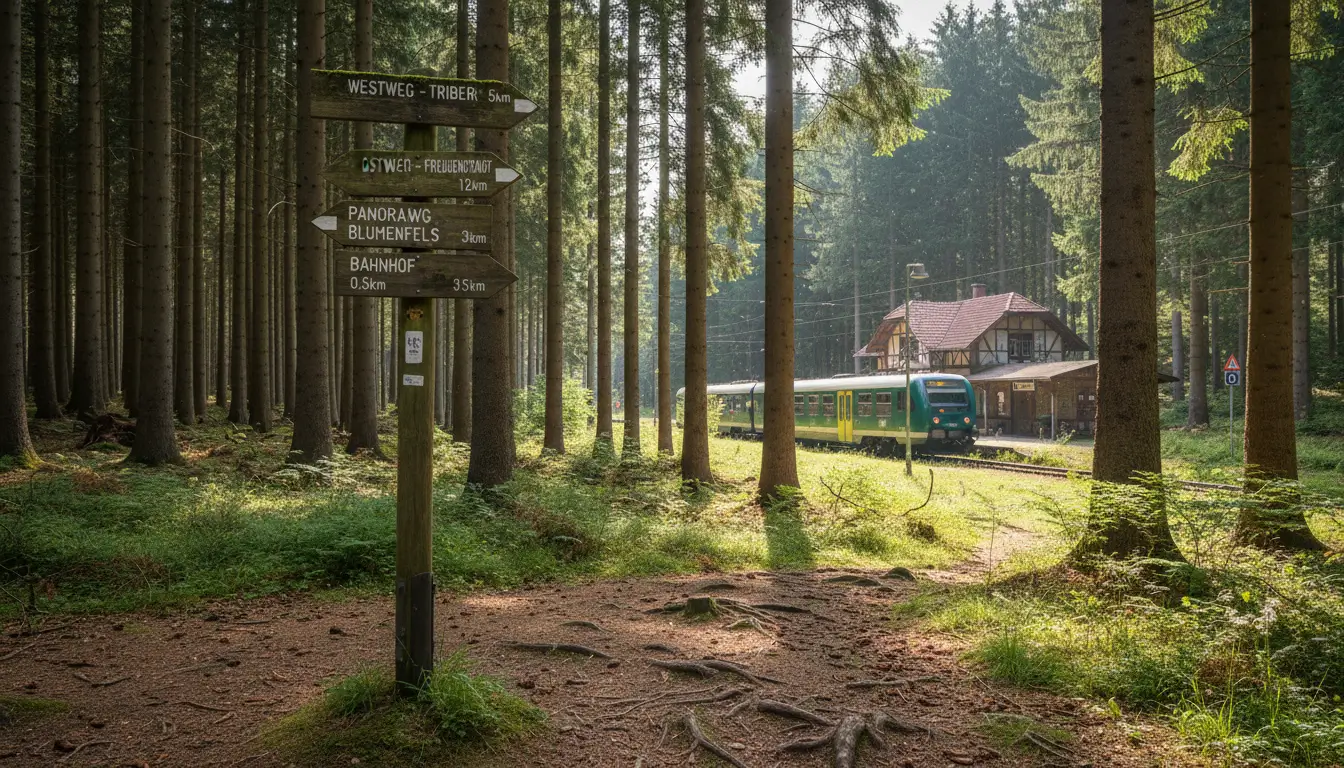
If you are planning a train hiking holiday for the first time, start with routes around Titisee or Jungfrau. Short walks of two to four hours give you a feel for how train and nature can be combined. Stations are close to the trails and alternatives such as boat trips are possible in bad weather.
Families should choose routes with regular opportunities to stop. Local trains often stop in villages with playgrounds or swimming spots. Mountain huts offer simple overnight stays and meals, which makes planning easier. Choose spring or early autumn for stable weather and less extreme temperatures.
On the Traveler Tips website you will find more information about routes, regulations and preparation for train holidays. Discover articles about specific destinations, equipment and planning. Explore the options and plan your next trip with reliable tips.
Frequently asked questions
For most train hiking holidays, spring and autumn offer the most pleasant hiking conditions, with mild temperatures and often quiet trails. In spring you get blooming landscapes and fresh greenery, especially in southern regions and low mountain ranges. In autumn, warm seasonal colours and clear light create particularly beautiful panoramas, especially in wooded and mountainous areas. Summer is mainly suitable for northern or higher regions, but in the south it can be too hot and crowded.
In summer, popular hiking routes and trains are at their busiest, especially during school holidays, which means that accommodation is often fully booked early and more expensive. In spring and autumn it is quieter on the trails and in the trains, with more choice and often better prices for accommodation, especially in southern and Mediterranean regions. In winter, many mountain and northern hiking routes are less accessible, but where hiking is still possible, both trains and trails are generally quiet and accommodation is easier to find. Regional peaks (for example autumn foliage walks in forest areas) can still lead to crowds locally and limited accommodation.
Important practical considerations include the available hours of daylight, as these determine how long you can walk safely without ending up in the dark. In spring and autumn, the days are shorter than in summer, which requires tighter timing and possibly a head torch. The season also determines your kit: in mountain regions you need extra layers, waterproof and windproof clothing and sometimes even snow or ice gear, while in southern regions you will mainly want light, breathable clothing and good sun protection. The season also affects how busy the trails and trains are, which may mean you need to book in advance or deliberately choose quieter periods, where facilities may be more limited.
Yes, certain destinations really come into their own in particular seasons. In spring, southern routes such as Andalusia and the Portuguese Algarve are ideal thanks to mild temperatures and blooming landscapes. In summer, northern routes such as Norway (Dombås–Åndalsnes) and Sweden are very suitable because of long days and stable weather. In autumn, Mediterranean regions and forest areas such as the Black Forest and Bohemian Switzerland stand out for their pleasant temperatures and spectacular autumn colours.
Train journeys and accommodation are usually most affordable in the low and shoulder seasons, roughly from November to March (except around public holidays and winter sports peaks). For southern destinations, September and October are often attractively priced and still pleasantly warm. In mountain and nature regions, prices often drop immediately after the summer holidays, from early September onwards. Flexible travel dates during the week (Mon–Thu) often give you extra savings.