 NL
NL
The choice between an A‑class and a low‑profile motorhome determines not only your budget, but also your driving experience and comfort while travelling. Both types offer similar living space with fixed beds and generous seating areas, yet differ greatly in construction, insulation and price. Find out which version best matches your travel plans.
What is the difference between A‑class and low‑profile
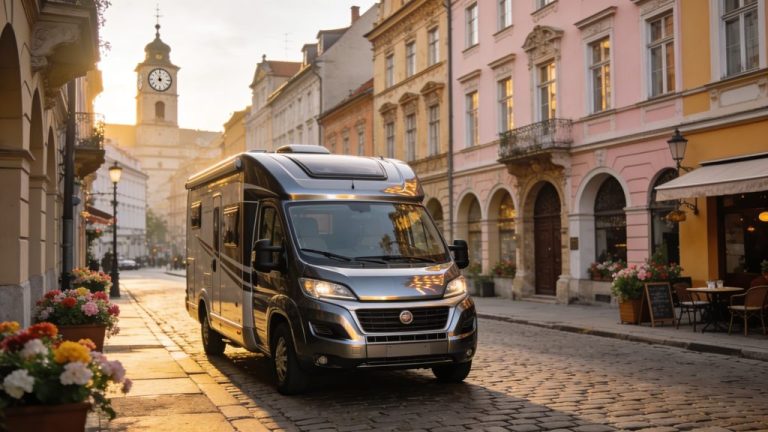
The main difference lies in the construction of the motorhome. In a low‑profile motorhome, the original cab of the base vehicle is retained, with the motorhome body built behind it. You can clearly see the transition between the driving area and the living area. This makes the motorhome more compact and more aerodynamic.
An A‑class motorhome is built entirely as one whole. The front section merges seamlessly with the living area, without the original cab. The panoramic windscreen extends right up to the roofline, giving a wider field of view and a greater sense of space. Want to know more about the different options? Then take a look at all motorhome types for a complete overview.
The difference in construction has a direct impact on insulation, comfort and price. A‑class motorhomes have a fully insulated front, which gives better protection against cold, heat and noise. Low‑profile motorhomes retain the standard insulation of the cab, which is less effective in extreme weather conditions.
Low‑profile: compact and budget‑friendly
The low‑profile motorhome is a popular choice for travellers looking for value without sacrificing living space. Because the original cab is retained, the weight stays lower and the motorhome is more economical to run. This makes longer journeys across Europe more affordable.
The handling feels more direct, similar to a van. The motorhome is more manoeuvrable on narrow roads and easier to park in cities. This is particularly useful on routes through mountainous areas or during city trips where parking space is limited.
The living area offers plenty of comfort for families or couples. Swivel seats in the cab create a spacious seating area, while the fixed bed at the rear ensures a good night’s sleep. Many models have an optional drop‑down bed above the dinette, making the motorhome suitable for four people. A panoramic roof hatch brings in extra daylight.
Advantages of a low‑profile motorhome
- Lower purchase price than an A‑class
- More economical fuel consumption thanks to lower weight
- More manoeuvrable and easier to park
- Sporty and compact appearance
- Rear garage for bikes or luggage
A‑class: luxury and space for all seasons
An A‑class motorhome offers a higher level of comfort and is built for longer journeys. The seamless integration between cab and living area creates a more generous living space. The panoramic windscreen gives a wide view of the landscape while driving, making travelling more relaxing.
Insulation is a major advantage. Because the front is fully insulated, the motorhome performs better in all seasons. This makes winter trips or journeys to colder destinations more comfortable. Heat loss and noise are significantly lower than in a low‑profile.
The interior finish is often more upmarket, with options such as underfloor heating and more storage space. The drop‑down bed above the cab is standard, increasing the total number of berths. The handling feels more stable on motorways, although the motorhome’s size means it takes more practice to park.
Advantages of an A‑class motorhome
- Better insulation against cold, heat and noise
- Greater sense of space thanks to the panoramic windscreen
- Standard drop‑down bed above the cab
- High‑quality finish and extra storage
- More comfortable on long distances
Price difference between A‑class and low‑profile
The purchase price is an important distinction. Low‑profile motorhomes are generally more budget‑friendly due to their simpler construction and use of a standard cab. A‑class motorhomes are more expensive because of the fully integrated body, better insulation and more luxurious finish.
The price difference ranges from several thousand to tens of thousands of euros, depending on the make, length and equipment. For those opting for shorter holidays or who are new to motorhome travel, a low‑profile often offers the best value for money. For longer trips or use in different seasons, the higher price of an A‑class is justified by the extra comfort and better insulation.
Besides the purchase price, maintenance costs and fuel consumption also play a part. Low‑profile motorhomes use less fuel because of their lower weight. This makes a clear difference on longer journeys across Europe. Maintenance costs are comparable for both types, although A‑class motorhomes need more attention to insulation and the drop‑down bed for winter trips.
Which motorhome suits your travel style
The choice depends on how you travel and where you want to go. For flexible routes through European cities and mountain areas, a low‑profile is more practical. Its manoeuvrability and lower fuel consumption make this type ideal for travellers who change location regularly. It is a good choice if you value easy parking.
If you opt for longer trips with more luggage, or if you are travelling with a family, an A‑class offers more comfort. The greater sense of space and better insulation make holidays to Scandinavia or journeys through different climates more pleasant. The drop‑down bed also provides more sleeping space without sacrificing daytime living space.
Test the handling in advance with a rental company so you can experience how both types behave on the road. Low‑profile motorhomes feel more direct in the steering, while A‑class motorhomes are quieter on motorways but need more room when manoeuvring. Also measure the dimensions of your intended parking spots or campsites, because an A‑class will not always fit on standard pitches.
Practical considerations for your choice
- Low‑profile: suitable for solo travellers, couples and shorter trips
- A‑class: ideal for families, long journeys and year‑round use
- Check insulation and drop‑down beds for winter trips
- Pay attention to pitch sizes on campsites for larger motorhomes
- Test handling with a rental vehicle to find your personal preference
Living space and layout: where are the differences
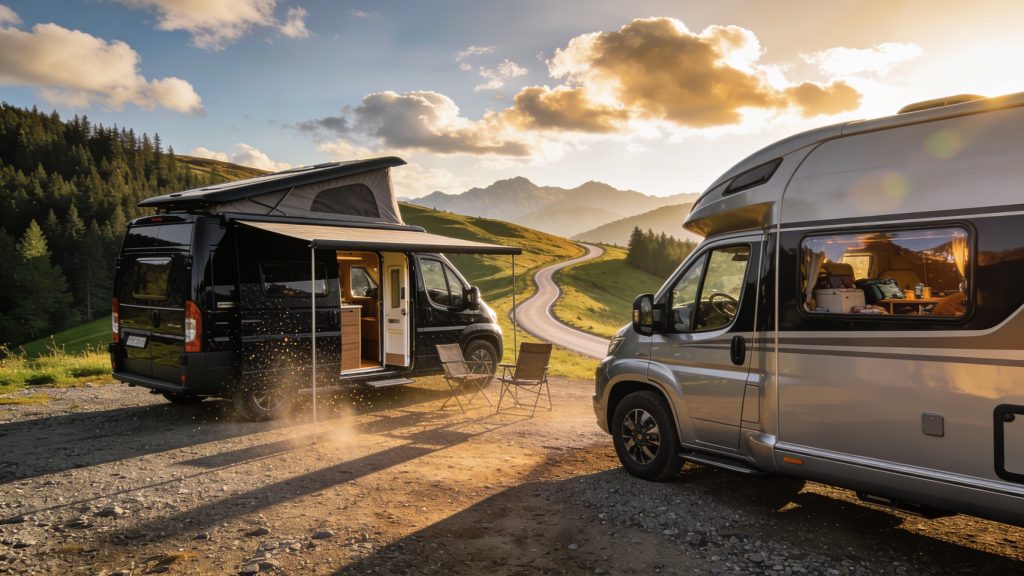
Both motorhome types offer similar basic facilities such as a spacious seating area, kitchen and bathroom. The difference lies mainly in the feeling of space and the flexibility of the layout. In an A‑class, the living area feels wider thanks to the panoramic windscreen and the seamless transition from cab to living space.
Low‑profile motorhomes often have a rear garage, useful for storing bikes, outdoor chairs or larger luggage. This is missing in many A‑class models, where storage is divided between cupboards and compartments in the living area. For those who want to travel actively with sports equipment, this is an important difference.
The swivel seats in the cab are used in both types as part of the seating area. In a low‑profile, the cab remains more separate, while in an A‑class the seats blend completely into the interior. This makes the seating area in an A‑class more spacious, but the functionality is essentially the same in both types.
Driving experience and fuel consumption in practice
The driving characteristics differ noticeably between the two types. A low‑profile steers more directly and feels lighter, similar to a delivery van. This makes it suitable for travellers who cover many different routes and value manoeuvrability.
A‑class motorhomes feel more stable on motorways and are less affected by crosswinds thanks to their streamlined shape. The longer wheelbase gives more calmness while driving, but makes tight bends and parking more difficult. For those who mainly drive long distances on major roads, this difference is less of an issue.
Fuel consumption is lower in a low‑profile because of its lower weight and better aerodynamics. This difference increases the more kilometres you drive. On long journeys through Europe, it can amount to several hundred euros per holiday. If you need to stay within a fixed budget, this is a factor to take into account.
‘ Leaks and draughts have more impact in a low‑profile. ’
Maintenance and seasonal points of attention
Both motorhome types require similar maintenance to the engine, tyres and technical systems. The difference lies in the seasonal preparation. A‑class motorhomes with full insulation require less preparation for winter trips, but you should still check the operation of the drop‑down bed and the heating.
With low‑profile motorhomes, extra attention is needed for the cab in cold conditions. Thermal screens for the windscreen and side windows help reduce heat loss. This is especially important when travelling to mountainous or northern regions where temperatures can drop significantly.
Always check the condition of the insulation around doors and hatches before departure. Leaks and draughts have more impact in a low‑profile. This is due to the less well‑insulated cab. In an A‑class the risks are smaller. Checking gaps and seams remains important to maintain comfort.
On the Traveler Tips website you will find much more information on motorhome holidays, routes through Europe and practical tips for on the road. Discover which destinations best match your motorhome type and how to prepare your trip in the best possible way.
Frequently asked questions
An A‑class motorhome generally offers the most comfort and flexibility for different travel parties and styles. Thanks to the fully integrated body, you get a very spacious, well‑insulated living area with extra sleeping places via the standard drop‑down bed. This makes the vehicle suitable for both couples and families, and for anything from short breaks to long, luxurious tours.
A low‑profile motorhome steers lighter and more directly, is narrower and usually shorter, which makes it easier to manoeuvre and park on narrow, unfamiliar roads and in city centres. An A‑class motorhome often feels more stable and comfortable on the motorway, with calmer driving behaviour and a better view, but it is wider and heavier, which makes tight bends and narrow streets more difficult. In busy city traffic, and when you need to turn quickly or park, the low‑profile therefore has a clear advantage. The A‑class requires a bit more planning and experience at roundabouts, in narrow streets and when parking.
The purchase costs of a low‑profile are clearly lower than those of an A‑class, which is more expensive because of its fully integrated body and additional luxury. In terms of running costs, the low‑profile is more economical thanks to its lower weight and better aerodynamics; maintenance costs are roughly comparable for both types. An A‑class, on the other hand, provides more space, better insulation and higher comfort, which is especially noticeable on long journeys and with year‑round use. In the long term, a low‑profile offers the best value if price and fuel consumption are decisive, while an A‑class offers the best value when comfort, space and all‑season suitability carry more weight.
If you mainly drive to specific destinations such as cities, narrow mountain roads or varied routes with many stops, then a low‑profile motorhome is the best fit thanks to its compact size, manoeuvrability and lower fuel consumption. If you prefer long, comfortable road trips with lots of driving hours, luggage and possibly with the family, then an A‑class motorhome is a better match because of the extra space, better insulation and panoramic view.