NL
NL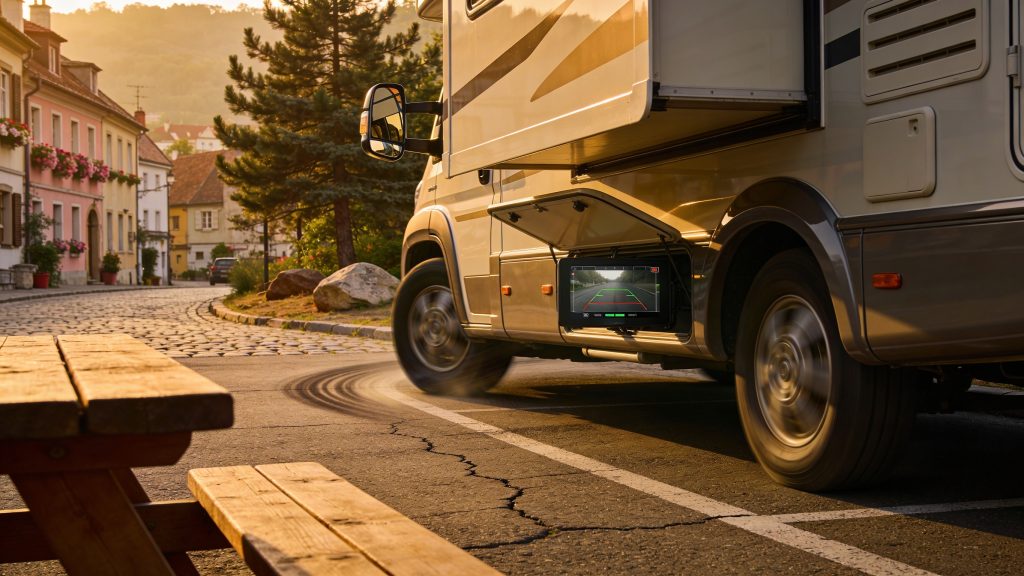
The semi-integrated motorhome combines space with an affordable entry point, but the larger size creates challenges when it comes to manoeuvring, parking and fuel consumption. Anyone who chooses a semi-integrated motorhome gets a comfortable vehicle for longer trips, but also accepts practical limitations in cities and tight spaces. How serious are these drawbacks in practice?
Anyone planning a first motorhome holiday soon faces the question: which type suits me? From compact campervans to luxury fully integrated models, every motorhome type has its pros and cons. The semi-integrated motorhome is popular, but it also has specific limitations that weigh more heavily for some travellers than for others. On the page All motorhome types you will find a complete overview of the different models and their features.
What makes the semi-integrated motorhome larger
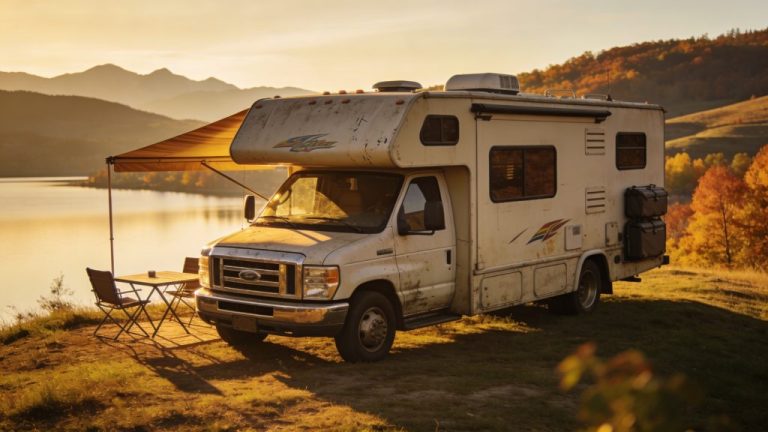
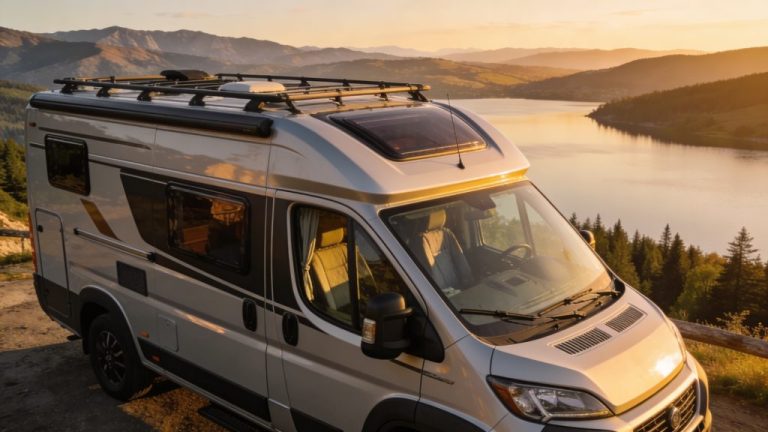
The semi-integrated motorhome is built on a standard chassis with cab, but has a body that is often longer and higher than that of a campervan. Most models are longer than 6 metres, some even more than 7 metres. This means you have more living space, can install fixed beds and create a layout similar to a static caravan. But that larger size also brings disadvantages when it comes to driving, parking and travelling through.
In particular, the higher driving height, often around 3 metres or more, creates additional challenges. Bridges, tunnels and some car parks are inaccessible. Even on campsites it can happen that certain pitches are too tight for this size. The length makes turning round and reversing more complex, especially in tight spots.
‘ Some destinations are less suitable for larger motorhomes. ’
Parking and manoeuvring require more practice
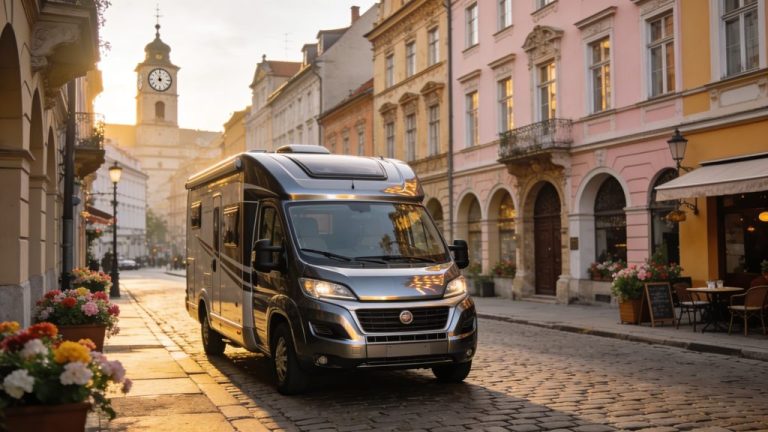
The biggest drawback in practice is the limited manoeuvrability. In narrow streets, historic village centres or busy car parks, the size really makes itself felt. A semi-integrated motorhome demands more attention when turning. Reversing also requires more concentration. Parking can be challenging. Where a campervan will still fit in a normal parking space, with a semi-integrated you often need a dedicated motorhome pitch or a generous bay.
Some destinations are less suitable for larger motorhomes. Think of mountain villages with hairpin bends, narrow coastal routes or nature reserves with restricted access roads. Even on campsites with small pitches it can be difficult to position the motorhome neatly. The turning circle is larger than that of a van, so you need more space to manoeuvre.
Higher fuel consumption due to weight and size
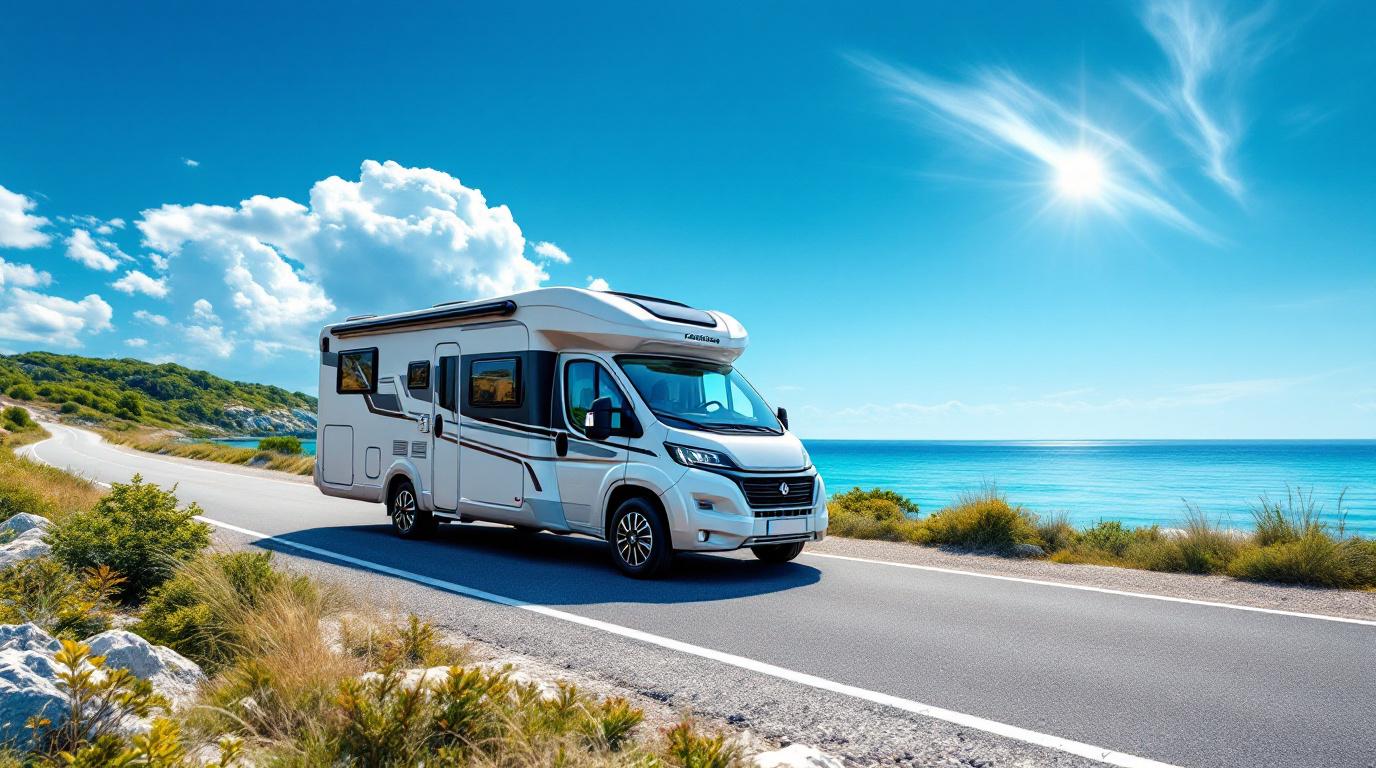
The larger size and higher weight lead to higher fuel consumption. Where a campervan uses on average between 8 and 10 litres per 100 kilometres, for a semi-integrated it is often between 10 and 13 litres. That difference may seem small, but on a 2,000-kilometre round trip it quickly amounts to 60 to 100 litres of fuel. With diesel prices of €1.80 per litre, that means an extra cost of more than €100 per trip.
Length also plays a role on toll roads and ferries. Many ferry operators charge by the metre, with anything over 6 metres becoming more expensive. On toll roads in France, Italy or Spain, a similar principle often applies. Anyone choosing a semi-integrated motorhome should therefore take into account higher travel costs than with a compact campervan.
How to reduce fuel costs with a semi-integrated motorhome
Although fuel consumption is higher, there are ways to limit the costs. When buying or hiring, pay attention to the weight of the motorhome. Lighter models use considerably less fuel than heavy versions with lots of extras. Also check whether the chassis is modern, as newer engines are often more economical and cleaner.
While travelling, driving calmly helps to reduce consumption. Maintain a constant speed, do not drive faster than 90 kilometres per hour and anticipate traffic situations. Cruise control can help avoid speed fluctuations. Avoid unnecessary load by only taking what you really need. Every extra kilo increases fuel consumption.
- Check tyre pressure regularly, as pressure that is too low increases fuel consumption
- Choose routes with fewer elevation changes, as climbing uses extra fuel
- Use air conditioning only when necessary, as this increases fuel consumption by 5 to 10 per cent
- Plan stops in advance and avoid unnecessary detours or drives around looking for places
‘ For those who spend a lot of time in the motorhome, this lack of a feeling of space can be a downside. ’
Limited headroom and less sense of space
Where a fully integrated motorhome has a completely streamlined body, the semi-integrated is still bound to the cab of the chassis. As a result, headroom above the cab is lower, which can be uncomfortable especially for taller people. In the rear of the motorhome the space is often sufficient, but just behind the front seats it feels lower.
The layout is also less efficient than in a fully integrated motorhome. The front seats remain separate from the living area, giving you less flexibility in how you use the space. In some models you can swivel the front seats, but that does not solve the low ceiling. For those who spend a lot of time in the motorhome, this lack of a sense of space can be a disadvantage.
What are the other downsides of a semi-integrated
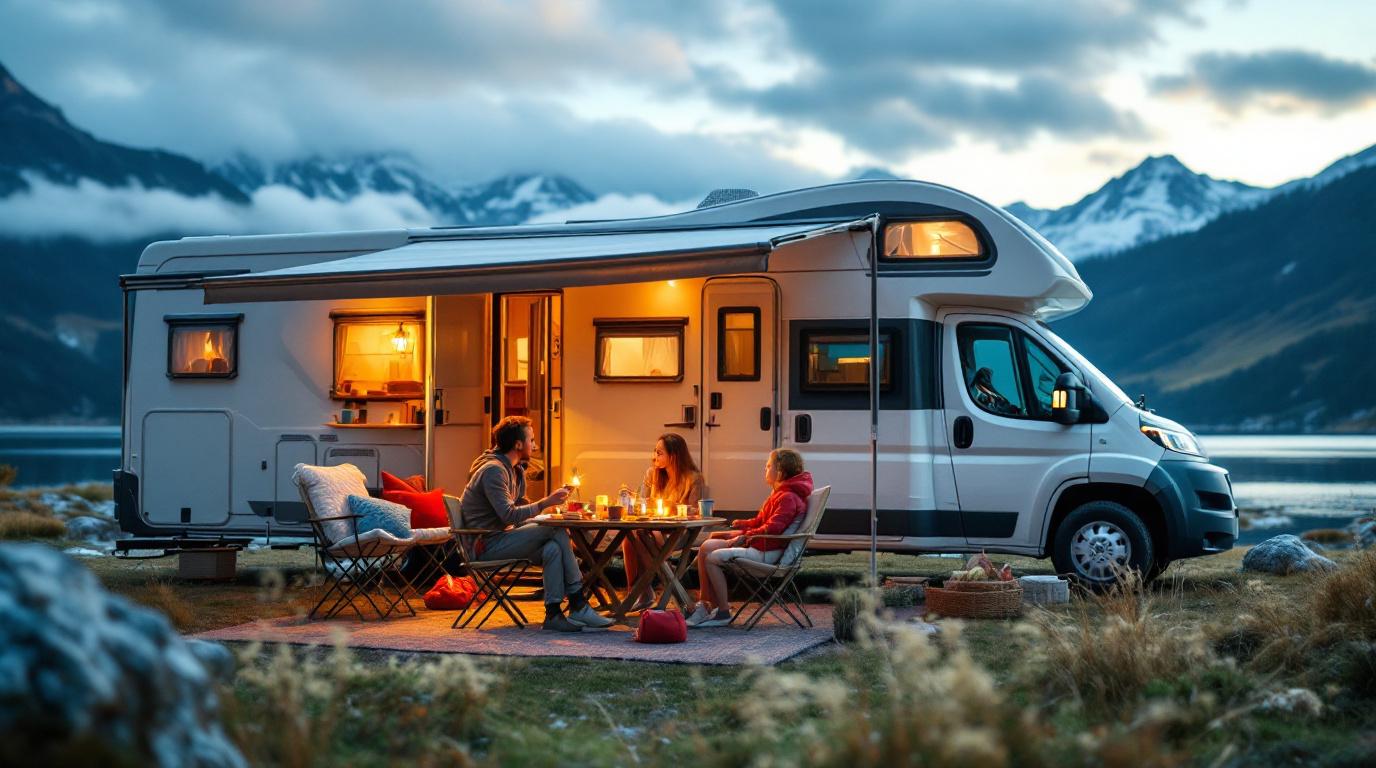
In addition to the larger size and higher fuel consumption, there are a few other disadvantages that travellers mention. The semi-integrated often offers fewer berths than an overcab motorhome. An overcab can sleep up to six people. A semi-integrated is usually limited to two to four people. This type of motorhome is therefore less suitable for larger families.
Insulation can also be an issue. Because of the large front window you lose heat in cold periods and suffer more from heat in warmer countries. Good sun blinds and curtains help, but cannot fully compensate for the lack of insulation. In older models, engine noise from the cab can also penetrate into the living area, which can be disturbing during quiet moments.
For whom is the semi-integrated still a good choice
Despite the downsides, the semi-integrated remains a popular choice for travellers who take longer trips and attach great value to comfortable beds and a spacious seating area. Those who mainly stay on campsites and do not often drive through cramped towns will be less affected by the larger size. For trips through Scandinavia, France or Spain, where campsites are spacious and roads are wide, comfort outweighs the limited manoeuvrability.
The price–quality ratio also plays a role. A semi-integrated is often more affordable than a fully integrated motorhome with a comparable layout. New models start at around €60,000, while a fully integrated one quickly exceeds €80,000. For those looking for the benefits of fixed beds and a spacious layout without the budget for a fully integrated motorhome, the semi-integrated is a logical intermediate step.
‘ If you notice that the limitations outweigh the benefits, it is better to opt for a more compact campervan or alternatively a fully integrated motorhome with more space and comfort. ’
Test first before you buy or rent long-term
If you are unsure whether a semi-integrated suits your travel plans, it is better to rent one first. In high season, rental prices range between €500 and €1,200 per week, depending on the model and rental company. This way you can experience whether the size suits your way of travelling. During the test drive, pay attention to parking, manoeuvring and how it drives on different types of roads.
Also test whether the lower headroom above the cab is acceptable for you and whether the layout matches your preferences. If you notice that the limitations outweigh the benefits, it is better to choose a more compact campervan or alternatively a fully integrated motorhome with more space and comfort.
On the Traveler Tips website you will find much more information about motorhome types, routes and practical tips for your motorhome holiday. From checklists to destination ideas, discover what best suits your plans and set off on your next trip even better prepared.
Frequently asked questions
Because of its larger size, a semi-integrated motorhome is harder to manoeuvre and park in narrow streets, village centres and compact city car parks. As a result, it can be less straightforward to just quickly drive into a small village or city centre and park close to the centre. Many travellers solve this by parking just outside the centre and continuing on foot or by (folding) bike. Compared with a campervan, you do sacrifice some direct urban flexibility in exchange for more space and comfort.
In addition to the rental price or depreciation, a semi-integrated motorhome often comes with higher fuel costs and possibly more toll or vignette costs due to the higher weight and length (sometimes more expensive on toll roads and ferries). Campsites can also work out more expensive than on a simple car holiday, especially with electricity, extra people or higher rates for larger pitches. Parking costs can also add up because you are more often dependent on special motorhome or larger parking areas. Finally, maintenance, insurance and any damage repairs are often more expensive than with an ordinary car trip or a flight plus hotel.
Practical challenges mainly involve the larger size, which makes manoeuvring and parking in narrow streets, cities and on small campsites more difficult. This can require extra planning for routes and overnight stops, reducing spontaneity. The higher weight also creates restrictions at bridges, tunnels and on toll roads, and means you have to pay attention to loading. Inside, limited headroom and less efficiently used space can further reduce comfort, especially for taller people.
Yes, because of its larger size a semi-integrated motorhome is less suitable for narrow mountain roads, historic village centres, cramped inner cities and small or full campsites. It requires more planning for routes, parking options and ferries, which can limit spontaneous detours. This can affect the travel experience because you sometimes spend more time manoeuvring and searching for suitable places. At the same time, the extra interior space can actually make the experience on the road and at your pitch more comfortable and relaxing.
The interior space and layout of a semi-integrated motorhome determine how much freedom of movement you have in bad weather, and whether everyone can sit, cook and relax comfortably at the same time without constantly getting in each other’s way. A clever layout with fixed beds and a spacious seating area increases comfort on long trips, because you do not have to keep converting everything. At the same time, a less efficient layout can reduce the feeling of space, so it more quickly feels ‘busy’ and restless when everyone has to stay inside. Privacy strongly depends on closable sleeping areas and the possibility to separate seating and sleeping areas visually and acoustically.