NL
NL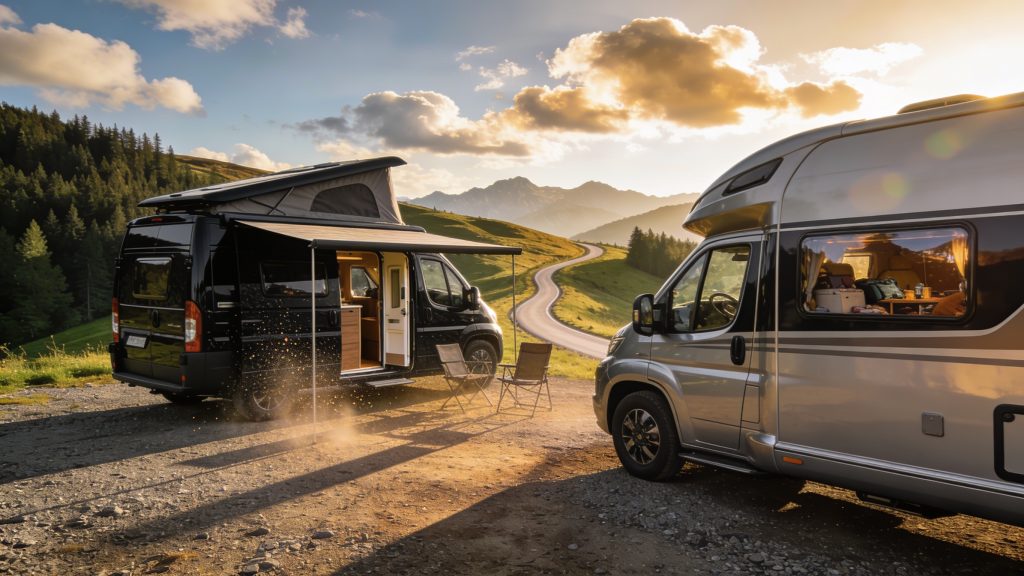
A campervan offers you compactness and manoeuvrability on a van chassis, while a semi-integrated motorhome creates more living space and comfort thanks to a separate body behind the cab. The biggest differences are in space, driving behaviour and how you use it: compact and agile for city breaks, or spacious and comfortable for longer family holidays. Which one fits your travel plans best?
What exactly is a campervan?
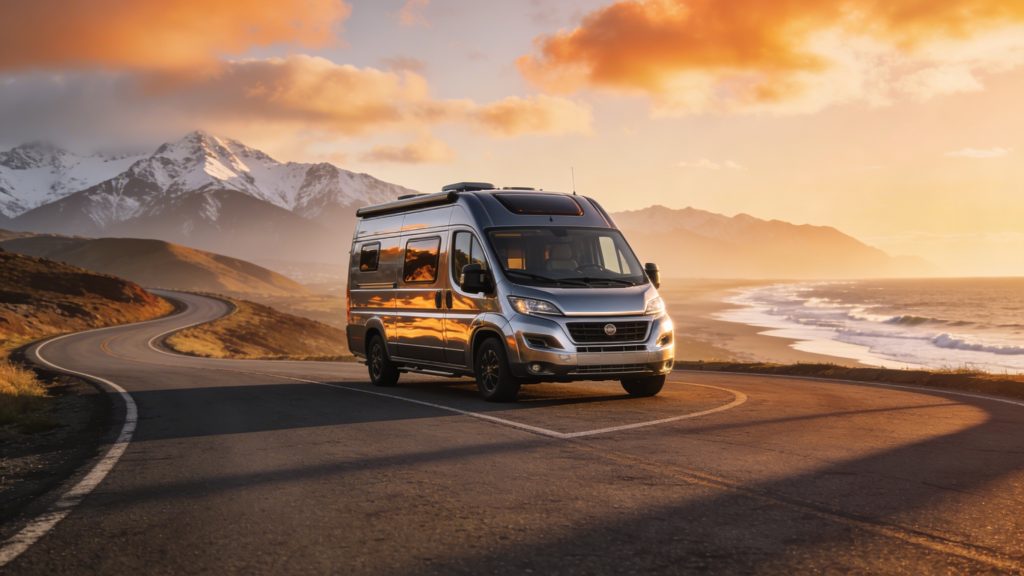
A campervan is built on the chassis of a standard delivery van, such as a Fiat Ducato or Mercedes Sprinter. The motorhome interior sits entirely within the original bodywork, without any extra coachbuilt section. You are therefore driving a van in which a complete camping layout has been integrated: kitchen, sleeping area and often a small seating area.
This type of motorhome remains compact and discreet. From the outside it looks like an ordinary delivery van, which is handy when parking in cities. The step is low and the driving comfort is comparable to that of a car. Many travellers also use a campervan as their everyday vehicle because it is so versatile.
Do you want to know more about other options? Discover all the information about motorhome holidays and all motorhome types on our website.
‘ This type looks stylish and is popular on campsites and camper pitches. ’
How does a semi-integrated differ from that?
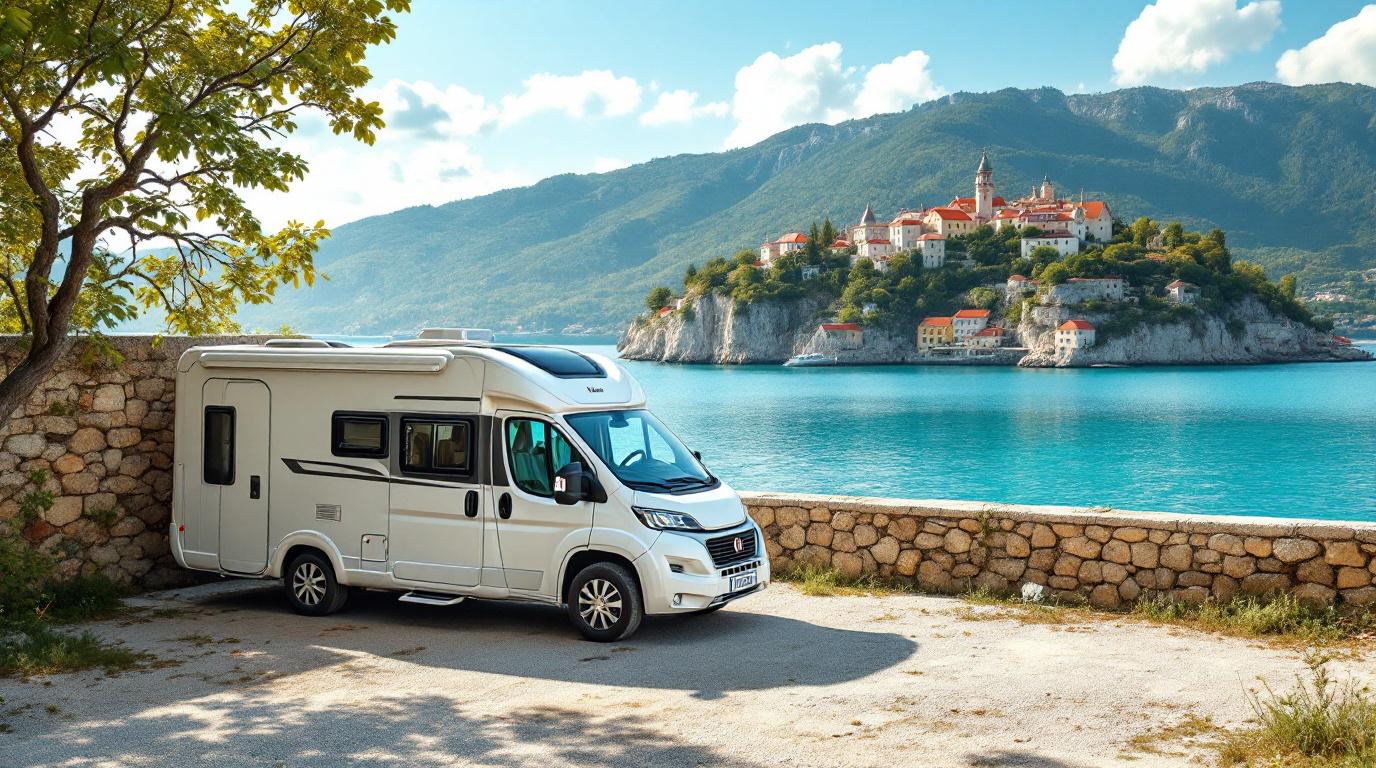
A semi-integrated motorhome also uses a van or lorry chassis, but here the manufacturer places a separate, wider motorhome body behind the original cab. The cab remains recognisable, but the living area behind it is larger and higher. This creates a clear separation between the driving area and the living area.
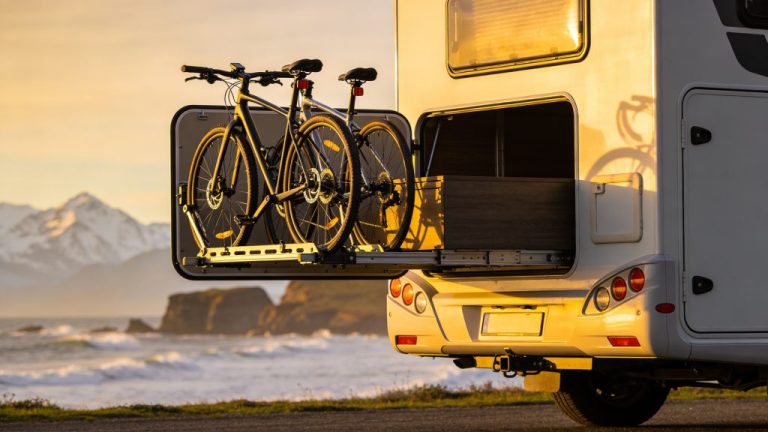
Thanks to the extra coachbuilt section you get considerably more headroom and floor space. Most semi-integrated motorhomes have a fixed bed, often in a low-profile overcab section or as a transverse bed at the rear. There is usually also a garage under the bed where you can store bikes, chairs or other gear. The panoramic rooflight above the living area lets in a lot of natural light.
The appearance is more eye-catching than with a campervan. The wider body and the aerodynamic roof make it obvious that you are driving a motorhome. This type looks stylish and is popular on campsites and camper pitches.
Where are the big differences in practice?
The difference between the two types becomes especially noticeable in day-to-day use. Below you will find the most important aspects side by side:
- Space: Campervans are suitable for a maximum of two people with limited luggage. Semi-integrated motorhomes comfortably accommodate two to four people, with more storage space and often a separate bathroom with toilet and shower.
- Driving behaviour: A campervan drives like a car, is agile in narrow streets and is allowed to drive at the maximum motorway speed. A semi-integrated motorhome is heavier and longer, which often limits the maximum speed to 100 kilometres per hour. It is more stable on long distances, but needs more space when manoeuvring.
- Fuel consumption: Campervans often use slightly more fuel because of their less aerodynamic shape. Semi-integrated motorhomes are more economical on long stretches thanks to their streamlined body.
- Comfort: In a semi-integrated motorhome you can stand upright and move around without restrictions. This makes a big difference in bad weather or during longer stays in one place. Campervans feel more cramped, especially with more than two people.
- Costs: Campervans are cheaper to buy, insure and maintain. Semi-integrated motorhomes require a higher investment, but also offer more luxury and equipment.
Who is better off with a campervan?
A campervan suits you if you travel alone or as a couple on short breaks. City trips to Rome, Lisbon or Paris become easier, because you can park almost anywhere without having to search for large spaces. The manoeuvrability helps on narrow mountain roads and in historic city centres.
For anyone who regularly uses their motorhome as an everyday vehicle, this type is also ideal. You can drive it to work and head off spontaneously at the weekend. Its discreet appearance makes stealth camping possible: staying overnight outside campsites without attracting attention.
Campervans are less suitable for families or longer holidays with lots of luggage. The limited headroom and storage space make the living area cramped, especially in rainy weather or in winter. Insulation is often more basic, which makes overnight stays in cold conditions less comfortable.
‘ You do not have to make up the fixed bed every evening, which brings peace of mind and comfort. ’
When should you choose a semi-integrated motorhome?
Choose a semi-integrated motorhome if you are planning longer trips around Europe with two to four people. The extra space makes all the difference on tours through the Alps, along the Italian lakes or through Scandinavia. You do not have to make up the fixed bed every evening, which brings peace of mind and comfort.
The garage is useful for active travellers. You can easily take bikes, canoes or hiking gear with you. With children, too, a semi-integrated motorhome offers more living space, so that everyone has their own spot. The captain’s chairs are often swivel seats, which increases the seating area when you are parked up.
Semi-integrated motorhomes are more stable in bad weather and when overtaking on the motorway. The better insulation makes camping in spring and autumn more comfortable. Do bear in mind: parking in cities takes more planning, and some narrow routes are difficult or impossible to manage.
How do you make the right choice?
Start by deciding on your travel purpose and who you are travelling with. Do you mainly travel as a couple for short breaks and want flexibility? Then a campervan suits your plans. Are you going on long holidays with the family and value space and facilities? Then choose a semi-integrated motorhome.
Also think about your budget. Besides the purchase price, fuel, insurance, campsite fees and maintenance also play a role. Campervans are cheaper in all respects, but offer less luxury. Semi-integrated motorhomes cost more, but in return provide more comfort and durability in the long term.
Test both types before you buy or hire. They differ greatly in driving behaviour, manoeuvrability and how the living area feels. Hire one for a first holiday and experience what suits you. Pay attention to details such as the height of the beds, the layout of the kitchen and how easy the storage spaces are to access.
Practical tips for your first motorhome trip
Plan your route in advance and check whether campsites are suitable for your type of motorhome. Some sites have maximum lengths, especially in mountainous regions or near historic locations. A campervan gives you more freedom, whereas a semi-integrated motorhome needs specific facilities such as larger pitches.
Take seasonal influences into account. Campervans are less suitable for winter camping without extra insulation. Semi-integrated motorhomes offer better protection against the cold, but need to be winterised with heating systems and thermal curtains.
Practise driving and parking before you set off on holiday. A semi-integrated motorhome takes some getting used to, especially when reversing and taking corners. A campervan drives more intuitively, but do watch the height in car parks and underpasses.
‘ Discover which travel options suit you and plan your next adventure with confidence. ’
Find out more about motorhome holidays
On the Traveler Tips website you will find extensive information about routes, destinations and practical preparation for your motorhome holiday. From tips on fitting out your motorhome to guides to the most beautiful campsites in Europe. Discover which travel options suit you and plan your next adventure with confidence.
Frequently asked questions
A campervan offers more flexibility for driving a variety of routes, including narrower ones, and for visiting and parking in city centres more easily. Thanks to its compact size it almost feels like a car, which is useful in heavy traffic and tight streets. A semi-integrated motorhome is less manoeuvrable due to its greater length and width, which makes some city centres and narrow routes harder to access. On the other hand, the semi-integrated motorhome provides more comfort once you are outside the city and on a fixed pitch.
For the most interior space and comfort on longer trips, a semi-integrated motorhome is usually the best choice. It offers more headroom, floor space, storage and often a more complete fit-out with fixed bed, kitchen, shower and toilet. As a result, it feels more spacious and comfortable, especially in bad weather or with several people. The trade-offs are higher purchase and running costs, slightly less manoeuvrability and being less suitable as an everyday vehicle compared with a compact campervan.
A campervan is usually cheaper to rent than a semi-integrated motorhome because it is more compact and more simply equipped. In terms of fuel consumption, a semi-integrated motorhome is often a bit more economical on long, straight stretches thanks to its better aerodynamics, while a campervan can be more efficient in city traffic and on winding roads. Parking a campervan is cheaper and easier because it fits in standard parking spaces and is less often charged as a large motorhome. A semi-integrated motorhome may incur higher parking fees and sometimes has to use special motorhome or long-stay parking areas.
For adventurous road trips with the option of wild camping, a campervan is the most suitable because it is compact, manoeuvrable and relatively inconspicuous. For more planned campsite stays with longer stopovers and more comfort, a semi-integrated motorhome is more appropriate thanks to its extra living space, better facilities and additional storage.
Yes, there are clear differences: a campervan drives and parks much more like an ordinary van, making it more manoeuvrable and easier to fit into city streets and standard parking bays, while a semi-integrated motorhome is larger and less agile but offers more space. A semi-integrated motorhome generally requires a bit more attention when manoeuvring, taking tight bends and parking due to its length and wider body. As long as the weight remains under 3,500 kg, you may drive both types in the Netherlands with a category B driving licence. Only for heavier motorhomes (over 3,500 kg) do you need a C1 or C licence.