 NL
NL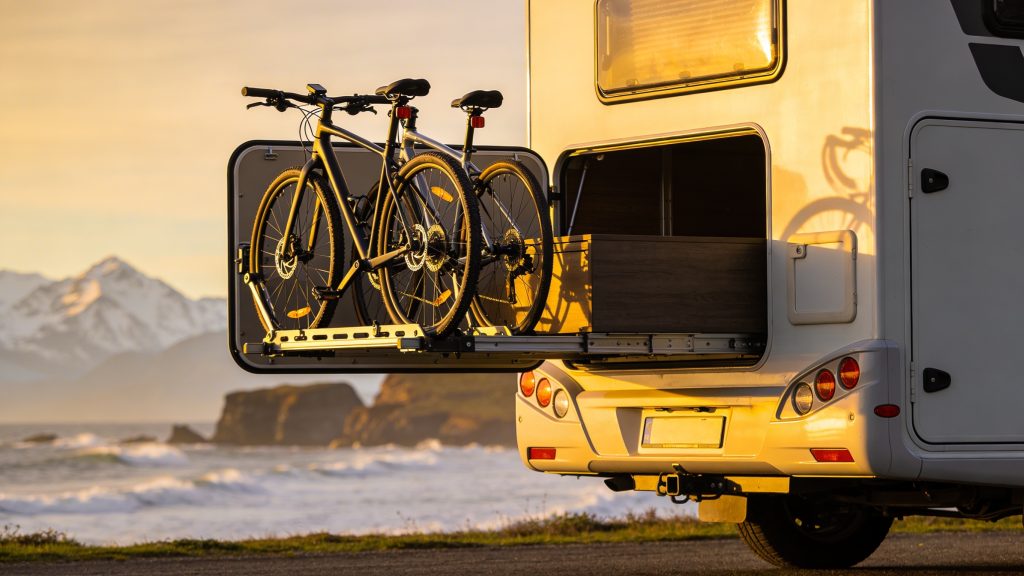
Frequently asked questions
Garages in low‑profile and integrated motorhomes with a spacious rear garage are the most suitable, because they usually offer sufficient height and length for several bikes, including electric ones. Ideally, a garage has a height of at least around 1.22 metres so that e‑bikes can stand upright. A standard garage is usually fine for two bikes, while for three to four bikes you need a wider and higher garage where the bikes can be placed against the walls and securely fixed. Garages that are too low or too narrow are less suitable and often require special sliding systems or external racks as an alternative.
Make sure the garage is high and deep enough and measure your (e‑)bikes in advance, including handlebar and saddle. Use wheel chocks or a rail system and secure each bike with additional tensioning straps and a brake strap to prevent movement while driving. If you are carrying several bikes, place them tightly against the walls, possibly with a frame bracket or bar between them for extra stability. For e‑bikes, remove the batteries during transport and ensure good ventilation and a garage floor that can bear the extra weight.
The weight of the bikes in the garage increases the rear‑axle load, which can lead to a softer or bobbing ride and a longer braking distance. Heavy (electric) bikes at the back make the motorhome more sensitive to crosswinds and can reduce stability in corners. The further back and higher the bikes are positioned, the greater the leverage effect on the motorhome and thus the impact on driving comfort. Even, low positioning close to the axle and good fixing of the bikes limit these negative effects.
Yes, you can make better use of the height with modular storage systems such as stackable boxes, hanging racks or an extra shelf above the bikes. Wall rails with hooks or nets are handy for cables, chairs, awning equipment and hoses. Use tensioning straps and storage bags on the sides to secure loose items tightly against the wall. A pull‑out drawer or platform under the bikes also helps you to use the full floor area and makes everything easier to reach.
A motorhome with a garage protects bikes better against the weather and theft and keeps them cleaner than external bike racks, which fits with a conscious, sustainable lifestyle. The garage often offers more space and flexibility, especially for e‑bikes (note a minimum height of about 1.22 m) and multiple bikes. However, a garage does require a motorhome with a specific layout and this can affect overall length, weight and fuel consumption. External racks are lighter and simpler for smaller motorhomes, but expose the bikes to the elements and an increased risk of damage.
A low-profile or overcab motorhome with a through‑garage offers space for two to four bikes, allowing you to easily explore the surroundings during your holiday without having to look for external racks or extra luggage space. With the right fixings, your bikes stay clean, dry and safe while you travel. Touring by bike through the Netherlands or Spain suddenly becomes much simpler: a motorhome with a built‑in garage makes the difference between hassle‑free and a headache.
Which type of motorhome has the largest garage
Not every type of motorhome has a spacious garage. Low-profile and overcab motorhomes usually have a through‑garage at the rear, which is ideal for taking bikes with you. This space is at the back of the motorhome and is accessible via a hinged door. Among all motorhome types there are differences in loading space, but low‑profile and overcab models offer the biggest advantage for travellers who want to take bikes.
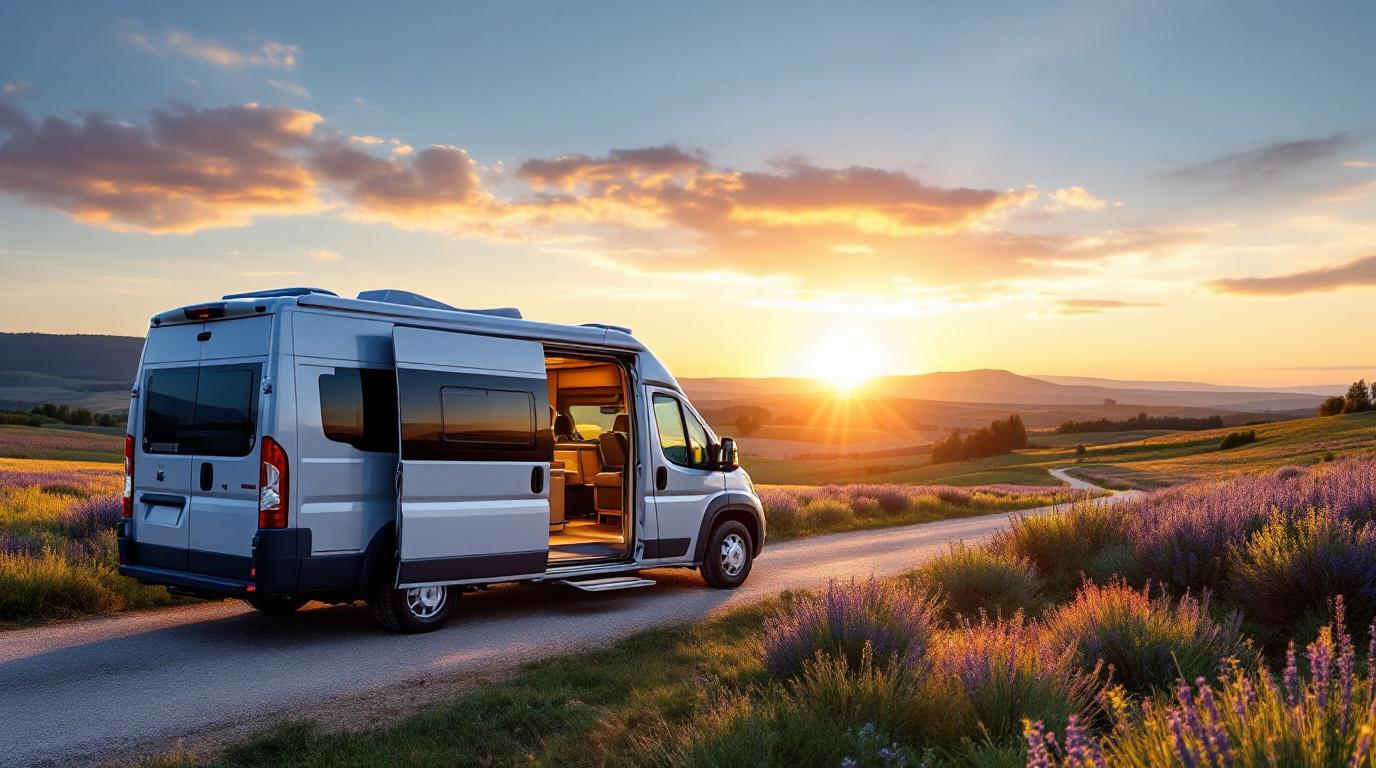
Fully integrated motorhomes sometimes also have a garage, but the dimensions vary by make and model. Panel van conversions usually have no built‑in garage. For these vans, external racks are an alternative, but your bikes then hang outside. That means exposure to the weather and an increased risk of theft.
When choosing a motorhome, pay attention to the height of the garage. For standard bikes a garage height of around 110 centimetres is sufficient. For e‑bikes you need at least 122 centimetres. Measure your bikes in advance so you know whether they will fit.
‘ With smart positioning and fixing you can take up to four bikes. ‘
How many bikes fit in a motorhome garage
In most motorhome garages two bikes fit comfortably next to each other. This is ideal for couples travelling together. With smart positioning and good fixing you can take up to four bikes. This works best if you place the bikes against the walls and secure them properly.
Putting in two bikes is easy. Place them side by side with the handlebars facing in opposite directions so they do not get in each other’s way. Four bikes will be a tighter fit. Stand the bikes separately against the walls and use straps to fasten the rear brake lever to the handlebar. That way you prevent the bikes from shifting while driving.
Securing bikes safely in the garage
A loose bike in the garage can cause damage to the motorhome and to the bike itself. Always use fixing aids. These are the most important methods:
- Wheel chocks or ratchet systems: these secure the wheels in place and prevent them from rolling or tipping
- Frame brackets: extra stability by clipping the frame onto a rail or bracket in the garage
- Strap around the handlebar: fasten the rear brake with a simple strap to the handlebar so the rear wheel stays locked
- Foam rubber or cloths: place these between bikes to prevent scratches
Always test after securing whether the bikes are standing firmly. Do a short test drive and check that nothing has shifted. Having to make adjustments during the first trip is normal, especially if this is your first time travelling with bikes in the garage.
Advantages of carrying bikes in the motorhome garage
Keeping bikes in the garage has several practical advantages. They stay clean and dry, whatever the weather. This is convenient if you want to cycle on several consecutive days without your bikes getting dirty or wet while you are driving.
The garage also protects your bikes against theft. Bikes hanging on the outside of the motorhome are visible and accessible to thieves. In the garage they are out of sight and locked away behind the rear door. This gives peace of mind, especially on longer trips through busy areas.
Another advantage is efficient use of space. You do not lose extra width or length to external racks. This makes manoeuvring and parking easier, especially on narrow roads or on campsites with tight pitches. In addition, the motorhome remains more aerodynamic, which can save fuel.
‘ E‑bikes with a tall frame or bulky handlebar may just not fit. ‘
Taking e‑bikes in the garage
E‑bikes are heavier and taller than standard bikes. This calls for extra attention when taking them in the garage. Measure the height of your e‑bike including the handlebar. Many garages are between 110 and 130 centimetres high. E‑bikes with a tall frame or bulky handlebar may just not fit.
There are special racks such as the Thule VeloSlide that help with loading e‑bikes into the garage. These systems use rails so you can position the bike horizontally or slightly at an angle, giving you more height clearance. Some motorhome owners modify their garage by raising the ceiling slightly or lowering the floor. This requires professional work, but can make all the difference for long‑term use.
Also pay attention to the weight. E‑bikes weigh on average between 20 and 30 kilograms. Check whether the garage floor can handle this weight, especially if you are taking several e‑bikes. Avoid overloading to prevent damage to the motorhome structure.
Alternatives if the garage is too small
Not every motorhome has a garage, or the garage may be too small for your bikes. In that case, external racks are a workable solution. You attach these to the towbar or to the chassis of the motorhome. The bikes then hang on the outside, which means they are exposed to rain, mud and dust.
Towbar‑mounted racks are the most commonly used. They are relatively easy to fit and suitable for two to three bikes. Pay attention to the maximum weight the towbar can carry. For e‑bikes you need a heavier‑duty rack.
Chassis‑mounted racks offer more stability and can carry a heavier load. They are more expensive and sometimes require professional installation. For long trips or multiple e‑bikes they are a reliable choice.
Another option is to choose a motorhome with a larger garage next time you hire or buy. Travellers who regularly go on cycling holidays give priority to models with a spacious through‑garage. This avoids hassle and gives you more flexibility on the road.
Practical tips for cycling holidays with a motorhome
Plan in advance where you want to cycle. The Netherlands and Spain are popular destinations for cycling holidays because of their extensive networks of cycle paths and routes. In the Netherlands you will find flat routes along the coast or through the countryside. Spain offers varied routes, from mountain regions to coastal paths.
Take maintenance gear for your bikes. A pump, spare inner tube, puncture repair kit and chain oil are useful if you get a puncture or a mechanical issue on the way. This prevents your holiday from grinding to a halt because of a minor technical problem.
Regularly check how well your bikes are fixed in the garage. Vibrations and uneven road surfaces can cause straps to come loose or clamps to shift. A quick check after every longer drive is enough to prevent problems.
‘ This way you avoid nasty surprises on the first day of your trip. ‘
Choose a motorhome that suits your trip
The choice of a motorhome with a garage depends on your travel plans and on how many bikes you are taking. For couples with two bikes, a low‑profile motorhome is often the best option. For families or groups with four bikes, an overcab motorhome with a spacious garage is more suitable.
Test the garage before you travel. Load your bikes and check that everything fits and is safely secured. This way you avoid nasty surprises on the first day of your trip. If you are hiring, ask for the garage dimensions and take the measurements of your bikes with you to the rental company.
On the Traveler Tips website you will find much more information about motorhome holidays, routes and practical preparation. Discover useful tips for planning your next trip and learn how to get more out of your holiday.
Frequently asked questions
Which types of motorhome garage are best suited to carrying different kinds and numbers of bikes?
Garages in low‑profile and integrated motorhomes with a spacious rear garage are the most suitable, because they usually offer sufficient height and length for several bikes, including electric ones. Ideally, a garage has a height of at least around 1.22 metres so that e‑bikes can stand upright. A standard garage is usually fine for two bikes, while for three to four bikes you need a wider and higher garage where the bikes can be placed against the walls and securely fixed. Garages that are too low or too narrow are less suitable and often require special sliding systems or external racks as an alternative.
How do I ensure safe and efficient storage and transport of my bikes in the motorhome garage?
Make sure the garage is high and deep enough and measure your (e‑)bikes in advance, including handlebar and saddle. Use wheel chocks or a rail system and secure each bike with additional tensioning straps and a brake strap to prevent movement while driving. If you are carrying several bikes, place them tightly against the walls, possibly with a frame bracket or bar between them for extra stability. For e‑bikes, remove the batteries during transport and ensure good ventilation and a garage floor that can bear the extra weight.
In what way do the weight and positioning of bikes in the garage affect the driving comfort and stability of the motorhome?
The weight of the bikes in the garage increases the rear‑axle load, which can lead to a softer or bobbing ride and a longer braking distance. Heavy (electric) bikes at the back make the motorhome more sensitive to crosswinds and can reduce stability in corners. The further back and higher the bikes are positioned, the greater the leverage effect on the motorhome and thus the impact on driving comfort. Even, low positioning close to the axle and good fixing of the bikes limit these negative effects.
Are there clever solutions or accessories to make optimal use of the space in the motorhome garage, besides carrying bikes?
Yes, you can make better use of the height with modular storage systems such as stackable boxes, hanging racks or an extra shelf above the bikes. Wall rails with hooks or nets are handy for cables, chairs, awning equipment and hoses. Use tensioning straps and storage bags on the sides to secure loose items tightly against the wall. A pull‑out drawer or platform under the bikes also helps you to use the full floor area and makes everything easier to reach.
What are the main considerations when choosing a motorhome with a garage for bikes, compared with external bike racks, for a conscious traveller?
A motorhome with a garage protects bikes better against the weather and theft and keeps them cleaner than external bike racks, which fits with a conscious, sustainable lifestyle. The garage often offers more space and flexibility, especially for e‑bikes (note a minimum height of about 1.22 m) and multiple bikes. However, a garage does require a motorhome with a specific layout and this can affect overall length, weight and fuel consumption. External racks are lighter and simpler for smaller motorhomes, but expose the bikes to the elements and an increased risk of damage.