NL
NL
Germany is the perfect destination for a driving holiday with your dog, especially if you are looking for variety between nature-rich hiking areas and peaceful accommodation. The Black Forest and the Bavarian Alps both offer extensive forests, dog-friendly trails and guesthouses where your four-legged friend is welcome. The right preparation and knowledge of local rules are important. That way, such a trip becomes a comfortable experience for both you and your dog.
Why the Black Forest and the Bavarian Alps are ideal
The Black Forest attracts many dog owners thanks to its extensive hiking network and well-marked paths. The mix of coniferous forests, open hills and small villages adds variety to your walks. In addition, this region has many holiday homes and guesthouses that allow dogs, often with enclosed gardens.
The Bavarian Alps are particularly suitable for travellers who love mountain landscapes and longer hikes. Here you will find off-lead areas where dogs can move around freely, although lead rules apply on many trails and in nature reserves. Both regions offer plenty of shade and water on warm days, which increases your dog’s comfort.
Best routes to the Black Forest and the Bavarian Alps
From the Netherlands, the Black Forest is accessible via the A5 towards Karlsruhe and then on towards Freiburg or Triberg. The journey usually takes six to seven hours, depending on your starting point. Plan intermediate stops, for example at Rastplatz service areas along the motorway, where there is space for a walk and water for your dog.
For the Bavarian Alps you drive towards Munich via the A8 or A95, and then continue to Garmisch-Partenkirchen, Füssen or the Tegernsee area. Journey time is around seven to nine hours. By setting off in the morning and not driving during the hottest hours of the day, you reduce the risk of overheating in the car.
Important points to watch during the journey:
- Take a break every two to three hours for water and a short walk
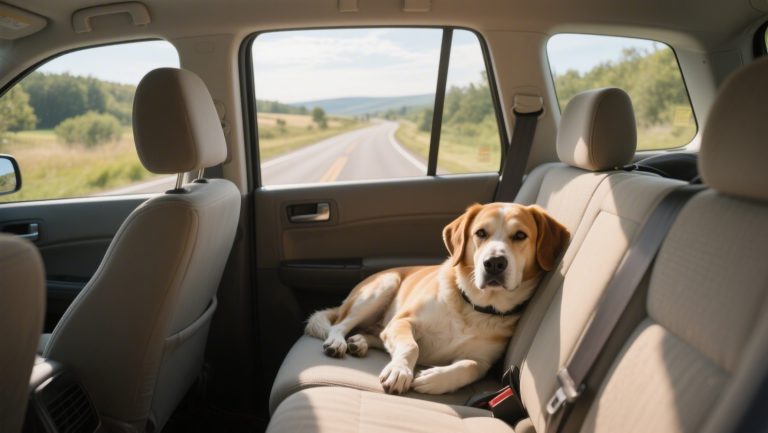
- Use a crate, dog guard or car harness to transport your dog safely
- Keep enough drinking water and a collapsible water bowl within easy reach
- Avoid long drives when the temperature in the car rises quickly
Dog-friendly destinations in the Black Forest
The Black Forest has a well-developed network of hiking routes where dogs are allowed. The Feldberg, the highest point in the area, offers several marked paths with shady sections. Around Titisee and Schluchsee you will also find quiet walking trails along the water.
Off-lead areas are limited. In many places outside official nature reserves your dog may walk off the lead. The condition is that it responds reliably to recall. Within nature parks and wildlife reserves there is often a strict lead requirement. Check local signs and information for specific rules.
A few popular hiking routes with dogs:
- Feldberg circular trail: around 12 kilometres, suitable for experienced dogs
- Triberg waterfalls: short walk with limited ascent, but note that leads are compulsory
- Schluchsee circular trail: flat route along the lake, suitable for older dogs
- Gengenbach routes: easy forest paths with a mix of shade and open fields
Rules for dogs in the Bavarian Alps
In the Bavarian Alps strict lead regulations apply. Wildlife such as roe deer, red deer and chamois live here. There are also many sheep and cattle pastures. On most alpine hiking trails your dog must be kept on a lead.
In some areas your dog is allowed off the lead. These include designated off-lead areas at campsites or special dog parks. You can find information about these via tourist information offices, municipal websites or your accommodation.
Additional points to consider in the mountains:
- Do not let your dog run free near cattle pastures, especially not where there are cows with calves
- Always take a long line with you for flexibility on quieter stretches
- Be aware of shepherd dogs guarding flocks of sheep
- Monitor your dog’s condition on longer climbs with significant height differences
Important hiking areas with dog regulations
In the Garmisch-Partenkirchen area, the Partnachklamm gorge and the area around the Eibsee are popular routes. At the Partnachklamm there is a strict lead requirement. The Eibsee offers a circular walk of about seven kilometres where dogs are allowed, provided they are kept on a lead.
The Tegernsee region has several medium-length hikes. The amount of ascent and descent varies by route. Check in advance which paths are suitable for dogs, as some mountain huts do not allow dogs inside. Dogs are often not welcome on cable cars and mountain lifts either.
Dog-friendly accommodation along the route
In both the Black Forest and the Bavarian Alps you will find a wide range of dog-friendly guesthouses, holiday homes and campsites. When booking, check the conditions: some accommodation charges a supplement per dog or sets a maximum number of pets.
Advantages of a holiday home with an enclosed garden:
- Your dog can safely be outside without a lead
- It is easier to schedule rest periods during the day
- Suitable for dogs that struggle to be left alone
Campsites often offer off-lead zones and water points, ideal for active dogs. Especially in the Allgäu region there are several campsites with special facilities for dogs. When booking, check whether your dog is allowed to sleep inside your motorhome or tent, as rules on this can differ.
Practical tips for choosing accommodation
Choose a location close to hiking areas or natural spots for peace and quiet. That way you do not have to drive far for a walk. Ask in advance about house rules on leaving the dog alone. Also ask whether there are any areas where dogs are not allowed.
Useful facilities:
- Lockable garden or terrace
- Washing facilities for dogs after wet walks
- Vet nearby for emergencies
- Information from the owner about local off-lead areas
Required documents and health matters
To cross the border into Germany, your dog needs a European pet passport with a valid rabies vaccination. The microchip must match the details in the passport. Check well before departure whether the vaccination is still valid, as the first jab must have been given at least 21 days before arrival.
Health preparation:
- Consult your vet about preventive treatment against ticks and fleas
- Check whether your dog is fit enough for longer walks and height differences
- Take enough food and any medication your dog needs daily
- Keep a small first-aid kit for dogs in the car
Ticks are very common in forested and grassy areas in Germany, especially from April to October. Check your dog every day after walks and remove any ticks as quickly as possible. Take a tick remover or tick card with you for immediate use.
Discover more about travelling with your dog
A well-planned driving holiday with your dog to the Black Forest or the Bavarian Alps combines comfortable travel with experiencing nature. By taking lead rules, safe transport and suitable accommodation into account, you create a relaxing trip for both you and your four-legged companion.
On the Traveler Tips website you will find extensive information about routes, preparation and other dog-friendly destinations in Europe. You will find campsite addresses, hiking tips and regulations by country. This gives you practical support for your next trip. Discover more and plan your next adventure with reliable tips.
Frequently asked questions
To take a dog to Germany, a valid European pet passport and a clearly readable microchip are mandatory. In addition, the dog must have a valid rabies vaccination, where the first (or renewed after expiry) jab has been administered at least 21 days before departure. Puppies without a valid rabies vaccination are generally not allowed to cross the border. Check in advance that the chip number and vaccination details in the passport are correct.
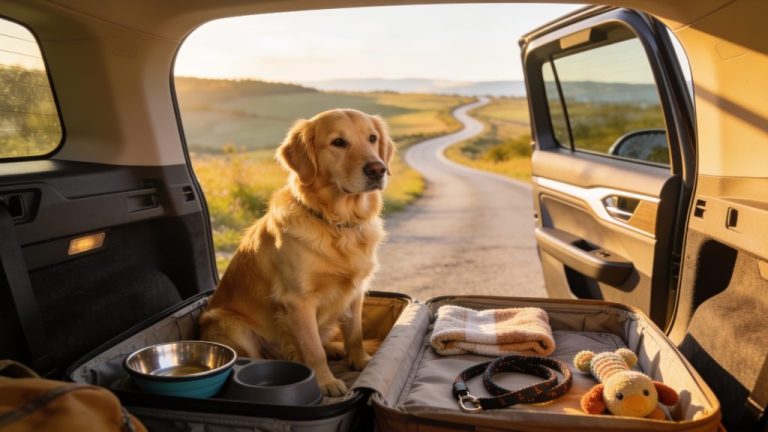
Make sure your dog is safely secured in a crate, with a dog seatbelt or behind a guard, and put down a familiar blanket or bed for extra comfort. Take plenty of water, familiar food, a collapsible water bowl, poo bags and, if needed, a towel and a small first-aid kit. Plan a short stop every 2 to 3 hours in a quiet place for water, a toilet break and some exercise. Avoid driving during the hottest hours of the day and never leave your dog in a hot car.
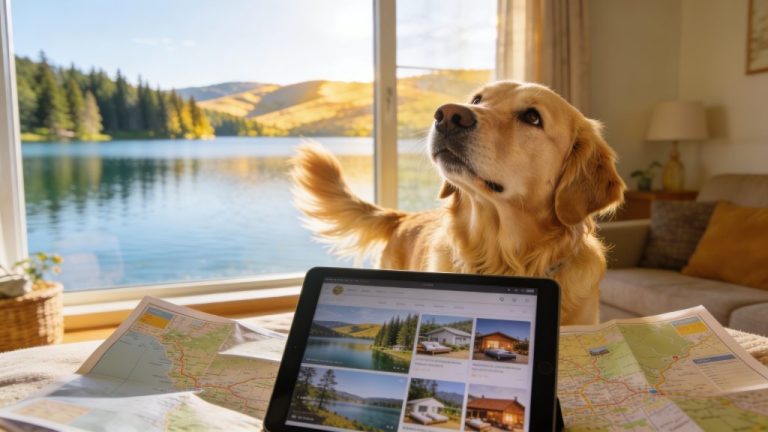
Use specialist platforms and filters for “dog-friendly” (for example cottages, hotels or campsites with enclosed gardens, walks from the door and clear house rules) and read recent reviews from other dog owners for a realistic impression. Combine regions where nature and peace are central – such as the Eifel, Harz or Black Forest – with small-scale accommodation in villages rather than large cities for a more authentic atmosphere. Check local lead regulations, dog beaches and marked hiking routes in advance so that your activities fit well with your daily rhythm. Plan the journey in stages with enough breaks so the drive itself also remains comfortable for you and your dog.
In Germany, in most towns and villages dogs must be kept on a lead in public spaces (streets, parks, town centres); in nature reserves and national parks there are often stricter lead requirements and sometimes access bans. Restaurants decide for themselves whether dogs are allowed; where they are welcome, they usually have to lie quietly under the table and must not disturb other guests. On public transport (train, bus, tram) small dogs are often allowed free of charge in a bag or crate, while medium-sized and large dogs usually have to be on a lead and wear a muzzle and generally need a (reduced) ticket. Local regulations can differ by federal state and municipality, so it is sensible to check them on the spot as well.