 NL
NL
Packing and carrying a backpack smartly on train journeys is the foundation of a comfortable trip; by placing heavy items low down and close to your back, and adjusting the hip belt correctly, you can prevent discomfort and back pain. Discover how a few simple adjustments can make the difference between lugging your bag around and travelling smoothly.
Why a backpack is a smart choice for train travellers
Travelling by train through Europe, for example with an Interrail pass, calls for flexible luggage. A backpack is then more practical than a suitcase. Your hands are free to open doors or to hop on a train quickly, which is useful at busy stations with lots of stairs or high platforms. A suitcase has to be lifted, which is awkward and can lead to back problems. On top of that, a backpack fits more easily under a seat or in a luggage rack, whereas a suitcase quickly gets in the way on a crowded train. Most experienced train travellers prefer a backpack, especially for longer trips where you regularly change locations.
‘ A rain cover is essential, sturdy zips are a must, and using a small travel padlock gives extra peace of mind on the train or in a shared dorm. ’
Choosing the right backpack for your train journey
Good preparation starts with choosing the right rucksack. Size is an important starting point here. For a trip of around two weeks, a backpack of 40 to 60 litres is usually enough. Many travellers combine this with a small daypack of 20 to 30 litres. You use this for your valuables and everyday essentials, while your large backpack stays in the hostel or other accommodation. When buying, pay attention to a few features that make travelling easier. A rain cover is essential, sturdy zips are a must, and using a small travel padlock gives extra peace of mind on the train or in a shared dormitory.
The fit is crucial. A backpack that does not sit properly on your body causes a lot of discomfort. Get advice in a specialist outdoor shop. A member of staff will adjust the rucksack exactly to your back length. The hip belt is very important here; it lets the weight rest on your hips instead of pulling on your shoulders.
How do I pack my backpack optimally for the train?
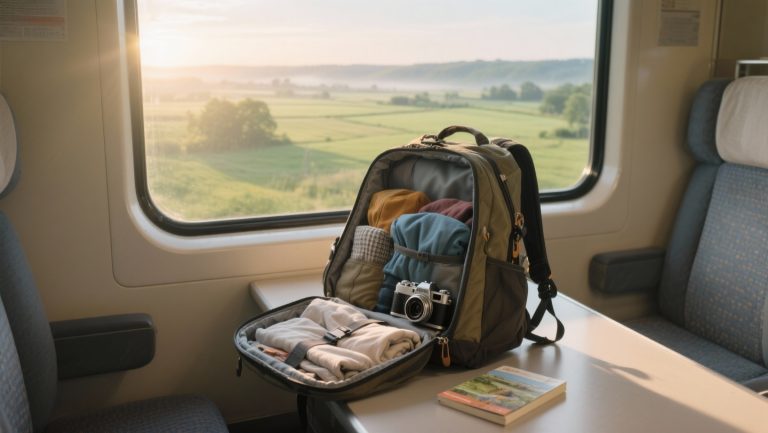
The way you pack determines how stable and comfortable your rucksack feels. The golden rule is simple: put the heaviest items as close to your back as possible and in the bottom section of the bag. This keeps the centre of gravity of the backpack close to your body, so the bag pulls back less and feels more stable. Think of things like your wash bag, shoes or books.
To keep your belongings organised, use packing cubes. These are small, closable bags in which you store clothes and other items by category. That way you don’t have to turn your whole bag upside down if you need something in a hurry. A logical layout looks like this:
- At the bottom: Heavy and less frequently used items, such as shoes, books and a wash bag.
- Middle, against the back: The heaviest items, for example a laptop in a protective sleeve or a full water bottle.
- Middle, further from the back: Lighter clothing such as trousers and jumpers, rolled up to save space.
- At the top: Items you want to have to hand quickly, such as a rain jacket, snacks or your train tickets.
- Side pockets and front pocket: Small items such as a water bottle, sunglasses or a map.
By sticking to this structure, your backpack stays balanced and you prevent the contents from sliding around. This contributes to a pleasant carrying experience, even if you have to walk a bit from the station to your accommodation.
How to wear a backpack correctly on train journeys
Packing your backpack well is one thing, but wearing it correctly is at least as important to prevent back pain. Adjusting the different straps makes all the difference. Always start with the hip belt. Position it on your hip bones and pull it tight. The hip belt should carry about 80% of the weight. This significantly relieves your shoulders and back.
Next, tighten the shoulder straps. Don’t pull them too tight; they should rest comfortably on your shoulders without carrying the full weight. Most modern backpacks also have so-called load lifters. These are small straps running from the top of the shoulder straps to the top of the rucksack. Tighten them until they are at an angle of around 45 degrees. They pull the top of the rucksack closer to your body, improving stability and preventing the bag from swinging.
Finally, fasten the chest strap. This strap connects the two shoulder straps and prevents them from slipping off your shoulders. By following these steps, you distribute the weight optimally across your body and can cover longer distances without any problems.
‘ Be extra alert at busy stations or on night trains to prevent theft. ’
Practical tips for on the road
Once you are on the move, keep a few things in mind. On the train itself, place your backpack preferably in the designated luggage racks or slide it under your seat. Always keep your daypack with valuables such as your passport, phone and wallet with you. Be extra alert at busy stations or on night trains to prevent theft. A small lock on your zips helps with this.
Try not to live too much out of your large backpack. Plan ahead and pack the things you will need during a long train journey in your daypack. Think of a power bank, earplugs, something to eat and a bottle of water. This prevents you from having to rummage through your entire bag at an awkward moment. By travelling consciously and in an organised way, you make your train journey much more pleasant.
Your trip offers a personal experience, and preparing for it is an important part of that experience. On the Traveler Tips website, you will find many more articles to help you plan your trip smartly. Discover our guides to popular train routes, tips for booking tickets and extensive packing lists for different destinations. That way you’ll always set off well prepared.
Frequently asked questions
The most efficient packing techniques for a backpack during a train journey, to keep it compact and organised, include using packing cubes for organisation and quick access. Roll clothes to save space and fill empty gaps with smaller items. Choose multifunctional clothing and pack minimally, so you only take the essentials and can make the most of laundry facilities in hostels. Place heavy items at the bottom of the rucksack and close to your back for better carrying comfort, and always keep valuables in a smaller daypack that you keep with you.
To prevent back problems and fatigue, choose a backpack with a hip belt so that the weight rests on your hips and not on your shoulders; have it professionally fitted in an outdoor shop. Pack minimally with multifunctional items and use packing cubes for organisation. Put the backpack in luggage racks or under seats on the train, and carry it on your back in stations to deal with stairs and crowds more easily. Keep valuables in a smaller daypack that you always carry with you.
When choosing a backpack for train travel, size and accessibility are crucial. A rucksack of 40–60 litres is ideal for a two-week trip, supplemented by a daypack of 20–30 litres for excursions. Look for essential features such as a rain cover, packing cubes for organisation and sturdy zips with a travel padlock. A professionally fitted rucksack with a hip belt ensures optimal carrying comfort and less strain on your shoulders.
To store your backpack safely and conveniently on different types of train, place it in luggage racks or under seats; for valuables, it’s best to use a smaller daypack that you always keep with you. Make sure that important items such as your passport, money and power bank are in this daypack for instant access and to prevent theft. Use packing cubes to keep your main backpack organised and a travel padlock for extra security. Choose a rucksack with a hip belt for optimal carrying comfort and freedom of movement.