 NL
NL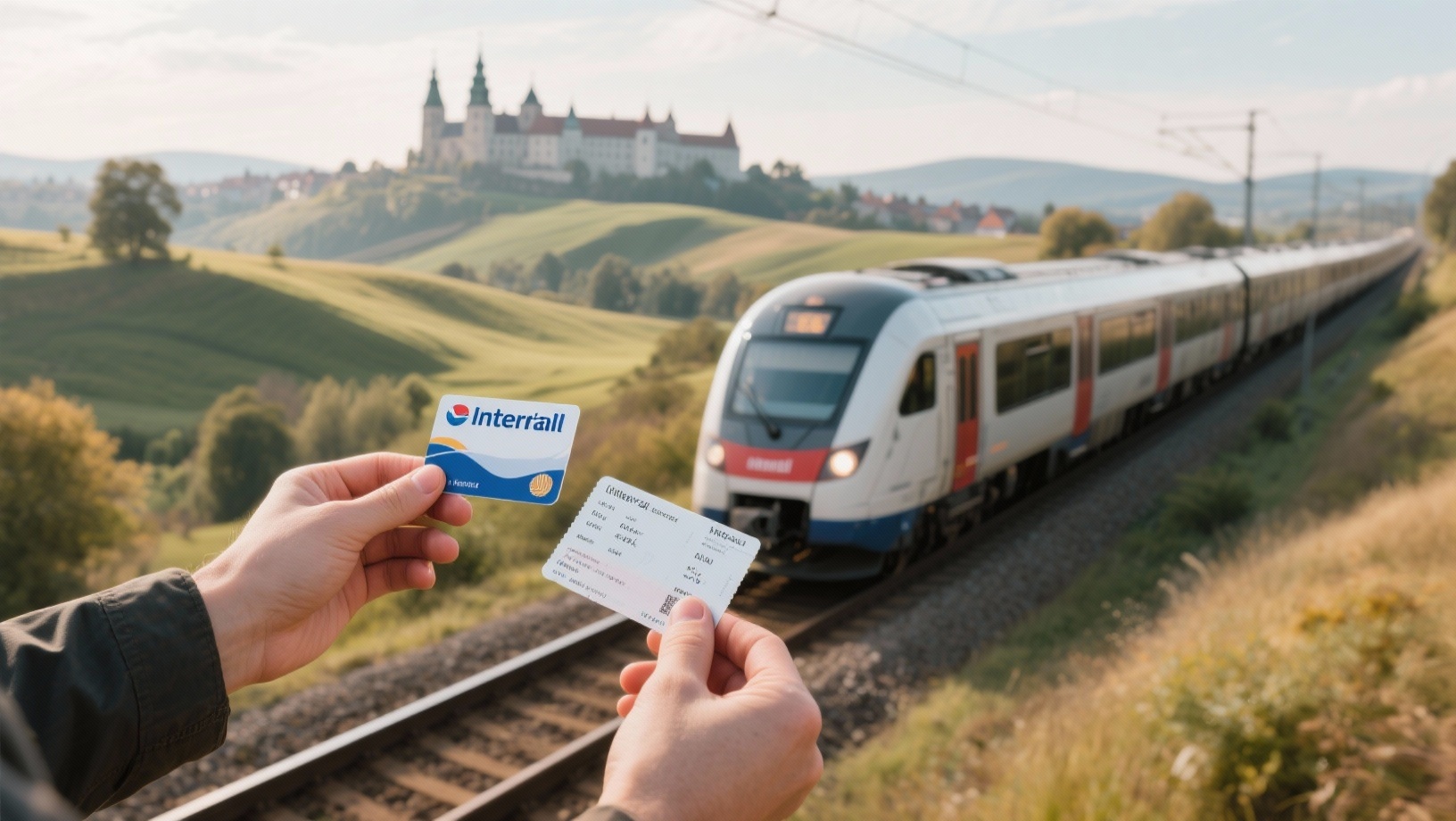
For train journeys through Central Europe, the choice depends on your travel style and how much flexibility you want. The number of countries you visit also plays a role. An Interrail pass offers convenience and freedom for a trip with multiple stops. Single tickets are more cost-effective for an itinerary with a few, pre-planned journeys. Making a good decision in advance will not only save you money, but also unnecessary research while you are on the road.
Balancing flexibility and cost
Choosing between an Interrail pass and single tickets is one of the first steps when planning your train journey. Both options have clear advantages, depending on how you want to travel. An Interrail pass is mainly aimed at travellers who want a lot of freedom. You might spontaneously decide to leave a day earlier or later, or to add an extra destination. This is ideal for a longer round trip through several countries where the route is not completely fixed.
Single tickets require more planning. Fares are often lowest if you book weeks or months in advance. You book them via the websites of national railway companies. This approach works well if you have a fixed route with a limited number of journeys. Take, for example, a trip from Amsterdam to Prague. A week later you travel from Prague to Vienna. Single tickets are then almost always the cheaper option. You give up flexibility, but you gain financially.
‘ The pass functions as a ticket for almost the entire European rail network. ’
When is an Interrail pass the best choice?
An Interrail pass becomes interesting as soon as you cover several, longer distances in a relatively short period. The pass functions as a ticket for almost the entire European rail network. This saves you the hassle of booking with different national companies. That is especially useful in Central Europe, where you quickly travel through several countries.
Advantages of an Interrail pass:
- Convenience: You do not need to buy a separate ticket for each journey. You activate a travel day in the app and can board most trains directly.
- Flexibility: You can change your plans at the last moment without losing money on non-refundable tickets.
- Costs for intensive travel: Planning four or more longer journeys within a month? The pass is often cheaper than the total of single tickets.
- Discounts: Young people up to and including twenty-seven and seniors (sixty plus) receive a substantial discount on the purchase of an Interrail pass.
Do bear in mind that for some trains, such as high-speed trains and night trains, a reservation is compulsory. These reservation costs are in addition to the price of the pass.


Single tickets: cost-effective for planners
Are you travelling to a limited number of destinations and do you already know your travel dates? Then single tickets are the obvious choice. Railway companies in countries such as the Czech Republic (České dráhy, ČD), Slovakia (Železničná spoločnosť Slovensko, ZSSK) and Hungary (Magyar Államvasutak, MÁV) offer very competitive online prices for early bookings. Fares are sometimes only a fraction of what you pay on the day itself.
The best strategy is to check prices directly on the websites of the national railway companies. Third-party websites often add their own commission. By booking directly, you get the most up-to-date information on fares and availability. For a trip to one or two cities, this is the most cost-efficient method. Planning takes a bit more time, but the financial benefit is worth it.
A train tour through the Czech Republic, Slovenia and Croatia
For a journey through these three countries, an Interrail pass is well worth considering. The countries do not all border one another directly along the most logical train routes. You often travel via Austria or Hungary. That is why an Interrail Global Pass is needed. A One Country Pass is not sufficient here. A Global Pass gives you the freedom to take whichever route suits you best.
Suppose you are planning a route from Prague to Ljubljana and then on to Zagreb, with a final leg to Split. These are three to four travel days. An Interrail Global Pass for, for example, ‘four days within one month’ is then a practical solution. You compare the price of this pass with the cost of single tickets for the following routes:
- Prague – Ljubljana (often with a change in Vienna or Villach)
- Ljubljana – Zagreb
- Zagreb – Split
By adding up the prices of these separate journeys, you immediately see whether the pass pays off. Do not forget to include the cost of any seat reservations. In this region they are often low or not compulsory. An exception is the night train to Split in high season.
‘ Good preparation is the key to a successful and comfortable train journey. ’
Tips for night trains in Hungary and Slovakia
Night trains are an excellent way to cover long distances while you sleep and save on a hotel night. From Budapest (Hungary) and Bratislava (Slovakia) there are good connections to cities such as Prague, Kraków and Bucharest. With an Interrail pass, the journey itself is covered, but you must always pay a supplement for your sleeping place.
You can choose between a seat, a couchette (a bunk in a shared compartment) or a bed in a sleeper carriage. The cost of these reservations varies depending on the level of comfort. Reserve your place on the night train as early as possible, especially in the summer months. You can easily arrange this via the website of the railway company operating the train. Examples include the Hungarian MÁV or the Austrian Österreichische Bundesbahnen (ÖBB). ÖBB operates many international night trains in the region.
Good preparation is the key to a successful and comfortable train journey. Will you choose the freedom of an Interrail pass, or the predictability of single tickets? Every trip offers a unique experience. On the Traveler Tips website you will find plenty more practical information, including on train travel, route planning and the most beautiful destinations in Europe. Discover our guides and make your next trip even better.
Frequently asked questions
The most cost-efficient choice depends on the number of long travel days and how much flexibility you need. With several (4–5 or more) long travel days over large distances within one month, an Interrail pass is usually cheaper. If you are only travelling a few times or mainly short distances, single tickets are almost always more economical.
The ability to change your travel route or dates spontaneously during a train journey in Central Europe is important for travellers who value flexibility. It contributes to a better travel experience because it reduces uncertainty about routes, transport options and rules. Smarter routes and better planning make the journey itself part of the enjoyment. It enables travellers to make informed choices that suit their way of travelling.
When weighing up your options, you need to take into account compulsory seat reservations on popular routes and high-speed trains, which are charged on top of the base fare. Supplements for night trains (couchette/bed), international high-speed lines and any booking fees charged by intermediaries should also be included. In addition, costs for cancelling/changing tickets and dynamic pricing in busy periods can increase your final amount. Include these items when comparing Interrail with single tickets.
The choice between an Interrail pass and single tickets depends on the type of travel experience you want: an Interrail pass offers flexibility for visiting many destinations in a short time, ideal if you want to see a lot. Single tickets, on the other hand, are cheaper and better suited to a more relaxed trip with fewer stops. For travellers who prefer a slower pace, booking single tickets makes it easy to adjust routes and stay longer in one place. An Interrail pass, in contrast, encourages spontaneous adventures and frequent changes of location.
People attach considerable importance to the convenience of a single booking, especially because it saves time and keeps everything clear. One central reservation offers more certainty and reduces stress about missing tickets or errors. Planning and booking each journey separately is mainly seen as attractive if it leads to clear cost savings or extra flexibility. In general, convenience weighs more heavily than the possible savings from separate journeys, unless the price difference is significant.