
 NL
NL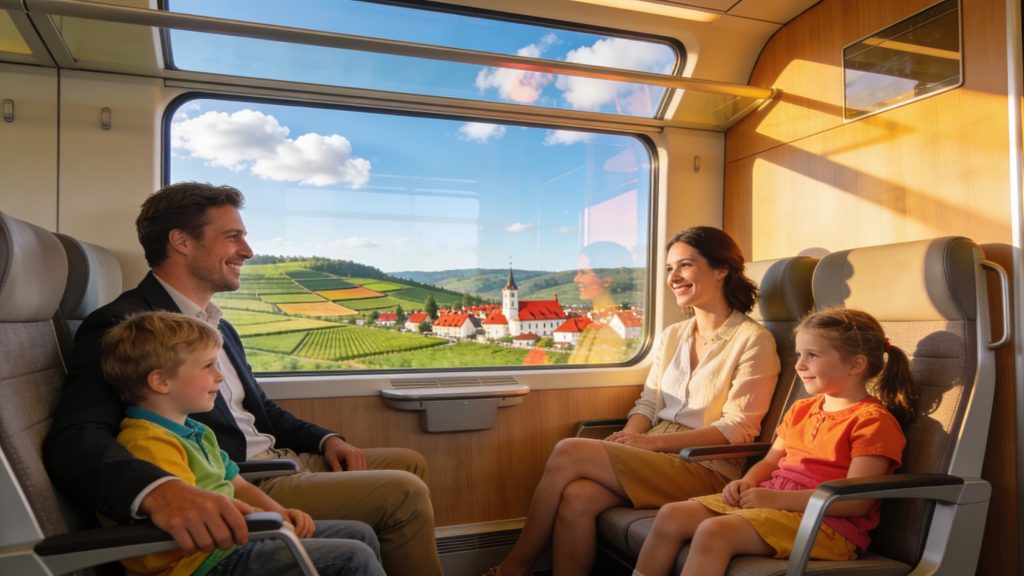
A train journey through Central Europe with children is more relaxing than you might think. No traffic jam stress, but space to play, draw and enjoy mountain landscapes and historic cityscapes gliding past. Children often get substantial discounts, trains offer play areas and family compartments, and the journey itself becomes part of the holiday. From Prague to Budapest and from Vienna to Ljubljana: Central Europe offers short routes, animal-friendly cities and attractions that appeal to children. Ideal for families who consciously opt for a Central Europe train holiday with more comfort and less hassle. Discover below how to plan smartly and what you can expect along the way.
Why a train journey with children through Central Europe works
A train journey offers children freedom you do not get in a car or on a plane. They can walk around, look outside, play games at a table or have a nap in between without anyone being stuck behind a steering wheel. The distances between major cities in Central Europe are manageable. Prague to Vienna is about four hours, Vienna to Budapest around 2.5 hours. This means you are not on the road all day and can stop in between for an overnight stay or an excursion.
For parents, travelling by train means less fatigue and more time to interact with the children. You can look at the map together, have a picnic on the way or simply talk in peace. In addition, many trains in Central Europe have facilities that make travelling with children easier: family compartments, changing tables, power sockets for tablets and sometimes even toys or colouring books on board.
‘ Children up to 12 years of age travel for free on a special child pass when you buy an adult pass. ’
Child discounts and Interrail passes save a lot
Children up to 3 years of age usually travel for free on an adult’s lap. For children from 4 to 11 years there is often a reduced fare, depending on the train company. On high-speed trains such as the Railjet or EuroCity in Austria, Czechia and Hungary, children generally get a 50 percent discount. Do note that you often need a seat reservation for these trains, which you pay for separately.
An Interrail pass can be cost-effective for families who want to visit several countries. Children up to 12 years of age travel for free on a special child pass when you buy an adult pass. You only pay the reservation fees for trains that require them, such as night trains or high-speed trains. Compare the costs of individual tickets with an Interrail pass in advance to see what works out best for your route.
Short routes and play space on the way
The big advantage of Central Europe is that many cities are close together. This makes it possible to combine short routes with active stops. Think of a day in Prague with Prague Castle and the zoo, and a stopover in Brno or Olomouc. You then travel on to Vienna or Bratislava. Short travel times keep children fresh and interested.
Many trains in this region have family areas or compartments with tables where children can play. In German ICE trains you will sometimes find a Kleinkindabteil (a small children’s compartment) with a changing table, coloured pencils and small play figures. In Austrian trains there are areas with films and children’s cinemas. Czech and Hungarian trains also often have space for pushchairs and luggage, so you do not have to struggle through narrow corridors.
Animal-friendly cities like Prague and Ljubljana
Children find animals fascinating, and fortunately Central Europe has several cities with good zoos or nature parks. Prague Zoo is among the top ten in Europe. The park is in a green, hilly area just outside the centre. From the main station you can get there within half an hour by public transport. The combination of a train trip to Prague and a day at the zoo works well for families with young children.
Ljubljana in Slovenia is smaller and easier to get around, with a city centre where cars are banned. The city has a compact zoo and is within walking distance of the train station. Vienna also has Schönbrunn, one of the oldest zoos in the world, directly accessible by metro and tram from the centre. These cities are easy to combine in a train tour.
‘ The city has a good public transport network, which means you can comfortably get from place to place with children without a lot of walking. ’
Attractions and family outings in Budapest
Budapest offers more than just culture and history. The Városliget city park has a large open-air bath, a children’s museum and Budapest Zoo. The Children’s Railway, run by children under adult supervision, is also a unique experience. The ride goes through the Buda Hills and takes about three quarters of an hour.
For older children, a boat trip on the Danube or a visit to the interactive Miniversum with miniature cities is fun. Budapest is easy to reach from Vienna with direct trains, and from Prague you travel via Bratislava or by night train. The city has a good public transport network, which means you can comfortably get from place to place with children without a lot of walking.
Night trains as part of the route
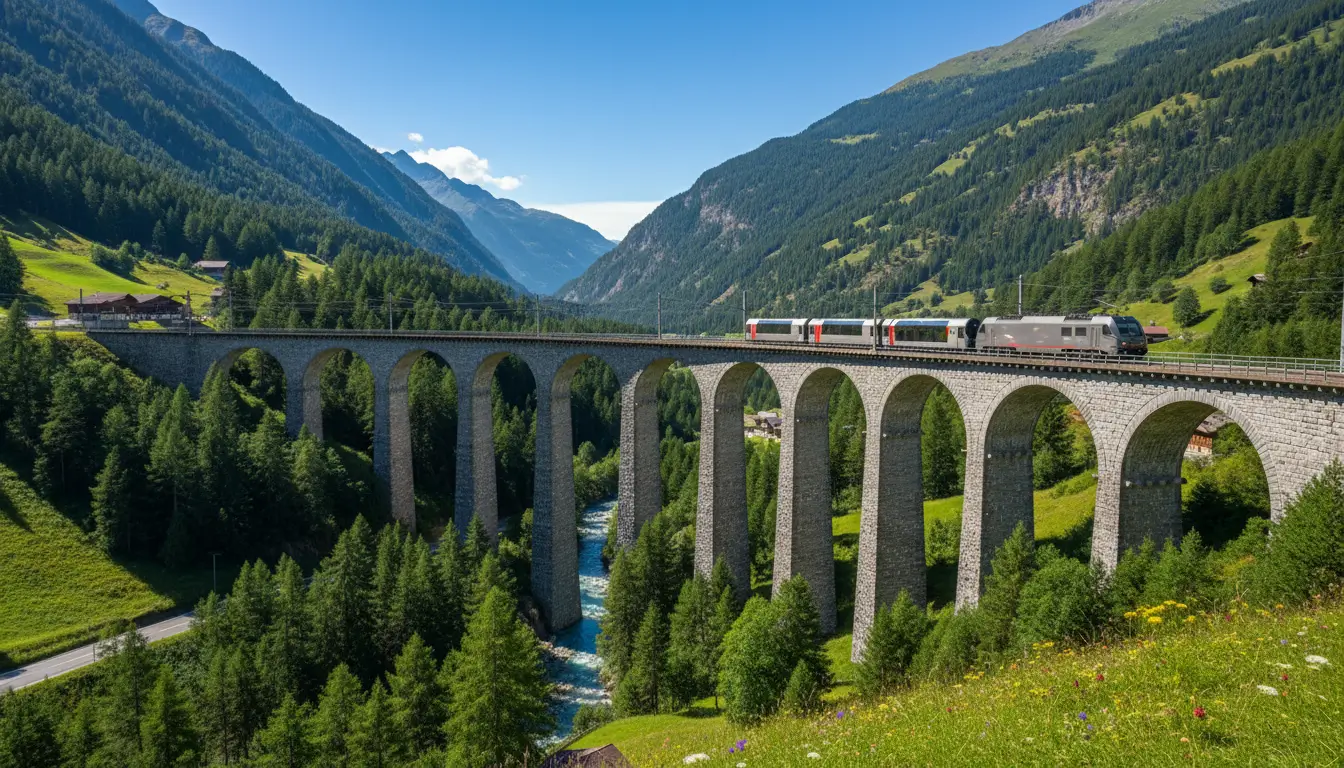
A night train can be a smart choice when you want to cover longer distances without spending an entire day on the train. Children often find it exciting to sleep on a train. The ÖBB Nightjet connects cities such as Vienna, Prague, Budapest and Zurich. You book a couchette or sleeping compartment where the whole family can sleep together.
Do keep in mind that reservations for night trains are required in advance and that you need to book separate places for children, even if they travel for free with Interrail. The cost of a couchette is between 15 and 30 euros per person, depending on the route and class. Take earplugs and a small night light with you, as stations and shunting can be noisy.
Practical tips for luggage and entertainment
Travel light. Rucksacks or foldable suitcases are easier to handle in busy trains than large wheeled suitcases. Pushchairs can travel for free and can often be folded and placed in the luggage rack or by the door. Take a power bank for tablets and phones, as not all trains have power sockets at every seat.
Entertainment for the journey can be simple: colouring books, card games like Uno or Guess Who, an e-reader with children’s books or a scenery game such as counting cows. On trains with wifi, children can watch films or series, but check in advance whether the connection is stable enough. Also take snacks and water bottles with you, as dining cars can be expensive and not always child-friendly.
‘ Avoid quiet carriages and preferably choose seats near the family area or the dining car. ’
Booking in advance and choosing seats
Reserve seats opposite each other at a table when travelling with children. That provides space for games and food, and keeps the children together. Many train companies let you choose a specific seat online during booking. Avoid quiet carriages and preferably choose seats near the family area or the dining car.
Book early for busy periods such as school holidays and the summer months. High-speed trains and night trains fill up quickly. Do you want to remain flexible? Then choose an Interrail pass. Reserve only the most important routes in advance. Local stopping trains often do not need reservations and offer just as much space, albeit with longer travel times.
Starting with a short route and expanding
Start small if it is your first time travelling by train with children. A direct connection from Vienna to Prague or Bratislava to Budapest is straightforward and low-stress. Let children get used to train travel before you plan a multi-country trip with changes and night trains. Discuss the route together beforehand, let them look at the map and involve them in decisions. That increases their engagement and reduces boredom.
As you gain more experience, you can add longer routes. Think of special trains such as panoramic trains in Austria or narrow-gauge lines in Hungary, or combinations with ferries and cable cars. Flexibility is important: build in time for rest, unexpected delays and spontaneous outings.
Discover more on Traveler Tips
On the Traveler Tips website you will find extensive information about travelling by train across Europe, routes through different countries, practical tips for travelling with children and background information on booking tickets and passes. Whether you are looking for inspiration for your next trip, details about regulations or experiences from other travellers, there is plenty to discover to help you prepare your holiday even better.
Frequently asked questions
Plan routes with as few changes as possible and medium-length legs (3–5 hours) with a longer break in a child-friendly city, so nobody becomes overtired. Travel light with rucksacks or small wheeled suitcases, take a compact buggy and split belongings between a day pack (food, toys, change of clothes) and main luggage. Reserve family compartments or table seats on ICE/ÖBB/EC trains, paying attention to facilities such as a children’s compartment, changing area, sockets and possibly restaurants or a children’s cinema. Provide offline entertainment (colouring books, card games, e-reader) and turn the view outside into a game, so children stay occupied and the journey itself feels like a relaxed part of the holiday.
Ideal ‘smart’ routes include the Netherlands – ICE to Munich or Salzburg for a combination of city, mountains and lakes, or via Berlin on to Prague for a mix of big cities and a medieval atmosphere. In Switzerland, routes around Lucerne and Engelberg with the Globi Express are perfect, because panoramic trains, cable cars and mountain villages offer lots of variety and experiences. In Germany, ICE trains with a Kleinkindabteil towards the Bavarian Alps or Lake Constance provide a comfortable base with child-friendly facilities. Where possible, combine high-speed trains with shorter regional journeys, cable cars or boat trips to turn the journey itself into an adventure full of experiences for the whole family.
First look at your travel profile (number of travel days, countries and distances) and then compare national tickets/offers with an Interrail family pass, where children often travel free or with a high discount. If you are travelling many long routes in a short time and across several countries, an Interrail Global Pass is usually the most economical and at the same time flexible; with fewer travel days, individual (early-booked) tickets are often cheaper. Always check compulsory reservations and supplements for ICE, TGV, Railjet or night trains, as these determine the real price difference between a pass and separate tickets. For comfort, choose trains with family areas, tables and air conditioning wherever possible, even if they are slightly more expensive, and plan the route so that you cover the longest stretches by day and with minimal changes.
Book seats well in advance (preferably at a table or in a family compartment), check child rules and discounts (such as Interrail child passes) and plan routes with as few changes as possible at child-friendly times. Pack light but thoughtfully with layers of clothing, basic first aid, snacks, water, a power bank and easy-to-carry luggage (rucksacks, foldable buggy). Provide varied entertainment: colouring and puzzle books, small games, audiobooks, offline films/series and scavenger or counting games using the landscape outside. Keep an eye on practical matters such as reservation requirements for high-speed and night trains, sit close to toilets or play areas and build in enough breaks for moving about at stations.