 NL
NL
Nature holiday by public transport: your sustainable journey starts here
A successful nature holiday by public transport is a conscious and sustainable choice that takes you to the most beautiful green destinations in a surprisingly comfortable and smart way. The key to success lies in good preparation, allowing you to travel relaxed and leave the car at home with peace of mind. Read on and discover how to get your next trip into nature smoothly on track.
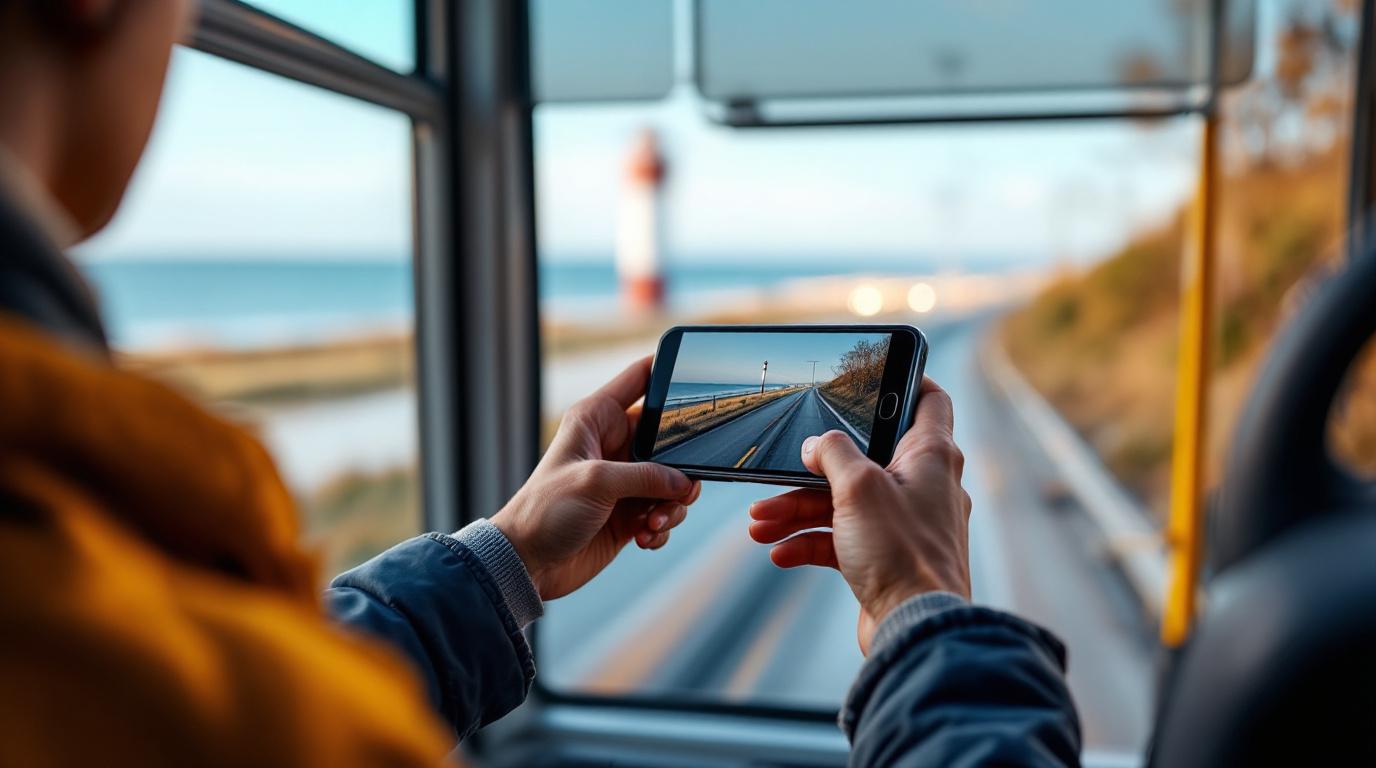
More and more travellers are opting for a holiday in which the journey itself is part of the experience. Planning inspiring nature holidays without being dependent on a car gives a feeling of freedom and often brings you closer to your destination. By using public transport you travel from the city centre to the starting point of a walking route while the landscape passes by your window.
The unexpected benefits of travelling to nature by train and public transport
Travelling by car often seems like the easiest option, but anyone who makes the switch to public transport soon discovers the advantages. Your journey begins the moment you step out of your front door. On the train you have time to read a book, prepare your route or simply enjoy the view. You avoid traffic congestion and the hunt for a parking space, which can be quite a challenge in popular nature reserves.
In addition, you travel more directly to the heart of your destination. Many railway stations are centrally located, and from there there are often good connections with local transport that take you deeper into nature. The pace of travel is slower, which means you observe your surroundings more consciously and arrive more rested. It is a way of travelling that encourages you to plan smarter and pack lighter, which contributes to a more focused and relaxing holiday.
‘ This creates calm and offers better protection for the fragile environment. ’
Low-car and car-free destinations: where nature calls without parking stress
Across Europe there are countless nature areas that are easy to reach without a car. In fact, many of these places are specifically designed for visitors arriving on foot, by bike or by public transport. This creates calm and offers better protection for the fragile environment.
Examples in the Netherlands
- De Hoge Veluwe National Park: Take the train to Ede-Wageningen or Apeldoorn station. From there a bus will take you directly to one of the entrances. Inside the park, the well-known white bicycles are available free of charge, ready for you to explore the vast landscape.
- The Wadden Islands: The train takes you to Harlingen (for Terschelling and Vlieland) or Den Helder (for Texel). After the crossing by ferry, you can use the excellent network of buses and cycle paths on the islands. Most visitors leave their cars on the mainland.
- South Limburg hill country: By train you can easily travel to cities such as Maastricht, Valkenburg or Heerlen. Various walking and cycling routes start from there. Local trains and buses connect the villages in the hills, making it easy to plan a multi-day trek.
Inspiration in Europe
- The Black Forest, Germany: Take an international train to Freiburg or Karlsruhe. Once there, the KONUS guest card (KONUS-Gästekarte), which you receive at most accommodations, entitles you to free use of buses and trains throughout the region. This way you can travel effortlessly to the starting points of the most beautiful walking routes.
- The Swiss Alps: Switzerland has one of the best public transport networks in the world. Trains, buses and even boats are perfectly coordinated. With a Swiss Travel Pass you can travel without limits and reach remote mountain villages and valleys where cars are not even allowed.
- Scottish Highlands, United Kingdom: The West Highland Line is often named as one of the most beautiful train journeys in the world. The route from Glasgow to Mallaig takes you straight through the rugged nature of the Highlands, with stops at places such as Loch Lomond and Fort William, the base for climbing Ben Nevis.
Planning your route: the train as the backbone of your nature trip
Good planning starts with mapping out your main route. The train is often the backbone of your journey. Use international journey planners such as those from NS International or Deutsche Bahn to find the best and fastest connections. Where possible, book your tickets a few months in advance; this can save you a lot of money, especially on popular high-speed trains.
Do not see the train journey as just transport, but as a fully fledged part of your holiday. Choose routes that are known for their beautiful views. Travelling by night train is also an efficient choice: you save a night in a hotel and wake up refreshed at your destination in the morning.
Solving the ‘last mile’: from station to the heart of nature
The biggest challenge of a car-free holiday is often the last stretch of your journey: the so-called ‘last mile’ from the station to your accommodation or the starting point of your activity. Fortunately, there are more and more smart solutions for this.
- Local buses: In many tourist regions, local bus timetables are aligned with the arrival and departure times of trains.
- Shared bikes and e-bikes: In the Netherlands, the OV-fiets (public transport bike) is a familiar option. In other countries too, you will find more and more bike-share systems at stations, ideal for exploring the immediate surroundings.
- Walking routes from the station: Organisations such as NS and Wandelnet have mapped out special walking routes that start directly from a railway station. That way you step off the train and start your hike straight away.
- Shuttle services and taxis: Many hotels and campsites in nature areas offer their own shuttle service to pick up guests from the nearest station. Ask about this when booking your stay.
‘ Travelling with a backpack is more practical than with a large suitcase, because you are more flexible at stations and on buses. ’
Tickets, passes and luggage: smart tips for hassle-free logistics
Carefree travel by public transport calls for a smart approach to the practical side of things. For international journeys within Europe, an Interrail Pass can be good value if you plan to travel a lot. For a trip within a single country, a local discount or tourist card is often the best option.
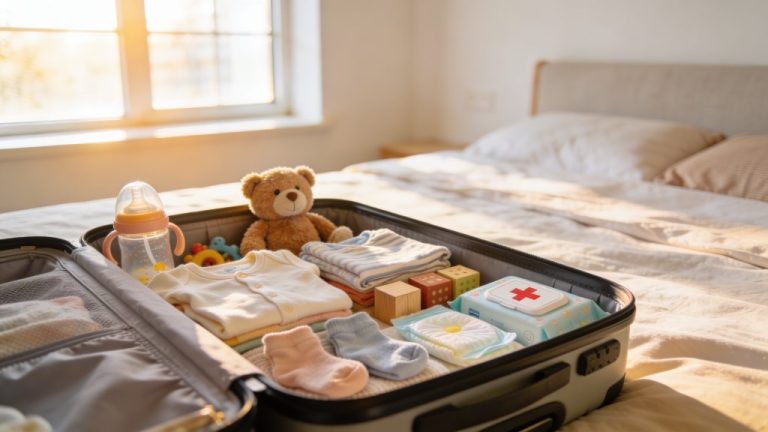
Think carefully about your luggage too. Travelling with a backpack is more practical than with a large suitcase, because you are more flexible at stations and on buses. Pack only what you really need. If you are travelling with more luggage, consider using luggage lockers at stations so you can explore a town or region during the day without having to carry everything with you.
Travelling in more comfort and with more awareness: extra tips for on the road
A smooth travel experience is all in the details. Download the apps of the relevant transport companies and planners such as 9292 or Rome2Rio in advance. Make sure you have offline maps of your destination on your phone so you can find your way even without an internet connection. A power bank is essential to keep your devices charged on the way.
Be flexible in your planning. Public transport is sometimes delayed. Try not to see this as a problem, but as an unexpected part of your journey. Take enough food and drink with you for the road so you are not dependent on what is available at stations. By consciously choosing a calmer travel pace, you will get even more satisfaction from your holiday.
Your next nature trip is waiting: start planning!
The time to book your next nature adventure is now. Start by choosing a destination you have always wanted to visit, check the train connections and reserve your first tickets. Download the necessary apps, make a packing list and get inspired by travel stories from others who have gone before you. Every public transport journey you plan takes you one step closer to the peace and quiet of nature and further away from the stress of driving. Grab your backpack, step onto the platform and discover how rewarding car-free travel really is.