
 NL
NL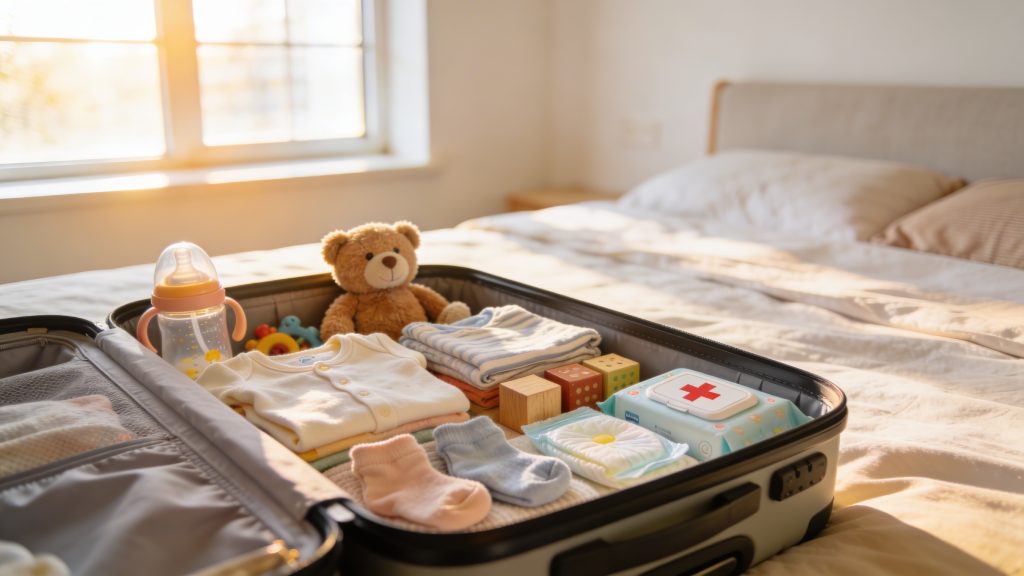
A well-prepared car holiday with children starts with a carefully thought-out packing list. With the right items within easy reach, you avoid stress on the road and make the journey comfortable for the whole family. Think of a first aid kit, organised toy backpacks, warm blankets, complete travel documents, tablets for entertainment and surprise bags to beat boredom. Want to know what really must not be missing?
A car holiday with children requires more preparation than a trip with only adults. Children’s needs vary greatly depending on their age and the length of the journey. With this detailed checklist you make sure you don’t forget anything and that everyone travels comfortably and safely.
The basis for a smooth journey lies in organisation. By packing items by category and placing them strategically in the car, you keep an overview and have frequently used things quickly to hand.
Safety and comfort first
Safety is the foundation of every car journey with children. Before you set off, check whether the car seats are properly secured and suited to your child’s age and weight. Make sure there is good head support, especially on long journeys.
For optimal comfort during the journey you will need these items:
- Travel pillows that prevent neck pain on long journeys
- Light fleece blankets for changing temperatures in the car
- Sunshades for the windows to block bright sun and heat
- Sunglasses for children sitting in the back
A handy tip: dress children in lighter clothing and use blankets. The car heats up quickly and children strapped into car seats get warm faster. With a blanket you can easily adjust their temperature without having to stop.
Organisation in the car
A seat-back organiser makes all the difference on a long car journey. You attach this accessory to the front seats so that children have direct access to what they need. This way you avoid having to search for toys, snacks or wipes while driving.
For optimal storage in the car, use:
- Storage cubes for each child’s clothing
- Packing cubes that save space in the boot
- An easily accessible bag with frequently used items such as wipes and snacks
- Foldable bags that take up very little space
Let older children pack their own organiser. This gives them responsibility and they instantly know where their things are.
Hygiene and emergencies on the road
A well-stocked hygiene bag prevents a lot of hassle during the journey. Pack it in a separate, easily accessible bag that you can grab quickly during stops or in emergencies.
The hygiene bag contains:
- Extra nappies, wipes and disposable changing mats for young children
- Bags for travel sickness
- Plastic bags for dirty nappies and other rubbish
- Paper tissues and kitchen roll
- Hand sanitiser and anti-bacterial wipes
- Moist wipes for quick clean-ups
- Instant stain removers for spills and accidents
Always keep a complete extra outfit per child within reach. A spilled drink or a travel-sick child is nothing unusual. A quick-drying microfibre towel helps with bigger accidents.
Taking a first aid kit and medicines
A first aid kit is compulsory in many European countries, but when travelling with children you need more than the standard car kit. Put together a separate kit specifically for children.
Take these medicines and products with you:
- Painkillers and fever reducers suitable for children
- Medicines for colds and blocked noses
- Remedies for stomach ache and diarrhoea
- Nappy rash cream for babies and toddlers
- Plasters in various sizes
- Disinfectant spray or ointment
- Insect repellent and anti-itch gel
Store medicines in a cool place in the car and always check the expiry date before departure. For babies, also take a changing mat and plenty of clean nappies.
Food and drinks for the road
Hungry children quickly become grumpy. A well-filled snack box prevents a lot of frustration during the journey. Choose snacks that don’t spoil quickly and don’t create too much mess in the car.
Fill the snack box with:
- Healthy options such as pretzels, crackers and apple slices
- Dried fruit and nuts for older children
- Biscuits and chocolate for special moments
- Bars and energy bars as an extra snack
- Small packages that are easy to open
Provide reusable water bottles for each child. A travel cup with a lid prevents drinks from being spilled in the car. Also take bibs and napkins for young children who eat while you are driving.
Organising fun and entertainment
Boredom is the biggest challenge on long journeys. A variety of entertainment keeps children occupied and makes the trip more pleasant for everyone. Plan different types of entertainment and alternate them.
These entertainment options work well in the car:
- Magnetic games that stay in place
- Colouring books with coloured pencils or felt tips
- Small building blocks and puzzles
- Tablets with films and games downloaded in advance
- Portable chargers and power banks
- Noise-cancelling headphones for peace and quiet
- Audiobooks the whole family can listen to
An effective tactic is the surprise bag. Before you leave, buy small toys or craft projects and wrap them in separate bags. Give a new bag every few hours. This keeps up the excitement and prevents boredom.
Store toys in light, foldable bags instead of heavy bags. They take up less space and are easier for children to handle.
Clothing and extra outfits
Children unexpectedly need extra clothes during a car journey. Pack at least one complete extra outfit per child in an accessible bag.
Take this extra clothing with you:
- A complete outfit including underwear and socks
- A warm jumper or cardigan for cooler moments
- Pyjamas for night-time journeys or overnight stays on the way
- Swimming trunks or a swimsuit if you stop by the water
- Socks and shoes for outside the car
- An umbrella for unexpected rain during stops
Take different weather conditions into account. The weather can change significantly on a long journey, especially when travelling south or to the mountains.
Travel documents and practical matters
Amid all the children’s items, don’t forget the practical documents. Keep them in a separate, waterproof folder that you can access quickly.
You will need these documents:
- Passports or ID cards for all travellers
- Driving licence and vehicle registration certificate
- Insurance papers including travel insurance
- European Health Insurance Card for each family member
- Accommodation reservations
- Notes with important phone numbers
Also take a torch with you for navigation in the dark or emergencies. Rubbish bags in different sizes help keep the car clean during the journey.
Special items for babies and toddlers
Travelling with very young children requires extra provisions. Babies and toddlers have specific needs that you must arrange in advance.
For the very little ones, take:
- Enough nappies for the whole journey plus extra
- Nappy bin or odour-control bags
- Bottles, teats and possibly a bottle warmer
- Baby food and snacks
- Cuddly toys and dummies
- A foldable pushchair for stops
- Sunshade specifically for car seats
Plan regular stops where babies and toddlers can move around. Sitting still for long periods is especially hard for them.
Final check before departure
Before you leave, do one last check of all your things. Walk around the car and check whether frequently used items are within easy reach. Test if tablets are charged and if the children can reach their belongings.
Plan enough stops during the journey. Children need more breaks than adults to move, go to the toilet and burn off energy. With young children, count on a stop every two hours of driving.
Adapt this packing list to your own family. What works for one child may be less suitable for another. Learn from previous trips and keep refining your packing list.
On the Traveler Tips website you’ll find much more useful information about planning your car holiday. From routes and destinations to practical tips on travelling with children. Discover more and make your next trip even better prepared.
Frequently asked questions
First create categories (safety, clothing, snacks, entertainment, hygiene) and decide for each category what is really essential only; use packing cubes and seat-back/backseat organisers to make efficient use of the limited space. Put frequently used items (nappies, wipes, a set of clean clothes, snacks, drinks bottles) in a separate, easily accessible bag in the car and store bulk supplies in the boot. Choose compact, multifunctional toys and entertainment (colouring book + pencils, a few small toys, tablet with films/games, headphones) instead of large cuddly toys or lots of loose bits and pieces. Allow for accidents: for young children always have at least one complete spare outfit per child, extra nappies/underwear and a microfibre towel within reach.
Indispensable “smart” items include a tablet or screen with downloaded films and games, plus a power bank or car charger so everything stays charged. Add wireless (preferably noise-cancelling) kids’ headphones for peace and quiet in the car. A backseat organiser with cleverly designed pockets for snacks, toys and drinks bottles prevents searching and mess. Finally, audiobooks or children’s podcasts via a smartphone or tablet are ideal for shared, calm entertainment.
Take layered clothing (T-shirt, thin jumper, light rain/wind jacket) so you can easily adjust to cold, wind or sun, plus a compact umbrella or poncho. Put a small emergency kit in your bag with plasters, painkillers, an emergency snack, power bank, small torch and a copy of important numbers/documents. Choose light, compact versions (microfibre towel, foldable bag, mini toiletries) to keep the volume down. Keep frequently used emergency items on top or in outer pockets so you can reach them immediately without unpacking everything.
Roll your clothes instead of folding them and use packing cubes or pouches per category (e.g. underwear, T-shirts, swimwear), so you can grab the right cube from your suitcase in one go. Put what you’ll need first (pyjamas, toiletries, clean change of clothes) on top or in a separate “first night” bag. Use smaller bags or organisers for cables, medicines and important documents and keep them in an outer pocket or hand luggage. Keep frequently used items during the journey (snacks, jumper, power bank, travel-sized toiletry bag) in an easily accessible compartment or separate daypack.
For swimming, swimwear, goggles, swim nappies (for little ones), towels, flip-flops and possibly armbands or buoyancy vests are important. For walking, good walking shoes or sturdy trainers for everyone, a small rucksack, waterproof jackets, sun protection (cap, sunglasses, sun cream) and enough water are indispensable. For both activities, take extra sets of clothes and a quick-drying (microfibre) towel for unexpected wet or muddy moments. A compact first aid kit with plasters, treatment for insect bites and painkillers also belongs to the essentials for these kinds of outings.