 NL
NL
A driving holiday with children becomes much more pleasant when you take regular breaks at well‑chosen spots. Stopovers at playgrounds, parks and child‑friendly rest areas help young travellers burn off energy, reduce restlessness in the car and prevent endless whining about toilet stops. Well‑planned breaks make the difference between a relaxed journey and a stressful trip. Read on for practical tips to help your next driving holiday with children run smoothly.
Why regular stopovers are important
Children do not like sitting still for hours. They get bored, uncomfortable and sometimes even irritable. Sitting still for a short time is already hard, but four hours or more in a car seat often means tears or whining. Regular breaks of 15 to 30 minutes give children the chance to move, go to the toilet and have something to eat or drink. This prevents restlessness and at the same time increases road safety. A tired or irritated driver is less alert.
Ideally, plan a stopover every 2 to 4 hours. The frequency depends on the age of your children. Pre‑schoolers usually need more movement than older children. Try not to drive for more than 4 hours in one go. Break long journeys into stages with fixed moments for breaks. This creates predictability and helps children cope better with the journey.
‘ This turns the stopover into a little outing instead of just a toilet break. ’
Which locations are suitable for stopovers
Not every car park is suitable for taking a break with children. Choose places with enough space to move around and facilities that match the needs of young travellers. Play areas along motorways are ideal. They offer swings, slides or climbing frames where children can quickly burn off energy. Many rest areas in Germany, France and Switzerland have such facilities.
Parks and picnic areas with lawns are a good alternative. Here you can bring a ball or throw a frisbee. Children can run around without you having to worry about heavy traffic. Look for locations with clean toilets and seating areas where you can eat in peace. Raststätten with roadside restaurants and children's menus are handy for a longer break, but are often busier and more expensive.
Some parents deliberately choose themed stops. Think of viewpoints where children can learn something about the surroundings, or small animal enclosures along the route. This turns the stopover into a little outing instead of just a toilet break. Use apps or online route planners to find child‑friendly locations in advance. This prevents you ending up halfway searching for a suitable place.
How to plan smart stopovers
Planning starts with choosing your route. Take the time to map out your stopovers in advance. Pay attention to the distance between stops and the facilities available. Avoid time pressure by not planning too tightly. A flexible plan works better than a strict timetable. Children sometimes unexpectedly need an extra break.
For younger children, create an activity booklet in which they can tick off the stops. This gives them predictability and motivation. They know when the next break is coming and can look forward to it. You can involve older children in planning the route. Let them help look for interesting places to stop and discuss the schedule together.
Take nap times into account. Plan quieter driving periods during the afternoon nap or after dinner. That way you can cover some distance without the children getting bored. Stop just before or just after sleep time so they can burn off energy or freshen up. Combine stops with meals by taking a picnic with you. This saves time and is often healthier than fast food along the motorway.
What to take with you for a good stopover
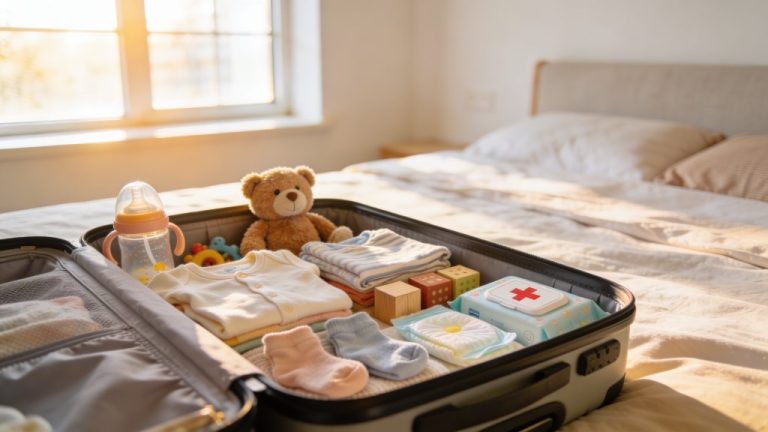
A well‑prepared stop bag makes every break easier. Pack a bag with wet wipes, sun cream, spare clothes and a first‑aid kit. Wet wipes are handy for quickly cleaning dirty hands or faces. Sun cream offers protection during stops in full sun, especially at playgrounds without shade.
Take a ball, frisbee or skipping rope with you. These toys are light and encourage movement. Children can quickly play a game without needing much space. Some parents take a small blanket for a short picnic on the grass. This makes the break more comfortable and inviting.
Make sure you have healthy snacks and plenty to drink. Fruit, yoghurt or homemade bars provide energy without sugar spikes. Take a cool bag for hot days. Avoid too many sweets or sugary treats. These often cause an energy peak followed by tiredness, which makes the rest of the journey more difficult.
Practical tips for relaxing stopovers
During the break it is important that children really unwind and move around. Let them run, climb or simply walk about. This helps them release built‑up tension. Limit the use of tablets and phones during breaks. Movement is more important than screen time.
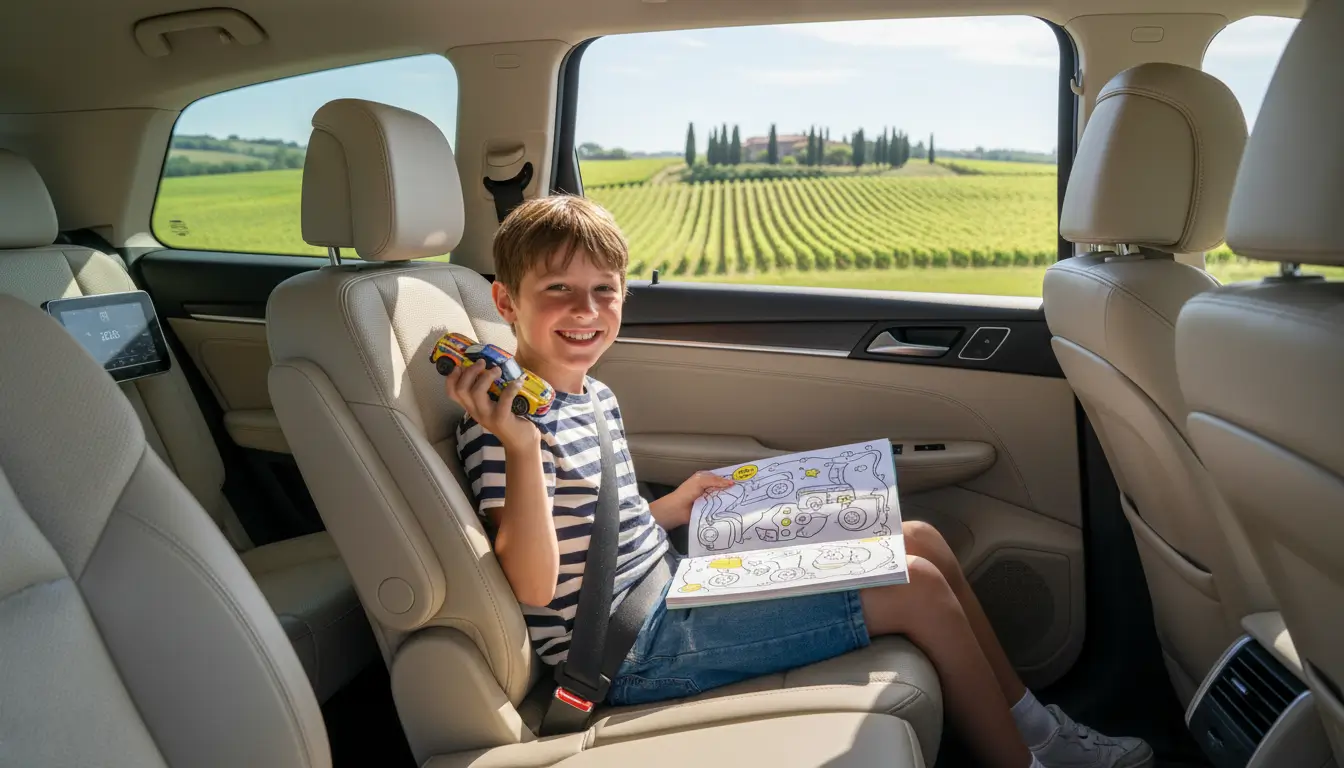
Check car seats again after every break. Make sure the belts are properly fastened and that the children are sitting comfortably. A poorly adjusted seat can cause discomfort during the journey. Air the car during the break by opening doors and windows. This cools the car down and refreshes the air.
- Plan breaks at playgrounds or parks with plenty of space
- Take a stop bag with wet wipes, sun cream and first‑aid items
- Choose healthy snacks and plenty to drink
- Let children move instead of just sitting behind a screen
- Check car seats and ventilate the car during every stop

How to make a stopover fun
A stopover does not have to be boring. Turn it into a little adventure by, for example, stopping at a viewpoint or visiting a local farm. Children enjoy seeing cows or other animals. It does not take much time and makes the journey memorable.
Use movement games to get children active. Think of tag, hide‑and‑seek or simple stretching exercises. Some parents play a stop‑and‑go game: 10 minutes of playing, then back in the car. This gives structure and keeps children focused.
Audiobooks and children's podcasts are useful for the drive between stops. Download stories or educational podcasts in advance that children can listen to. These keep them calm and entertained without using screens. Save toys and tablets for the breaks themselves rather than for the entire journey. This makes the break more appealing and helps prevent boredom on the road.
Child‑friendly places to stop by destination
The availability of child‑friendly places to stop differs from country to country. Germany has many rest areas with playgrounds, especially along the A5, A7 and A8. Look out for car parks with the playground symbol on the road signs. These are often well maintained and offer clean toilets.
France also has many aires with play facilities. Especially along the A6 and A7 heading south you will find various locations with climbing equipment and picnic areas. Some aires even have small walking trails or educational boards about nature. Switzerland offers smaller, but often beautiful rest areas with views and play space.
Use online tools to find locations in advance. Websites and apps such as Google Maps or special apps for parents on the road show where child‑friendly facilities are. Mark these places in your navigation so that you can easily find them en route. Read reviews from other travellers to see whether a location is suitable.
‘ A relaxed journey is more important than sticking to a tight schedule. ’
How to avoid problems during stopovers
Avoid very busy locations by stopping outside peak times. Early in the morning or late in the afternoon, rest areas are often quieter. This makes it more pleasant to park and gives children more space to play. Pay attention to road safety when getting in and out. Always keep children close by in car parks.
Make sure you allow enough time. Stress often arises when you want to set off again too quickly. Give children time to go to the toilet, eat and move around. This prevents you from having to stop again after just a few kilometres. Communicate clearly when the break is over. Use a timer or tell them in advance how much time they have.
Stay flexible. Sometimes a stop does not go as planned. Children can become tired, overstimulated or unwell. Adjust your plans and opt for extra rest if needed. A relaxed journey is more important than sticking to a tight schedule.
On the Traveler Tips website you will find much more practical information about travelling with children, route planning, safety on the road and handy tips for a successful holiday. Discover more articles and make sure your next trip is well prepared and carefree.
Frequently asked questions
Plan stops every 2–4 hours at places with play facilities, grass or a park, so children can run, climb and let off steam. Combine practical convenience with fun by choosing locations with clean toilets, food/drink and, if possible, a playground or picnic area. Keep the schedule flexible and involve the children with a simple “stop timetable” or map on which they can see the next break. Take a dedicated “stop bag” with toys, ball/frisbee, snacks and care items so you can make every break quick and enjoyable.
The most suitable stopovers are places where children can move around, such as playgrounds, parks or grass areas with room to run and climb. Child‑friendly roadside restaurants or Raststätten with a play corner and clean toilets also work well. Themed breaks, for example at a (children's) farm, a small animal park or a scenic viewpoint, keep different ages interested. Picnic areas where you can eat, play with a ball or frisbee and have a good run around are ideal for variety.
Choose child‑friendly locations with clean toilets, changing facilities and, if possible, a restaurant or picnic area so you can eat and go to the toilet in peace. Bring your own healthy snacks, drinks, wet wipes and spare clothes to ensure comfort and hygiene. Pay attention to safety by checking car seats, seat belts and the temperature in the car at every stop. Look for places with play equipment, a grass area or space to run around so that children can burn off energy and then sit more calmly in the car.
Plan stopovers at logical moments (for example every 2–4 hours) and link them to necessary breaks such as toilet, refuelling and meals so you do not lose extra time. Choose locations directly along the route with play areas, a park or a short walk so everyone can move without major detours. Use themed stops (viewpoint, animals, local park) to make the journey itself part of the experience. Keep the plan flexible so you can extend a stop that turns out to be fun and skip the next one if everyone still feels fine.