 NL
NL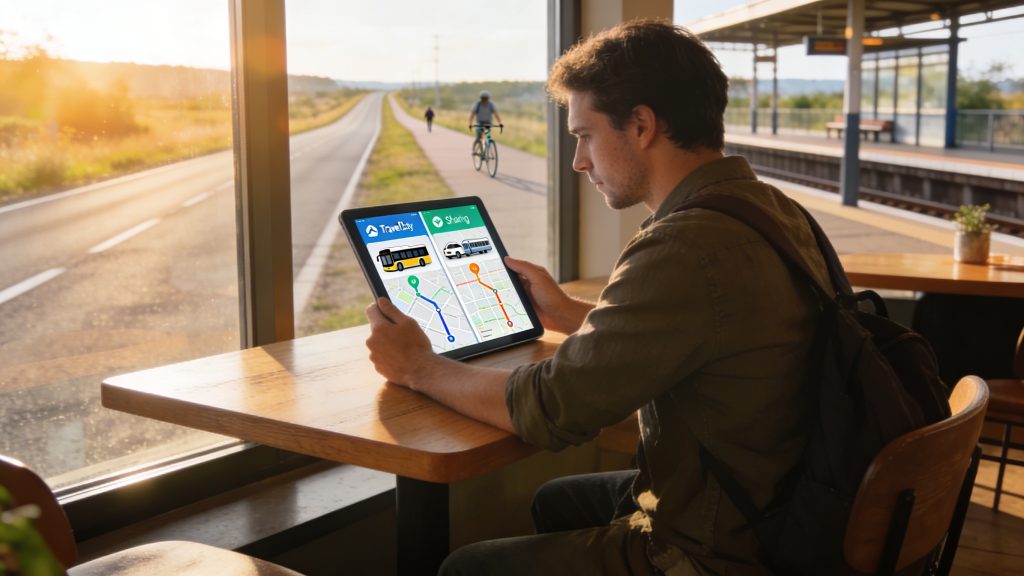
Rail strikes and disruptions regularly throw your travel plans off course. If you plan ahead and know your options – such as car‑pool apps, flexible tickets or coach services – you keep control of your journey and avoid unnecessary frustration. In this article you’ll find concrete alternatives, useful apps and passenger rights that help you further on international train routes.
Car‑pool apps as a reliable alternative
During large‑scale strikes, roads fill up quickly, but car‑pool apps offer a practical way out. Platforms connect drivers with fellow passengers for shared journeys, which not only reduces congestion but also keeps costs manageable on longer distances. For routes such as Amsterdam–Brussels you can quickly find a ride via these apps, often within a few hours of a strike being announced.
The big advantage: you share the costs and are not dependent on overcrowded rail‑replacement coaches. One train carries on average a thousand passengers, while a coach can take a maximum of fifty. In the case of large‑scale disruptions, car‑pooling is therefore often more reliable than waiting for scarce buses. Travellers report that they found a lift particularly quickly during strikes in France or Germany. Install popular apps and create a profile before you travel, so you can respond immediately when disruptions occur.
‘ Railway companies put on extra coaches, but they rarely cover the entire network. ’
Coach services and regional diversions
Rail‑replacement services – extra coaches that railway companies deploy as an alternative when trains are cancelled – often take centre stage during strikes, but in practice they are only available to a limited extent. Railway companies put on extra buses, but they rarely cover the whole network. So make sure you also consider private coaches or international coach lines as an alternative. Services such as Lux Express or FlixBus run between major European cities and offer good coverage.
During regional strikes there are often guaranteed train services during peak hours. In Italy, on strike days, trains run between 06:00 and 09:00 and between 18:00 and 21:00. Always check the official strike lists of railway companies such as Trenitalia or SNCF. For routes to Eastern Europe you can, in case of disruption, divert to coaches via Szeged–Subotica–Novi Sad as an alternative route through the Balkans. Keep regional travel apps – apps from local transport operators in specific countries or regions – close at hand for up‑to‑date information on Serbian or Greek service rules during strikes.

Flexible tickets and rebooking options
Buying flexible train tickets saves you stress and money when disruptions occur. Standard tickets – tickets that tie you to a specific train at a fixed departure time – lock you in to a set departure time, whereas flexible options allow you to rebook or cancel free of charge until shortly before departure. For ICE trains (high‑speed trains operated by Deutsche Bahn) between Amsterdam, Cologne and Frankfurt, reservations are compulsory in peak months. Buy flexible tickets and book at least ten days in advance, especially when engineering works or strike risks have been announced.
An Interrail Pass – a rail pass that allows you to travel unlimited through multiple European countries within a set period – gives you maximum flexibility for last‑minute changes. In case of disruption, you can switch to alternative rail routes or to other modes of transport with discounts on coaches and ferries. From 2025, European rules for combined tickets will apply. These are tickets where you make one journey using trains of several railway companies, so that on international trips involving several operators you retain your right to compensation and alternative transport.
Apps for live updates and diversions
Real‑time travel apps – apps that show current departure times, delays and timetable changes based on live data – are essential during rail strikes. These tools show up‑to‑date timetables, alternative routes and strike information. Download in advance the apps of major railway companies such as DB Navigator (the app of Deutsche Bahn, the German railways), SNCF Connect (the app of the French railways) or Trainline (a commercial European booking app for train and coach journeys). Also check national strike calendars on official websites so you can anticipate disruption.
Use journey planners that combine several modes of transport. In case of disruption, these apps immediately show alternative combinations of trains, coaches and car‑pools. Many apps send push notifications when strikes or major delays occur, so you can adjust your plans quickly. Travellers report that these apps often help them find alternatives a day in advance, which significantly reduces the risk of being stranded.
‘ Night trains usually have separate timetables that are less affected by regional strikes. ’
Night trains as a delay‑proof option
Travelling overnight helps you avoid daytime delays and is often more reliable than daytime services during strike periods. Services such as European Sleeper run between Brussels, Amsterdam and cities in Eastern Europe. You travel comfortably and sustainably, while saving daytime hours and continuing your journey without traffic jams or chaos on overcrowded platforms.
Night trains usually have separate timetables that are less affected by regional strikes. On top of that, you save the cost of a night in a hotel. For long distances such as Paris–Berlin or Milan–Munich, night trains are a smart alternative when there are disruptions during the day. Do plan ahead: berths are popular and sell out quickly, especially in holiday periods.
Bicycle and local public transport for short distances
For distances up to ten kilometres, cycling is quick and healthy. Many European cities offer shared bikes or e‑bikes that you can rent via an app. During regional strikes, local buses or trams are sometimes an option, but be aware: unions regularly target these services as well. Check locally which services are still running.
Bike‑and‑train combinations work well for shorter hops between cities. In Belgium, for example, you can cycle between Bruges and Kortrijk if trains are cancelled. Electric bikes also make longer rides manageable, as they require less effort. Do take the weather and your luggage into account.
Working from home or taking leave during major disruptions
When strikes affect an entire network, travelling may simply not be realistic. Ask your employer in good time if you can work from home, or take a day’s leave. Many companies offer satellite offices or remote‑working options during major disruptions. This approach prevents hours of waiting around or expensive last‑minute solutions.
Plan this proactively if you know strikes are coming up. Check strike calendars and communicate with your employer early. That way you stay in control of your schedule and avoid stress.
‘ For international routes, new European rules are on the way that extend rights to combined journeys – trips where you travel one route using trains of different railway companies – with several operators. ’
Passenger rights and compensation for delays
For delays of more than an hour, you are entitled to compensation, depending on the cause and the route. For international journeys with several operators, this only applies if the railway companies have agreements between themselves. If you have to stay overnight because of disruptions, you are entitled to a hotel and alternative transport.
There is no fixed minimum number of trains that must run during strikes, but railway companies must provide a predictable service that is published 24 hours in advance. Trains are lengthened when capacity falls below fifty per cent. Always keep your tickets and document delays if you intend to submit a claim. For international routes, new European rules are on the way that extend rights to combined journeys – trips where you travel one route using trains of different railway companies – with several operators.
Preparation and practical tips
Plan journeys during strike‑prone periods with generous buffers. Download relevant apps in advance and save important numbers and routes. Check strike calendars for any countries you travel through and book flexible accommodation that allows free cancellation.
Travellers recommend being especially alert to engineering works and spontaneous strikes in Germany and France. Buy tickets with flexible conditions and keep some cash on you for emergencies. Build in at least an extra hour for transfers on international routes. During major disruptions, special timetables often apply. You’ll only find these via official apps.
On the Traveler Tips website you’ll find extensive information about train travel across Europe, from route planning to practical regulations. Discover more tips on international travel, your rights and smart preparations that make your journey smoother.
Frequently asked questions
Check the journey planner or app of the operator straight away for up‑to‑date information and any alternative trains or routes. Look into other transport options such as (shared) car, car‑pooling, coach or bike/local public transport for all or part of the journey. Contact your employer or the people you are meeting to see whether working from home, video calls or rescheduling appointments is possible. Keep your tickets and proof of delay so you can request compensation or a refund where appropriate under passenger rights rules.
You can check the official channels of rail operators and infrastructure managers (such as NS, NMBS/SNCB, Deutsche Bahn, SNCF, Trenitalia), including their apps, websites and Twitter/X accounts, where planned strikes and major engineering works are announced. In addition, national trade unions and umbrella union organisations often publish strike overviews on their websites in advance. For a regional picture, news media and regional broadcasters are reliable sources to flag upcoming action or major disruptions. Finally, journey planners such as the NS app, DB Navigator, SNCF Connect and European planners (such as Rail Planner or Google Maps with public‑transport layer) often issue early warnings when large‑scale disruptions are expected.
The most practical alternatives to train travel during disruptions are mainly (shared) car/car‑pooling, long‑distance or shuttle coaches, bicycle or local public transport and – where possible – working from home or at another workplace. For each option, compare the total journey time (including transfers and any detours) and the costs, such as fuel, tolls, parking charges or coach tickets. Also consider comfort: legroom, the possibility to work or rest, how crowded it will be and whether you can sit or have to stand. Finally, take reliability into account (risk of traffic jams or cancellations) and always check current travel apps before you set off.
Make your plans modular, with fixed anchor points (such as your first and last stay) and deliberately keep the travel days in between “loose”, so that you can easily switch to another train, coach or car‑pool option. Use flexible tickets or a rail pass (such as Interrail) so you can rebook without extra costs or stress in case of delays or strikes. Build buffer hours into your connections and, for long journeys, opt for night trains so that disruptions have less impact on your holiday days. Keep an eye on current travel apps and disruption alerts at all times and link any longer journey time to something enjoyable (a book, podcast, views), so that the experience remains relaxed.