 NL
NL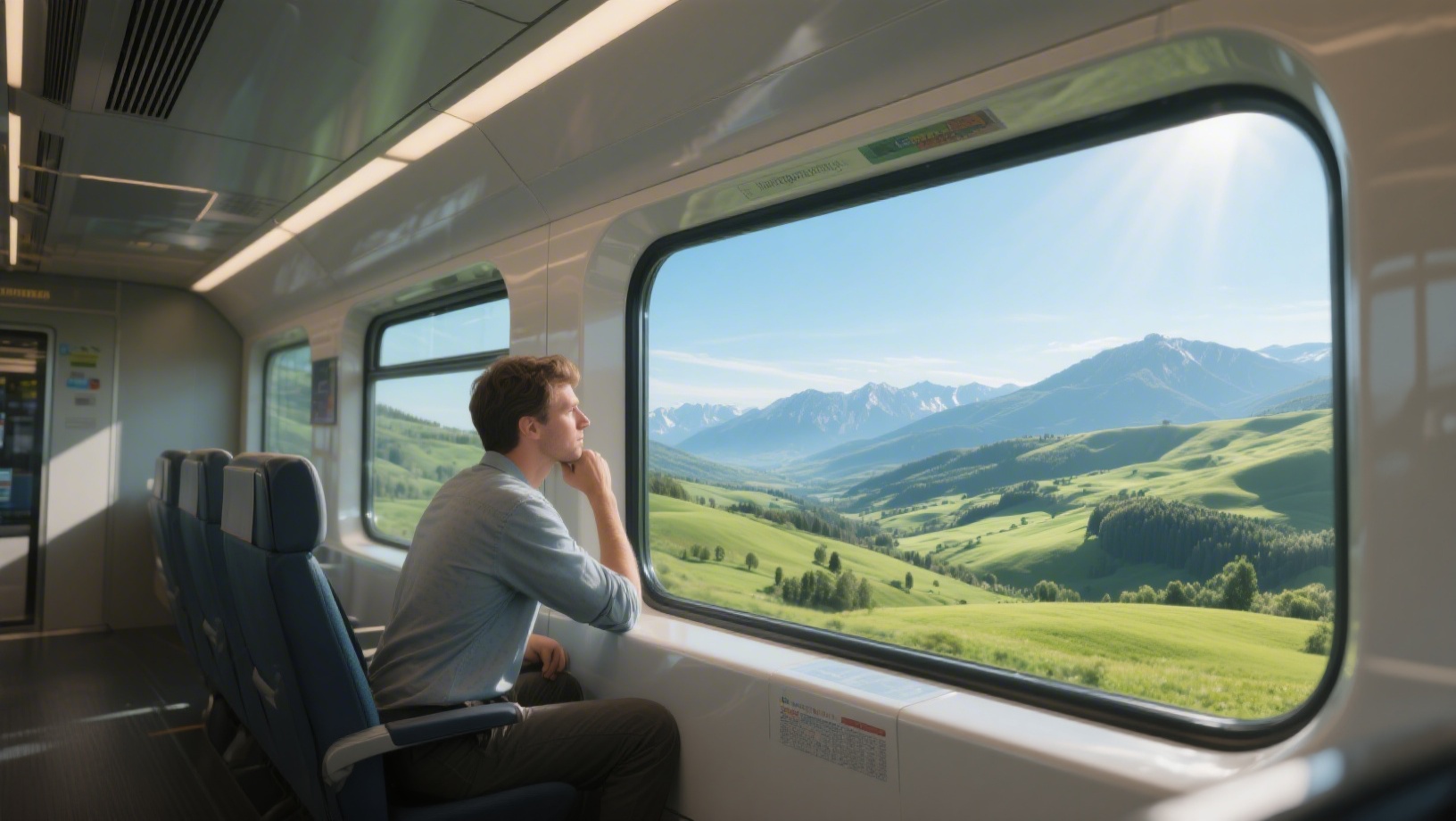
Travelling by train can cut your CO₂ emissions by up to 90% compared with flying. On more and more European routes, trains run on green electricity. Sustainable travel by international train is a realistic choice for environmentally conscious holidaymakers. In this article you can read how much CO₂ you save and which routes run on green energy. You will also see how train travel compares with other means of transport.
How much CO₂ you save with international trains
The CO₂ savings of train travel compared with flying are substantial. On popular routes from the Netherlands, the differences are large: often more than 90%. A train journey from Amsterdam to Paris emits around 4 kilograms of CO₂ per passenger, while the same trip by plane produces around 70 kilograms. That means a saving of more than 90%.
For other routes from the Netherlands you will see similar figures:
- Amsterdam–London: train 3.9 kg CO₂, plane 70.9 kg (95% saving)
- Amsterdam–Berlin: train 5.2 kg CO₂, plane 72 kg (93% saving)
- Amsterdam–Brussels: train 1.8 kg CO₂, plane 45 kg (96% saving)
These savings are not just due to more efficient engines. Trains share their energy use between more passengers and use electric traction instead of kerosene. With train travel, emissions from transfers to and from airports also disappear. Railway stations are usually located in the city centre.
‘ Since 2017, NS has been running all domestic and international trains on wind energy. ‘
Green trains from the Netherlands and Belgium
More and more international trains run on sustainable energy. Some trains run entirely on green electricity, others largely so. The proportion differs per country and operator. Dutch and Belgian train operators are actively switching to green electricity from wind and solar power. Since 2017, NS has been running all domestic and international trains on wind energy. Thalys, which connects Amsterdam with Paris and Brussels, also runs entirely on green electricity.
From the Netherlands you can reach various destinations with trains that run on sustainable energy:
- Amsterdam–Paris: Thalys on 100% green electricity (3.5 hours)
- Amsterdam–Brussels: Intercity Brussels on wind energy (1 hour 50 minutes)
- Amsterdam–London: Eurostar via Brussels on green electricity (4 hours 30 minutes)
- Amsterdam–Berlin: partly on green electricity via DB (6 hours 30 minutes)
German railways (Deutsche Bahn) run their ICE trains on 64% renewable energy. The goal is to reach 100%. In Switzerland, almost all SBB trains run on hydropower, which makes these routes particularly sustainable. For journeys to France, Austria or Italy via Switzerland, the environmental impact is therefore minimal.
Night travel as a sustainable alternative
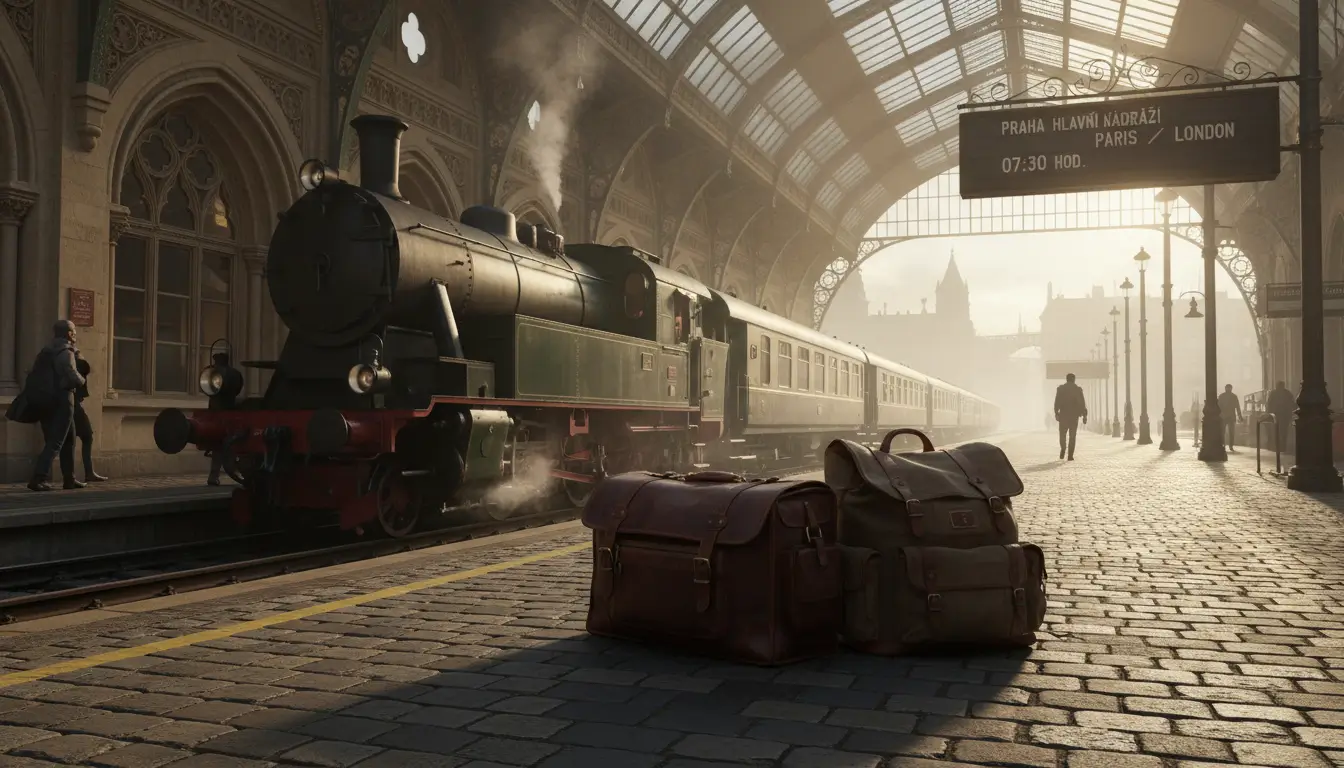
Night trains replace both transport and accommodation. You save a hotel night. ÖBB’s Nightjet connects the Netherlands with Vienna and onwards to Austria and Italy, entirely using electric trains. These trains run largely on green electricity from Austrian hydropower. The European Sleeper, which connects Amsterdam with Prague and Berlin, offers a similarly sustainable alternative.
Train versus car and road trip
Even compared with driving, the train performs well, although the differences are smaller than with flying. Over medium distances, an average petrol car emits two to four times more CO₂ per person than a train. For the Paris–Brussels route, for example, car emissions are around 23 kilograms of CO₂ per passenger, while the train emits 1.6 kilograms.
For road trips, how sustainable your journey is strongly depends on how many people are in the car. If you travel with four people in an economical car, the CO₂ emissions per person fall and come closer to those of the train. But with a single driver the train still remains significantly cleaner. Modern electric cars can reduce emissions per person considerably, especially if they charge with green electricity. Even so, the train remains on average more efficient. This is due to the high occupancy and the use of electric traction on the rail network.
Practical considerations for road trips
Besides CO₂ emissions, other factors also play a role. By car you have more freedom to stop, change routes and reach remote destinations. When travelling by train you depend on the timetable and available connections. For longer road trips with multiple stops the car is often more practical. For city breaks the train is often faster, more comfortable and more sustainable.
Offsetting and additional sustainable choices
Train journeys already have a low CO₂ footprint. Conscious choices can reduce this even further. Some rail companies offer CO₂ offsetting, where you pay a small amount to compensate remaining emissions via climate projects. With NS and Eurostar this is already included in the ticket.
Other ways to make your train journey even more sustainable:
- Choose direct connections to avoid unnecessary kilometres
- Travel with light luggage to limit energy use
- Buy tickets from operators who invest in green energy
- Combine train journeys with local public transport at your destination
Interrail and Eurail passes give access to thousands of train connections in Europe. These passes make it easier to travel slowly from place to place, without rushing. By visiting several destinations by train, you avoid short flights and reduce the overall environmental impact of your trip.
‘ For those who deliberately choose slow travel, the train fits perfectly with this travel philosophy. ‘
Comfort and benefits for the conscious traveller
Apart from environmental benefits, travelling by train offers practical advantages. Stations are centrally located in cities, so you do not lose time on transfers. During the journey you can work, read or sleep. Baggage rules are more relaxed than when flying and you have more legroom. Many travellers find trains more relaxing than planes or long car journeys.
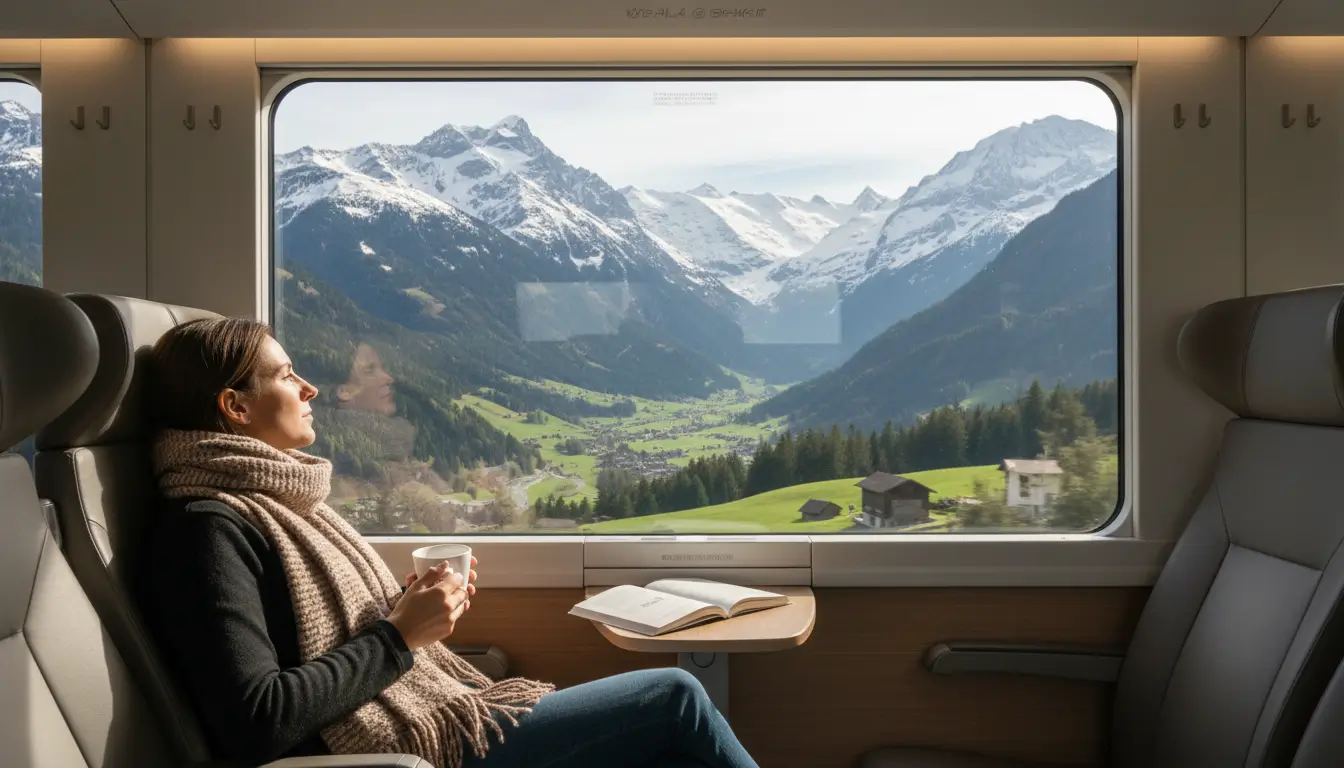
The routes across Europe also offer beautiful views. The journey through the Alps, along the Rhine or through French vineyards becomes a part of the holiday itself. For those who deliberately choose slow travel, the train fits perfectly with this travel philosophy.
Planning and flexibility
International train journeys require a bit more planning than flights. At the same time, they also offer flexibility. You can book many tickets up to shortly before departure. Boarding earlier or later is often possible. On many routes you do not have to choose a specific train in advance, which makes spontaneous stopovers possible.
For popular routes such as Amsterdam–Paris and Amsterdam–Brussels, several trains depart each day. Night trains require more preparation. Seats are limited. It is best to book these a few weeks in advance, especially in high season. You can find a lot of information about connections, prices and booking options on the websites of NS International, Eurostar, Thalys and DB.
On the Traveler Tips website you will find extensive information about European train routes, practical travel guides and tips for planning sustainable holidays. Discover more articles on green travel choices, destinations reachable by train and smart ways to organise your trip.
Frequently asked questions
Choose direct high-speed and night trains from the Netherlands to cities such as Paris, Berlin or London to limit transfers and extra emissions. Use route planners and, if you wish, an Interrail pass to combine efficient routes and stay flexible. Reserve seats or berths in quiet zones for more comfort and bring your own food, work or games. Compare the estimated CO₂ emissions per route in advance so you can consciously choose the most sustainable connections.
Use route planners and ticket platforms such as RailEurope, Deutsche Bahn, The Trainline and the Interrail planner to compare international connections and prices. Start looking early and be flexible with departure day and time; during the week and outside peak hours tickets are often cheaper and trains quieter. Combine high-speed trains with regional trains or night trains to limit both travel time and overnight costs as well as CO₂ emissions. Where possible, choose routes with direct connections from the Netherlands (such as to Paris, Brussels, Berlin or London) to avoid transfers and extra emissions caused by detours.
Use platforms such as Rail Europe, The Man in Seat 61 and Interrail to discover inspiring international train routes, night trains and lesser-known lines, filtered by departure from the Netherlands. Combine that information with map apps to plan routes that link city trips (e.g. Berlin, Paris, Swiss lakes) with quiet, nature-friendly destinations. Look for trains that run on green electricity and, where possible, choose direct connections or night trains to limit both your CO₂ footprint and the number of travel days. Read blogs and experiences from other sustainable travellers to find unique stops along the way that match your travel philosophy.
International trains often offer spacious seats, quiet carriages and workspaces with sockets and Wi‑Fi, which makes travelling more comfortable and productive. Many trains have a restaurant car or at-seat service so you can eat and drink comfortably on the way. On some routes you can choose first class with extra legroom, quiet and sometimes meal service at your seat. Night trains offer sleeping compartments or couchettes, allowing you to arrive at your destination rested and save a hotel night.
Use online tools such as the EcoPassenger or Ecopassenger.org calculator to compare the CO₂ emissions and energy consumption of your train journey with those of car and plane on the same route. Combine this with ticket comparison sites (e.g. NS International, Omio, Trainline) and air/car costs (fuel, tolls, baggage fees) to put total travel costs side by side. When assessing ecological footprint, look at: emissions per passenger kilometre, energy source (green electricity for trains) and extras such as transfers to airports. If you wish, also factor in hotel nights saved with night trains to make a fair cost comparison.