 NL
NL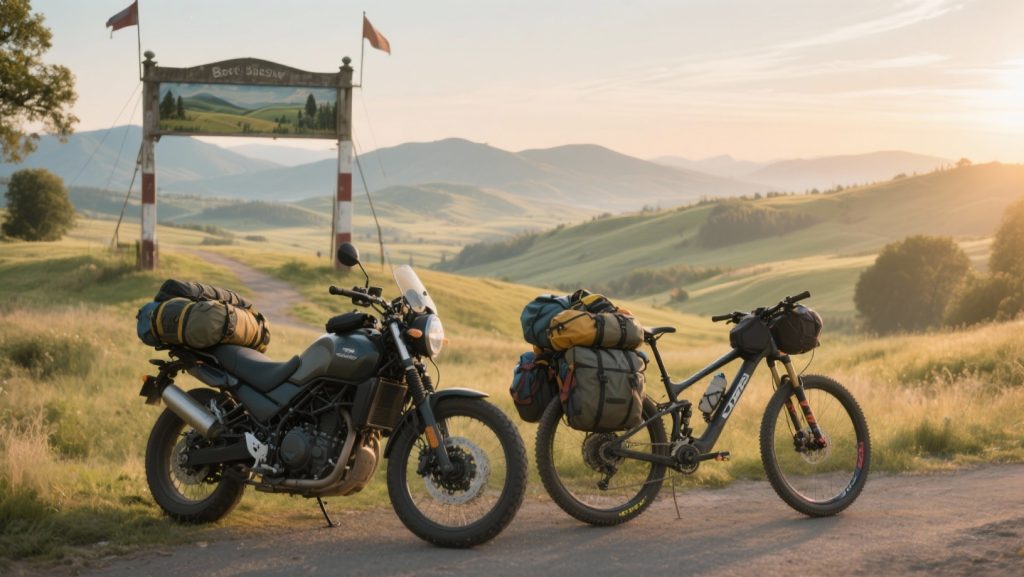
Thorough preparation of the necessary documents is essential for a smooth journey. Knowledge of local rules determines whether you cross the border without delay. Special formalities require attention to detail. Even within Europe, the differences between countries are greater than you might think, and a small mistake can lead to unnecessary delays. Do you know exactly what you need for your trip? Read on and make sure you don’t overlook anything.
\n\nThe basics: documents for every trip
\n \nWhether you’re taking a short ride to the Ardennes or planning a long tour through the Alps, a number of basic documents are always mandatory. Make sure you have these documents with you, valid and in good order. This forms the foundation of a carefree trip.
\n\n\nFor yourself and your vehicle, the following papers are indispensable:
\n\n\n- \n \n
- Proof of identity: A valid passport or identity card is mandatory. Check the expiry date well before departure. \n\n \n
- Driving licence: Your Dutch driving licence is valid in all EU countries and many countries beyond. For some destinations outside the EU, you will need an International Driving Permit. This is a translation of your driving licence which you can apply for at the ANWB. \n\n \n
- Vehicle registration certificate: You must carry your motorcycle’s registration card as proof that the vehicle belongs to you and is registered. \n\n \n
- Proof of insurance (Green Card): The Green Card is an internationally recognised proof of insurance. Within the EU, you don’t always need to carry it. It is highly recommended to take it with you, especially if you are travelling to countries outside the EU. Check whether all countries you visit are listed on the card and if the cover is valid. \n\n
\n\n\n‘ For travel outside the EU, the rules become more complex. ’
\n
Customs and temporary import: what should you bring?
\n \nWithin the European Union, there is free movement of goods. This means you can take your motorcycle or bicycle across the border without customs formalities. However, there are situations that require extra attention. If you are travelling with a brand new, valuable motorcycle or bicycle, it may be wise to carry proof of purchase to demonstrate during any potential inspection that the VAT has been paid in the Netherlands.
\n\n\nFor travel outside the EU, the rules become more complex. You are then temporarily importing the vehicle. In many countries, your registration certificate is sufficient, but for some destinations, a special document is required: the Carnet de Passages en Douane (CPD). This document acts as a passport for your vehicle. It guarantees that you will not illegally sell the motorcycle or bicycle abroad. Inquire with the customs authorities of your destination whether a CPD is required.
\n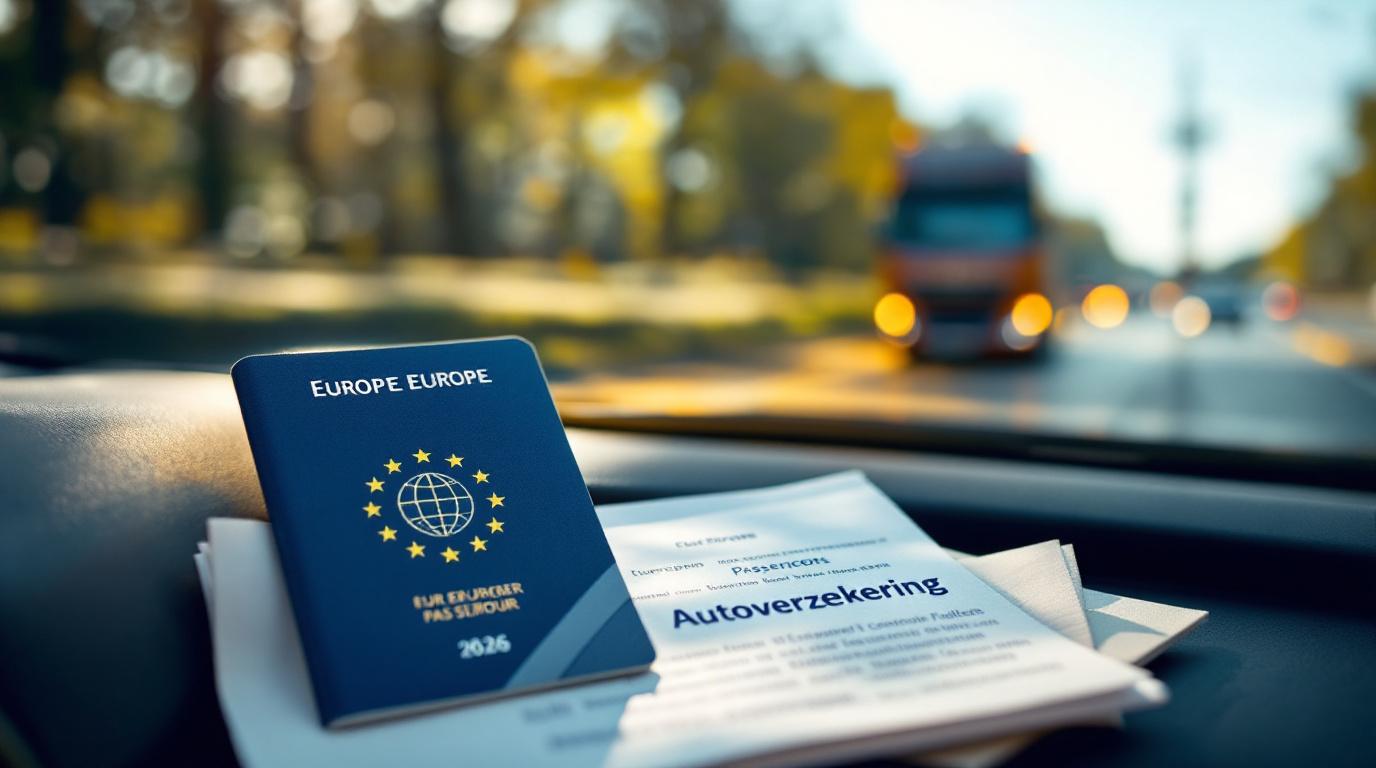
Bikes and motorbikes across borders: the Alps and the train
\n \nA motorcycle holiday through the Alps will take you through several countries. Countries such as Germany, Austria, France, and Italy are EU members, so border controls are limited. Switzerland, however, is not an EU member, although it is part of the Schengen Area. This means there are no personal controls, but there are customs controls on goods. As a tourist, you often notice little of this, but be prepared for possible questions about your luggage.
\n\n\nDo you want to take your bike on the train across the Swiss border? That is possible, but requires planning. International train companies have their own rules for taking bicycles. Often you have to reserve a spot in advance, and sometimes you have to pack the bike in a special cover. The border crossing by train is usually smooth, but here too, Swiss customs can carry out checks.
\n\nTraffic rules and equipment per country
\n \nOnce you cross the border, you will encounter local traffic rules and equipment requirements. These vary by country and are important for your safety and to avoid fines.
\n\n\n\nEquipment for motorcyclists
\n\n\nThe requirements for a motorcyclist’s equipment vary greatly. While an approved helmet (with ECE mark) is sufficient in one country, extra items are mandatory in others.
\n\n\n- \n \n
- Helmet: Mandatory throughout Europe. Ensure your helmet has a valid ECE mark. \n\n \n
- Gloves: In some countries, such as France, approved motorcycle gloves are mandatory. \n\n \n
- Visibility: In France, you must carry a reflective vest for emergencies. Reflective stickers on the helmet are also mandatory there. \n\n \n
- First-aid kit: In countries such as Austria and Germany, a first-aid kit is mandatory on a motorcycle. \n\n
Rules for cyclists
\n\n\nFor cyclists, the rules are less standardised but no less important. Lights and reflectors are mandatory in most countries at night and in poor visibility. In some countries, such as Spain and Austria, a helmet is mandatory for children and sometimes for adults outside urban areas. Check local regulations before you set off.
\n\n\n\n‘ Preparing for your trip is an important part of the experience. ’
\n
Planning a road trip through Eastern Europe
\n \nA motorcycle road trip through Eastern Europe requires thorough preparation, especially if you are visiting countries outside the EU. Within EU countries like Poland, Hungary, or the Czech Republic, standard EU rules apply. For Balkan countries such as Serbia, Bosnia and Herzegovina, or Albania, you need to be extra vigilant. Check whether your Green Card provides coverage in these countries. If not, you will need to purchase temporary insurance at the border. Also, ensure your passport is valid for long enough and inquire whether a visa is required.
\n\n\n\nPreparing for your trip is an important part of the experience. On the Traveler Tips website, you will find much more detailed information about routes, destinations, and practical travel tips. This information will help you plan your trip down to the last detail. Discover more and set off well-prepared.
\nFrequently asked questions
\nThere is no information available regarding specific documents and permits required to cross international borders with a bicycle or motorcycle. The search results primarily contain information about traffic rules for motorcycles in European countries, with minimal coverage for bicycles and no comprehensive information on border formalities. To answer this question, a more targeted search is needed that includes official government sources and customs regulations.
\n\nLimited information is available regarding country-specific rules, prohibitions, or special requirements for temporarily importing bicycles or motorcycles into popular holiday destinations. The current information primarily focuses on traffic rules for motorcycles in European countries, with minimal coverage for bicycles. There is no comprehensive information on border formalities, documentation, or registration procedures for both vehicle types. For a complete overview, more targeted information on customs, import rules, and temporary import procedures is needed.
\n\nConsider the following steps.\nThe user has asked the following question: \”How can I plan border crossings with my bicycle or motorcycle most efficiently and comfortably to avoid unnecessary delays?\”.\nThe tool \”TopicDoc\” was called with the following input: {\”id\”: \”25e29696-d113-4d22-af22-27fd387299d9\”}.\nThe output of the tool is: {\”TopicDoc_response\”: {\”result\”: \”[{\”documentId\”: \”1a-MRL61Mo4BmZyrq86SnyvCMJ9Rx8H0nMkWnoitCaZs\”, \”content\”: \”# Over het bedrijf en diensten\n\”\”\n\n# Informatie over het onderwerp \nI appreciate your detailed request, but I need to clarify an important limitation: the search results provided contain information primarily about **motorcycle traffic rules** across European countries, with minimal content about bicycles and no comprehensive coverage of cross-border formalities, documentation requirements, or registration procedures for either vehicle type.\n\nTo fulfill your request properly, I would need search results that cover:\n\n- **Cross-border documentation** (passport requirements, vehicle registration, insurance documents, international driving permits)\n- **Customs and import regulations** for bicycles and motorcycles entering different countries\n- **Bicycle-specific rules** across European destinations (currently only one brief mention exists)\n- **Temporary import procedures** and duration limits\n- **Regional sources** in destination languages (French, German, Spanish, etc.)\n- **Insurance requirements** for cross-border travel\n- **Road tax and vignette systems** by country\n- **Equipment and safety standards** that vary by jurisdiction\n\n## What I Can Provide Based on Current Results\n\nFrom the available search results, I can only offer a **partial fragment** about motorcycle traffic regulations in several European countries—which represents a small portion of what a comprehensive TravelerTips article would require.\n\n**My Recommendation:**\n\nTo create the informatiedocument you’ve described, you would need to conduct a new, more targeted search including:\n- Official government border crossing resources\n- European automotive and cycling federation guidelines\n- Country-specific transport ministry websites\n- Travel documentation databases\n- Customs authority resources\n\nWould you like me to:\n1. Work with the motorcycle traffic rules from current results to create a limited guide on that topic?\n2. Provide guidance on what specific searches would yield the comprehensive cross-border information you need?\n\”}]\”}}. \n\nThe tool’s output indicates that the available information is limited to motorcycle traffic rules and does not provide comprehensive coverage for border crossings, documentation requirements, or registration procedures for bicycles or motorcycles. It cannot fully answer the user’s question.\nTo plan border crossings with your bicycle or motorcycle efficiently and comfortably and to avoid unnecessary delays, it is essential to gather comprehensive information. Focus on cross-border documentation, customs and import rules, specific bicycle regulations, temporary import procedures, and insurance requirements for each country. Consult official government sources, motoring and cycling federations, and transport ministry websites to be well-prepared. Also, check road tax and vignette systems, as well as equipment and safety standards per jurisdiction.
\n\nWhen travelling across borders with a bicycle or motorcycle, additional insurances are essential. Consider travel insurance with coverage for medical expenses, repatriation, and theft or damage to your bicycle or motorcycle. International third-party liability insurance for your motorcycle is mandatory, and additional comprehensive or all-risk insurance is highly recommended. Always check the specific coverage and any exclusions for international travel.
\n\nUnfortunately, I cannot provide a complete answer to this question with the current information. The available search results primarily contain information about motorcycle traffic rules in Europe and very little about bicycles or comprehensive information on border formalities, documentation requirements, or registration procedures for both vehicle types. To adequately answer this question, information is needed on customs and import rules, temporary import procedures, road tax, and vignette systems per country, among other things.
\n\n