 NL
NL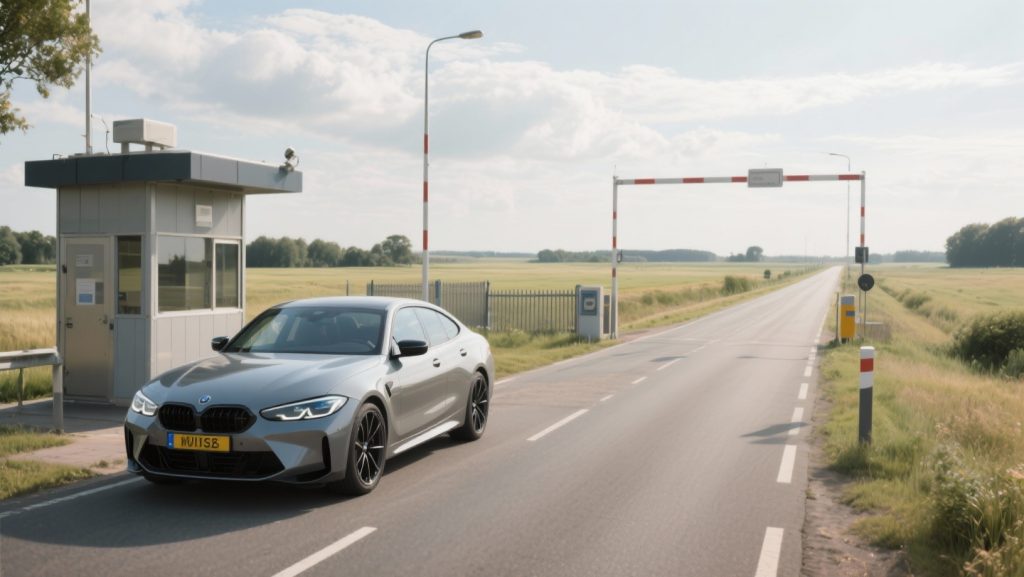
Good preparation for seasonal border checks and the accompanying summer queues and winter inspections is not a guarantee for a journey free of traffic jams, but it significantly reduces the chance of long waiting times and unexpected problems. Those who plan smartly travel more comfortably and have more time left for the holiday itself. Read on to discover how to cleverly circumvent the known bottlenecks.
German Border Checks: More Than a Formality
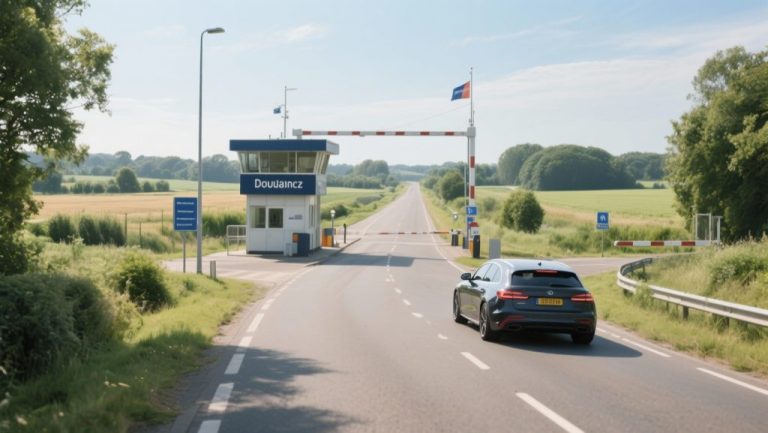
Those driving towards the south or east of Europe often pass through Germany. In recent years, border controls here have been tightened, and this will remain the case for the foreseeable future. The German government has announced that border controls, including those at the border with the Netherlands, will remain in effect at least until 2026. This means that, especially during busy holiday periods, you should factor in extra travel time.
Checks are not permanent at every crossing, but take place on a random basis. Experience shows that congestion concentrates at major motorway crossings. Do you want to avoid summer queues at the German border? Then it is smart to plan your journey outside weekends and early morning hours.
Locations of Potential Checks
The likelihood of checks and subsequent delays is greatest on the main thoroughfares. These include the following motorways:
- A1 (from the direction of Deventer/Enschede)
- A12 (from the direction of Arnhem)
- A67 (from the direction of Eindhoven)
- A76 (from the direction of Heerlen)
A common tip is to leave the motorway and cross the border via smaller, local roads. This is not always the best solution. These roads are not designed for large volumes of traffic and quickly become congested. Furthermore, mobile checks also take place here. The result is often more delays and unnecessary stress.
‘ The notorious \”black Saturdays\” are infamous; on other days too, traffic grinds to a halt, especially at border crossings and tunnels. ’
Summer Congestion Towards Switzerland and Austria
The summer months, particularly the period from mid-July to the end of August, guarantee peak congestion on European roads. The notorious \”black Saturdays\” are infamous; on other days too, traffic grinds to a halt, especially at border crossings and tunnels.
The Best Time for Crossing the Swiss Border
Planning a road trip through Switzerland in August? Then the timing of your border crossing is important. The Gotthard Tunnel is a well-known bottleneck where waiting times of several hours are not uncommon. The best strategy is to get ahead of the crowds.
- Travel anti-cyclically: Avoid weekends. Try to travel on a Tuesday, Wednesday, or Thursday.
- Choose your time: Cross the border and tunnels very early in the morning (before 07:00) or later in the evening (after 20:00).
- Consider an alternative: An alternative to the Gotthard Tunnel is the San Bernardino Tunnel. However, check traffic information in advance, as it can also be busy here. Another option is a pass route, such as the Gotthard Pass. This takes more time, but the route is often more scenic and you avoid the tunnel queue.
Winter Checks in Austria: Snow Chains and Winter Tyres
Travelling in winter, especially to popular winter sports areas such as Austria, requires different preparation. Here, it is not so much the customs checks that cause delays, but the inspections of the correct winter equipment. The Austrian police enforce strict controls, and the absence of the correct provisions leads to heavy fines or even a prohibition from continuing your journey.
Mandatory Winter Equipment
In Austria, there is a ‘situation-dependent’ winter tyre obligation. This means that in winter conditions (snow, ice, slipperiness), you are obliged to drive with winter tyres. Ensure that your tyres have the M+S symbol (mud and snow) or the snowflake symbol. Additionally, it is mandatory to carry snow chains for at least two driven wheels. On certain mountain roads, the use of snow chains is made compulsory by a traffic sign, even if you are driving on winter tyres. The police conduct targeted checks on this, especially at the foot of passes and near popular ski resorts. Therefore, make sure you know how to fit the chains.
Smarter Travel: Practical Planning
Regardless of the season, good preparation is half the battle. With a few simple steps, you can make the journey a lot more pleasant.
- Check current traffic information: Use route planners with live traffic updates just before and during your journey.
- Documents in order: Ensure your passport or ID card, driving licence, and vehicle registration certificate are close at hand.
- Vignettes and environmental stickers: Order the necessary vignettes and environmental stickers well in advance online.
- Travel outside peak times: If possible, travel at night or on weekdays to avoid the busiest periods.
On the Traveler Tips website, you will find many more detailed guides and articles that will help you plan your ideal car holiday or road trip. Discover our routes, destination tips, and comprehensive information about regulations in different countries. This way, you will always be well-prepared for your journey.
Frequently Asked Questions
To minimise delays at border controls during peak seasons, it is advisable to stay informed about extended checks, such as those at the Dutch-German border until 15 March 2026. Please note that checks primarily occur on motorways such as the A1, A7, A12, A76, and occasionally the A67 and A37. Avoiding motorways at border crossings can be counterproductive, as border villages are not equipped for additional traffic. During the summer of 2026, significant holiday traffic is expected, especially on routes to Southern Europe, with congestion on the A2, A12, and A67 in the Netherlands.
For a quick border crossing during seasonal checks, it is essential to know that German border controls have been extended until 15 March 2026, particularly on motorways such as the A1, A7, A12, and A76. Avoiding motorways and taking detours through border villages is counterproductive and can actually prolong travel time.
German border controls have been extended until 15 March 2026 and take place on motorways such as the A1, A7, A12, and A76. Avoiding motorways at border crossings is often counterproductive, as border villages are not equipped for additional traffic and this can actually prolong travel time. No information is available regarding less busy alternative routes during seasonal checks. This also applies to the expected congestion during the summer of 2026 on popular routes to Southern Europe.
Up-to-date information on waiting times and changes at border controls is difficult to obtain comprehensively through the available search results, as there are insufficient sources. However, it is known that German border controls at the Dutch-German border have been extended until 15 March 2026, with checks on various motorways such as the A1, A7, and A12. In the summer of 2026, significant holiday traffic is expected, particularly on routes to Southern Europe. For the Netherlands, this mainly applies to the A2, A12, and A67.