
 NL
NL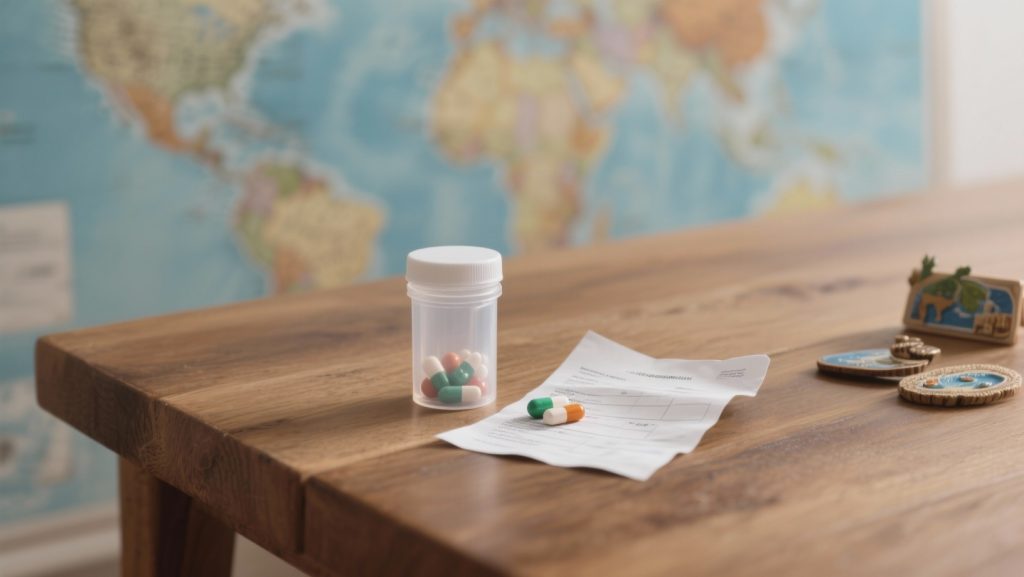
Good preparation is the only way to transport your medication across the border without any issues. When travelling by car to Austria or Switzerland, the rules are specific and strict. Read on to discover how to avoid unnecessary delays and legal problems at the border.
Which medications require attention?
Not all medications require the same documentation. The most important distinction is made by the Opium Act. Medicines falling under this act, such as strong painkillers, sleeping and calming medications (like Valium or Seresta), and ADHD medication (like Ritalin or Concerta), have the strictest rules. For these medications, an official declaration is mandatory to prove that you are taking them for personal use. Without the correct paperwork, possession of these substances can be considered a criminal offence.
For medications not covered by the Opium Act, such as insulin, blood pressure reducers, or the contraceptive pill, the rules are more lenient. Nevertheless, it is wise to take the necessary precautions for these too. A medical passport, available from your pharmacy, is a useful document in this regard. It is not an official travel document, but it does provide a clear overview of your medication in multiple languages.
‘ If you’re taking strong painkillers to France, a prescription alone is not enough ’
Travel within the Schengen Area
Are you travelling to a country within the Schengen Area? Then you will need a Schengen declaration for medications covered by the Opium Act. This applies to popular self-drive holiday countries like France and Austria, as well as Switzerland. This declaration is issued by the CAK.
Applying for the Schengen declaration
The procedure is simple but takes time. Therefore, start your application at least four weeks before departure.
- Download the form from the CAK website.
- Have the form completed and signed by your treating physician.
- Send the signed declaration to the CAK for approval.
An approved Schengen declaration is valid for a maximum of 30 days. If you are planning a longer trip, you will need a separate declaration for each 30-day period. For example, if you are taking strong painkillers to France, a prescription alone is not sufficient; the Schengen declaration is the official authorisation you must be able to show during a check.
Travel outside the Schengen Area
For destinations outside the Schengen Area, different, often stricter, procedures apply. A Schengen declaration is not sufficient here. You will need an English-language medical certificate, which often also needs to be legalised. This means that the doctor’s signature must be officially recognised by various authorities. The steps for this are usually:
- Your doctor completes an English-language medical certificate.
- The document must be legalised by the Ministry of Foreign Affairs.
- Subsequently, the embassy or consulate of your destination must legalise the document.
As rules vary greatly by country, it is essential to contact the embassy of your destination country well in advance. They can tell you exactly what requirements you need to meet. Some countries even have a complete import ban on certain medications covered by the Opium Act.
Practical tips for on the road
Good preparation prevents stress at the border. With this checklist, you’ll be well-prepared for your trip, whether you’re taking insulin to Switzerland or transporting other medication.
- Original packaging: Always transport your medication in its original packaging with the pharmacy label intact. Loose pills in a generic box can cause suspicion during a check.
- Sufficient supply: Take enough medication for the duration of your trip, plus an extra supply for unexpected delays.
- Hand luggage: Always keep your medication and associated documents in your hand luggage. Checked luggage can be delayed or lost.
- Medical passport: Ask your pharmacy for a European Medical Passport. This contains all information about your medication use. This is especially useful for medication not covered by the Opium Act.
With the correct documentation and careful preparation, you can travel worry-free with your medication across the border. Ensure you start arranging the necessary declarations well in advance, so you can enjoy your journey at the border instead of being caught out by missing paperwork.
Frequently asked questions
Medications covered by the Opium Act, such as strong painkillers, sleeping pills (e.g., Valium), ADHD medication (e.g., Ritalin), and medicinal cannabis, require special declarations. For travel within the Schengen Area, a Schengen declaration is needed, valid for a maximum of 30 days. For destinations outside the Schengen Area, an English-language medical certificate is required, which often needs to be legalised by the Ministry of Foreign Affairs and the embassy or consulate of the country concerned. It is essential to keep medications in their original packaging and carry an up-to-date medication overview from the pharmacy. Start the application process in good time, as it can take weeks.
Reliable and up-to-date information on import rules for medications can be found via the ‘Medicines for Travel’ helpdesk of the CAK. For country-specific details, you can consult the websites of Netherlands Worldwide or the CAK. It is also advisable to contact the embassy or consulate of your destination, especially for non-Opium Act medications or legalisation. These sources are based on official Dutch authorities for factual accuracy.
To avoid problems at the border when travelling with prescribed medications, you need the correct documents. For travel within the Schengen Area, a Schengen declaration is required, valid for a maximum of 30 days. Outside the Schengen Area, an English-language medical certificate is needed, which often must be legalised by the Ministry of Foreign Affairs and the embassy or consulate of the destination country. Furthermore, it is always advisable to carry an up-to-date medication overview from your pharmacy and keep all medications in their original packaging. Start the application process in good time, as it can take weeks.
Yes, there are restrictions on the amount of medication you can take; this must be for personal use and sufficient for your trip, plus some extra for unexpected delays. Your prescription is not automatically valid in all visited countries; for travel within the Schengen Area, a Schengen declaration is required, and for outside, an English-language medical certificate is often needed, which may need to be legalised. Always keep medications in their original packaging and carry them in your hand luggage. Before departure, contact the embassy or consulate of your destination for specific rules, especially for medications covered by the Opium Act.
The available information does not provide specific guidelines on how to keep medications at the correct temperature during a long car or train journey. The documentation primarily focuses on the regulations and necessary declarations for taking medications across borders. It is advised to keep medications in their original packaging and in hand luggage. However, details regarding temperature control are missing.