NL
NL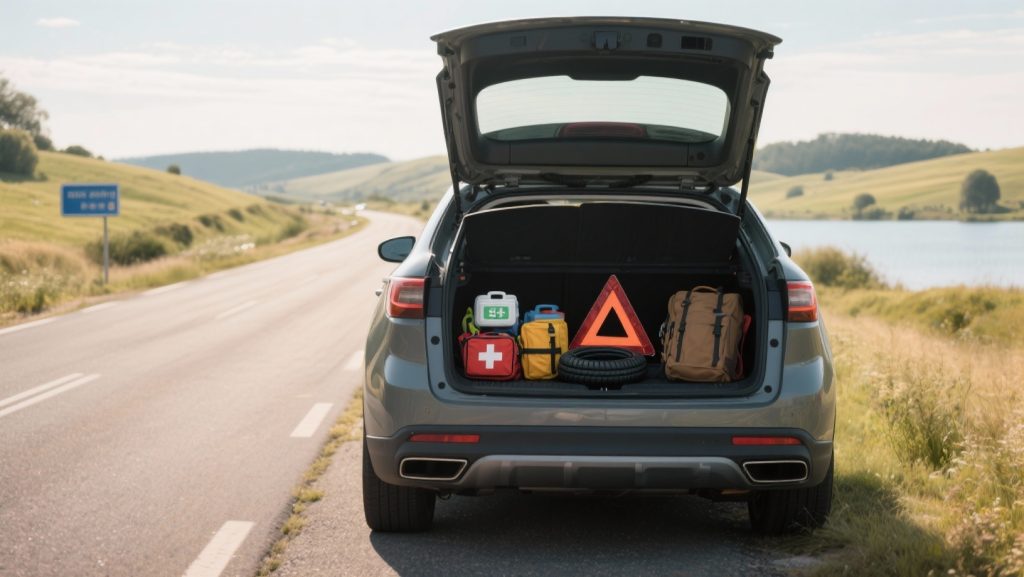
Breakdown cover and roadside assistance: preparation
A good breakdown cover policy and thorough preparation for roadside assistance are not a luxury, but the foundation of a relaxed and worry-free driving holiday. The assurance that assistance providers will help you effectively with a flat tyre, a dead battery, or another malfunction makes the difference between an annoying interruption and a well-managed situation. Discover how to hit the road with peace of mind with the right choices and preparations.
\n\nThe benefit of breakdown cover for Europe
\n \nIf you’re planning a road trip through Europe, the risk of a car breakdown is very real. Distances are greater, conditions differ, and the language barrier can pose an additional obstacle. Good breakdown cover with European coverage then provides a solution. This insurance ensures that you don’t have to search for a reliable garage in an unfamiliar region yourself. The assistance centre coordinates the help, from a mechanic on-site to potential replacement transport or a hotel stay. This not only saves a lot of stress but also prevents unexpectedly high costs for repairs or vehicle repatriation.
\n\n\n\n‘ The range of breakdown cover policies is extensive, and the terms and conditions vary widely. ’
\n
Choosing the right breakdown cover for your driving holiday
\n \nThe range of breakdown cover policies is extensive, and the terms and conditions vary widely. The best choice depends on your specific travel plans and personal preferences. Compare providers and don’t just look at the price. Pay particular attention to the coverage terms.
\n\n\n\nKey points when comparing
\n\n\n\nA checklist will help you make the right decision. Consider the following points before taking out insurance:
\n\n\n\n- \n \n
- Coverage area: Check whether all countries you visit are included in the European coverage. Some insurers apply a more restricted list than others. \n\n \n
- Home start service: Breakdowns can also happen right outside your door. Coverage in your own home town is not always included as standard. \n\n \n
- Replacement vehicle: Investigate the conditions for a replacement car. How long can you use it, and does this also apply abroad? A car of equivalent standard is often not guaranteed. \n\n \n
- Personal or vehicle-specific: A vehicle-specific insurance is tied to one particular car. A personal insurance policy covers you as the driver, regardless of which vehicle you are driving. This is a good option if you sometimes drive a different car. \n\n \n
- Trailer or caravan: Are you travelling with a trailer or caravan? Make sure it is also insured for breakdown assistance. This is usually an additional module. \n\n
Practical preparation: more than just insurance
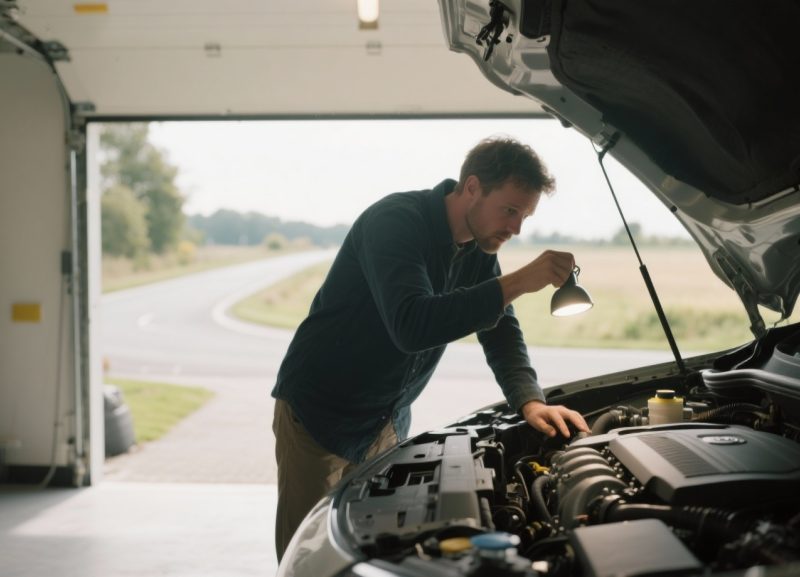
\n \nGood preparation goes beyond taking out insurance. By thoroughly checking your car beforehand and bringing the right items, you can prevent some problems or solve them quickly. Perform some basic checks before departure or have a garage do it for you.
\n\n\n\nPre-departure checklist
\n\n\n\n- \n \n
- Tyres: Check the tyre pressure, including that of the spare wheel. Inspect the tread and ensure it meets the legal requirements of the countries you will be travelling through. \n\n \n
- Fluids: Check the levels of engine oil, coolant, and windscreen washer fluid. Top them up if necessary. \n\n \n
- Lights: Check all lights: headlights, tail lights, brake lights, and indicators. \n\n \n
- Mandatory equipment: Ensure you have the legally required items in the car. Think of a warning triangle, high-visibility vests for all occupants (within easy reach), and a first-aid kit. In some countries, extra items such as a fire extinguisher or spare bulbs are mandatory. \n\n \n
- Documents: Keep your insurance papers, the green card, and the phone number of the breakdown assistance service in an easily accessible place. \n\n
Dealing with a breakdown on the German Autobahn
\n \nCar breakdowns are always frustrating, but on a busy motorway like the German Autobahn, extra caution is essential. The high speeds make the situation more dangerous. Therefore, follow a fixed step-by-step plan to ensure your own safety and that of others.
\n\n\n\nImmediately switch on your hazard lights and try to steer the car as far to the right as possible onto the hard shoulder (Standstreifen). Turn the wheels to the right, away from the traffic. All occupants must exit the car on the right-hand side and immediately stand behind the crash barrier. Put on a high-visibility vest before getting out. Then, place the warning triangle approximately 150 to 200 metres behind the car. After that, call the breakdown assistance service. Along German motorways, emergency telephones (Notrufsäule) are located every two kilometres, which connect you directly to the emergency centre if your phone has no signal.
\n\n\n\n‘ Make sure your phone is fully charged and consider taking a power bank for emergencies. ’
\n
Apps and digital tools for on the road
\n \nModern technology makes it easier to call for help. Many breakdown assistance providers have their own app that allows you to share your location and request help with a single tap. This significantly speeds up the process, as your location is immediately known to the assistance centre via GPS. Additionally, navigation apps like Google Maps or Waze can help you find your exact coordinates if you need to provide them. Make sure your phone is fully charged and consider taking a power bank for emergencies.
\n\n\n\nGood preparation for roadside breakdowns is an investment in a relaxed journey. On the Traveler Tips website, you’ll find much more practical information for planning your driving holiday. Discover our comprehensive guides on the most beautiful routes, traffic rules per country, and packing lists. This way, you’ll always be well-prepared for your trip.
\nFrequently asked questions
\nVarious breakdown assistance options are available from providers such as ANWB, Besured, and Bovag, offering both national and European coverage. For a trip through Europe, it is crucial to choose an option with explicit European coverage. When making your choice, pay attention to factors such as home start service, replacement transport, and whether the coverage is personal or vehicle-specific. Compare the different providers on their specific terms and costs to find the most suitable breakdown assistance for your journey.
\n\nEssential checks and thorough preparation are crucial to minimise the chance of a breakdown on the road. This includes complete planning of the travel process, attention to the correct equipment, and knowledge of the rules per country. Practical tips for on the road reduce uncertainty and stress. This contributes to a smooth and enjoyable travel experience.
\n\nBreakdown cover for a carefree holiday abroad requires coverage that extends beyond just the Netherlands. Crucial services include home start service, replacement transport in the event of a breakdown, and personal coverage not tied to a specific vehicle. Costs vary, but more extensive coverage is essential to prevent stress and unforeseen expenses.
\n\nThe costs of short-term travel insurance with breakdown cover are more economical per trip, while an annual policy can vary annually between €29.95 and €140+. The benefits of an annual option lie in uninterrupted coverage for frequent travel, which can prove more cost-effective per trip than repeatedly taking out a short-term policy. Important comparison factors for coverage include home start service, replacement transport, and whether the assistance is personal or vehicle-specific. The optimal choice depends on travel frequency and the desired extent of breakdown assistance.
\n\n