 NL
NL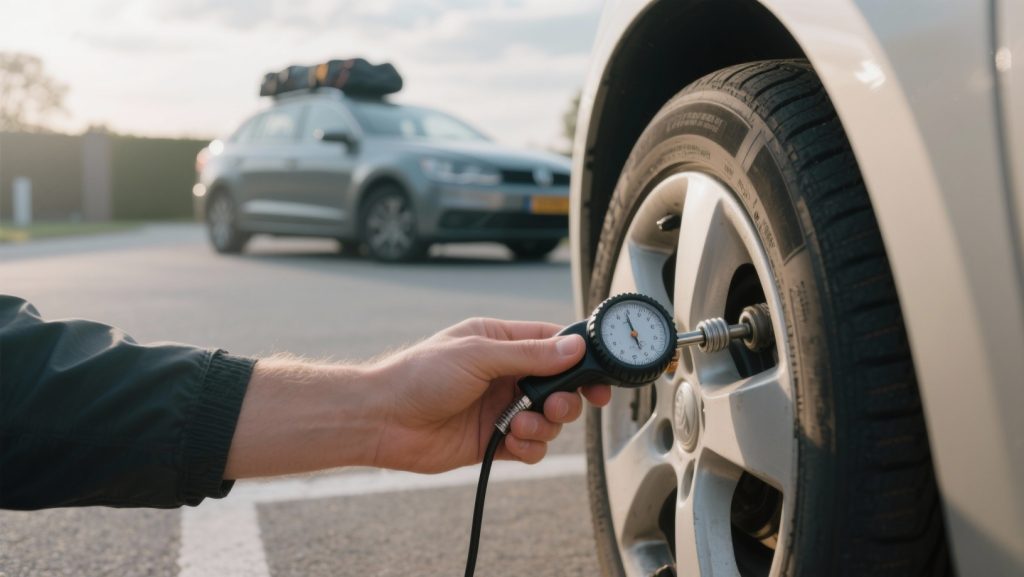
A thorough check of your tyres before your holiday isn’t an unnecessary luxury—it’s a decisive step towards a safe and relaxed car journey. The correct pressure for a fully loaded car, sufficient tread depth and a solution for a puncture form the basis of good preparation. Do you know exactly what to look out for and how to avoid common mistakes? Read on and set off with peace of mind.
What is the correct tyre pressure for your holiday?
The correct tyre pressure is important for safety, fuel consumption and the lifespan of your tyres. For a holiday trip—when the car is often more heavily loaded than usual—different advice applies. Tyre pressure that’s too low creates more friction, which leads to higher fuel use and a greater risk of a blowout due to overheating. Pressure that’s too high reduces contact with the road and results in unpredictable handling.
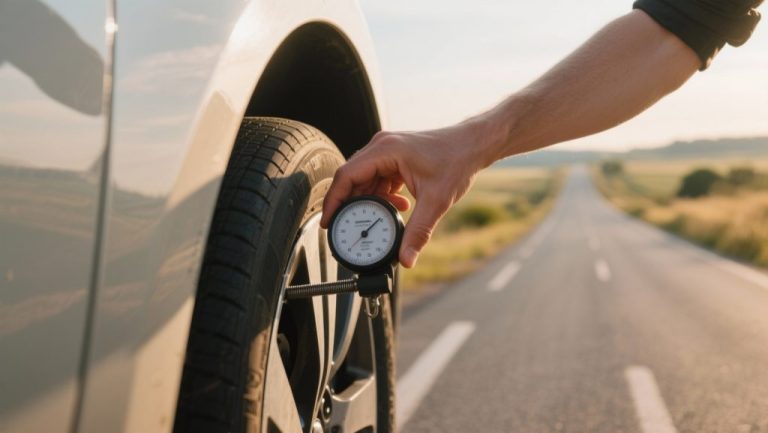
You can usually find the recommended tyre pressure for your specific car on a sticker in the driver’s door jamb, on the inside of the fuel filler flap, or in the owner’s manual. You’ll often see two recommendations there: one for normal load and one for heavy load. For your holiday, use the value for heavy load. Expect an increase of around 0.2 to 0.4 bar compared with normal pressure. Always check the pressure when the tyres are ‘cold’. This means you haven’t driven more than a few kilometres.
‘ Tyre pressure that’s too low creates more friction, which leads to higher fuel use and a greater risk of a blowout due to overheating. ’
Do I need a spare tyre for a road trip to southern France?
Whether you need a spare tyre depends on your car and your destination. Modern cars increasingly come with a tyre repair kit instead of a spare wheel. Such a kit consists of a sealant and a compressor, allowing you to temporarily seal a small hole in the tread. For a road trip to southern France—where you may also drive on more remote roads—it’s sensible to weigh up the pros and cons.
The tyre repair kit
A repair kit is light and saves space in the boot. It’s an effective solution for small, straightforward punctures. The kit won’t work for larger tears, damage to the sidewall of the tyre, or a blowout. Bear in mind that the repair is temporary. You’ll still need to go to a garage to have the tyre professionally repaired or replaced.
The spare wheel
A spare wheel offers more reassurance. There are two versions: a full-size spare wheel and a smaller space-saver spare, also known as a ‘get-you-home’ wheel. With a full-size wheel, you can continue your journey without restrictions. A space-saver is intended to get you to the nearest garage, with an adjusted, lower maximum speed (usually 80 km/h). Although a spare wheel is heavier and takes up space, on a long journey through rural areas—such as parts of southern France—it provides significantly more peace of mind.
Before you leave, check which solution your car has. If you have a spare wheel, make sure it’s also at the correct pressure and in good condition.
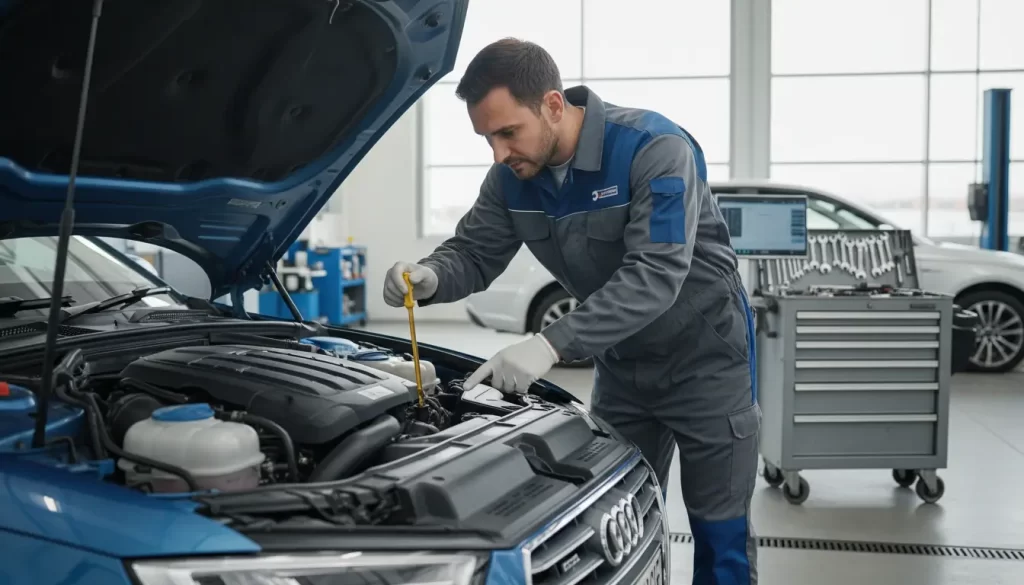
The final visual inspection before departure
Besides pressure and tread, a final visual check is a small effort with a big effect. Walk around the car and pay attention to the following points:
- Damage: Inspect the sides of the tyres for cracks, bulges or other irregularities. These can indicate internal damage and increase the risk of a blowout.
- Tyre age: On the sidewall of the tyre you’ll find a DOT code ending in four digits. These indicate the week and year of manufacture. ‘3221’, for example, means week 32 of 2021. Tyres age as the rubber dries out. Replace tyres that are more than six to eight years old, even if there’s still enough tread.
- Stones and debris: Remove any stones or other objects lodged in the tread.
By taking a moment for your tyres now, you’re investing in the safety and enjoyment of your entire holiday. It means less stress on the road and reduces the chance of unpleasant surprises. A thorough check of pressure, tread depth and the condition of your tyres is the foundation for a carefree trip. Also don’t forget to check whether your spare solution is complete and in good condition. With this preparation, you can set off with peace of mind and enjoy every mile along the way.
Frequently asked questions
For a safe road trip, check your tyres thoroughly. Measure tyre pressure when the tyres are cold and use the higher ‘heavy load’ pressure stated in the owner’s manual. Make sure the tread depth is at least 2 mm and visually inspect the tyres for wear, bulges or cracks. Don’t forget the spare tyre, and finally check other essential fluids and components of the car.
Correct tyre pressure is crucial for a comfortable drive and better fuel efficiency, especially over long distances with extra load. Underinflated tyres reduce grip and comfort, while overinflated tyres can make the car feel twitchy. The right pressure can reduce fuel consumption by as much as 10%. A tread depth of at least 2 mm is essential for optimum grip, especially in rain and in the mountains. Regularly checking tyre pressure and tread depth maximises performance and helps prevent dangerous situations.
You can recognise worn tyres by a tread depth of less than 2 mm, uneven wear, bulges or cracks. To avoid unnecessary breakdowns, check tyre pressure monthly and before every long drive with cold tyres, and adjust it for heavy loads. In addition, it’s essential to check not only the tyres but also the oil level, brake fluid, coolant, brake pads and lights for a safe journey. A well-prepared car ensures optimum grip and safety, allowing you to enjoy your holiday without interruption.
If you travel by car through different countries, there are specific tyre rules and recommendations. The legal minimum tread depth is 1.6 mm, but 2 mm is recommended for summer tyres, and in France tread is checked strictly, with fines of up to €135. It’s also essential to adjust tyre pressure for heavy loads, as stated in the owner’s manual or on the door sticker, to prevent blowouts and shorten braking distances. For winter, it’s recommended to increase pressure by 0.2 bar and to switch to summer tyres when temperatures rise above 7°C. Regular checks of tread, wear and the spare tyre are crucial for a safe journey, especially when travelling to southern Europe.