 NL
NL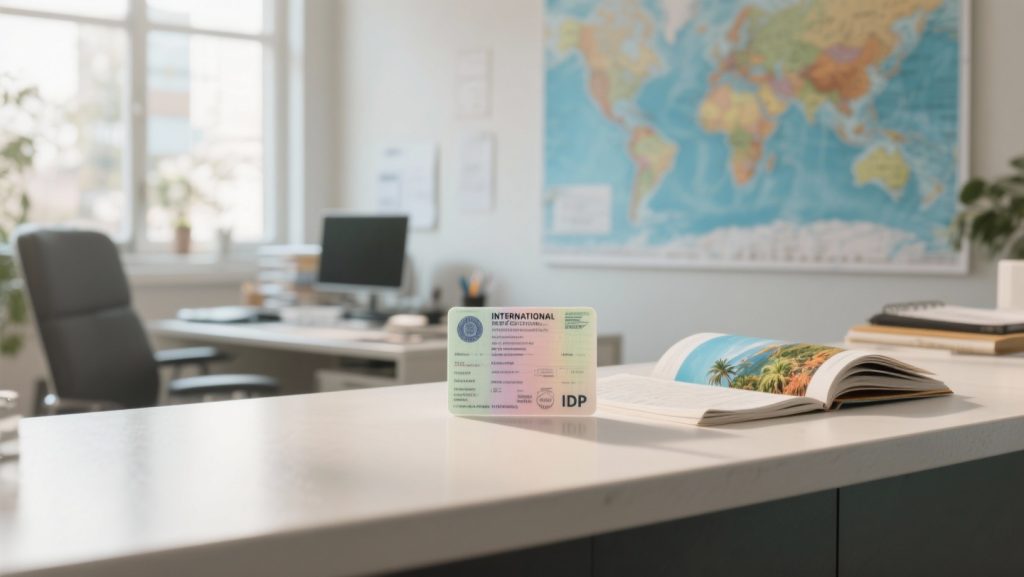
Applying for an International Driving Permit for a car holiday outside the EU
For a car holiday outside the European Union (EU), applying for an International Driving Permit is often a mandatory and sensible preparation that saves you hassle with rental companies or fines on location. This document is not a replacement for your Dutch driving licence, but an official translation of it. It’s a small step in your planning that makes a big difference. Discover exactly why, where and how to arrange this document.
\n\nThe meaning of an International Driving Permit
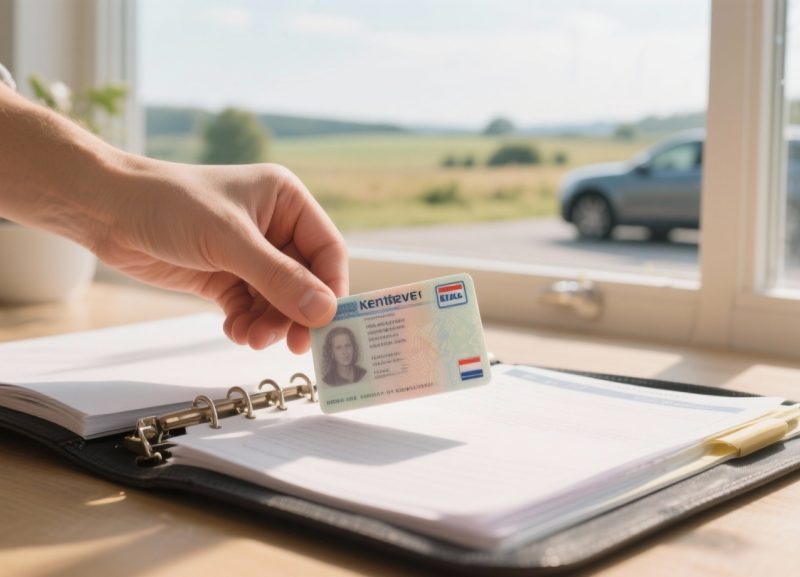
\n\n\n\nAn International Driving Permit is a document that translates the details of your national driving licence into multiple languages. It is drawn up in accordance with international conventions and helps authorities abroad, such as police officers or car rental company employees, to understand which vehicle categories you are authorised to drive. It is important to know that an International Driving Permit is only valid in conjunction with your valid Dutch driving licence. Therefore, you must always carry both documents with you.
\n\n\n\nThe purpose of the International Driving Permit is to remove language barriers and standardise information. This prevents misunderstandings during a traffic stop or when collecting a rental car. Without this document, a rental company may refuse to give you a vehicle, even if you already have a reservation. This can severely disrupt your travel plans.
\n\n\n\n\n‘ As soon as you travel outside the European Union (EU), the rules change. ’
\n
The necessity of an International Driving Permit per destination
\n\n\n\nThe need for an International Driving Permit depends entirely on your destination. The rules vary greatly by country and region, so good preparation is of great importance.
\n\n\n\nTravelling within the European Union
\n\n\n\nFor travel within European Union (EU) countries, you do not need an International Driving Permit. Your Dutch driving licence is a European model and all European Union member states recognise this document. This also applies to countries within the European Economic Area (EEA), such as Norway and Iceland, and in Switzerland.
\n\n\n\nTravelling outside the European Union
\n\n\n\nAs soon as you travel outside the European Union (EU), the rules change. In many countries, an International Driving Permit is mandatory. In other countries, authorities strongly recommend it.
\n\nInternational Driving Permit required
\n\n\n\nJapan: Strictly mandatory (1949 Model). Without this document, you will not be allowed to rent a car and you will be liable to prosecution.
\n\n\n\nThailand: Mandatory (1968 Model). The police strictly enforce this with tourists on scooters and in cars.
\n\n\n\nIndonesia: Mandatory (1968 Model).
\n\n\n\nAustralia: Mandatory in most states (1949 Model). In Queensland, it is not officially mandatory, but it is strongly recommended.
\n\n\n\nNew Zealand: Mandatory (1949 Model) unless you have an official English translation.
\n\n\n\nArgentina: Mandatory (1949 Model).
\n\n\n\n\n\n\n\nInternational Driving Permit strongly recommended
\n\n\n\nIn these countries, the legal situation is sometimes a grey area, but rental companies often require it in their terms and conditions. It also prevents language problems during police checks.
\n\n\n\n- \n
- United States: Varies by state, but almost always recommended (1949 Model). Rental companies often ask for it. \n\n\n\n
- Canada: Recommended (1949 Model), particularly in the French-speaking province of Quebec. \n\n\n\n
- South Africa: Recommended (1968 Model). Rental companies often require it if the Dutch driving licence does not contain English text (although categories A/B are universal). \n\n\n\n
- Brazil: Recommended (1968 Model). \n\n\n\n
- Morocco, Turkey, Egypt: Although the Dutch driving licence is often accepted, an IDP (1968 Model for Morocco/Turkey, 1949 Model for Egypt) prevents arguments with local police. \n
The models of the International Driving Permit
\n\n\n\nNot every International Driving Permit is the same. There are three models, based on the international conventions of 1926, 1949, and 1968. Which model you need depends on the country you are travelling to. The 1968 Model is the most common and is valid for three years. The 1949 Model is valid for one year, and countries such as the United States and Japan require this model. The oldest model, 1926, is also valid for one year and is only needed for a small number of countries, such as Somalia.
\n\n\n\nIf you plan a trip that takes you through multiple countries, you may need both the 1968 and 1949 models. Therefore, it is important to check this per country. The ANWB, where you apply for the document, can inform you about this based on your travel plans.
\n\nLocal document required
\n\n\n\nSri Lanka: You must have your IDP validated in Colombo by the local Automobile Association of Ceylon (AAC).
\n\n\n\nChina: You are not permitted to drive here with a foreign or International Driving Permit. You need a temporary Chinese driving licence.
\n\n\n\nVietnam: The IDP is often not recognised; you officially need a Vietnamese driving licence for vehicles over 50cc.
\n\nThe application procedure for an International Driving Permit
\n\n\n\nApplying for an International Driving Permit is a simple and quick process, but it does require a personal visit. You cannot order the document online. The only official body in the Netherlands that issues an International Driving Permit is the Algemene Nederlandse Wielrijders Bond (ANWB). To obtain one, you must personally visit one of the Algemene Nederlandse Wielrijders Bond (ANWB) shops. The advantage is that you receive the document immediately.
\n\n\n\nMake sure you take the following items with you to the shop: your valid Dutch driving licence and a passport photo that meets the official requirements. It’s wise to take two passport photos, just in case, especially if you are travelling to multiple countries and may need both the 1968 and 1949 models.
\n\n\n\nIn the shop, the employee will process your application on the spot. Costs vary by model, so check the Algemene Nederlandse Wielrijders Bond (ANWB) website for current rates. The employee will check your driving licence, affix the passport photo to the document, and apply the necessary stamps. After a few minutes, you will leave with your valid International Driving Permit.
\n\n\n\n\n‘ These are not official documents, and authorities abroad do not accept them. ’
\n
Practical advice for use while travelling
\n\n\n\nOnce you are in possession of your International Driving Permit, there are a few things to keep in mind during your trip. Always keep the document together with your Dutch driving licence. In the event of a check, you must be able to present both. The International Driving Permit is invalid without the original driving licence.
\n\n\n\nAlso, inquire with your car rental company about their terms and conditions. Many companies state in their rental agreement that an International Driving Permit is mandatory for travel outside the European Union (EU) or in specific countries such as the United States, Thailand, South Africa, Turkey, and Morocco. If you cannot produce it, the insurance company may declare the insurance invalid, or you simply won’t be able to take the car. Good preparation prevents your holiday from starting with unnecessary stress.
\n\n\n\nBe aware of websites that offer to arrange an International Driving Permit for you online and send it to you. These are not official documents, and authorities abroad do not accept them. The only correct way to obtain a valid International Driving Permit in the Netherlands is through a personal application at an Algemene Nederlandse Wielrijders Bond (ANWB) shop.
\n\n\n\nGood preparation is half the battle, especially for a road trip. On Traveler Tips, you’ll find much more in-depth information about routes, toll roads, environmental zones, and the best equipment for your car holiday. Discover more and set off perfectly prepared.
\n\nFrequently asked questions
\n\n\nFor car holidays outside the EU, an International Driving Permit (IDP) is often mandatory in addition to your valid Dutch driving licence. This prevents fines, problems with car hire, or traffic stops. It is essential in most countries outside the EU, such as Thailand, South Africa, or Turkey. Always consult the ANWB for each destination for specific requirements, validity period, and the type of IDP.
\n\nTo apply for an International Driving Permit, you need a valid Dutch (or EU) driving licence, one or two recent passport photos, and a recent proof of address. You can only apply for this document in person at an ANWB shop in the Netherlands. The application takes a few minutes, and you will receive the permit immediately. It is usually valid for 1 year.
\n\nYou apply for an International Driving Permit (IDP) in person at an ANWB shop in the Netherlands; online applications are not possible. For this, you need a valid Dutch driving licence, 1 or 2 recent passport photos, and a recent proof of address. The application takes a few minutes and the IDP is generally valid for 1 year, with costs of approximately €30-€40. For car holidays outside the EU, the IDP is often mandatory.
\n\nFor travel outside the EU, an International Driving Permit (IDP) is often mandatory in addition to your Dutch driving licence. There are three variants (1926, 1949, 1968); the required type and validity period (usually 1 year) differ by country. You can only apply for an IDP in person at an ANWB shop in the Netherlands with a valid driving licence, passport photos, and proof of address. Check the specific requirements for your destination via the ANWB.
\n\nFor car holidays outside the EU, an International Driving Permit (IDP) is often mandatory in addition to your valid Dutch driving licence. Within the EU, no IDP is required; your Dutch driving licence is sufficient. There are three variants of the IDP (1926, 1949, 1968), and the required variant may differ per country, such as the 1949 model for the USA or Japan. It is always advisable to check the specific requirements, validity period, and the type of IDP per country via, for example, the ANWB.
\n\n