 NL
NL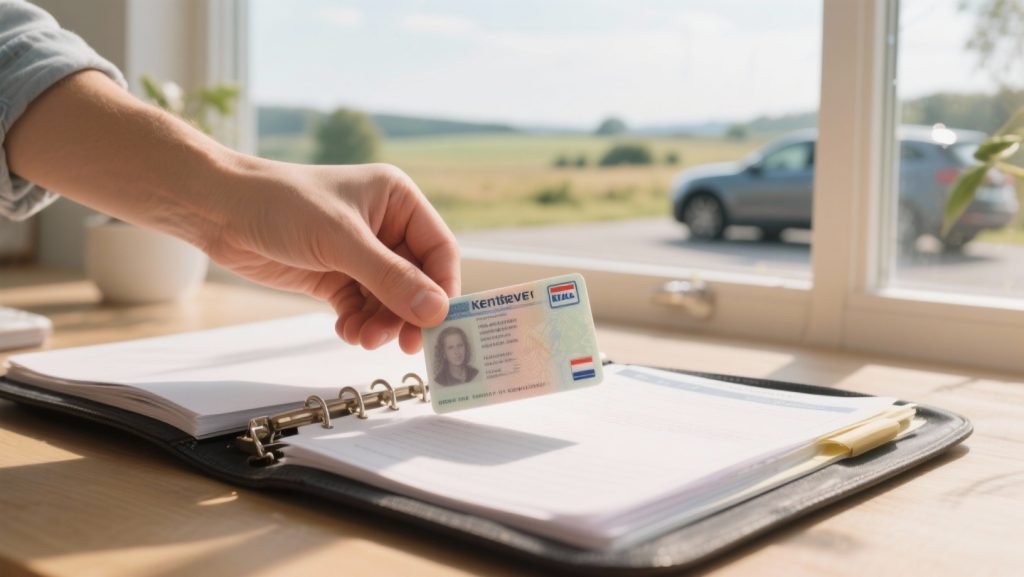
The correct approach to keeping your vehicle registration certificate and registration code safe while travelling is a matter of smart separation: take your vehicle registration card with you on the road, but leave the registration code securely at home. This simple action prevents a lot of administrative hassle and potential fraud after theft. Curious why this separation is so important and how to implement it practically? Then read on.
\n\nVehicle registration card and registration code: what’s the difference?
\n \nBefore we delve into the best storage method, it’s important to clarify the distinction between the two documents. Since 2014, the Dutch vehicle registration certificate has consisted of two separate parts that together form the complete registration of your vehicle.
\n\n\n\nThe vehicle registration card
\n\n\nThe vehicle registration card is a credit card-sized plastic pass. This card displays the most important vehicle data, such as the registration number, make, model, and chassis number. The card also states the owner’s details. This is the document you are legally obliged to carry when driving your car, both in the Netherlands and abroad. A copy, scan, or photo on your phone is not valid during a check.
\n\n\n\nThe registration code
\n\n\nThe registration code is a unique, nine-digit code. This code serves as proof of ownership for the car. You need the code when you want to sell, suspend, scrap, or export the car. The code proves that you are the rightful owner and are authorised to change the vehicle’s status. You do not need to carry this code with you when driving.
\n\n\n\n‘ By separating the documents, you significantly limit the damage in case of theft. ’
\n
Why you should never keep your vehicle registration certificate and code together
\n \nIt’s a common mistake: keeping all car documents, including the registration code, in a folder in the glove compartment. Although it seems organised, this creates a significant risk. In the event of car theft, you not only hand over the vehicle to the thief but also the complete proof of ownership. This makes it easier for criminals to resell the car illegally.
\n\n\nAdditionally, it complicates your own situation. Without the code, it’s harder to file a report and initiate the insurance procedure. Applying for a new code costs time and money, precisely when you have other things to worry about. By separating the documents, you significantly limit the damage in case of theft.
\nThe best storage strategy for your documents when travelling
\n \nGood preparation for your car holiday or road trip also involves smart handling of your documents. The right strategy is simple and effective.
\n\n\n\nWhat should you do with the vehicle registration card?
\n\n\nYou must, therefore, always carry the original vehicle registration card with you when driving. The safest place is not in the car itself, but on your person. Follow these steps for a safe journey:
\n\n\n- \n \n
- Keep the vehicle registration card along with your driving licence and any green card in a document folder or wallet. \n\n \n
- Always take this folder with you when you leave the car, just as you would take your phone and house keys. \n\n \n
- Never leave the vehicle registration card unattended in the car, not even ‘just quickly’ during a stop at a petrol station or supermarket. The glove compartment is the first place a thief will look. \n\n
A digital copy or photo of the vehicle registration card on your phone is useful for yourself. You can use it, for example, when applying online for an environmental sticker for a city. Remember, however, that this is not a substitute for the original during a police check.
\n\n\n\nWhere should you keep the registration code?
\n\n\nThe registration code has only one correct place: at home. Store the code in a secure folder, safe, or drawer where you also keep other important documents. Since you don’t need the code while travelling, there’s no reason to take it with you. This way, your car’s proof of ownership remains safe, even if your vehicle is stolen.
\n\nWhat to do if your vehicle registration card is stolen?
\n \nShould you, despite all precautions, become a victim of theft, it’s important to act quickly. If your vehicle registration card is stolen, report it immediately to the local police. This is necessary for insurance purposes and to prevent misuse of your document. You can then apply online for a new vehicle registration card from the RDW (Netherlands Vehicle Authority). Because you kept your registration code safely at home, you will complete the application process smoothly and prove that you are the owner.
\n\n\n\nOn the Traveler Tips website, you’ll find much more practical information for planning your ideal car holiday or road trip. Discover our articles on the most scenic routes, compulsory car equipment, and the best planning tools. Travel smarter and with more enjoyment.
\nFrequently asked questions
\nYes, it is mandatory to carry your car’s original vehicle registration card with you when driving, including abroad. A copy, scan, or photo is not valid. The registration code, however, does not need to be taken with you during your journey and can be safely kept at home. Preferably, keep the vehicle registration card together with your driving licence and green card, and not loosely in the glove compartment.
\n\nThe original vehicle registration certificate (vehicle registration card) must always be with you when driving; do not keep it loose in the glove compartment. Place it together with your driving licence and green card in a document holder that you take with you when you leave the car. The registration code does not need to be taken on your trip and should be kept safely at home. A copy or scan of the vehicle registration card can be useful for your own records, although the original is legally mandatory.
\n\nIt is mandatory to always carry the original vehicle registration certificate, the vehicle registration card, with you when driving; a copy is not valid. You do not need to take the registration code with you when travelling and should keep it safely at home. Unfortunately, with the available information, I cannot precisely advise what to do if your vehicle registration certificate or registration code is stolen or lost abroad. For comprehensive advice, additional international sources and guidelines are required.
\n\nYes, it is advisable to keep the vehicle registration certificate (vehicle registration card) and the registration code separate. As the driver, you must always carry the vehicle registration card with you when driving. The registration code, a unique 9-digit code, can be safely stored at home, as it is not mandatory to take it with you when travelling. This reduces the risk in case of theft of the car or your personal belongings.
\n\nIt is not mandatory to carry copies of your vehicle registration certificate, as only the original certificate is valid while driving. However, keeping a copy or scan of the vehicle registration card can be useful for personal administration, such as applying for environmental stickers. Keep the original, along with your driving licence and green card, in a document holder that you take with you and not loose in the car. You do not need to take the registration code with you, and it can be stored safely at home.
\n\n