 NL
NL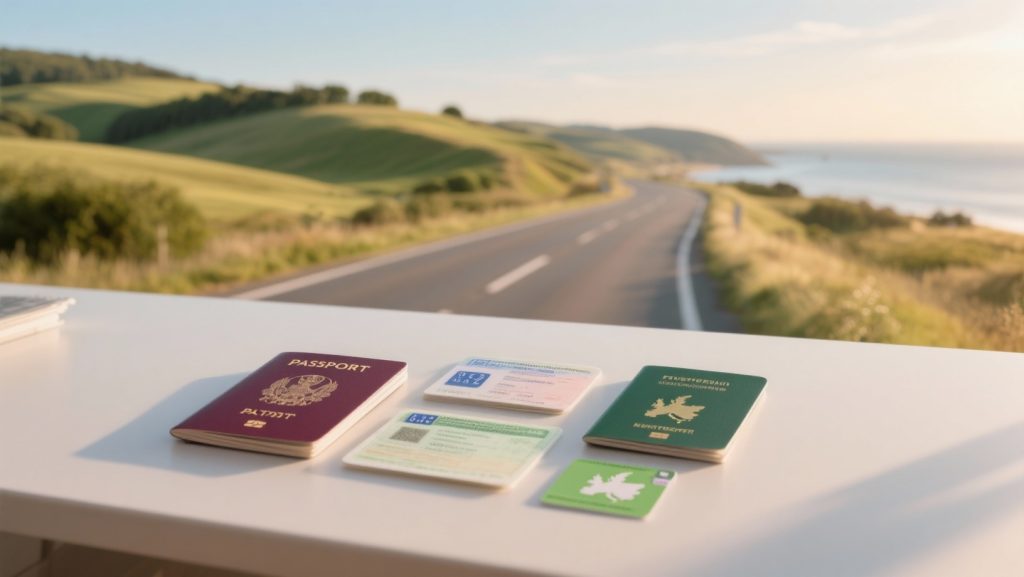
Good preparation is crucial for a carefree driving holiday, and that starts with the question: which car documents must you carry with you when abroad? The answer is simple: a valid driving licence, your vehicle registration certificate, and an international insurance certificate (green card) form the compulsory basis. Without these documents, you risk not only high fines but also serious delays and administrative hassle. Are you wondering if a copy is sufficient and which additional papers can prevent discussions with the local police? Read on and hit the road with peace of mind.
Compulsory documents: your foundation for a safe journey
When you cross the border by car, you enter an area with potentially different rules and laws. During a check, authorities abroad must quickly be able to establish that you are authorised to drive and that the vehicle is legally on the road. Therefore, there are three documents that you absolutely must carry physically with you.
1. Your driving licence
This may seem obvious, but it is the most important document. Your Dutch driving licence is valid in all European Union countries and many countries beyond. Always check the expiry date before departure. An expired driving licence is invalid and can lead to significant problems. Should you forget your driving licence during a check, the consequence depends on the country and the officer on duty. Often, you’ll get off with a warning or a small fine, provided you can prove your identity and someone at home can send a photo or copy. In the worst case, the police may temporarily impound the car until you present the original document.
2. The vehicle registration certificate
Yes, it is absolutely compulsory to take your original vehicle registration certificate with you on a driving holiday. This document, in the form of a registration card (credit card size), proves that the car is registered in your name or that you are lawfully driving it. The paper vehicle registration certificate from before 2014 is, of course, still valid. What should you take?
- The vehicle registration card: This is the most important part. It contains the vehicle details and your personal information.
- The registration code: You need this code for transferring ownership, suspending registration, or scrapping. Always leave this nine-digit number safely at home! You don’t need it on the road, and it makes car theft much easier.
The police in most countries do not accept a copy of the vehicle registration card. The authorities want to see the original, fraud-proof document.
3. International insurance certificate (green card)
The green card, which insurers often print on white paper nowadays, is the international proof that your car is insured for Third-Party Liability (TPL). Although within the EU the number plate often suffices as proof, it is highly recommended to always carry the card with you. In some non-EU countries, such as Albania, Turkey, and Morocco, presenting it is compulsory. Check with your insurer which countries your insurance covers. The card also contains important telephone numbers you’ll need in case of a breakdown or accident, making it a useful document to have at hand.
‘ Hopefully, you’ll never need it, but an accident can happen in an instant. ’
Recommended documents that prevent problems
In addition to the compulsory papers, there are documents that, although not always strictly required to be carried with you, can save your holiday in unexpected events.
Annual Vehicle Inspection (MOT) report
In the Netherlands, it is not compulsory to carry your Annual Vehicle Inspection (APK) report physically in the car. Abroad, this may differ. An officer who doubts the technical condition of your car may ask for proof of approval. Carrying a recent APK report can prevent a lengthy and unnecessary roadside discussion. It’s a small effort to take it with you, and it demonstrates that your vehicle complies with European safety standards.
European accident statement form
Hopefully, you’ll never need it, but an accident can happen in an instant. A European accident statement form in your glove compartment is essential for correct handling. Make sure you have a paper version, because in a stressful situation, you don’t want to be dependent on a dead phone battery. Fill in the form together with the other party, take photos, and never let yourself be pressured into signing something you don’t understand.
Authorisation for a borrowed or leased car
Are you driving a car not registered in your name, such as a leased car or one borrowed from friends or family? Then ensure you have an authorisation. This is a statement signed by the owner granting you permission to drive the vehicle abroad. This prevents suspicion of theft. For some countries, a legalised statement may even be required. Enquire about this with the Royal Dutch Touring Club (ANWB) or your leasing company.
Your checklist before departure
To keep things clear, here is a summary of the documents you should always have in the car during a road trip:
- Valid driving licence (original)
- Vehicle registration card (original)
- International insurance certificate (green card)
- European accident statement form
- MOT inspection report (highly recommended)
- Possibly an authorisation for the car
Careful preparation of your car documents is the first step towards a relaxed driving holiday. It provides peace of mind, knowing that you can hand over everything immediately during a check. With your driving licence, vehicle registration certificate, and green card, you have the compulsory basics in order. Additional documents such as the MOT report and a European accident statement form provide extra security on the road. Before departure, check that all documents are current and complete, so nothing stands in the way of your trip.
Frequently asked questions
For a car trip abroad, a valid driving licence, the vehicle registration certificate, and an insurance certificate (Green Card) are always compulsory. In addition, you must carry your passport or ID card. Depending on the country outside the EU, an International Driving Permit or International Vehicle Registration Certificate may also be necessary. For a rental car, the rental agreement is the valid document in addition to your driving licence and ID.
Yes, there are certainly differences in the required documents. Within the EU, a valid passport/ID card and an EU driving licence are sufficient, whereas for countries outside the EU, an International Driving Permit and sometimes a visa are often required. Furthermore, for travel outside the EU, an International Vehicle Registration Certificate (IVRC) or a legalised authorisation may be necessary if the car is not registered in your name. Toll stickers and compulsory car equipment can also vary by country, both within and outside the EU.
If you are driving a rental car, in addition to your passport or ID card and valid driving licence, you must also carry the car’s rental agreement with you, instead of a vehicle registration certificate. The insurance certificate (green card) and a European accident statement form are also compulsory. Depending on the country of destination, additional documents such as an International Driving Permit or a foreign declaration may be required. Always check the specific requirements of the country you are travelling to.
If you forget or cannot show the compulsory documents during a check, you risk problems and potential fines. A valid driving licence, vehicle registration certificate, and insurance certificate (green card) are essential and accepted everywhere in the EU. For countries outside the EU, additional documents such as an International Driving Permit or an International Vehicle Registration Certificate (IVRC) may be required. Without the correct papers, you may not be allowed to continue driving, resulting in delays and legal consequences. Therefore, always ensure you create a checklist beforehand and have all necessary, valid documents with you.
An International Driving Permit is not compulsory everywhere, but it is necessary in some countries outside the European Union. Within the EU, a valid national driving licence in credit card format is sufficient. This document is an official translation of your own driving licence and can be applied for in the Netherlands at the ANWB. Ensure you check the specific requirements of your destination country.