 NL
NL
Everything you need to know for a carefree car holiday with your dog
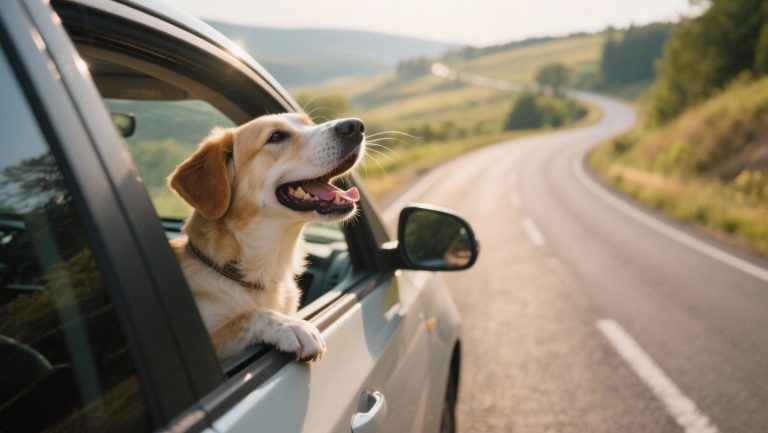
A successful car holiday with your dog stands or falls with good preparation. By arranging the right things in advance, planning your journey smartly and being prepared for your four-legged friend’s needs at your destination, you can turn a potentially stressful undertaking into an unforgettable adventure for both of you. The freedom of a car holiday can be perfectly combined with the company of your faithful companion, as long as you know what to look out for. In this article you will discover how to leave nothing to chance and create the best memories together, from the first kilometre to the last walk.
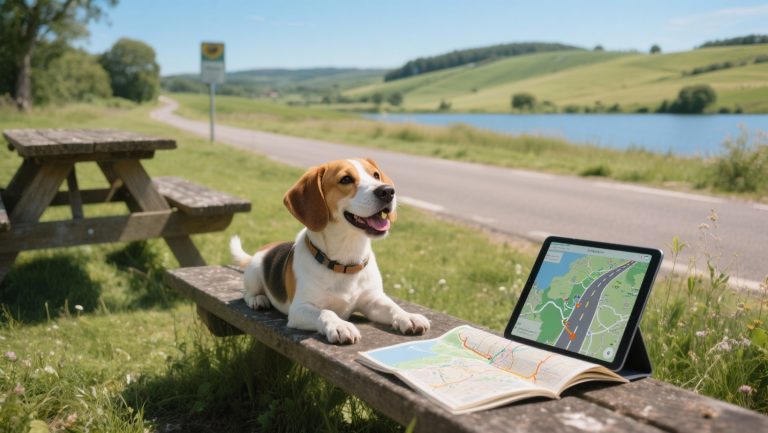
Planning the route is one of the most enjoyable parts of the anticipation. Perhaps you want to explore the picturesque coastlines of Italy or discover the rolling hills of the French Dordogne. There are countless destinations that are perfect for inspiring car holidays. By taking your dog with you, you add an extra dimension to your trip. Walks become explorations and a simple break turns into playtime in nature. With this step-by-step plan we make sure that both you and your dog get the most out of your holiday.
The most important preparations before departure
Well begun is half done. Before you start the engine and set off on your adventure, it is essential to prepare a number of things thoroughly. This not only includes organising the necessary documents and health certificates for your dog, but also putting together a complete packing list. By taking these preparations seriously, you avoid unpleasant surprises at the border or problems at your holiday address. We break the preparation down into two key parts: the official formalities and the practical essentials for the journey.
Formalities: EU passport, microchip and vaccinations
Travelling within the European Union with a pet is subject to strict rules. These rules exist to prevent the spread of animal diseases such as rabies. Make sure you have the following arrangements in place well before departure:
- EU pet passport: This official document is compulsory for travel within the EU. You can obtain it from your vet. The passport contains information about the dog’s identity, the owner, and an overview of all vaccinations and health treatments.
- Microchip: Every dog that travels must be identifiable by means of a microchip. This chip is inserted under the skin by the vet and contains a unique registration number that is linked to your details. Ask your vet to check whether the chip can still be read properly.
- Rabies vaccination: A valid vaccination against rabies is compulsory. Importantly, the vaccination must have been given at least 21 days before departure. The period of validity is stated in the pet passport. If you are travelling with a puppy, it may only travel from 15 weeks of age (12 weeks for the vaccination + 21 days’ waiting time).
- Additional country-specific requirements: Although the basic rules within the EU are the same, some countries may impose extra requirements, such as compulsory treatment for worms or ticks. Always check the specific entry requirements for your final destination and all countries you will be travelling through.
Health and the packing list for your faithful four-legged friend
In addition to the compulsory documents, your dog’s health and comfort are of the utmost importance. A visit to the vet shortly before your trip is a good idea to check their general health and to get advice about, for example, travel sickness or protection against parasites that occur abroad.
Then put together a complete packing list so you don’t forget anything:
- Enough food: Take sufficient amounts of your dog’s usual food for the entire holiday. A sudden change of diet can cause stomach and intestinal problems.
- Water for the road: Take a supply of water from home for the first few hours of the journey and a handy travel water bowl.
- Own bed or blanket: A familiar item with the scent of home provides calm and a sense of security in an unfamiliar place.
- Favourite toys: Provide distraction on the way and entertainment at your destination.
- First-aid kit for dogs: Think of a tick remover, disinfectant, bandages and any personal medication.
- Poo bags: Self-evident, but indispensable.
- Collar with tag: Make sure the tag shows your telephone number (including country code +31) and, if possible, the address of your holiday accommodation.
- Copies of documents: Keep a digital copy of the pet passport and microchip registration on your phone.
‘ In many European countries, such as Germany and Spain, it is even compulsory to secure your dog safely. ’
Safe and comfortable in the car: transport and essentials
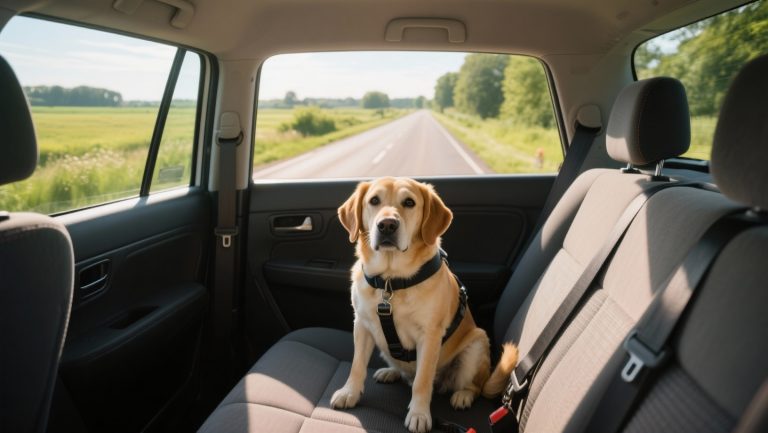
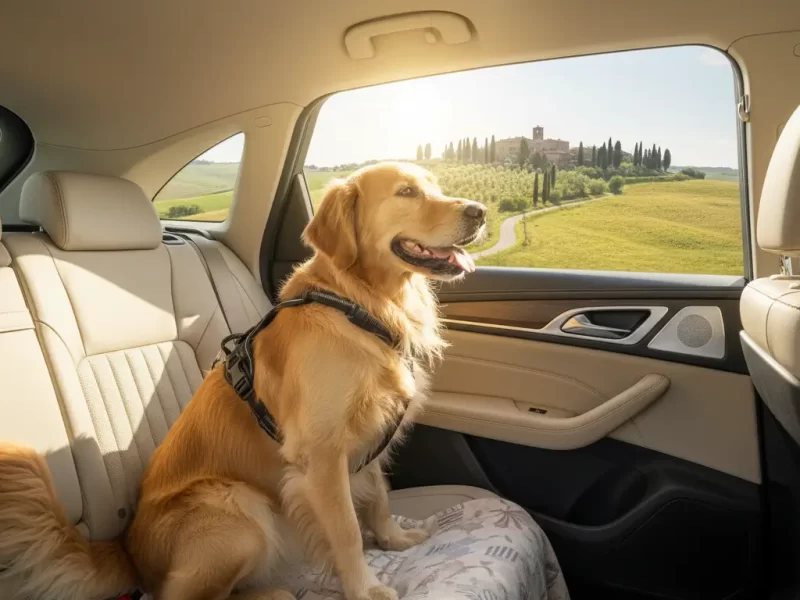
The safety of everyone in the car, including your dog, comes first. A loose dog can not only seriously injure itself in an emergency stop, but also poses a danger to the other passengers. In many European countries, such as Germany and Spain, it is even compulsory to secure your dog safely. There are several reliable methods:
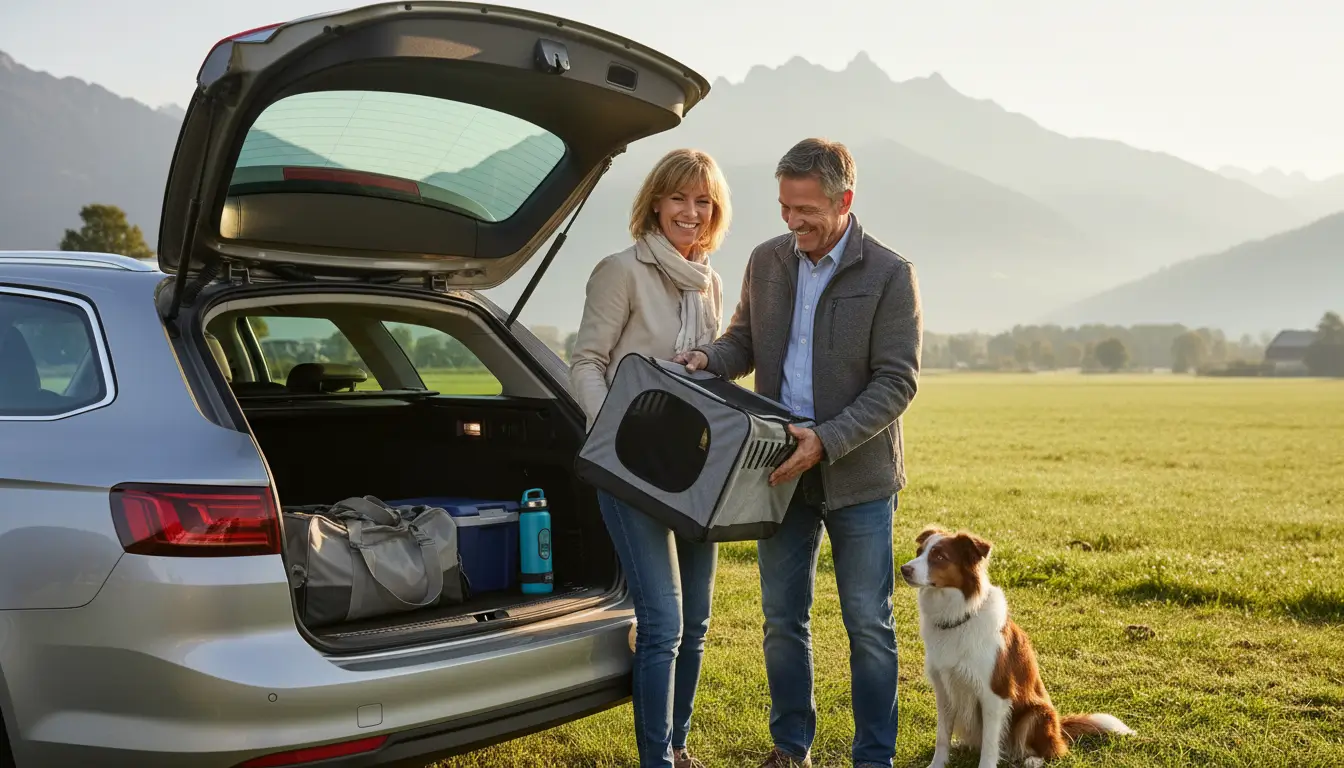
- Travel crate: A sturdy, well-ventilated crate is one of the safest options. Secure the crate in the boot or on the back seat. It gives your dog its own safe little cocoon.
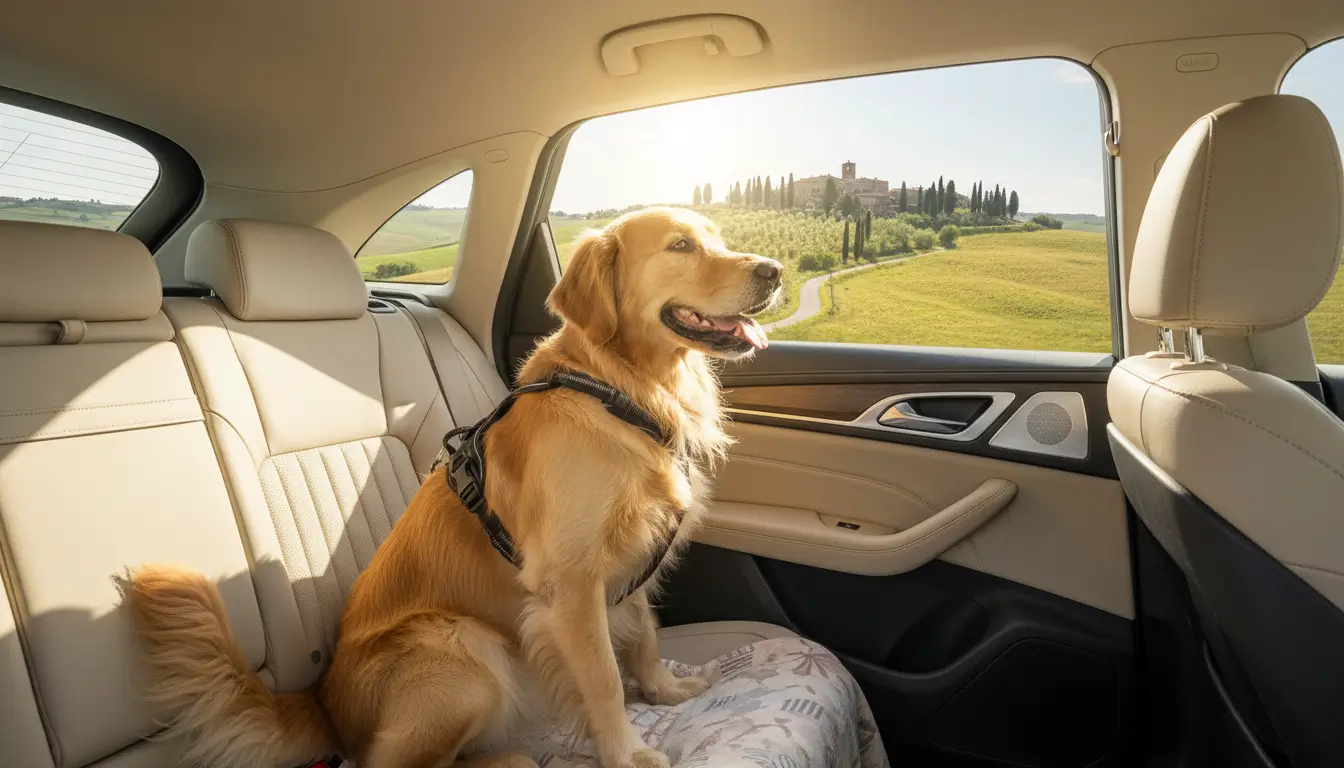
- Special dog harness with seatbelt attachment: You fasten this harness to the seatbelt buckle. It gives the dog some freedom of movement, but ensures that it stays safely in place in the event of a collision.
- Dog guard: A guard between the boot and the passenger area prevents the dog from climbing forwards or being flung forwards. This is ideal for larger dogs and provides plenty of space.
Also make sure your dog is comfortable. A sunshade on the windows can prevent overheating and a comfortable blanket makes the journey more pleasant. Let your dog get used to the car by taking short, fun trips in advance.
The journey itself: rest breaks, toilet stops and preventing heatstroke
A long car journey can be tiring for a dog. Plan your trip carefully and take your dog’s needs into account. Stop at least every two to three hours for a break. Look for a quiet place where your dog can safely get out of the car, stretch its legs, drink water and relieve itself. Always keep it on the lead. These breaks are also important for you as the driver to stay alert.
The biggest danger during a car holiday in the summer is overheating. Never, ever leave your dog alone in the car. Not even with a window slightly open or when parked in the shade. The temperature inside a car can rise to life-threatening levels within minutes. Plan your stops and activities in such a way that the dog can always go along with someone or wait in a cool, safe place.
Finding pet-friendly overnight stays
Fortunately, there are more and more hotels, holiday homes and campsites where dogs are very welcome. However, it is important to check and book this in advance. Use the filters on booking websites such as Booking.com or Airbnb to search specifically for “pet-friendly” accommodation. Always read the small print: sometimes additional costs apply, there may be restrictions on weight or breed, or the dog may not be left alone in the room. If in doubt, always contact the accommodation directly.
‘ Do your research into local rules and options before you go. ’
Activities and leisure time at your destination
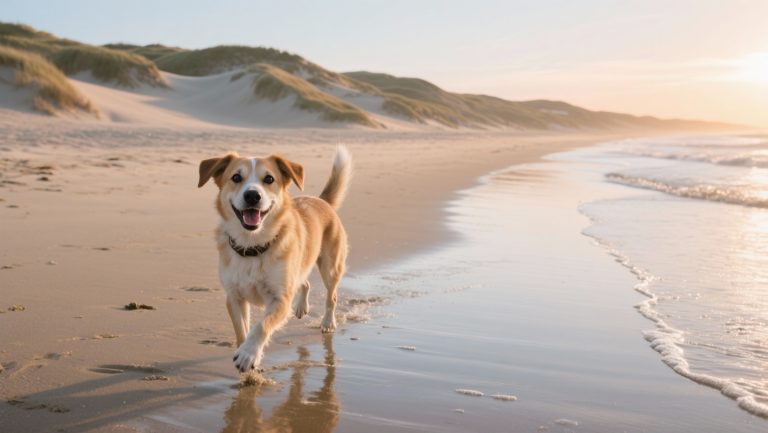
Once you’ve arrived, the real enjoyment begins. Do your research into local rules and possibilities before you go. Is your dog allowed off the lead on the beach or in the forest? Are dogs allowed on public transport or on terraces? A quick online search for “dog-friendly beaches [region]” or “walking with dog [region]” often produces valuable information. Look for activities you can do together, such as long walks in nature reserves, swimming in a lake where dogs are allowed, or visiting a city park.
Extra tips for a carefree car holiday with your dog
- Stick to routines: Try to keep feeding times and toilet walks as similar as possible to those at home. This gives your dog structure and calm.
- Respect your surroundings: Always clean up after your dog and avoid causing a nuisance to others.
- Be prepared for unexpected situations: Save the telephone number of a local vet near your holiday address in your phone.
In conclusion: enjoy every kilometre together
A car holiday with your dog is an enriching experience that strengthens the bond between you. It requires thoughtful preparation, flexibility on the road and attention to your animal’s needs. By arranging the right documents, ensuring a safe and comfortable journey and choosing your destination carefully, you lay the foundations for a carefree time away. The adventures you experience together and the memories you create are more than worth the investment in preparation. Grab the lead, the water bowl and the map, and get ready for an unforgettable journey together.