NL
NL
Book your tickets early so you can enjoy yourself later without stress. In the summer months and around Easter, trains are full. Prices go up. Popular routes sell out. Even so, a train holiday to Italy in high season is perfectly doable. You just need to plan smartly and use a good strategy. That way you avoid crammed carriages, you do not stand in long queues, and you skip unnecessary stress. Read here how to dodge the crowds and still travel in comfort.
Book early to avoid disappointment
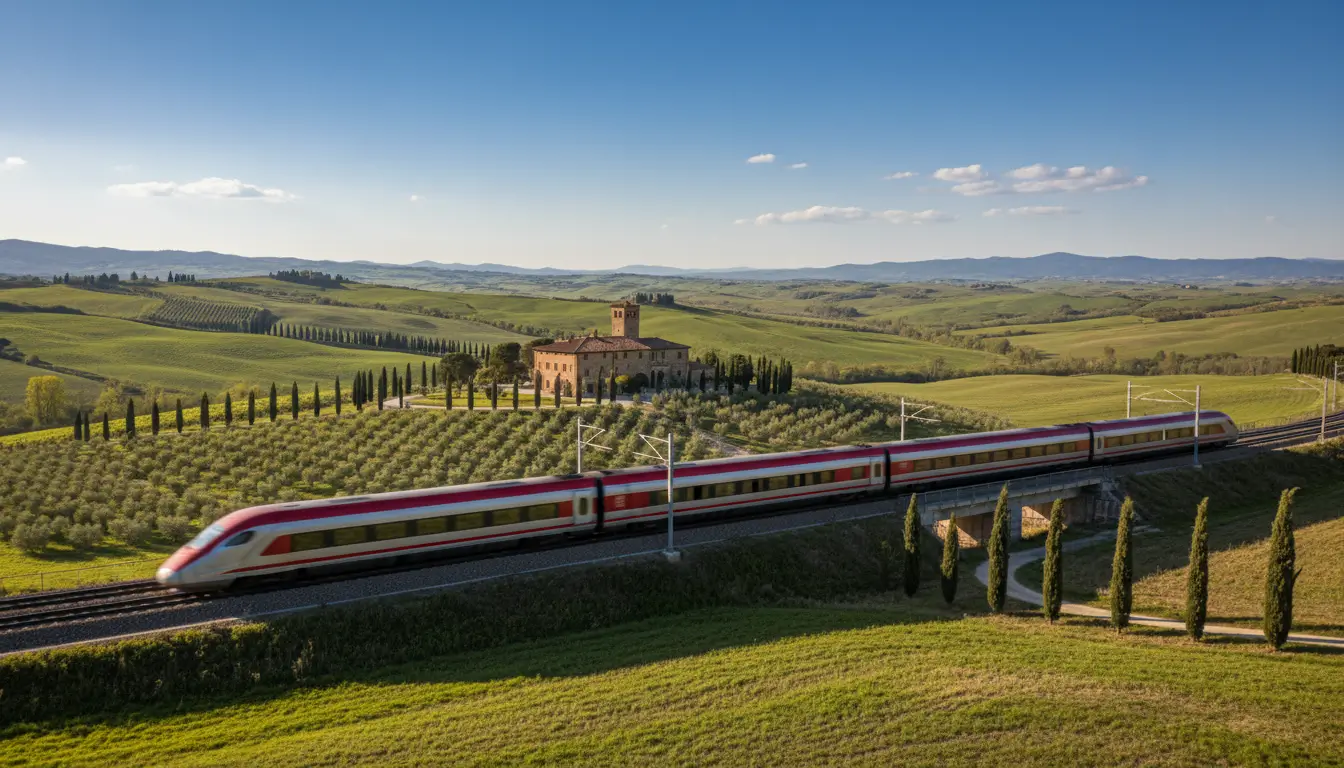
Trains in Italy can be booked months in advance. High-speed trains are popular. The Frecciarossa is one example. These trains sell out quickly, especially between Rome, Florence and Milan. If you wait too long, you pay more and may not find any seats. You plan train holidays with Interrail. Then early reservations are compulsory. Many popular routes require seat reservations, and these are limited.
Start booking as soon as your dates are fixed. You can usually buy tickets three to four months in advance. Some routes are especially busy. Florence–Rome is one example. Milan–Venice is another busy route. For these connections it is extra important to book early. Advance-purchase fares are cheaper and guarantee you a seat on the train. If you wait until shortly before departure, you take a risk. You may need to travel via a detour or leave a day later.
‘ The shoulder months are then the answer. ’
Choose low season for peace and lower prices
High season runs from mid-July to the end of August, with peaks around Easter. During this period Italian trains are packed with tourists and locals on holiday. Stations are busy. Trains are dirty. The atmosphere is rushed. Many travellers want to avoid this. The shoulder months are then the answer. May, June, September and October are quieter. It is cleaner and travelling is more pleasant.
In low season prices drop significantly. Hotel rooms are cheaper. Train fares are lower. Package deals cost less. On top of that, you have more choice of connections and departure times. Some destinations are very popular. Cinque Terre is one example. Tuscany also attracts many visitors. In the shoulder months these areas are much nicer to visit. The villages are less overcrowded. The beaches have space. The hiking trails are accessible. There is no jostling.
Months with the least crowds
- May: ideal for walks and city trips, pleasant temperatures
- June: warm weather, few tourists, affordable fares
- September: calm after the summer rush, good weather
- October: autumn season, perfect for Tuscany and northern Italy
Avoid peak times on popular lines
Even in high season there are differences. Some times are quiet, others are busy. Early morning trains are often full. Lunchtime services are calmer. Many travellers want to make the most of their day, so they choose early trains. Friday afternoon trains are extra busy. Sunday evening is also busy, when local travellers go home.
Plan your connections so you travel outside peak hours. Then you will have more peace. Leave after ten in the morning, or around three in the afternoon. That way you have a better chance of a relaxed journey. There are empty seats next to you. Regional trains are often quieter. Fast services are busier. Regional trains take longer but offer a calmer alternative.
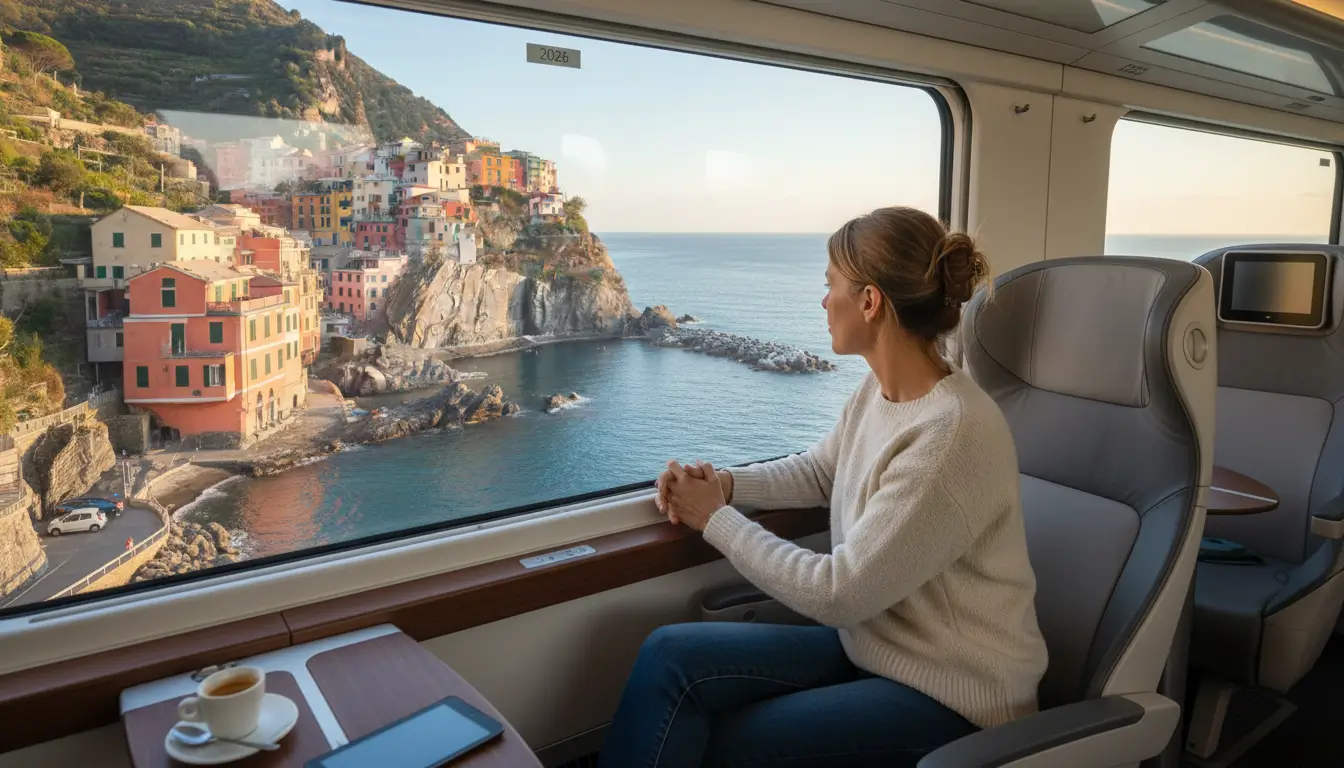
The Rome–Florence line has specific peak times. Do not leave between eight and ten in the morning. Between five and seven in the evening it is also busy. These are the most crowded times. For Cinque Terre the advice is different. Travel early in the morning. After three in the afternoon it gets quieter again. Between eleven and two it is very busy. At those times the trains are packed with day-trippers.
Choose smart passes for unlimited travel
Italy offers various passes that let you travel unlimited. This applies within a certain region or for a set period. You make several short journeys. Cinque Terre is a good example. Travelling around Tuscany is another. In those cases these passes are especially useful. You do not need to book every single journey again and again, saving you time at the station.
The Cinque Terre Train Card is valid from mid-March to early November. It lets you travel unlimited between La Spezia and Levanto. You also get access to the hiking trails. Local buses are included as well. The pass costs about 18 euros for one day. For travellers who want to explore Cinque Terre in depth, this pass pays off straight away.
The Italia in Tour pass offers unlimited travel on regional trains. The pass is valid for three days and is also available for five days. It can be used throughout Italy and is very flexible. High-speed trains are not included with this pass. It is an affordable option, especially for touring through several regions.
Advantages of train passes in high season
- No hassle with separate tickets at every station
- No need to queue at ticket machines
- Flexible hop-on, hop-off travel with no extra costs
- Access to hiking routes and public transport in some areas
‘ You maximise your travel time. ’
Book night journeys for more comfort and time savings
Night trains are a smart choice. You cover long distances and do not waste daylight. From the Netherlands you travel with the Nightjet. The train runs via Düsseldorf and then on to Munich. The final destination is Genoa. The journey takes around twelve hours. You step off in the morning, well rested, and can start your day straight away.
Night trains have sleeping compartments. There are beds and sheets are provided. Usually there is a washbasin. You save the cost of a hotel night and avoid the daytime crowds. Do book well in advance. Sleeping compartments are popular and sell out fast. In high season this is a very sought-after option.
Within Italy itself there are also night trains. One example is the connection between Rome and Sicily. You plan longer travel routes. You want to combine several destinations. In that case these connections are ideal. You maximise your travel time and avoid crowded platforms during the day. Station buildings are busy, and this is how you sidestep that.
Combine the train with alternative transport
Some destinations are difficult to reach. Parts of Tuscany are one example. There are also places along the coast that are hard to get to. The train on its own is not enough. It can help to hire an electric car. Do this at a hub station. Genoa is a good example of such a hub. You then combine the advantages: the train offers comfort on long distances, the car gives you flexibility for local trips.
Electric cars have a range of around 350 kilometres. This is enough for several days in one region. You can head out to small villages. Remote beaches become reachable. Rural routes also open up. Trains do not serve these places. This is how you discover parts of Italy that many tourists miss.
Local buses are handy. Bike rental is also a good addition. Train stations are located in many Italian towns and cities. Bus stations are close by and often well connected. For short distances a bike is quicker and more pleasant. You do not have to wait for the next train.
Allow for engineering works and delays
During the summer months there are engineering works on the railways. This happens regularly. Tracks are maintained. This leads to replacement buses. You may have to travel via another route and journey times will be longer. Check the current timetable before you leave. Trenitalia publishes this information, as do other operators. The information is online and in their apps.
Build in a buffer in your schedule. This means planning extra time. You may have onward trains or a fixed booked activity. Then you avoid problems. A delay of half an hour is common. In Italy this is nothing unusual. Busy days increase the risk. Popular routes are more prone to delays.
International journeys can change. Timetables are sometimes adjusted. One example is the route via Basel, which runs via Zurich to Milan. In July there are amended times. In August this also applies. Check again a week before departure so that you are not caught out.
‘ Early arrival is an advantage. ’
Make use of early morning trains for popular places
You want to visit Cinque Terre. Verona and Florence are also popular. You want to avoid the masses of tourists. Then leave early. The first trains of the day are quieter. The destinations themselves are still empty. Museums are pleasant in the morning. Churches are quiet. Beaches are still calm and manageable.
In Cinque Terre the first trains leave from La Spezia at around seven o’clock. You then arrive in Monterosso. Vernazza is another option. The villages are still largely empty. You have them almost to yourself. Around eleven the daytime crowds begin. The streets are full. There are queues at restaurants. Train stations are overflowing.
The same applies to Rome. Florence has the same situation. Early arrival is an advantage. Sights are still quiet. You do not get stuck in crowds. You can enjoy the atmosphere. In July and August morning temperatures are pleasant. The midday heat is intense.
Think about comfort on long travel days
High season brings crowds. It also brings heat. Trains can overheat. Regional lines sometimes have no air conditioning, which makes the heat even more noticeable. Take plenty of water. Wear light clothing. If you are sensitive to heat, take a small fan.
High-speed trains have more comfortable seats. Regional trains offer less comfort. If you have long journeys, consider investing in a first-class ticket. This gives you more space. The carriages are quieter. There are often sockets for your devices. If you are travelling for several hours, arriving rested is a pleasure. Arriving exhausted is unpleasant. The difference lies in the ticket you choose.
Take some snacks. On-board restaurants are not always open. On peak days they are sometimes understocked. A simple sandwich helps. Some fruit is handy. If the restaurant car is full or closed, your own supplies will save the day.
Discover more about train travel
The Traveler Tips website offers extensive information. You will find routes, listed destinations and explanations of ticket options. Practical preparations for train holidays are included. Detailed travel guides are available. Handy checklists help you further. All of this helps your trip run smoothly. Explore the site and plan your next trip with confidence.
Frequently asked questions
Ideally, book your train tickets and main legs a few months in advance, as soon as sales open, so you benefit from lower fares and guaranteed seats. Secure your accommodation early too, especially in popular regions such as Cinque Terre, Tuscany and major cities like Rome and Florence. Try to plan your arrival and departure days outside weekends and public holidays to avoid peak crowds. Travel preferably outside rush hours (for example, around midday) to experience fewer crowds both on the train and at stations.
Travel as much as possible outside peak hours and reserve a seat wherever you can, so you do not have to stand on the busiest trains. Take light, easy-to-handle luggage and keep important items (ticket, passport, water, snack) within easy reach so you feel less stress when getting on and off. Use stopovers to consciously unwind: take a short walk, stretch and look for quiet corners at stations, for example away from escalators and information boards. Adjust your expectations and allow extra time in your plans so that any crowds or delays do not immediately cause stress.
Combine major hubs (such as Milan, Florence and Rome) with smaller bases just outside the hotspots, for example staying in Levanto instead of directly in the Cinque Terre. Plan popular routes early in the morning or around midday and use regional trains or less well-known branch lines to add quieter villages, lakes or wine regions. Build in extra nights in peaceful locations and take day trips from there to the busy highlights. Alternate iconic cities with nature and coastal areas mainly visited by locals, so you spread both your travel time and the crowds.
Yes, there are specific passes that are especially good value in high season, such as the Cinque Terre Train Card (unlimited travel between La Spezia and Levanto plus access to hiking trails) and the nationwide “Italia in Tour” pass for unlimited travel on regional trains for several days. Use these passes mainly for short, frequent journeys on busy routes, so that each journey works out much cheaper than buying single tickets. Buy your pass as soon as you arrive in busy areas (such as Cinque Terre) to avoid queues, and check in advance the validity period and any compulsory reservations. Plan busy long-distance legs in off-peak hours and combine your pass with high-speed reservations booked early for the best value for money.
Reserve your trains and seat reservations as early as possible and choose trains outside peak hours wherever you can, to avoid the worst of the crowds. Plan generous transfer times so you do not immediately miss your connection if there is a delay. Have a back-up plan with alternative routes or departure times, and save timetables or rail company apps on your phone. Take enough food, drink and entertainment in case you have to spend longer in or waiting for a train.