 NL
NL
For a road trip through Italy, the train offers relaxation and impressive landscapes without traffic jams, while the car gives you more flexibility for remote hills and hidden villages. Both options have clear advantages, but the choice depends on your itinerary, budget and whether you prioritise comfort or freedom. What suits your trip to Italy best?
A trip to Italy is something you should prepare for carefully. The way you travel largely determines how you experience your holiday. On a train holiday in Italy you enjoy a relaxed journey past well-known cities, while a road trip by car gives you more freedom to put together your own route. The choice between train and car depends on your destination, your travel goals and what you value most along the way.
In this article we compare both ways of travelling on practical points such as costs, accessibility, comfort and flexibility. That way you can make a well-informed choice that fits your plans.
Why the train is a smart choice for city routes
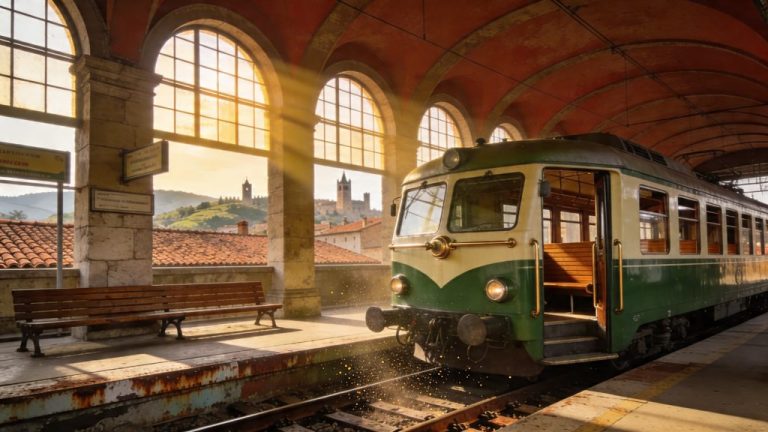
The train is becoming increasingly popular for travel between major Italian cities. Cities such as Milan, Florence, Rome and Venice are well connected by high-speed lines. The travel time between Milan and Rome, for example, is just over three hours on a high-speed train.
The advantages of travelling by train in Italy are:
- Less travel stress by avoiding traffic jams and the search for parking
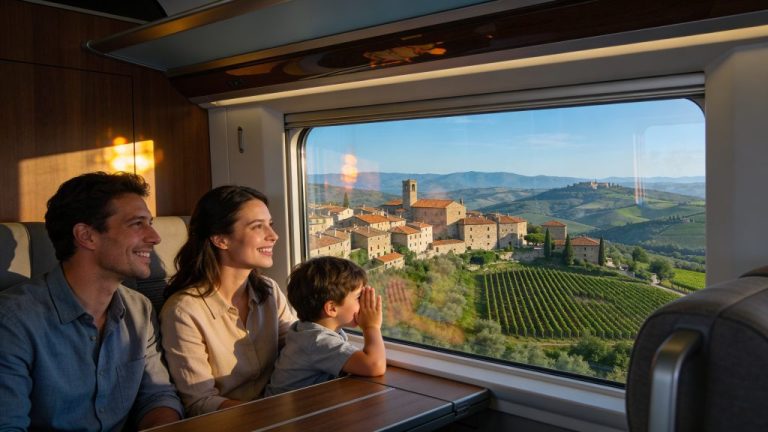
- Relaxed travel with the option to work, read or enjoy the scenery
- Direct connections between city centres, so you arrive right in the heart of the city
- More sustainable travel with lower CO₂ emissions than driving
- Often cost-effective on popular routes, especially if you book early
The train is especially practical if you are touring several major cities. You get off at the main station and walk or take public transport straight to your accommodation. This avoids all the hassle around parking in historic centres, where parking spaces are scarce and expensive.
Limitations of the train for remote destinations
The train also has its downsides, especially if you want to travel beyond the well-trodden routes. Smaller villages in Tuscany, coastal towns in Abruzzo or mountain areas in Umbria are often difficult to reach by train. You depend on bus connections or local transport, which takes time and requires planning.
Other practical limitations are:
- Being tied to fixed departure times and stations
- Limited spontaneity for unexpected stops or detours
- Possibly several changes on international routes
- Extra transport needed from the station to accommodation outside the centre
If you are carrying luggage or travelling with children, combining different types of transport can be a bit of a hassle. For travellers who mainly want to see the well-known cities, these drawbacks are limited. For those who want to explore less accessible regions, however, the train is less suitable.
The car offers maximum freedom and flexibility
A road trip by car allows you to plan your own route. You stop wherever you like, drive through wine regions and mountains, and visit villages further away from the tourist trails. This makes the car ideal for travellers who want to combine several regions and do not want to be tied to a tight schedule.
The advantages of travelling by car are:
- Complete freedom in terms of route and pace
- Access to remote areas such as hilltop villages, lakes and coastal resorts
- Convenient for families or travellers with lots of luggage
- The possibility to visit multiple destinations in one trip
The car really comes into its own in regions where the train is less practical. Think of routes through Tuscany, along the Amalfi Coast or through the Dolomites. Here you will get the most out of your trip if you are behind the wheel yourself and plan your own stops.
Disadvantages of driving in Italy
Driving in Italy also brings its challenges. Traffic in cities can be heavy, and parking is often expensive or limited. In historic centres, environmental zones are common, where only certain vehicles are allowed. In addition, many old town centres are not designed for car traffic.
Other disadvantages are:
- Higher costs due to fuel, toll roads and parking fees
- More driving stress, especially on busy routes and in cities
- Arriving more tired after long hours behind the wheel
- Toll costs can be high, especially on popular routes such as the A1 from Milan to Rome
The costs of a road trip can turn out higher than expected. In addition to the hire car, you pay for fuel, tolls and parking. For a drive from Milan to Rome, for example, you pay over 30 euros in tolls. If you cover several long distances, these costs quickly add up.
When to choose the train or the car
The choice between train and car depends on your travel plans and preferences. If you mainly visit cities and want to travel in a relaxed way, the train is usually the better option. You avoid traffic congestion and arrive directly in the city centre. For a tour of Florence, Rome and Venice, the train is both comfortable and efficient.
Choose the train if:
- Your route mainly includes well-known cities
- You want to travel sustainably
- You do not fancy driving and parking
- Your budget is limited and you can book early
Choose the car if:
- You want to visit remote villages, mountains or coastal towns
- Flexibility is important to you and you want to make spontaneous stops
- You are travelling with children or a lot of luggage
- You want to combine several regions in a single road trip
In some cases you can also combine both options. For example, travel by train to your first destination and hire a car there for part of your trip. This way you benefit from the comfort of the train and the freedom of the car where needed.
Comparing costs between train and car
The cost of your trip varies depending on how you travel. Train tickets are often cheaper if you book early or use discount cards. A train ticket from Milan to Rome costs between 30 and 60 euros, depending on the type of train and when you book.
For a road trip by car you need to add up several costs:
- Hire car from around 30 euros per day, depending on season and car type
- Fuel costs for a journey from Milan to Rome of around 50 euros
- Tolls on the same route of around 35 euros
- Parking fees in cities ranging from 2 to 5 euros per hour
On shorter routes between major cities, the train is often cheaper. On longer road trips with multiple stops, car costs can rise considerably. In return you give yourself more freedom. Work out in advance which option fits your budget and which benefits matter most to you.
Sustainability and comfort as factors
Sustainability plays an increasingly important role when choosing how to travel. The train produces significantly less CO₂ than driving. This difference is especially marked if you are travelling alone. For travellers who consciously opt for a smaller ecological footprint, the train is a logical choice.
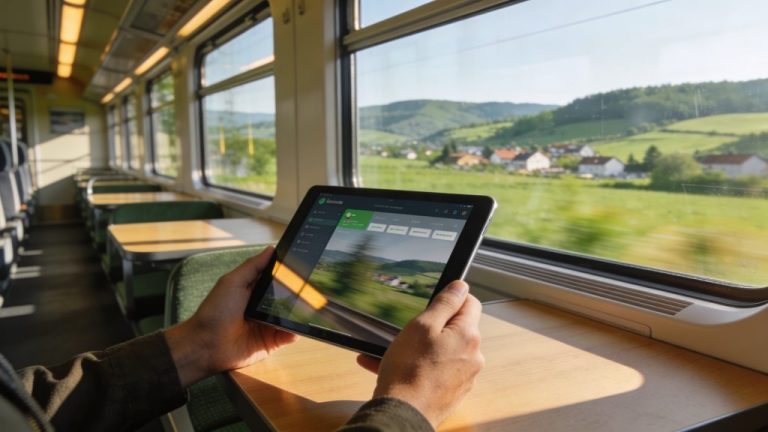
There are also differences in comfort. On the train you can relax, move around, work on a laptop or simply enjoy the view. When driving you are constantly occupied with traffic and navigation. On arrival you are often more tired, especially after a long drive.
On the other hand, the car offers comfort in the form of privacy and control. You do not share space with other travellers and you decide yourself when to take a break. For families with young children this can be a major advantage.
‘ This way you benefit from the best of both worlds. ’
Practical tips for making your choice
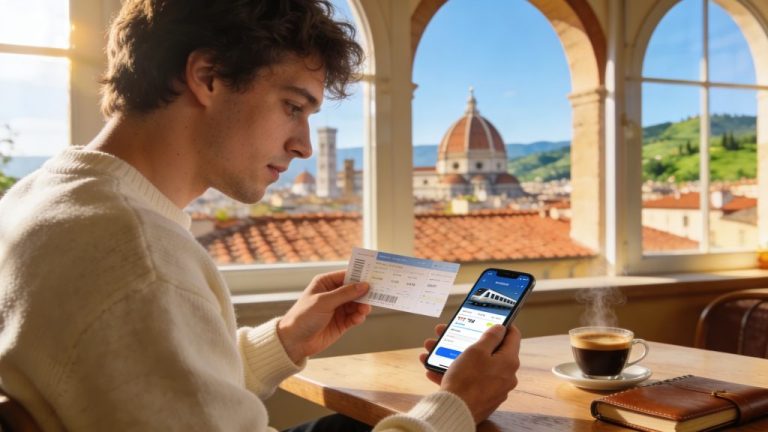
Prepare your choice carefully by taking your route, budget and preferences into account. Check train connections in advance and book early for the best fares. If you opt for the car, study the toll roads and parking options at your destinations.
For an optimal trip you can also combine both means of transport. For example, travel by train to major cities and hire a car locally for trips into the surrounding area. This way you benefit from the best of both worlds.
On the Traveler Tips website you will find more information about routes, travel planning, destinations and practical tips for your trip to Italy. Discover useful guides, checklists and background information to help you prepare for your holiday even better.
Frequently asked questions
The car offers the greatest flexibility to discover remote places and make spontaneous stops during a road trip through Italy. With a car you can set your own pace, easily detour to villages, viewpoints and nature areas, and stop wherever and whenever you like.
For train travel in Italy you mainly pay for tickets (sometimes reservations for high-speed trains), but you avoid almost all extra costs such as tolls, parking, ZTL fines and high fuel prices. With the car, besides fuel costs you also have motorway tolls (autostrade), often expensive parking rates in and around cities, and the risk of fines due to ZTL zones (low-traffic city centres where you usually only have access with a permit). Things like extra insurance, wear and tear and possible car hire costs also count on the car side, while for the train you are more likely to spend extra on local public transport or taxis to and from the station. Overall, the train between major cities is usually cheaper and more predictable in terms of costs, while the car becomes especially more expensive once you use many toll roads and drive into urban areas.
Travelling by train usually offers more relaxation: you do not have to drive yourself, you can read or sleep, and you are less affected by traffic jams and parking stress, although you do have to carry your own luggage and sometimes change trains. With the car you always have your luggage to hand and right by your accommodation, but you will often experience more stress because of traffic, toll roads and parking. On the train the journey itself is usually calmer and feels more like “travel time = free time”. In the car you have more freedom and flexibility, but you generally arrive more tired.
For exploring different regions in Italy, a combination of high-speed train and (hire) car is the most time-efficient. Use the train for fast journeys between major cities and hubs, as this minimises travel times, traffic jams and parking problems. Then hire a car locally to flexibly discover less accessible villages, coastal areas and mountain regions. This way you benefit from the good train connections and lose little time on detours or changes.
The train contributes most to an authentic travel experience and the chance to connect with local culture along the way. You travel in a relaxed way alongside locals, get off in city centres and watch the landscape pass by without having to drive yourself. Along the way you can more easily strike up conversations, discover local eateries around stations and get off spontaneously at intermediate stops.